Caliginous is a literary adjective meaning dark, dim and misty, the kind of gloom that thickens the air rather than simply switching off a light. To use caliginous in a sentence, attach it to a place or atmosphere: “A caliginous fog swallowed the harbour.” It describes conditions, not people.
Caliginous at a glance
- Caliginous is an adjective, and its rare adverb is caliginously.
- It means dark, dim and misty at once, with a suggestion of haze or vapour.
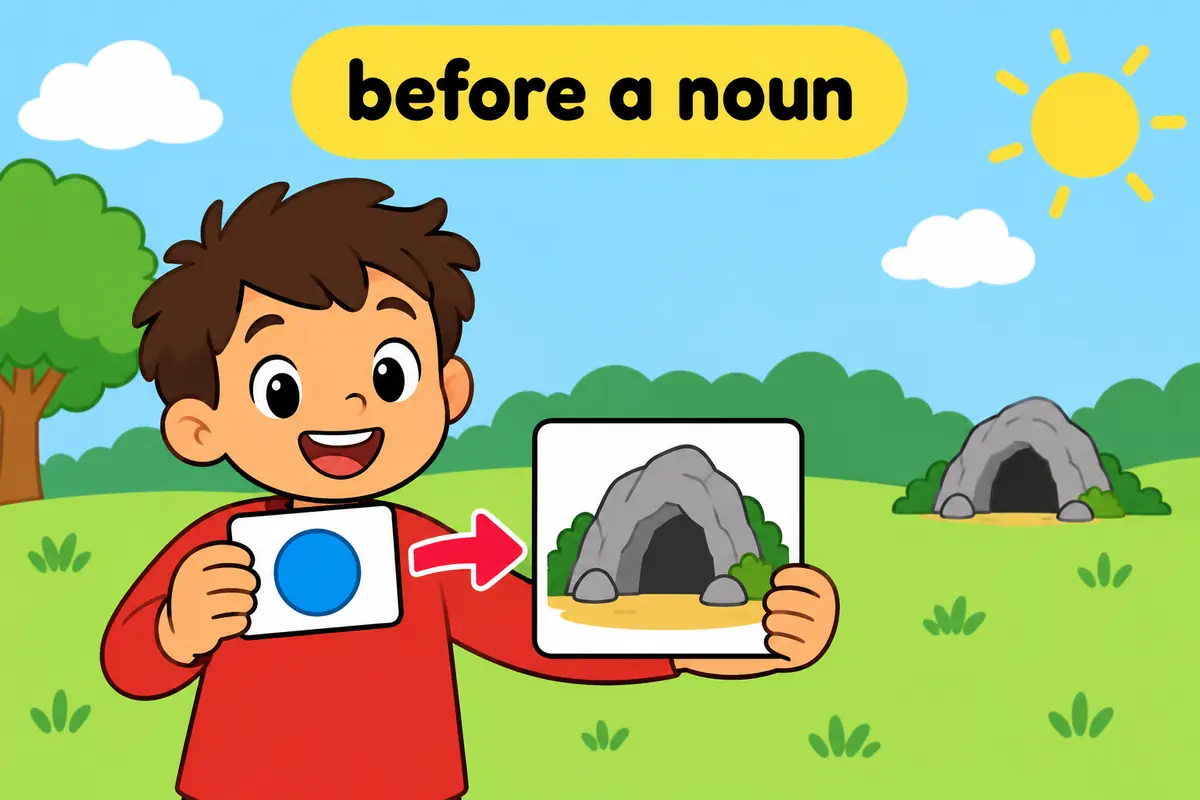
- The adjective usually sits before a noun, as in a caliginous cave.
- It belongs to poetry, Gothic fiction and literary criticism rather than to speech.
- The commonest error is using caliginous for plain night-time darkness, where dark is the natural word.
What does caliginous mean?
Caliginous is an adjective meaning dark, dim and misty, often with the sense of a gloom thickened by fog, dust or vapour. The Cambridge entry for caliginous keeps that core sense, and the word carries two shades of it: a physical murk you could walk into, and a figurative gloom that hangs over a mood or a period. Where the darkness is plain and unremarkable, dark is the honest everyday choice.
| Sense | Plain meaning | Example sentence |
|---|---|---|
| Physical murk | Dark, dim and misty in one place | A caliginous mist filled the valley floor. |
| Figurative gloom | A heavy, dim mood or era | The final chapters settle into a caliginous sadness. |
| Obscure and unclear | Hard to see or understand | The records survive in a caliginous, half-legible hand. |
One limitation is worth stating plainly. Caliginous is rare and unmistakably literary, so it suits a gothic novel, a poem or a film review, and it misfires in a shopping list or a text message. It never describes a person, and it never means simply unlit: the haze or the heavy air is part of the meaning, which is why hazy and dim often do the everyday job better.
A second trap is the near-synonym. Caliginous keeps light and vapour inside one word, so it cannot be split into darkness on one hand and mist on the other. Tenebrous offers darkness alone and nebulous offers vagueness alone, which is why neither of those substitutes matches the full sense.
How do you use caliginous in a sentence?
Caliginous is a descriptive adjective, so it can sit before a noun or stand after a linking verb. The attributive slot is the more literary of the two, while the predicative slot reads as slightly more conversational.
| Pattern | Example | What it signals |
|---|---|---|
| caliginous + noun | They crept through a caliginous tunnel. | The classic attributive use, dense and novelistic. |
| linking verb + caliginous | The cellar looked caliginous at noon. | Predicative use, describing a state as it appears. |
| caliginous + abstract noun | A caliginous silence followed the verdict. | Transfers the murk from a place to a mood. |
| caliginous + weather noun | A caliginous drizzle hid the coast. | Pairs the word with fog, drizzle, smoke or dust. |
| caliginously + verb | The lamps burned caliginously in the fog. | The rare adverb, best kept to poetry. |
The adjective is gradable, so a writer may say more caliginous or most caliginous, though the comparative sounds forced outside verse. It does not take the negative prefix un-, so uncaliginous is not a word to use.
Caliginous in a sentence: examples across contexts
Because caliginous belongs to written description, its natural homes are fiction, criticism and verse. These ten sentences show where it earns its place and where it would sound out of key.
| Context | Example sentence | Why this works |
|---|---|---|
| Gothic novel | The corridor was caliginous, and the candle reached only a few feet. | Predicative use that keeps the haze as a physical fact. |
| Poetry | Caliginous woods drank the last of the light. | Attributive use with a natural image and a strong verb. |
| Nature writing | A caliginous haze softened every ridge along the shore. | The weather noun haze follows the adjective naturally. |
| Film review | The director keeps the final act caliginous, all smoke and shadow. | Extends the word from a place to a visual style. |
| Game description | Players cross a caliginous marsh where the map never fully clears. | Applies the sunless, obscuring quality to a game setting. |
| Literary essay | Critics read the caliginous imagery as a study in grief. | Uses the word as a technical term in analysis. |
| Historical fiction | A caliginous age of plague and rumour closed over the town. | Figurative use for a whole period of gloom. |
| Art criticism | The later canvases grow caliginous, their figures half-dissolved. | Describes tone and visibility rather than literal night. |
| Journalism | The report paints a caliginous picture of the flooded delta. | Figurative gloom, acceptable in feature writing but not hard news. |
| Ghost story | The stairs gave onto a caliginous landing where the lamp would not catch. | Uses the word for an interior where light fails in haze. |
| Travel memoir | We rowed into a caliginous morning that hid both banks. | Pairs the adjective with a time of day and a place. |
| Everyday writing | The kitchen was caliginous because the bulb had gone. | Deliberately out of key, showing why dark suits the plain case. |
The last row is a deliberate misfire. In ordinary domestic writing the word draws attention to itself, which is exactly the opposite of what a plain description needs.
Across every row the adjective does the same work: it merges darkness with something suspended in the air. When only one of those two ideas is present, a plainer word carries the sentence better, which is why the domestic example reads as a joke rather than a description.
Caliginous vs murky and obscure
Caliginous overlaps with two common adjectives and matches neither. murky usually implies dirt or cloudiness in water or air, while obscure stresses that something is hard to understand rather than hard to see.
| Attribute | caliginous | murky | obscure |
|---|---|---|---|
| Core job | Dark and misty at once | Cloudy, dirty, hard to see through | Unclear or little known |
| Typical subject | Air, caves, woods, moods | Water, glass, motives | Facts, origins, references |
| Implied cause | Fog, vapour or heavy shade | Suspended dirt or sediment | Distance, rarity or complexity |
| Register | Literary and rare | Neutral and common | Neutral and formal |
| Works for people | No | Sometimes, of motives | Of reputation, not faces |
Verdict: choose murky for anything clouded by dirt, obscure for anything hard to grasp, and caliginous only when a dark atmosphere is itself the point.
Word forms and grammar of caliginous
Caliginous has a small family of forms, and most of them are far rarer than the adjective. The table also lists the forms learners invent that do not exist.
| Form | Part of speech | Example |
|---|---|---|
| caliginous | adjective | The caliginous hall swallowed every sound. |
| caliginously | adverb, rare | The fog rose caliginously from the marsh. |
| caliginousness | noun, very rare | The caliginousness of the room was almost tangible. |
| caliginosity | noun, archaic | Poets once used caliginosity for thickening gloom. |
| caliginous | comparative, rare | The lower caves grew more caliginous by the hour. |
| uncaliginous | non-standard | Wrong: an uncaliginous morning broke over the town. |
The noun forms survive mostly in older prose, so a modern writer reaches for gloom or murk instead. Its antonym in everyday use is luminous, which describes the opposite quality of light.
The comparative form exists but sounds forced, so most writers rebuild the sentence instead of writing more caliginous. The adverb is the most durable of the rarer forms, though even it belongs to verse. A learner who needs a plain noun should choose gloom or murk rather than caliginosity.
Common mistakes with caliginous
- Incorrect:
He is a caliginous person.Correct: He is a gloomy person. Rule: Caliginous describes places, air and moods, never a person in ordinary use. - Incorrect:
The night was caliginous and clear.Correct: The night was caliginous and hazy. Rule: The word already carries mist, so clear contradicts it. - Incorrect:
The caliginous of the cave frightened them.Correct: The caliginous gloom of the cave frightened them. Rule: Caliginous is an adjective and cannot stand as the subject of a sentence. - Incorrect:
It was a very caliginous Tuesday at the office.Correct: It was a gloomy Tuesday at the office. Rule: The word is literary, so it clashes with plain, everyday subjects. - Incorrect:
The caliginous fog was completely transparent.Correct: The caliginous fog hid the road. Rule: Transparent reverses the meaning, since caliginous implies poor visibility.
Practice using caliginous
Work through the six items, then compare your wording with the reasoning in the answers.
- Fill the gap: A ______ mist crept between the gravestones.
- Choose the better word: The pond was (caliginous / murky) after the storm stirred up the mud.
- Correct the error: The caliginous was heavy in the old library.
- Build a sentence: use caliginous attributively about a forest at dusk.
- Spot the register: which fits a gothic novel — a caliginous corridor, or a caliginous kitchen light bulb?
- Rewrite figuratively: The meeting was dark and tense. Replace dark with caliginous.
Answers
- caliginous — mist and gloom are the exact conditions the adjective describes.
- murky — stirred mud is the dirt-and-sediment sense, which belongs to murky.
- The caliginous gloom lay heavy in the old library — the adjective needs a noun to modify.
- Model answer: A caliginous forest swallowed the last of the daylight.
- A caliginous corridor — the word suits grand, literary settings, not domestic fixtures.
- The meeting was caliginous and tense — the figurative sense transfers the murk to a mood.
The bottom line
Use caliginous in a sentence when a place, an atmosphere or a mood is dark and misty at once, and keep it for literary and descriptive writing. The two details that decide most sentences are these: the adjective usually sits before its noun, and it never describes a person. Where the gloom is plain and unmisted, gloomy or dark will read more naturally than so rare a word.

Frequently asked questions about caliginous
Is caliginous a common word?
No. Caliginous is rare and unmistakably literary, so it turns up in poetry, Gothic fiction and criticism far more often than in speech. Most everyday sentences about dim light use dark, dim, misty or hazy instead. Recognising the word matters more than dropping it into conversation, where it would draw attention to itself.
What part of speech is caliginous?
Caliginous is an adjective, so it describes a noun or follows a linking verb. Its rare adverb is caliginously, as in the fog rose caliginously from the marsh. The related nouns caliginosity and caliginousness are archaic or very rare, which is why a modern writer usually reaches for gloom or murk.
Can caliginous describe a person?
No, not in ordinary use. Caliginous describes places, air, weather and moods, never a person, so a caliginous man is a mistake. If the intended sense is that somebody is gloomy or secretive, then gloomy, sombre or mysterious fits. The adjective attaches to conditions and atmospheres, not to character.
How is caliginous different from dark?
Dark simply means without light, while caliginous adds mist or heavy air to the darkness. A room is dark when the bulb has gone; a valley is caliginous when fog thickens the gloom until objects half vanish. Dark is the everyday word, and caliginous is the literary one that insists on the haze.