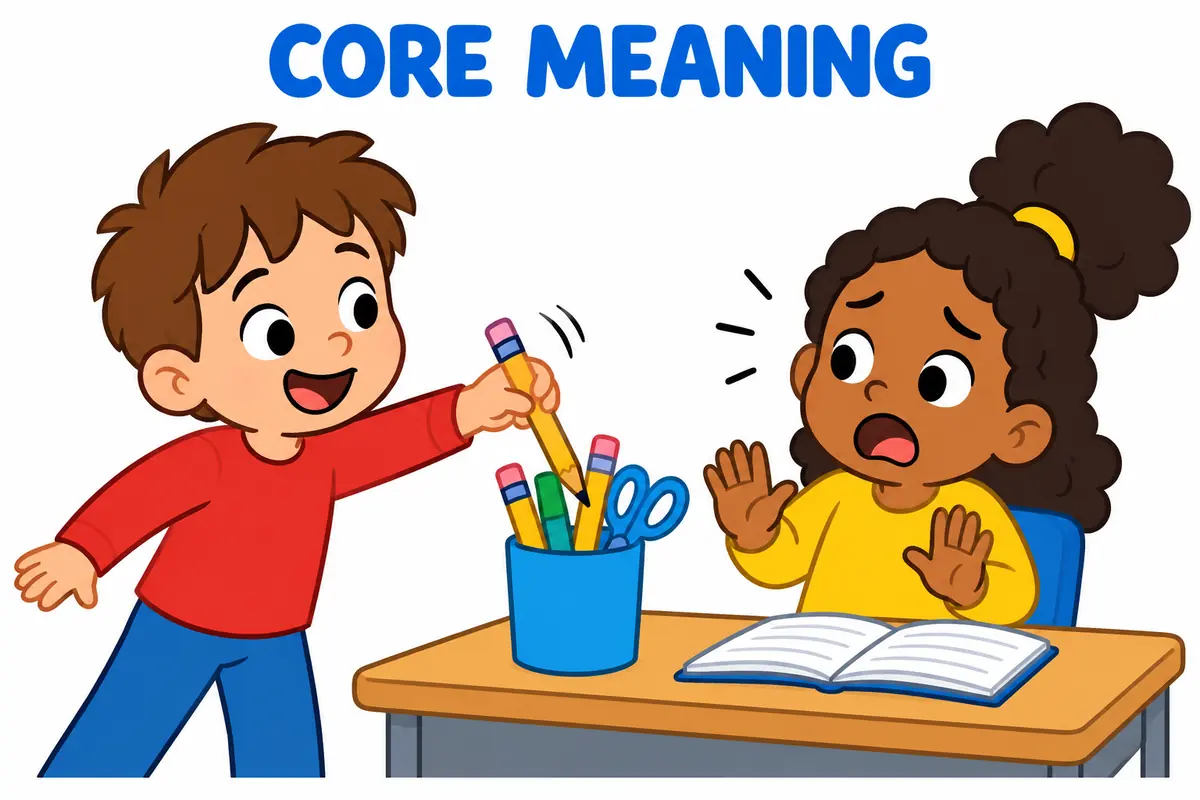
Come around is an intransitive phrasal verb with several senses: to visit someone, to change your opinion, to wake up after fainting, or to happen again in due course. To use come around in a sentence, add the preposition that fits the sense, as in “She came around to our view.” British writers often spell it come round.
Come around at a glance
- Come around is an intransitive phrasal verb, so it never takes a direct object.
- Its forms are comes around, came around and coming around.
- Four senses are common: visit, change your mind, regain consciousness, and recur.
- The spelling come round is standard in British English, and both mean the same.
- The commonest error is adding an object, as in come around me, which the verb cannot take.
What does come around mean?
Come around is an intransitive phrasal verb with four everyday senses that share the idea of movement toward a point. The Cambridge entry for come around records the visit and change-of-mind senses, and the other two appear constantly in speech. Because the verb takes no object, the sense is carried by context and by any following preposition.
| Sense | Plain meaning | Example sentence |
|---|---|---|
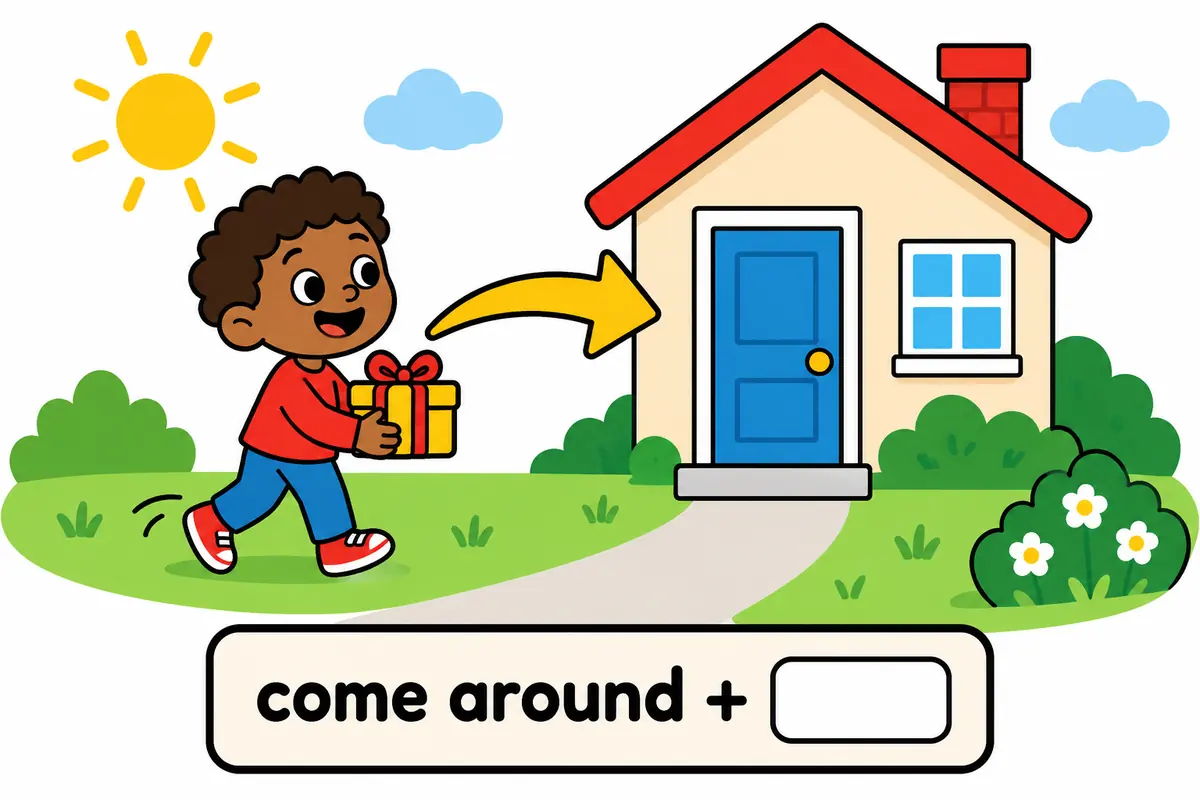
| Visit | Go to someone’s home or area | Come around for dinner on Friday. |
| Change your mind | Adopt a view you first resisted | He came around to our plan. |
| Regain consciousness | Wake up after fainting | She came around after a few minutes. |
| Recur | Arrive again in the usual cycle | Winter comes around so quickly. |
One limitation is worth stating plainly. Come around is too casual for a formal report, and its change-of-mind sense suggests slow persuasion rather than a sudden decision. It also does not mean arrive at a place as a one-off journey; for that plain sense, come across or arrive is the better choice.
How do you use come around in a sentence?
Come around is intransitive, so it stands without an object, and the sense is fixed by the words around it. The pattern table shows the four shapes that cover almost every real sentence.
| Pattern | Example | What it signals |
|---|---|---|
| come around (to visit) | Come around at seven. | A friendly invitation with no object. |
| come around to + noun | She came around to the idea. | The slow change of mind, with to before the view. |
| come around (regain consciousness) | The runner came around on the grass. | Recovery, often with a place phrase after it. |
| come around + time phrase | Payday comes around every month. | The recurrence sense, marked by a time expression. |
The rule that decides most sentences is simple: nothing follows come around directly, because the verb is intransitive. A related verb, get around, uses the same particle but means to travel or to avoid a problem.
Come around in a sentence: examples across contexts
The verb keeps one shape while the sense changes with the setting. The thirteen sentences below move from a doorstep to a history book, and each makes its sense clear from context.
| Context | Example sentence | Why this works |
|---|---|---|
| Invitation | Come around for tea whenever you like. | The visit sense needs no object at all. |
| Family talk | Grandma comes around every Sunday afternoon. | A time phrase marks the recurring visit. |
| Workplace email | The board finally came around to the new schedule. | The to phrase carries the change of mind. |
| Sports report | The boxer came around after the count of eight. | Context shows the recovery sense clearly. |
| Calendar talk | Exam season comes around faster each year. | The recurrence sense suits a time expression. |
| Persuasion | It took weeks, but the committee came around. | With no to phrase, context supplies the view. |
| News report | Neighbours came around with food after the storm. | A concrete action makes the visit vivid. |
| Medical writing | Most patients come around within a minute. | The recovery sense suits neutral reporting. |
| Conversation | I will come around later if you are free. | The informal visit sense fits everyday speech. |
| Literature | As another birthday came around, he felt older. | The recurrence sense works in narrative reflection. |
| Team update | She came around to our way of working. | The to phrase names the adopted view. |
| Weather talk | Summer comes around before the garden is ready. | The recurrence sense suits seasonal talk. |
| History writing | Public opinion came around only after the reports. | Shows slow persuasion across a whole society. |
Come around vs come about
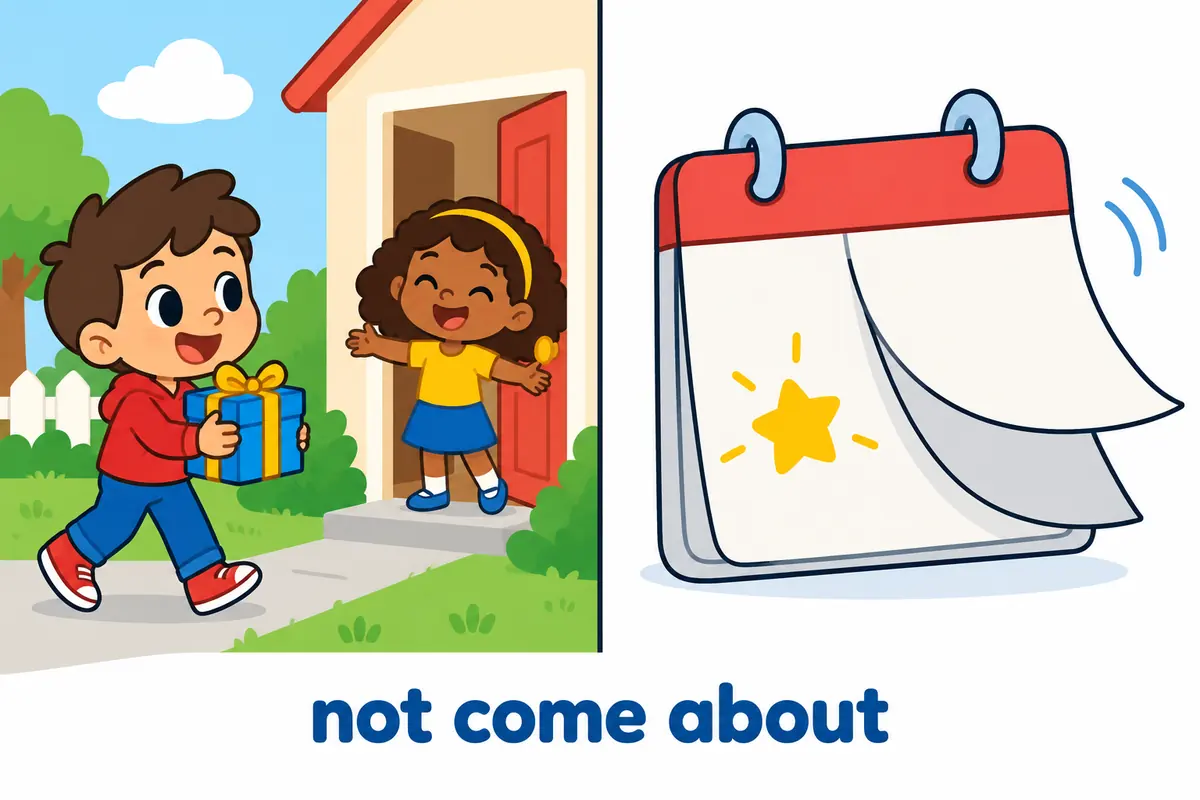
Come around and come about look similar and are easily mixed, but they mean different things. Come around is about visiting, changing your mind, waking up or recurring. Come about means to happen or come to pass, as in how did the delay come about. Only the first of the two can describe a person waking up.
| Attribute | come around | come about |
|---|---|---|
| Core sense | Visit, change view, wake, recur | Happen, come to pass |
| Typical subject | A person, a season, a date | An event, a change, a result |
| Takes an object | No, always intransitive | No, always intransitive |
| Common phrase | come around to an idea | how did this come about |
| Register | Neutral to informal | Neutral to formal |
| Interchangeable | No | No |
Verdict: choose come around for visiting, waking or changing your mind, and come about when the subject is an event that happened.
Is come around or come round correct?
Both forms are correct and mean exactly the same thing. Come around is the usual spelling in American English, and come round is the usual spelling in British English. The choice is a matter of regional habit rather than grammar, and mixing them in one document simply looks inconsistent.
| Region | Usual form | Example |
|---|---|---|
| American English | come around | Drop by, come around any time. |
| British English | come round | Come round for supper. |
| Formal writing | either, kept consistent | The committee came around to the proposal. |
| Spoken English | either, by region | I will come round later. |
Whichever spelling you choose, keep it the same throughout, and do not switch to the lookalike come back, which means to return to a place rather than to visit or recover.
In formal writing, the visit sense is usually replaced by attend or visit, and the change-of-mind sense by accept or be persuaded. A report would say the board accepted the plan rather than the board came around to it, because the phrasal verb sounds conversational. The recovery sense, by contrast, stays acceptable in neutral medical writing, where patients come around is a plain description.
Common collocations with come around
- come around to an idea, the standard change-of-mind phrase.
- come around for dinner, the everyday visit collocation.
- come around again, when the recurrence sense is meant.
- slowly come around, which stresses gradual persuasion.
- hang around and come around, two phrases that share the particle but differ in meaning.
Word forms and grammar of come around
Only the verb changes across the forms, and the particle around stays fixed. The phrase has no passive, because the verb is intransitive. Do not confuse it with turn around, which means to rotate or to improve.
| Form | Part of speech | Example |
|---|---|---|
| come around | base phrase | Please come around soon. |
| comes around | third person singular | Her birthday comes around in May. |
| came around | past and past participle | He came around after the fall. |
| coming around | present participle | She is coming around to the plan. |
| come round | British spelling | They often come round on Sundays. |
| intransitive | grammar note | Never write come around me or come around it. |
Common mistakes with come around
- Incorrect:
Come around me for dinner.Correct: Come around for dinner. Rule: The verb is intransitive, so it takes no direct object. - Incorrect:
She came around the idea slowly.Correct: She came around to the idea slowly. Rule: The change-of-mind sense needs to before the view. - Incorrect:
The delay came around after the storm.Correct: The delay came about after the storm. Rule: Come about means to happen; come around does not. - Incorrect:
He came around back to the office.Correct: He came back to the office. Rule: Come back means to return; come around means to visit or recover.
Practice using come around
Work through the six items, then check the reasoning rather than only the answer.
- Fill the gap: Would you like to ______ around for lunch on Sunday?
- Choose the better word: Nobody knows how the mix-up (came around / came about).
- Correct the error: She came around the new timetable after a long talk.
- Build a sentence: use come around in the recovery sense about an athlete.
- Spot the register: which suits a British novel – come round for tea, or come around for tea?
- Rewrite with the recurrence sense: The holidays seem to arrive faster each year. Use come around.
Answers
- come – the visit sense takes no object.
- came about – the mix-up is an event that happened.
- She came around to the new timetable after a long talk – the to phrase is required.
- Model answer: The sprinter came around on the track after a few seconds.
- come round for tea – the British spelling suits a British novel.
- The holidays seem to come around faster each year – the verb marks recurrence.
The bottom line
Use come around in a sentence when someone visits, changes their mind, wakes up or meets a date that recurs, and remember that the verb is intransitive, so it never takes an object. Two points decide most sentences: the change-of-mind sense needs to before the view, and British writers usually spell the phrase come round. When the subject is an event that happened, come about is the right verb.
Frequently asked questions about come around
What does come around mean when someone faints?
In that context come around means to regain consciousness. A person who has fainted comes around when they wake up again, as in the patient came around within a minute. The same phrase also means to visit or to change your mind, so the surrounding words decide the sense.
Is come around the same as come round?
Yes. Come around and come round mean exactly the same thing and differ only by spelling convention. Come around is usual in American English and come round in British English. Choose one form and keep it consistent throughout a piece of writing.
Does come around take an object?
No. Come around is intransitive, so it never takes a direct object. You say come around for dinner or come around to an idea, never come around me. The preposition that follows depends on the sense, and to marks the change-of-mind meaning.
What is the difference between come around and come about?
Come around means to visit, to change your mind, to wake up or to recur. Come about means to happen, as in how did the change come about. The two share the verb come but have different particles and meanings, so they are not interchangeable in any sentence.