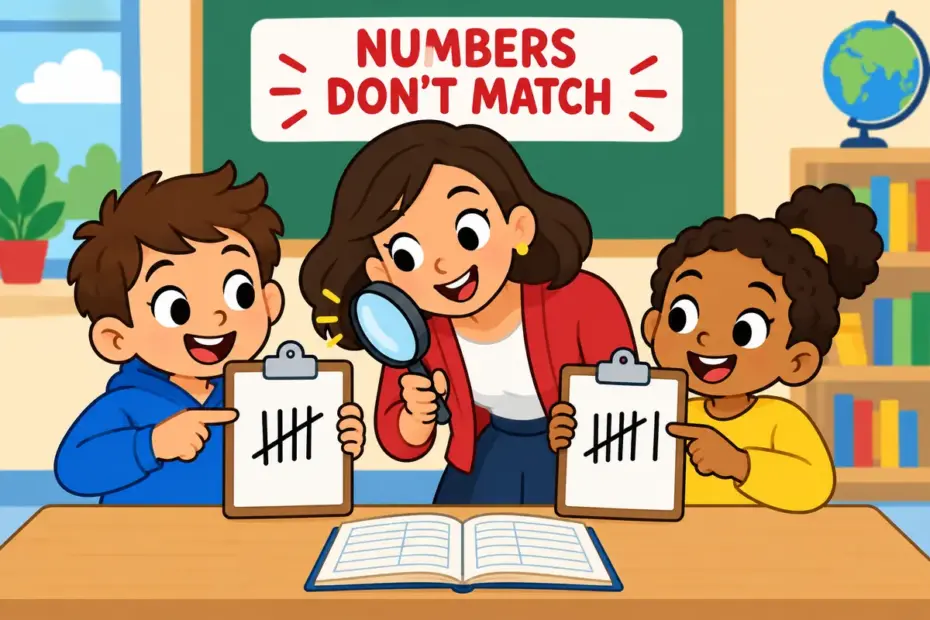
Discrepancy means a difference between two things that ought to match, and it usually signals an error. To use discrepancy in a sentence, name both sides with between and and: “Auditors found a discrepancy between the invoice and the ledger.” The noun works in finance, science and law, where an unexplained mismatch needs an answer.
Discrepancy at a glance
- Discrepancy is a countable noun meaning a difference where a match was expected.
- Its plural is discrepancies, formed by changing the final y to ies.
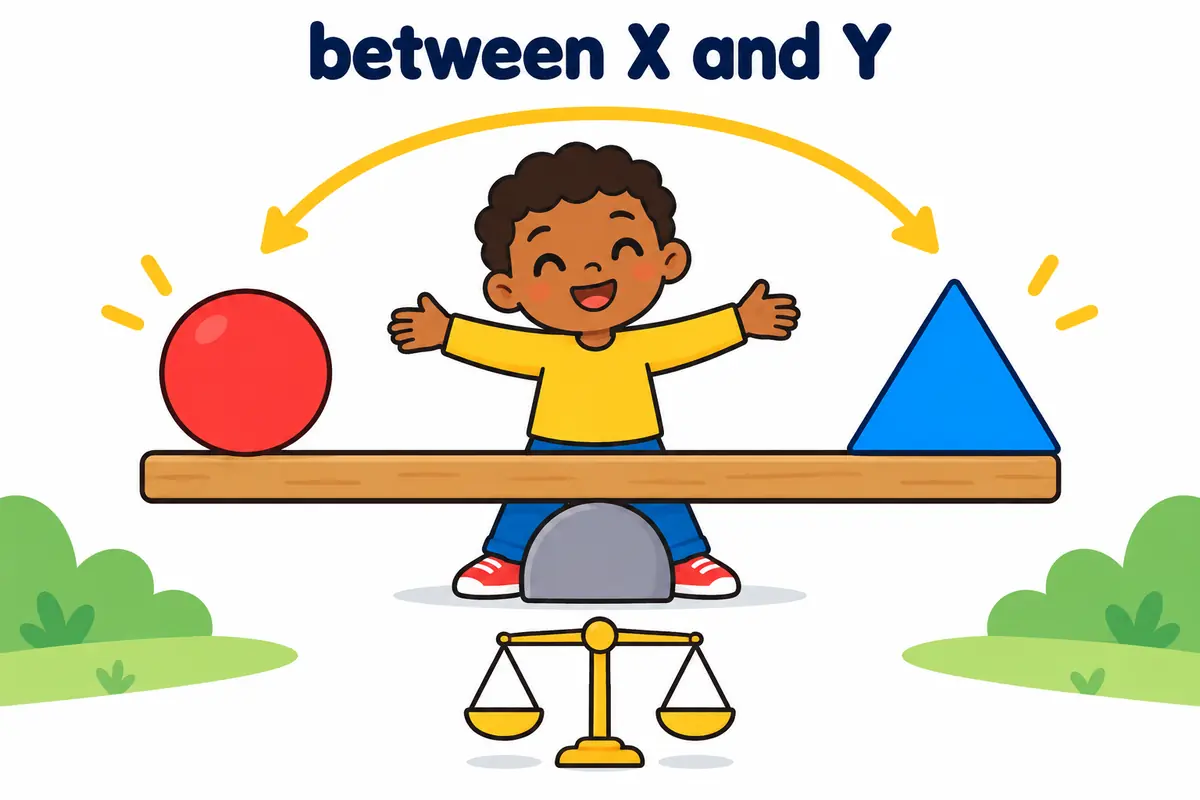
- The dominant pattern is a discrepancy between X and Y.
- It appears most in finance, auditing, science and law.
- The commonest error is writing between X to Y instead of between X and Y.
What does discrepancy mean?
Discrepancy is a noun meaning a difference between two things that should agree, especially one that points to an error. The Cambridge entry for discrepancy records this sense of an unexpected mismatch. It is narrower than difference: every discrepancy is a difference, but a difference is only a discrepancy when the two things were meant to match. Where no match was expected, difference is the accurate and more neutral noun.
| Sense | Plain meaning | Example sentence |
|---|---|---|
| Accounting | A gap between recorded and actual figures | Auditors found a discrepancy between the two ledgers. |
| Science | A mismatch between a measurement and a prediction | The team investigated a discrepancy in the readings. |
| Law | A conflict between two accounts or documents | The defence pointed to a discrepancy in the witness statements. |
Discrepancy carries a mild accusation. It suggests something has gone wrong, so it is a poor fit for a harmless difference such as a gap between two styles. It also does not mean a mistake by itself: a discrepancy is the mismatch you notice, while the error is what caused it.
How do you use discrepancy in a sentence?
Discrepancy needs two sides, and they are normally joined by between and and. The noun is countable, so it takes a or the in the singular and no article in the plural.
| Pattern | Example | What it signals |
|---|---|---|
| a discrepancy between X and Y | There is a discrepancy between the invoice and the order. | The standard, two-sided pattern. |
| a discrepancy in + singular field | The auditor reported a discrepancy in the totals. | The mismatch lives inside one set of figures. |
| discrepancies in + plural field | The review found discrepancies in three accounts. | More than one mismatch in one area. |
| explain or account for the discrepancy | Nobody could account for the discrepancy. | Points to the search for a cause. |
| resolve or reconcile a discrepancy | The clerk reconciled the discrepancy by hand. | Moves from noticing the gap to fixing it. |
When the gap is small and less alarming, mismatch names it without the hint that someone erred. A run of related discrepancies becomes an inconsistency, which stresses that the same rule was broken more than once.
Discrepancy in a sentence: examples across contexts
Discrepancy keeps one meaning across registers but moves from grave to routine. Each sentence below names the two sides or the field where the mismatch was found.
| Context | Example sentence | Why this works |
|---|---|---|
| Accounting | The audit revealed a discrepancy between stock records and the shelf count. | Names both sides and the size of the problem. |
| Science writing | A small discrepancy in the sensor readings delayed publication. | Locates the mismatch inside one data set. |
| Legal writing | The judge noted a discrepancy in the two versions of the contract. | Points to conflicting documents. |
| Workplace email | Please explain the discrepancy in last month’s expenses. | Turns the noun into a polite demand. |
| News report | A discrepancy between the official figures and the survey puzzled economists. | Sets two public sources against each other. |
| Retail | The till showed a discrepancy of four pounds at closing. | Uses an amount to make the gap concrete. |
| Medicine | The scan showed no discrepancy with the earlier diagnosis. | Uses the word for a reassuring match. |
| Academic writing | The paper examines discrepancies across regional datasets. | The plural covers several mismatches at once. |
| Conversation | I spotted a discrepancy between what he said and what he did. | Everyday use of the between pattern. |
The noun almost always names the two sides or the field where the gap appears. A sentence that leaves both sides out, such as there was a discrepancy, forces the reader to guess what failed to match. A single discrepancy in one reading is a deviation from the expected pattern rather than a fault.
Discrepancy vs difference
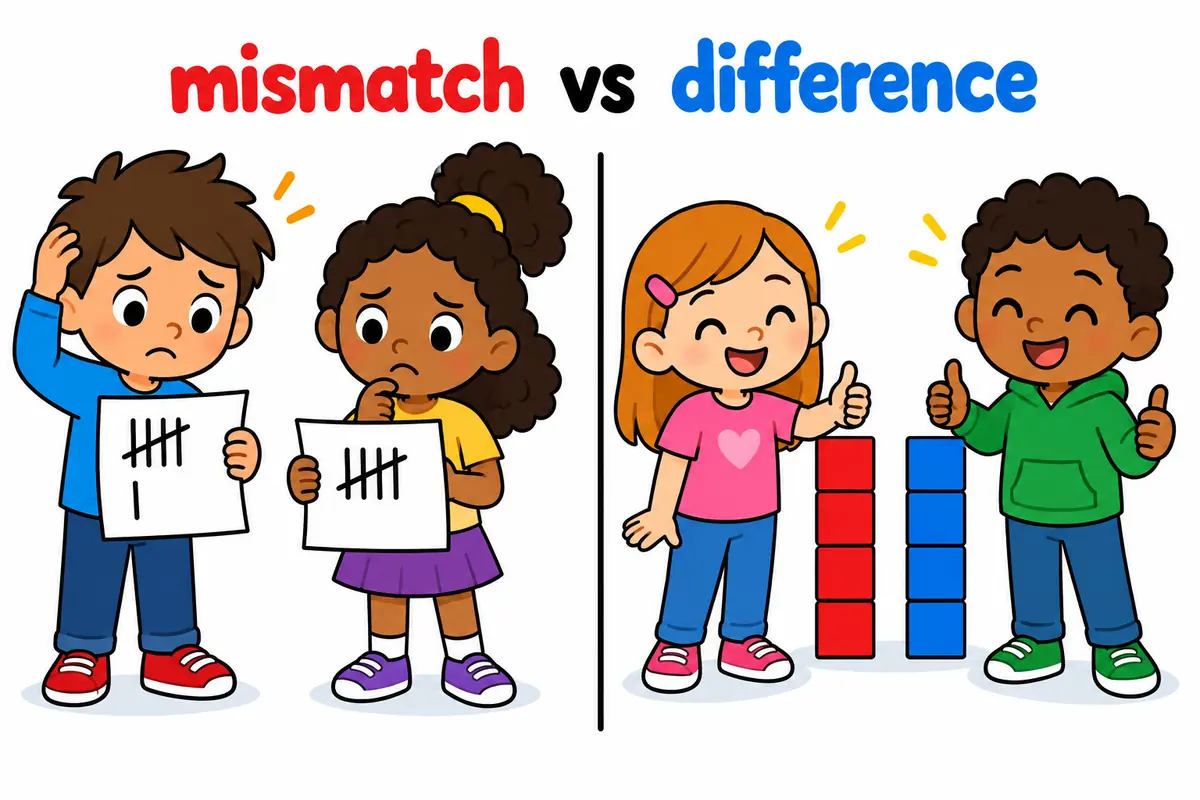
Difference is the general word and discrepancy is the pointed one. A difference is any way two things are unlike, while a discrepancy is a difference that breaks an expected agreement and usually needs explaining.
| Attribute | discrepancy | difference |
|---|---|---|
| Core meaning | A mismatch that should not exist | Any way two things are unlike |
| Expectation | The two should have matched | No expectation either way |
| Tone | Concern, often an error | Neutral |
| Typical field | Accounts, data, records, statements | General |
| Plural | discrepancies | differences |
| Common verbs | account for, explain, reconcile | tell apart, make |
Verdict: reach for discrepancy when two records or accounts were supposed to agree, and for difference when you are simply comparing. If the gap is large and socially uneven, disparity is the sharper noun, because it names an imbalance between groups.
Word forms and grammar of discrepancy
Discrepancy is a noun with a regular plural, and it shares the opening letters of a group of words that mean quite different things. The table keeps them apart.
| Form | Part of speech | Example |
|---|---|---|
| discrepancy | noun, singular | The report explains one discrepancy. |
| discrepancies | noun, plural | The report lists three discrepancies. |
| discrepant | adjective, formal | The two discrepant totals were never reconciled. |
| discreet | adjective, different meaning | She made a discreet enquiry. |
| discretion | noun, different meaning | The matter was left to the manager’s discretion. |
Discreet and discrepancy look alike at the start but mean different things, since discreet means careful and tactful while discrepancy means a mismatch. Confusing the two is the error this word attracts most, and it is worth checking the ending before you publish.
Common mistakes with discrepancy
- Incorrect:
There is a discrepancy between the two accounts to the records.Correct: There is a discrepancy between the two accounts and the records. Rule: Between pairs with and, never to. - Incorrect:
The discrepancy is that the figures differ.Correct: There is a discrepancy between the figures. Rule: Discrepancy is a noun, so name the two sides rather than linking it like an adjective. - Incorrect:
She was discrepancy about the timing.Correct: She was discreet about the timing. Rule: Discrepancy is a noun; the adjective meaning careful is discreet. - Incorrect:
We found many discrepancy in the data.Correct: We found many discrepancies in the data. Rule: Use the plural discrepancies after many. - Incorrect:
The discrepancy caused that the payment failed.Correct: A discrepancy in the reference number caused the payment to fail. Rule: Name where the mismatch was, then state the effect.
Practice using discrepancy
Work through the six items, then read the reason with each answer.
- Fill the gap: The clerk could not explain the ______ between the two receipts.
- Choose the better word: The two houses differ in style, a harmless (difference / discrepancy).
- Correct the error: The audit found a discrepancy between the order to the invoice.
- Build a sentence: use a discrepancy between X and Y about a class register and the count of pupils.
- Spot the register: which belongs in an audit report — There is a discrepancy in the petty-cash records, or The numbers do not match up, sorry?
- Rewrite in the plural: The report described a discrepancy in three accounts. Use discrepancies.
Answers
- discrepancy — the two receipts should have matched.
- difference — no matching was expected between two houses.
- The audit found a discrepancy between the order and the invoice — between pairs with and.
- Model answer: The teacher found a discrepancy between the register and the number of pupils present.
- There is a discrepancy in the petty-cash records — an audit report suits the formal noun.
- The report described discrepancies in three accounts — many mismatches take the plural.
The bottom line
Use discrepancy in a sentence when two records, accounts or statements were expected to agree and do not. Two points decide most sentences: the noun needs both sides, usually joined by between and and, and it hints that an error is waiting to be explained. For a neutral comparison, difference is the better word.
Frequently asked questions about discrepancy
What is the plural of discrepancy?
The plural is discrepancies, formed by changing the final y to ies. It can take many or several, as in the review found several discrepancies. The singular needs an article, so write a discrepancy or the discrepancy, not simply discrepancy when it is the subject.
What is the difference between discrepancy and difference?
A difference is any way two things are unlike, while a discrepancy is a difference between things that should have matched. Discrepancy therefore suggests an error or something to explain. If no agreement was expected, difference is the accurate and more neutral noun.
How do you use discrepancy in a sentence?
Discrepancy normally sits after a discrepancy between and the two sides, as in a discrepancy between the invoice and the ledger. It can also follow in before the field where the gap appears, as in a discrepancy in the totals. It is a countable noun, so it takes an article.
Is discrepancy a formal word?
Discrepancy belongs to formal writing about money, data, law and science. It is at home in an audit report or a research paper, and it can sound stiff in casual talk, where mismatch or the numbers do not match is more natural. The meaning stays the same.
Have you ever encountered a situation where there was a noticeable difference or inconsistency between two things? This difference, often called a “discrepancy,” can occur in various aspects of our lives and is worth exploring further.
A discrepancy refers to a variance or contrast between two or more elements, whether it be in numbers, details, opinions, or outcomes. Identifying and understanding these discrepancies can lead to valuable insights and solutions in many areas, such as finance, data analysis, or communication.
7 Examples Of Discrepancy Used In a Sentence For Kids
- There is a discrepancy between the number of apples and bananas.
- The colors on these two pictures show a discrepancy.
- Find the discrepancy between the big and small shapes.
- The teacher noticed a discrepancy in the counting.
- Let’s look for the discrepancy in the pattern of shapes.
- Can you spot the discrepancy in the sizes of the animals?
- We must solve the discrepancy between the numbers in the boxes.
14 Sentences with Discrepancy Examples
- The discrepancy in the syllabus between the printed version and the online portal caused confusion among the students.
- Students were alarmed by the discrepancy in their exam scores displayed online compared to the marks they had calculated.
- The discrepancy in the textbook prices at different stores made it challenging for students to budget for their academic materials.
- The professor addressed the discrepancy in the assignment deadline mentioned in the syllabus and on the course website.
- The discrepancy in the hostel fees listed by the administration and what was communicated to the students created a lot of chaos.
- It was frustrating for the students to deal with the discrepancy in the class schedule provided by the faculty members.
- The discrepancy in the availability of study materials required for the course forced students to seek alternative resources.
- Students raised concerns about the discrepancy in the grading criteria mentioned in the rubric and what was followed by the teaching assistants.
- The sudden discrepancy in the examination pattern took the students by surprise, affecting their performance.
- The unexpected discrepancy in the library timings posted online and on the notice board caused inconvenience to many students.
- After noticing a discrepancy in the event registration fees, students approached the college administration for clarification.
- The discrepancy in the hostel allotment list puzzled many students who were expecting a specific room assignment.
- A noticeable discrepancy in the internship placements of students from the same department raised concerns about the selection process.
- Students faced a discrepancy in the Wi-Fi connectivity across different parts of the college campus, affecting their online learning experience.
How To Use Discrepancy in Sentences?
To use the word Discrepancy in a sentence, it’s important to understand its meaning and how it can be applied correctly. A discrepancy refers to a difference or inconsistency between two or more things that should be the same or consistent.
When constructing a sentence with the word discrepancy, it is essential to identify the contrasting elements and clearly express the variation between them. For example, “There was a discrepancy between the actual sales figures and the projected revenue for the quarter.”
To effectively incorporate discrepancy into a sentence, follow these steps:
1. Identify the two or more items that are being compared and note the difference between them.
2. Clearly state the nature of the discrepancy—whether it is a numerical difference, a contradiction in information, or a deviation from an expected outcome.
3. Ensure that the sentence structure is clear and the use of the word discrepancy fits logically within the context.
Here are a few more examples of using discrepancy in a sentence:
– “The discrepancy between the two witness testimonies raised doubts about the accuracy of the account.”
– “There is a noticeable discrepancy in the pricing of similar products across different stores.”
By following these guidelines and practicing the use of discrepancy in sentences, you can enhance your communication skills and effectively convey differences or inconsistencies in various contexts.
Conclusion
In conclusion, the sentences with discrepancies highlighted in this article expose inconsistencies or differences between two or more elements. These discrepancies can occur in various forms, such as conflicting data, contradictory statements, or mismatched information within a sentence. Addressing and resolving these discrepancies is crucial for ensuring accuracy and clarity in communication.
By identifying and rectifying sentences with discrepancies, writers can enhance the credibility of their work and prevent misunderstandings. Regular proofreading and fact-checking are essential practices to minimize discrepancies and uphold the integrity of written content. Overall, maintaining consistency and coherency in sentences not only improves the quality of writing but also fosters effective communication with the audience.