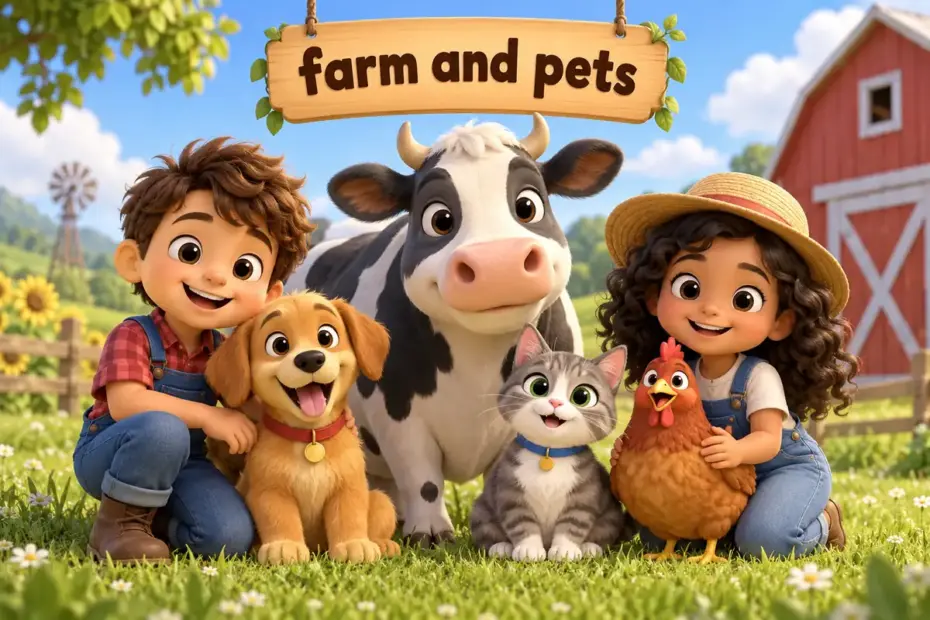
Domestic animals are the species people keep for company, food or work, from dogs and cats to cows and chickens. This guide groups the main names, explains the words for their young and homes, and shows each one in a clear sentence.
Domestic Animals at a glance
- A domestic animal is a species bred and kept by people.
- Common domestic animals include dogs, cats, cows, sheep, goats and chickens.
- They fall into three rough groups: pets, livestock and working animals.
- Most domestic animal names are countable nouns with regular plurals.
- The commonest error is adding -s to sheep, which stays the same in the plural.
What are domestic animals?
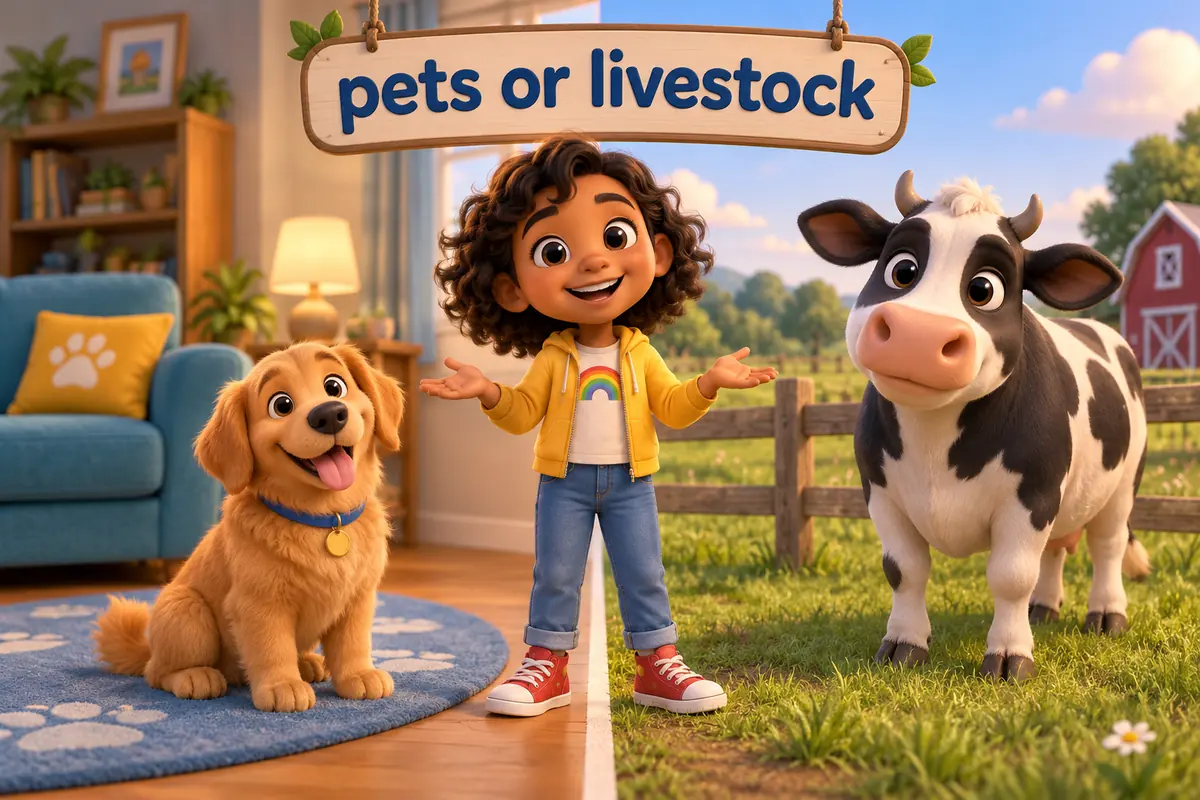
Domestic animals are species that people have bred and kept for many generations, so they live alongside humans and depend on them. People keep them for company, for food such as meat, milk and eggs, and for work such as guarding, herding or carrying loads. A page of domestic animal sentence examples shows the base phrase in use.
| Role | Typical animals | Why people keep them |
|---|---|---|
| Pets | dog, cat, rabbit | Company and friendship. |
| Livestock | cow, sheep, goat, pig | Meat, milk and wool. |
| Poultry | chicken, duck, goose | Eggs and meat. |
| Working animals | horse, donkey | Carrying, pulling and herding. |
| Small farm animals | turkey, guinea fowl | Meat and eggs on small farms. |
Domestication of the main farm species began thousands of years ago, which is why these animals are so used to human company. This guide keeps to the animals a learner meets in daily life, so rare breeds and exotic species are left out.
Common domestic animal names in one list
The table below pairs each name with a young form and a short fact. A wider set of animals that start with a to z extends the vocabulary beyond this list.
| Name | Young animal | Key fact |
|---|---|---|
| Dog | Puppy | A common working and companion animal. |
| Cat | Kitten | Kept mainly for company. |
| Cow | Calf | Kept for milk and meat. |
| Horse | Foal | Used for riding and pulling. |
| Sheep | Lamb | Kept for wool and meat. |
| Goat | Kid | Kept for milk, meat and brush clearing. |
| Pig | Piglet | Kept mainly for meat. |
| Chicken | Chick | Kept for eggs and meat. |
| Duck | Duckling | A water bird kept for eggs and meat. |
| Goose | Gosling | Larger than a duck; guards a farmyard. |
| Rabbit | Kit or bunny | Kept as a pet or small livestock. |
| Donkey | Foal | Carries loads in hilly country. |
| Turkey | Poult | Kept for meat, especially at holidays. |
| Guinea pig | Pup | A small rodent kept as a gentle pet. |
| Water buffalo | Calf | Pulls carts and ploughs wet fields. |
How do you use domestic animal names in a sentence?
The names are ordinary countable nouns, though a few have irregular plurals. The frames below cover the common uses.
| Pattern | Example | What it signals |
|---|---|---|
| a + name | We keep a goat. | One countable animal |
| plural name | The cows are grazing. | More than one animal |
| name + young form | The sheep has a lamb. | A parent and its young |
| name as adjective | a chicken coop | The animal names a place |
| a herd or flock of | a flock of geese | A collective group |
Domestic animal names in a sentence: examples across contexts
The names appear in farm talk, stories and everyday conversation, and a page of domestic sentence examples shows the base word in wider use.
| Context | Example sentence | Why this works |
|---|---|---|
| Classroom | Our teacher listed the animals kept on farms. | The names are the topic. |
| Farm talk | The sheep are in the lower field. | The plural names a group. |
| Conversation | My cat sleeps all afternoon. | The name takes an article. |
| Story | A dog barked at the gate. | The name begins a scene. |
| Vet notice | Keep dogs on leads near the sheep. | The plural names two groups. |
| News feature | Local farmers raised fewer pigs this year. | The plural states a count. |
| Recipe book | Baste the goose while it roasts. | The name names the food. |
| Travel writing | Donkeys carried bags up the narrow track. | The plural is the subject. |
| Poultry farm | The ducks waddle to the pond at noon. | The plural names a group. |
| Pet shop | The kittens are ready for new homes. | The plural takes an article. |
| Country fair | Farmers showed their finest cattle and sheep. | Collective names stand alone. |
| School trip | The children fed the goats and ducks. | The plural follows a verb. |
Which domestic animal is which?
Match the name to the feature or job, and the choice becomes clear.
| Feature or job | Name | Example |
|---|---|---|
| Guards the house | Dog | The dog barked at strangers. |
| Gives milk daily | Cow | The cow grazed near the barn. |
| Gives wool | Sheep | A sheep wandered onto the road. |
| Pulls a plough | Horse | The horse pulled the cart. |
| Lays eggs | Chicken | The chicken laid an egg. |
The clearest clue is the job: guarding points to a dog, milk to a cow, wool to a sheep, and eggs to a hen, so the role often names the animal.
Spelling and word forms of domestic animal names
Most names add -s, but a few change form or stay the same. Collective words name a group rather than a count.
| Form | Part of speech | Example |
|---|---|---|
| dog | noun | The dog is asleep. |
| dogs | plural noun | The dogs are outside. |
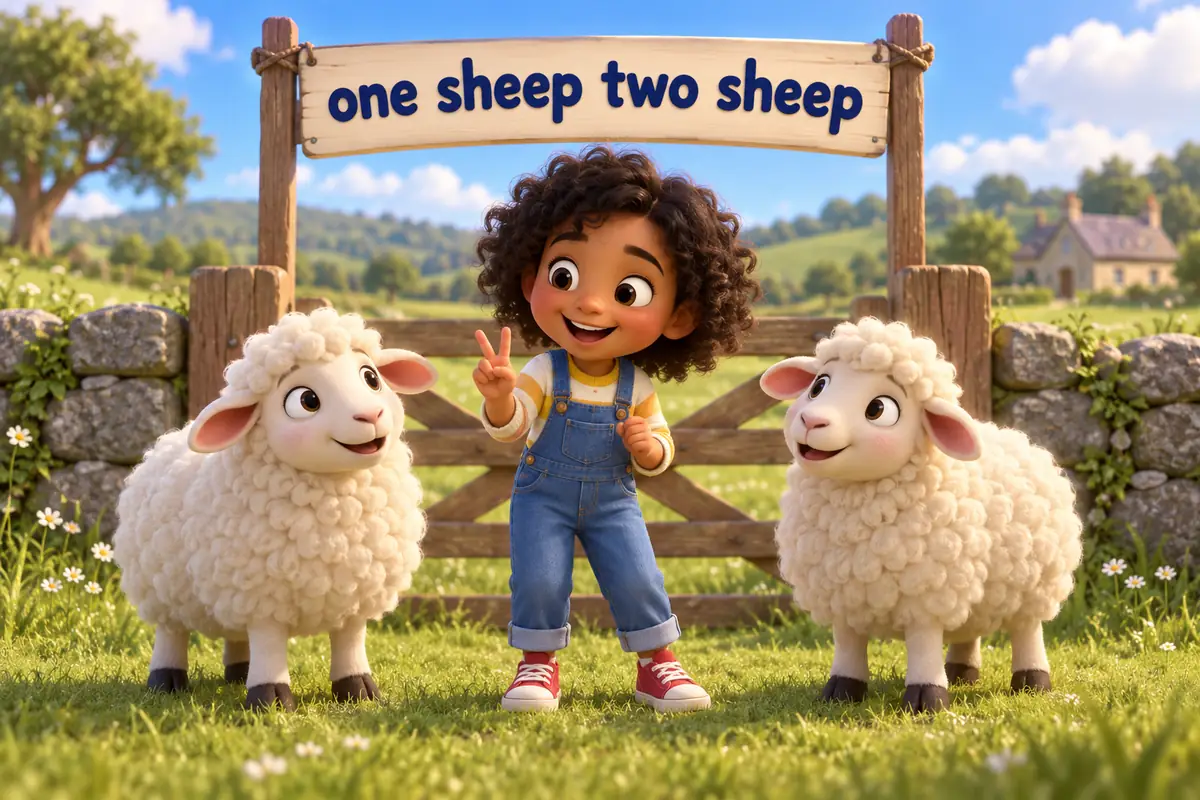
| sheep | noun, same plural | One sheep, two sheep. |
| goose | noun | A goose honked loudly. |
| geese | plural noun | The geese flew over the pond. |
| cattle | collective noun | The cattle are grazing. |
Common mistakes with domestic animal names
Mistake 1: sheep takes a plural -s. Incorrect: two sheeps. Correct: two sheep. Rule: sheep keeps the same form in the plural.
Mistake 2: goose takes a regular plural. Incorrect: two gooses. Correct: two geese. Rule: goose changes to geese, like foot to feet.
Mistake 3: cattle is given a singular. Incorrect: I saw a cattle. Correct: I saw a cow. Rule: cattle is a collective noun with no singular form.
Mistake 4: poultry takes a plural -ies. Incorrect: many poultries. Correct: much poultry. Rule: poultry is a collective noun and stays unmarked.
Mistake 5: domestic is used as a noun. Incorrect: The domestics need food. Correct: The domestic animals need food. Rule: domestic is an adjective; use a noun such as pets or livestock.
Practice using domestic animal names
- Fill in the blank: The ___ laid an egg this morning.
- Choose the better word: A young sheep is a (lamb / calf).
- Correct the error: We saw three sheeps and two gooses.
- Build a sentence: use a flock of with a domestic bird.
- Spot the register: which line suits a vet notice, (a) Watch the dogs, or (b) All dogs must be kept on leads?
- Fill in the blank: A young cow is called a ___.
Answers
- chicken, because a chicken lays eggs.
- lamb, because a young sheep is a lamb.
- We saw three sheep and two geese; both plurals are irregular.
- A flock of geese crossed the farmyard at dawn.
- (b), because a public notice uses formal, precise wording.
- calf, because the young of a cow is a calf.
The bottom line
Domestic animals cover the species people keep as pets, livestock and working animals, from the dog and cat to the cow, sheep and chicken. Treat the names as countable nouns, but keep the irregular forms in mind: sheep stays the same and goose becomes geese. Keep the collective nouns ready too, since a flock and a herd are not interchangeable. Learn each animal with its young form, and the vocabulary grows quickly.
Frequently asked questions about domestic animals
What is the difference between a domestic animal and a wild animal?
A domestic animal is a species bred and kept by people over many generations, while a wild animal lives and feeds without human care. Domestic animals depend on people for food and shelter, and they often behave differently from their wild relatives. A tamed wild animal is not the same as a domestic one.
Is a rabbit a domestic animal?
Yes, the rabbit people keep at home is a domestic animal, bred from wild ancestors over many centuries. Domestic rabbits live as pets or as small livestock in some places. Wild rabbits still exist separately, and the two behave quite differently, even though they belong to the same family.
Which domestic animals are kept for work?
Working domestic animals include the horse and the donkey, which carry riders and loads, and the dog, which guards property and herds other animals. In some regions, oxen pull ploughs and water buffalo work in wet fields. These animals earn their keep through labour rather than through food or company.
Why do we say a flock of geese but a herd of cows?
English uses different collective nouns for different animals. A flock names a group of birds such as geese, chickens or ducks, while a herd names a group of large mammals such as cows, horses or goats. These pairings are fixed by custom, so learners best treat each collective noun as a set phrase.