
Dormant means temporarily inactive, alive or possible but not currently operating. To use dormant in a sentence, describe something that is resting and can still wake: “The seeds lay dormant through the cold months.” The word covers sleeping animals, quiet volcanoes and accounts left unused.
Dormant at a glance
- Dormant is an adjective; its noun form is dormancy.
- It means temporarily inactive, not permanently gone.
- The usual subjects are volcanoes, seeds, animals, accounts and viruses.
- It normally follows linking verbs such as lie, remain, become and stay.
- The commonest error is using dormant when you mean extinct or deleted.
What does dormant mean?
Dormant is an adjective meaning temporarily inactive, or alive but not currently growing, working or erupting. A sleeping volcano and a bulb under winter soil share the first sense; a bank account and a virus share the second. The Cambridge entry for dormant records both, and the word always implies that activity could return.
| Sense | Plain meaning | Example sentence |
|---|---|---|
| Resting but alive | An animal or plant sleeping through hard conditions | The hedgehog stayed dormant until March. |
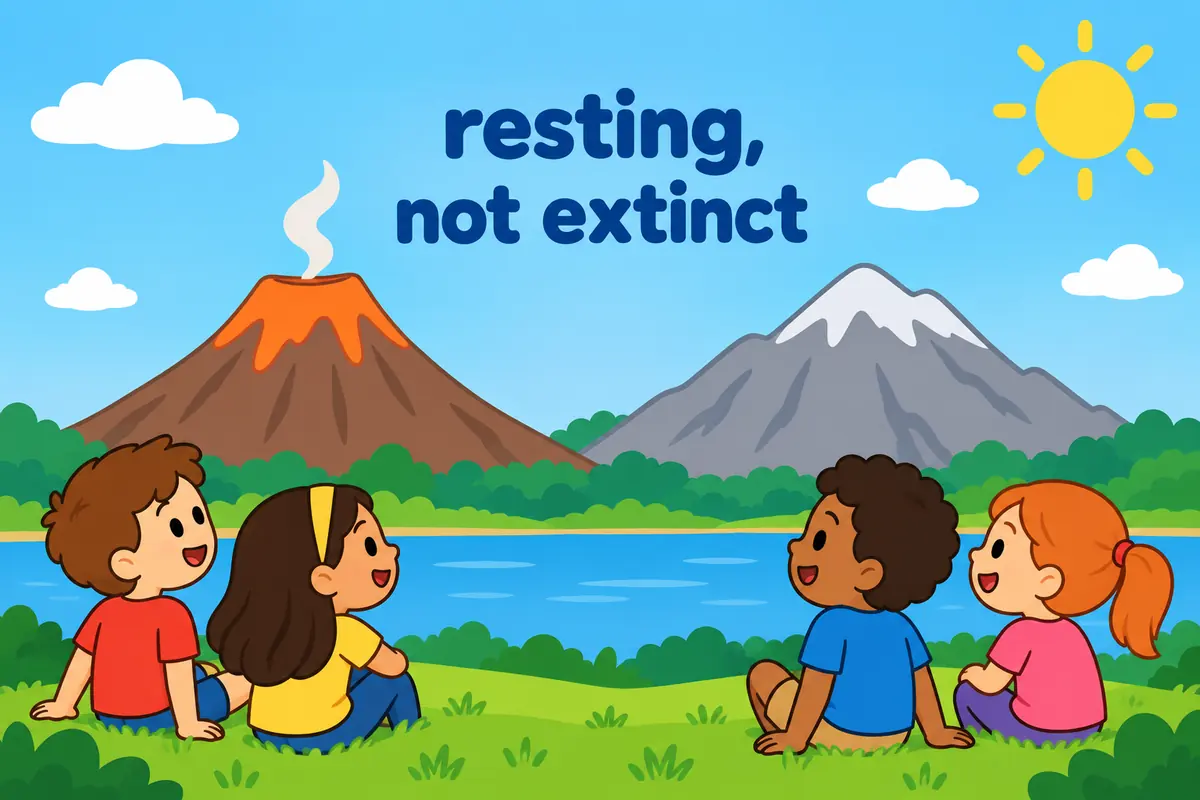
| Quiet but not extinct | A volcano that is not erupting now | The dormant peak has not erupted for a century. |
| Inactive but revivable | An account, club or illness not currently active | The club lay dormant for three years. |
One limitation matters here. Dormant does not mean finished or removed. An extinct volcano will never erupt and a deleted file is gone, but a dormant one can return, so using dormant for something permanently overstates its chances. Where nothing can come back, quiescent and gone are the honest words.
How do you use dormant in a sentence?
Dormant almost always follows a linking verb rather than sitting before a noun. The patterns below cover the everyday uses, and the verb choice carries the meaning: lie suggests rest, become suggests a change, and remain stresses how long it has lasted.
| Pattern | Example | What it signals |
|---|---|---|
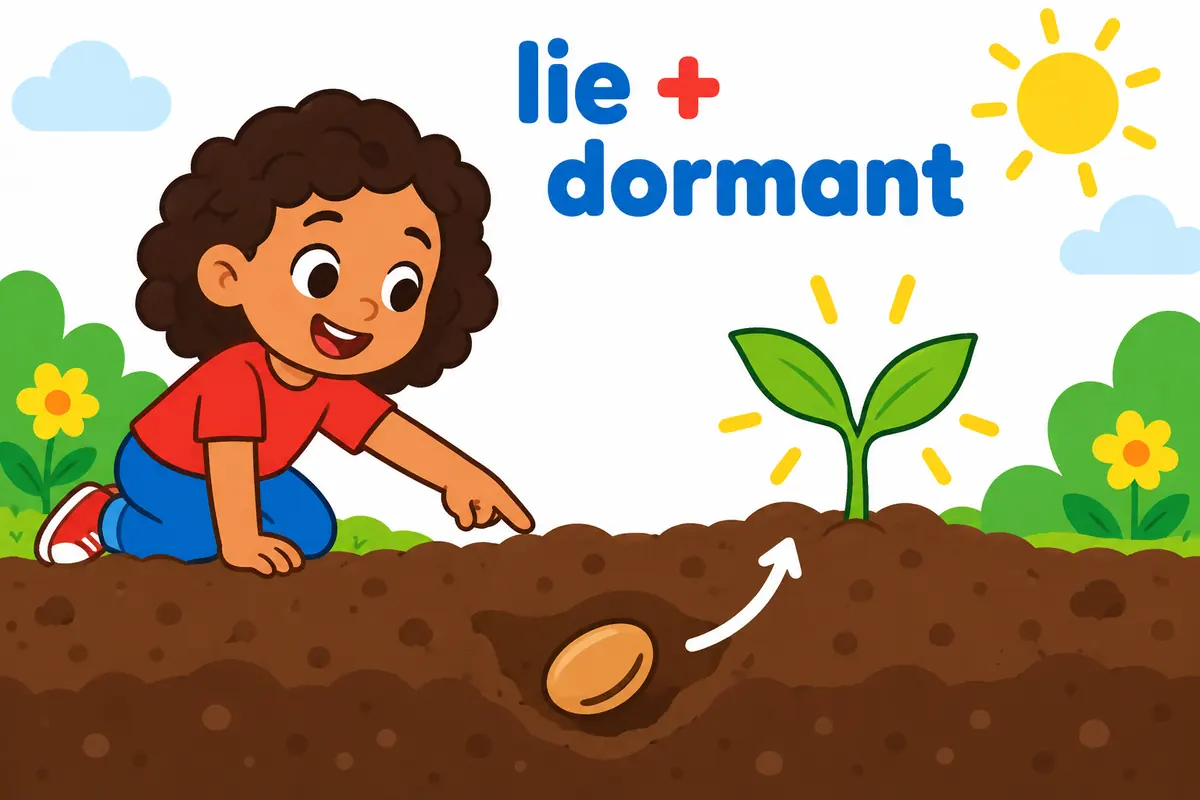
| lie + dormant | The bulbs lie dormant under the frost. | Rest with the option of waking. |
| remain / stay + dormant | The account remained dormant for a decade. | Emphasises the length of inactivity. |
| become / go + dormant | The volcano became dormant after the last flow. | Marks the change into inactivity. |
| dormant + noun | Officials tracked the dormant deposits. | Attributive use in formal or technical writing. |
| seem + dormant | The club seemed dormant until the new term. | An impression rather than a settled fact. |
Dormant in a sentence: examples across contexts
Dormant keeps the same meaning across registers, but the subject changes with the setting. These sentences move from a garden to a finance desk, and each one makes clear that the pause is temporary.
| Context | Example sentence | Why this works |
|---|---|---|
| Classroom | The bean seeds stayed dormant in the dark cupboard until we watered them. | A concrete experiment shows the pause ending. |
| Gardening | Keep the bulbs dormant in a cool shed over the summer. | Instructions pair the adjective with a clear condition. |
| Science writing | The virus can remain dormant in nerve tissue for years. | The subject and the time frame carry the medical sense. |
| Geography | The dormant volcano still feeds hot springs on its slopes. | Contrasts visible quiet with hidden activity. |
| Finance | The bank closed the dormant account after two years. | Names the institution acting on the inactive item. |
| Business email | We revived a dormant supplier relationship last quarter. | Shows the state being reversed, which fits the word. |
| News report | A dormant land dispute flared again after the boundary survey. | Signals that the issue never truly ended. |
| Academic prose | The gene lies dormant until a specific trigger switches it on. | Precise mechanism language keeps the claim technical. |
| Conversation | My gym membership has been dormant since January. | The everyday register still respects the temporary sense. |
The financial and medical rows show the same idea from opposite ends: in one, a thing can be woken by a person, and in the other by a trigger the person cannot see.
Dormant vs inactive, idle and latent
Dormant sits beside three adjectives that all describe a pause, and each stresses something different. Inactive members simply are not taking part, idle machines are ready but unused, and latent talent is present but not yet shown.
| Attribute | dormant | inactive | idle |
|---|---|---|---|
| Core meaning | Resting, able to wake | Not currently active | Ready but unused |
| Implies a natural cycle | Often, as with seeds and seasons | Rarely | No |
| Typical subject | Volcano, seed, account, virus | Member, account, rule | Machine, engine, worker |
| Suggestion of blame | None; the rest is natural | Mild; something should act | Often negative; wasted capacity |
| Register | Scientific and formal | Neutral, everyday | Technical and workplace |
Verdict: choose dormant when the pause is natural and reversible, inactive when you simply mean not taking part, and idle when something is standing ready but producing nothing.
Word forms and grammar of dormant
Dormant is a plain adjective with a small family. The noun dormancy is common in science, while the adverb is rare enough that many learners never meet it.
| Form | Part of speech | Example |
|---|---|---|
| dormant | adjective | The bear was dormant all winter. |
| dormancy | noun | The seeds broke dormancy in spring. |
| dormantly | adverb, rare | The engine sat dormantly in the shed. |
| nondormant | adjective, technical | Nondormant seeds sprout without a cold spell. |
The noun beats the adverb by a wide margin, so write the seeds lay dormant or the seeds were in dormancy rather than reaching for dormantly.
Common mistakes with dormant
- Incorrect:
The volcano is dormant, so it can never erupt.Correct: The volcano is dormant, so it may erupt again. Rule: Dormant means a pause, while extinct means finished for good. - Incorrect:
The club is dormant since 2019.Correct: The club has been dormant since 2019. Rule: A state continuing from the past takes has been, not the simple present. - Incorrect:
She is dormant and never finishes her work.Correct: She is idle and never finishes her work. Rule: Dormant suits natural cycles, not a person who is simply lazy. - Incorrect:
We deleted the dormant file from the drive.Correct: We deleted the old file from the drive. Rule: A deleted file is gone, not dormant, since nothing can wake it.
Practice using dormant
Work through the six items, then check the reason beside each answer rather than the key alone.
- Fill the gap: The seeds ______ dormant under the snow until spring.
- Choose the better word: After years of silence, the club was (dormant / extinct) but ready to restart.
- Correct the error: The volcano is dormant, so it will never erupt again.
- Build a sentence: use remain dormant about a savings account nobody uses.
- Spot the register: which belongs in a science report — The virus remains dormant in nerve tissue, or The virus is having a nap?
- Rewrite with the noun: The seeds were dormant all winter. Use dormancy instead.
Answers
- lay — lie dormant is the fixed pattern, and the past tense of lie is lay.
- dormant — the club can restart, whereas extinct would mean it is finished.
- The volcano is dormant, so it may erupt again — dormant keeps the possibility open.
- Model answer: The savings account remained dormant for eight years.
- The virus remains dormant in nerve tissue — a report avoids slang and keeps the technical pattern.
- The seeds were in dormancy all winter — the noun needs a prepositional phrase.
The bottom line
Use dormant in a sentence for something that is resting but still able to return, and let a linking verb such as lie, remain or become carry it. The two nuances that decide most sentences are these: dormant keeps the door open on activity, while extinct and deleted close it, and the word suits natural cycles better than a person who is merely lazy. When nothing can come back, choose a plainer word instead.
Frequently asked questions about dormant
Is dormant a negative word?
Dormant is neutral rather than negative, because it describes a natural pause rather than a failure. A dormant volcano and a dormant account are simply not active for now. The word only sounds critical when a person should be doing something and is not, as in a dormant committee.
How long can something stay dormant?
There is no fixed limit, and that is the point of the word. Seeds can stay dormant for years, a virus can wait in the body for decades, and an account can sit unused indefinitely. The adjective only promises that activity is possible, never when it will resume.
Can people be described as dormant?
People can be, but the word sounds odd for a person who is simply lazy. It fits a group or an organisation better, as in the society lay dormant, and it can describe an ability that is present but unused. For an individual, inactive or idle usually reads more naturally.
What is the noun form of dormant?
The noun is dormancy, and it names the state itself rather than the thing in it. Scientists write about seed dormancy and the breaking of dormancy, while everyday writers say the club was in dormancy. The adverb dormantly exists but is rare enough to avoid.
Ever wondered what exactly constitutes a “dormant” state? Look no further for a clear explanation. When something is described as dormant, it means that it is currently in a state of temporary inactivity or dormancy.
This term is often used to convey that something is not actively engaged in its usual functions or displaying its typical characteristics. In various contexts, the dormant status implies a period of rest, suspension, or hibernation before resuming normal activity or development.
7 Examples Of Dormant Used In a Sentence For Kids
- The bear is dormant in its cave during winter.
- The flower bulbs are dormant in the ground until spring.
- When animals hibernate, they become dormant.
- Some volcanoes may look peaceful, but they are actually dormant.
- The seeds lie dormant in the soil until it’s time to grow.
- The caterpillar may seem dormant, but it’s preparing to become a butterfly.
- During the dry season, some plants become dormant to conserve energy.
14 Sentences with Dormant Examples
- The student club has been *dormant for months due to lack of leadership.*
- I left my project dormant for too long and now I’m struggling to catch up.
- It’s important to keep your creativity from lying dormant by constantly exploring new ideas.
- The library was almost empty, with most students’ energy seemingly dormant.
- After a long semester, I find myself in a dormant state of mind, needing a break.
- Dormant opportunities can be found in unexpected places, so always keep an eye out.
- The student’s potential was lying dormant until they found the right mentor.
- I woke up feeling dormant but some exercise helped me get energized.
- The college’s old traditions have remained dormant for years, waiting to be revived.
- My interest in the subject lay dormant until I discovered its real-world applications.
- The campus garden has been dormant during the winter months, but will soon bloom with new life.
- Despite feeling dormant, I managed to finish all my assignments before the deadline.
- The student council elections sparked new interest in a previously dormant student body.
- I realized my passion for volunteer work had been lying dormant until I joined a charity organization.
How To Use Dormant in Sentences?
To use the word Dormant effectively in a sentence, consider its meaning as “inactive” or “lying asleep.” Here are some tips for beginners on how to incorporate Dormant into their writing:
-
Meaning: Before using Dormant, make sure you understand its definition. It is commonly used to describe something that is temporarily inactive or asleep.
-
Context: Choose your sentence context carefully. Dormant is often used when referring to things like volcanoes, bacteria, or bank accounts that are temporarily inactive.
-
Placement: Place Dormant in your sentence where it best fits grammatically. It can be used as an adjective to describe a noun (e.g., “The volcano lay dormant for centuries.”).
-
Variety: Try to vary your sentence structures when using Dormant. This will help you practice incorporating it smoothly into different types of writing.
-
Practice: The best way to become comfortable with using Dormant is through practice. Write sentences using the word in different contexts to improve your understanding and mastery.
Remember, using new vocabulary like Dormant may feel challenging at first, but with regular practice, you will become more confident in incorporating it into your writing effectively.
Conclusion
In conclusion, the examples of sentences with the keyword “dormant” illustrate its meaning as something temporarily inactive or at rest. Used to describe periods of inactivity or slumber, such as dormant volcanoes, businesses, or talents, the term conveys a sense of potential waiting to be awakened. By highlighting scenarios where dormancy signifies a state of readiness or untapped potential, these sentences emphasize the latent power inherent in seemingly inactive entities.
Overall, the sentences featuring the word “dormant” shed light on the idea that stillness does not equate to permanence or lack of vitality. Instead, they suggest that what appears dormant may in fact be a precursor to growth, transformation, or renewed activity. By recognizing the transient nature of dormancy, these examples encourage a perspective that values the hidden possibilities within seemingly quiet or motionless phases of life.


