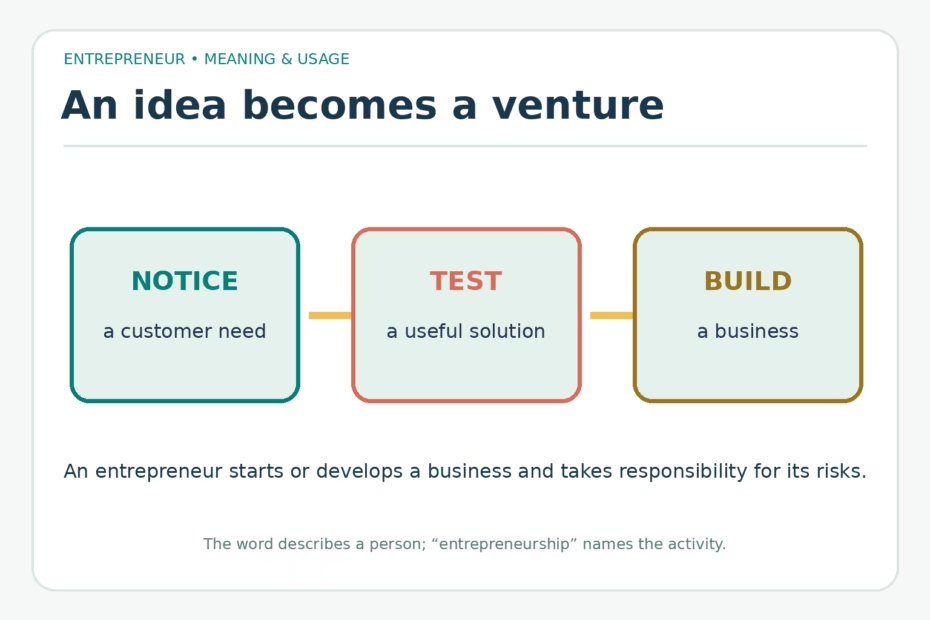
An entrepreneur is a person who starts or develops a business, organizes its work and resources, and takes responsibility for the risks involved. In a sentence, use it as a countable noun: an entrepreneur or two entrepreneurs. It is a common noun, so it is usually lowercase except at the start of a sentence or as part of a proper name.
- Meaning: a person who starts or runs a business venture, often by recognizing an opportunity and accepting uncertainty.
- Related words: entrepreneurial (adjective) and entrepreneurship (the activity or field).
- Example: “The entrepreneur tested a smaller version of the service before opening a second location.”
What does “entrepreneur” mean?
An entrepreneur is someone who starts or develops a business and takes on the work and risk involved. The word often suggests initiative: an entrepreneur spots a need or opportunity, brings together resources, and tries to create something customers will use. Cambridge Dictionary’s definition emphasizes making money by starting a business, especially when it involves identifying an opportunity and taking risks. In everyday use, entrepreneurs may run a small local company, build a technology startup, or create a social enterprise.
The word names a person. Entrepreneurship refers to the activity, process, or field of starting and developing ventures. Entrepreneurial describes a quality, action, or mindset associated with that work. For example: The entrepreneur studied entrepreneurship and took an entrepreneurial approach to testing the idea.
How to use “entrepreneur” in a sentence
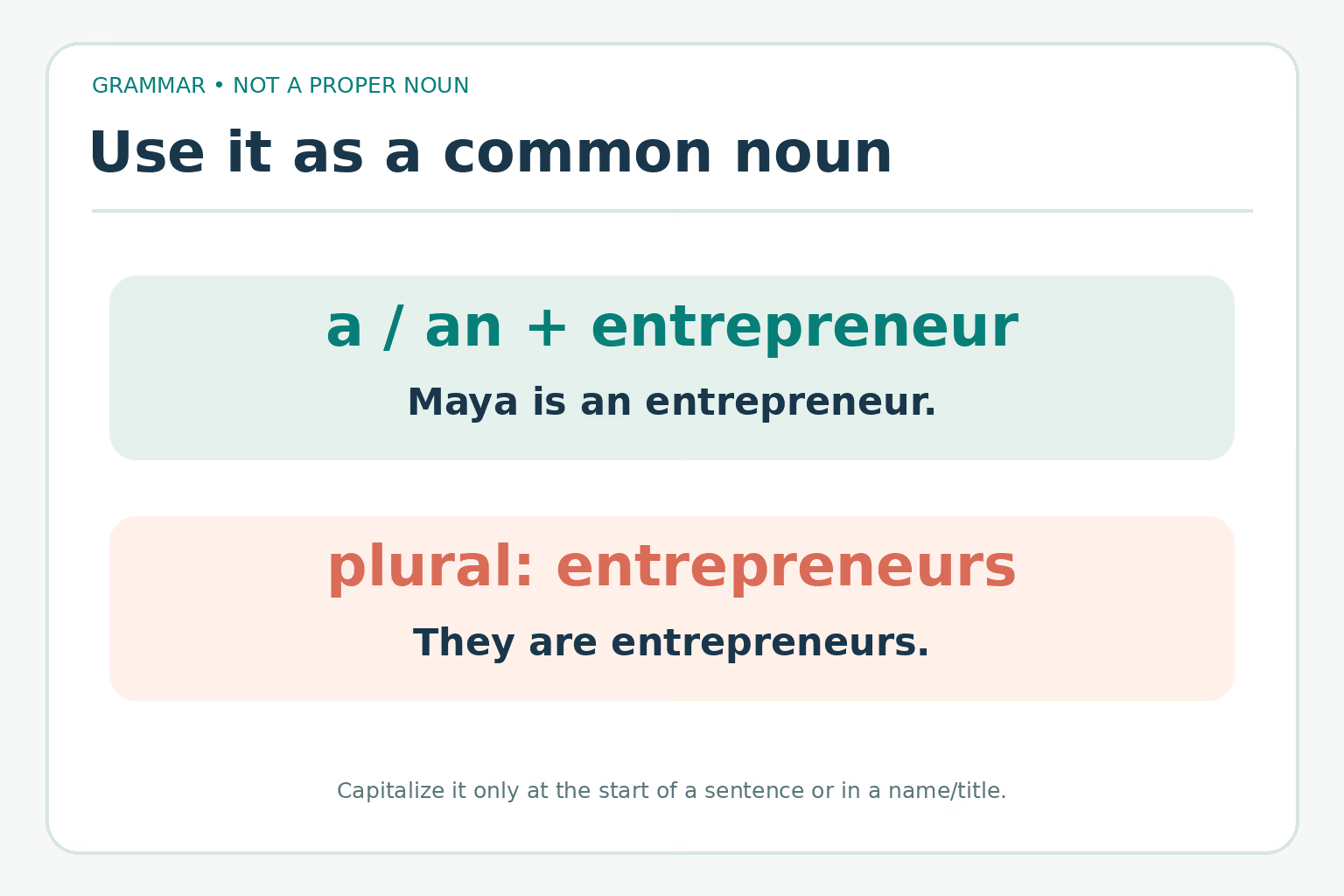
Entrepreneur is a countable noun. Use a or an before it when you mean one person: She is an entrepreneur. Because the first sound in entrepreneur is a vowel sound, an entrepreneur is the usual form. The plural is entrepreneurs: Several entrepreneurs shared advice at the event.
It is a common noun, not a proper noun. Write it in lowercase in the middle of a sentence: The entrepreneur opened a neighborhood bakery. Capitalize it when it begins a sentence or appears in an official name or title. The original examples below include capitalized instances at sentence beginnings; the term itself does not need capitals wherever it appears.
Sentence examples with “entrepreneur”
- Starting a business: “The entrepreneur opened a repair shop after noticing a shortage of local services.”
- Testing an idea: “An entrepreneur can learn a great deal by offering a small pilot first.”
- Food business: “The entrepreneur turned a weekend baking project into a neighborhood café.”
- Technology: “A young entrepreneur designed an app to help volunteers coordinate deliveries.”
- Social enterprise: “The entrepreneur built a company that hires and trains returning citizens.”
- Plural: “Three entrepreneurs presented their plans to the community lenders.”
- With an adjective: “Her experienced mentor helped the aspiring entrepreneur set priorities.”
- At sentence start: “Entrepreneurs often revise a product after hearing from early customers.”
- Business planning: “The entrepreneur researched local demand before signing a lease.”
- Risk and uncertainty: “Each entrepreneur weighed the potential benefit against the cost of failure.”
- Creative work: “A fashion entrepreneur tested a limited collection before ordering more materials.”
- Family business: “My aunt became an entrepreneur when she began offering bookkeeping services.”
- In a question: “What problem does the entrepreneur hope to solve?”
- Related adjective: “The team admired his entrepreneurial approach to solving a familiar problem.”
- Related noun: “Entrepreneurship can involve persistence, planning, and learning from customers.”
What entrepreneurs do
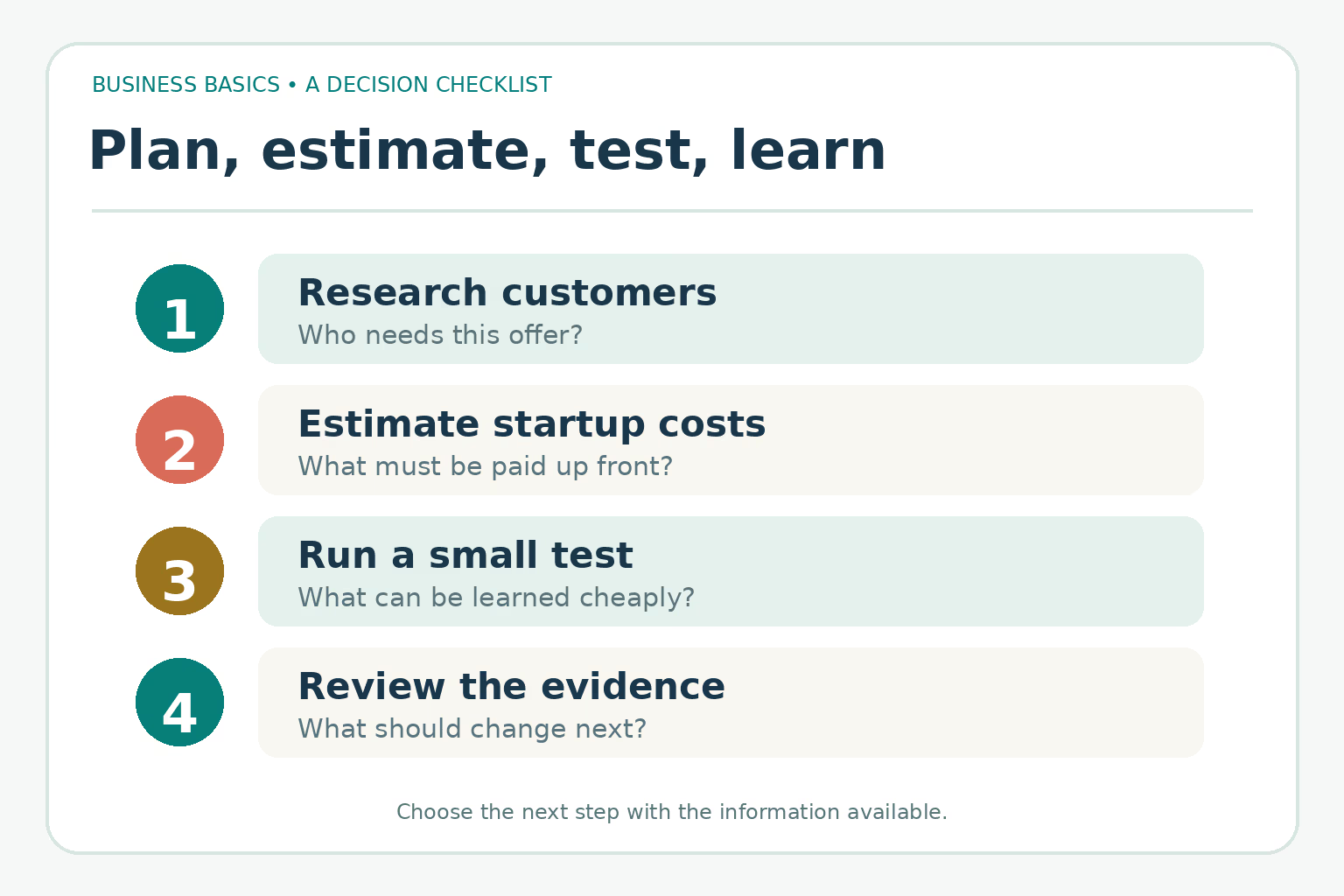
There is no single path into entrepreneurship, and the day-to-day work depends on the type and size of a venture. A person may research customer needs, shape an offer, estimate expenses, find suppliers, set prices, manage cash flow, and communicate with customers. A founder might do much of this personally at first, while a larger business has employees or outside specialists responsible for different tasks.
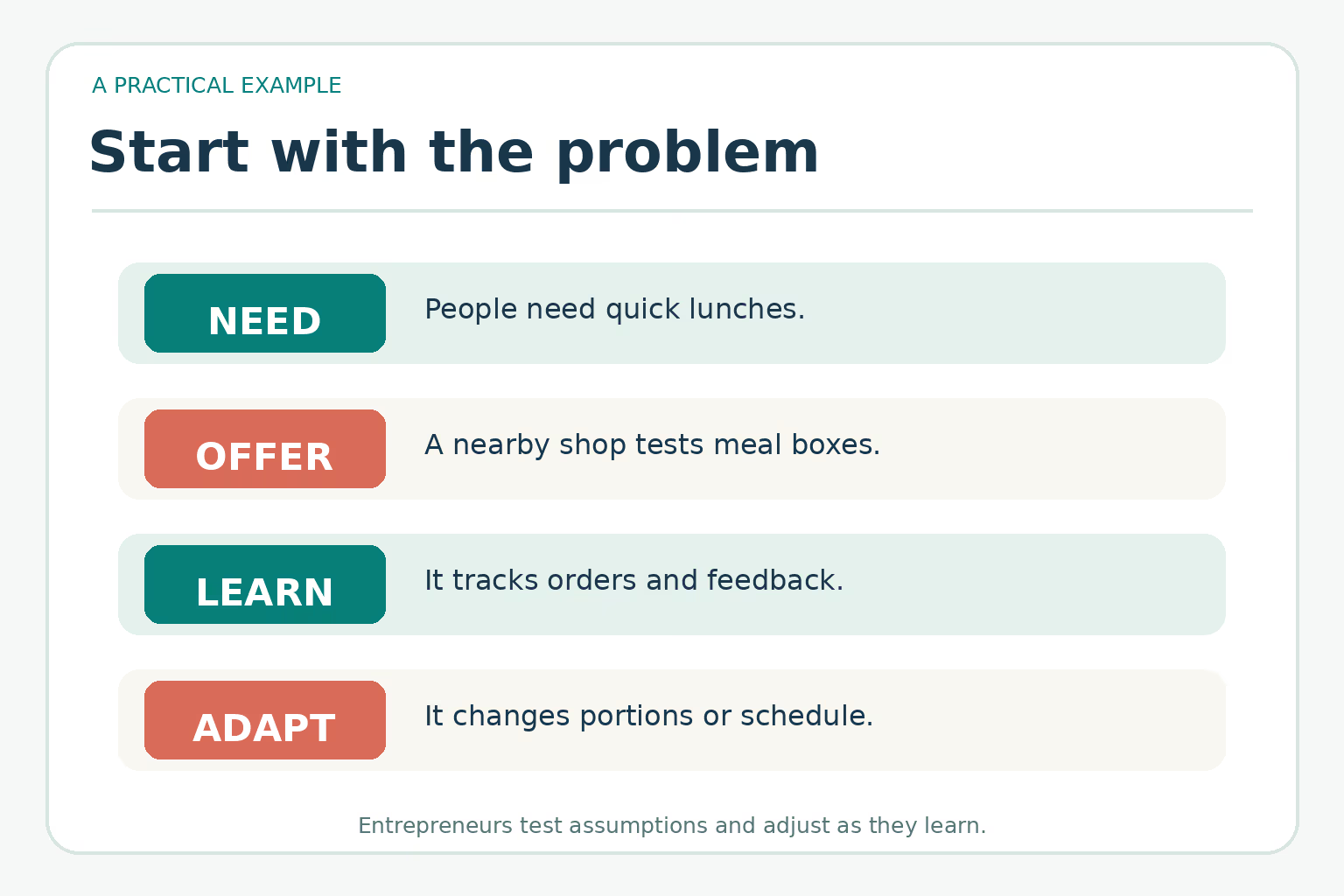
A practical first step is to check whether a real group of people wants the proposed product or service. The U.S. Small Business Administration’s planning guidance describes market research as a way to understand consumer behavior and economic trends and to improve a business idea. An entrepreneur can use interviews, surveys, competitor research, or a small pilot to gather useful evidence. The method should fit the decision and the available time and budget.
Planning also means estimating what it will cost to begin and operate. Rent, equipment, permits, insurance, inventory, software, wages, and marketing may all matter, depending on the business and location. The SBA’s launch guidance recommends calculating startup costs and notes that costs can vary by location. A careful estimate helps an entrepreneur decide what to fund now, what can wait, and whether the plan needs adjustment.
“Entrepreneur” vs. “business owner”
The terms overlap. A business owner is anyone who owns a business. Entrepreneur often highlights starting or developing a venture, pursuing an opportunity, or taking a calculated risk. A person can be both: a shop owner who buys an established store is a business owner, while someone who launches a new service may be described as an entrepreneur. These are tendencies in usage, not strict categories; context determines which description fits.
Common mistakes to avoid
- Capitalizing the word everywhere: use lowercase entrepreneur in the middle of an ordinary sentence.
- Using “a entrepreneur”: write an entrepreneur, because the word begins with a vowel sound.
- Confusing the related forms: a person is an entrepreneur; the activity is entrepreneurship; a characteristic or approach is entrepreneurial.
- Assuming every entrepreneur runs a technology startup: entrepreneurs work in many industries and at many scales, from solo services to growing companies.
- Calling any risk-taking action entrepreneurship: the word usually relates to creating or developing a business venture, rather than risk alone.
Frequently asked questions
What is an entrepreneur in simple words?
An entrepreneur is a person who starts or develops a business and takes responsibility for making it work.
Is “entrepreneur” capitalized?
Usually no. It is a common noun, so write it lowercase except at the beginning of a sentence or in a proper name or title.
What is the plural of “entrepreneur”?
The plural is entrepreneurs.
What is the difference between an entrepreneur and entrepreneurship?
An entrepreneur is a person. Entrepreneurship is the activity or field of starting and developing business ventures.
Can a small business owner be an entrepreneur?
Yes. The terms overlap, especially when the owner started or developed the venture. “Business owner” focuses on ownership; “entrepreneur” often emphasizes building or pursuing an opportunity.
Sources and usage note
Cambridge Dictionary’s entry for entrepreneur supports the core meaning and its association with opportunity and risk. The U.S. Small Business Administration explains business planning and market research and offers guidance on launching a business and estimating startup costs. The example sentences in this article are original and illustrate common English usage.

Do you know what an entrepreneur is? An entrepreneur is a person who starts their own business and takes on financial risks in the hope of making a profit. These individuals are often known for their innovation, determination, and the ability to turn their ideas into successful ventures.
7 Examples Of Entrepreneur Used In a Sentence For Kids
- Entrepreneur is someone who starts their own business.
- An entrepreneur works hard to make their business successful.
- My uncle is an entrepreneur who owns a bakery.
- Do you want to be an entrepreneur when you grow up?
- An entrepreneur comes up with new ideas for their business.
- The entrepreneur sold handmade crafts at the market.
- We can learn a lot from successful entrepreneurs.
14 Sentences with Entrepreneur Examples
- Entrepreneur is often seen as a role model for many college students in India.
- Many college students in India aspire to become a successful entrepreneur after graduation.
- Attending a workshop conducted by a successful entrepreneur can be very inspiring for college students.
- Joining a startup accelerator program can provide valuable experience for aspiring entrepreneurs in college.
- College students with innovative ideas can participate in entrepreneurship competitions to showcase their skills.
- Networking with other like-minded individuals can help college students in India connect with potential partners and investors for their entrepreneurial ventures.
- Taking a course in entrepreneurship can provide college students with the necessary knowledge and skills to start their own business.
- A successful entrepreneur can serve as a mentor to college students seeking guidance in starting their own businesses.
- College students can gain practical experience by interning at a startup led by a seasoned entrepreneur.
- Attending a guest lecture by a renowned entrepreneur can offer valuable insights to college students interested in the field.
- Participating in a hackathon can help college students develop their problem-solving skills, which are essential for entrepreneurship.
- College students can seek funding for their entrepreneurial projects through pitch competitions and crowdfunding platforms.
- Balancing academics with entrepreneurship endeavors can be challenging for college students, but it can also be a rewarding experience.
- Joining an entrepreneurship club on campus can provide college students with a supportive community of like-minded individuals.
How To Use Entrepreneur in Sentences?
Entrepreneur is a noun that refers to a person who starts and operates a business, taking on financial risks in the hope of making profits. In a sentence, entrepreneur is used to describe someone who is actively engaged in the creation of a new venture or project. For example, “Sarah is a successful entrepreneur who founded her own catering company.”
When using entrepreneur in a sentence, make sure to capitalize the word at the beginning as it is a proper noun. It is important to place it in the appropriate context, such as discussing someone’s occupation or role in business. Entrepreneur can also be used in plural form, “entrepreneurs,” when referring to a group of individuals who are involved in business activities.
To enhance your sentence structure, consider incorporating adjectives like “successful,” “innovative,” or “aspiring” before entrepreneur to provide more detail about the individual being described. This will paint a clearer picture for the reader about the qualities or characteristics of the person in the sentence.
By following these tips and guidelines, you can effectively use entrepreneur in a sentence to convey the idea of someone who takes risks to build and manage a business for financial gain.
Conclusion
In conclusion, a successful entrepreneur is someone who takes risks, seizes opportunities, and creates value through innovation and hard work. They are ambitious individuals who have a vision for their business and are willing to put in the effort to see it through. The journey of an entrepreneur is filled with challenges, setbacks, and triumphs, but their determination and resilience are key traits that help them navigate the uncertainty of the business world.
From creating a business plan to securing funding, building a brand, and adapting to market changes, entrepreneurs wear many hats and must be adaptable and strategic in their decision-making. Their ability to think outside the box, stay motivated, and learn from failures ultimately sets them apart in the world of business. Overall, entrepreneurship requires a unique combination of skills, passion, and perseverance that contribute to the success of these driven individuals.


