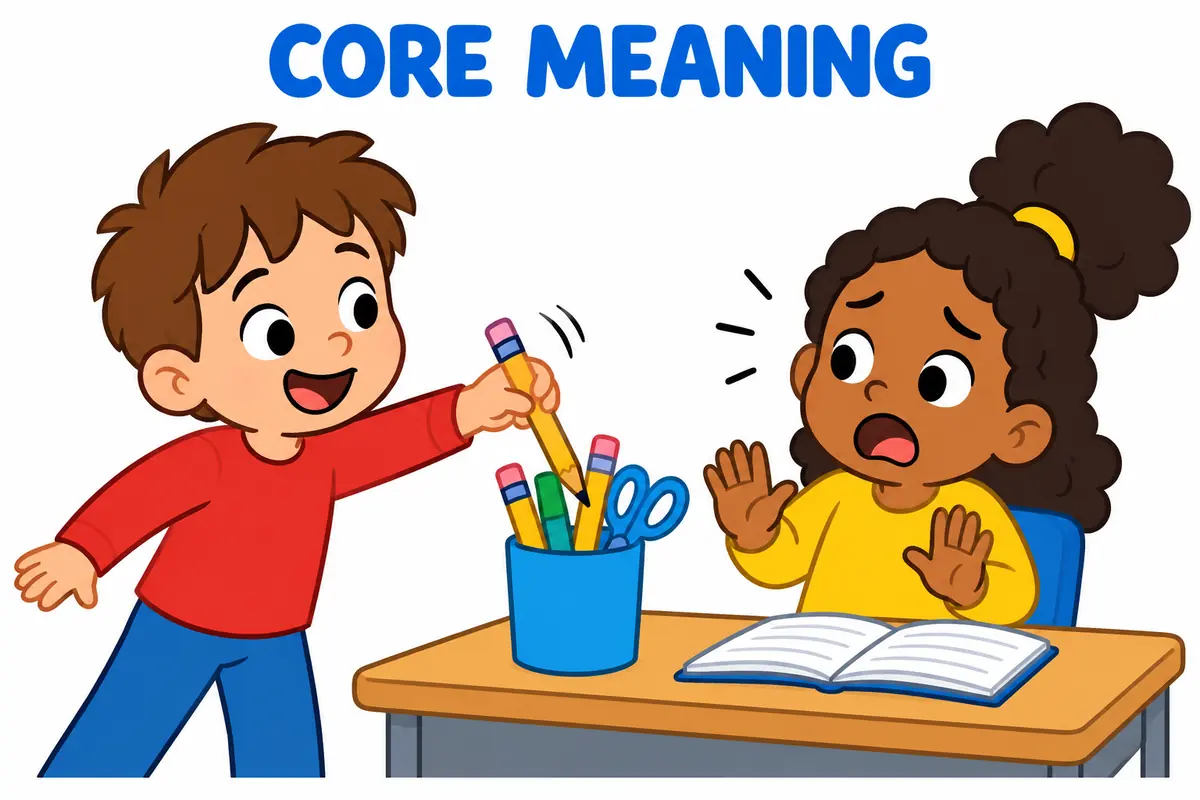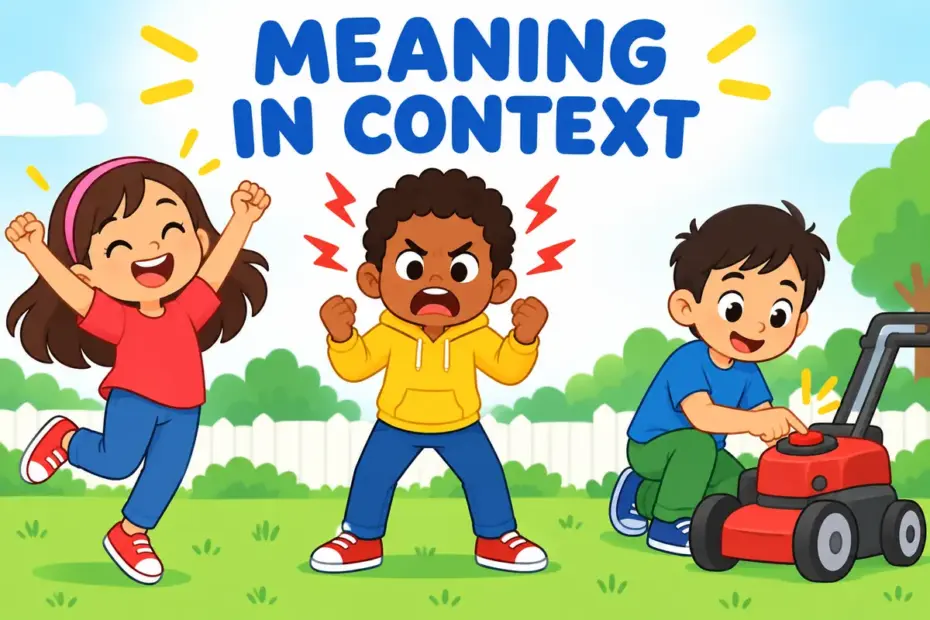
The phrase fire up in a sentence means make someone enthusiastic or angry, or start a machine or device. Its grammar depends on the intended sense: fire up + person/group. For example, “The coach fired up the players before the final.” shows fire up in a natural, complete sentence with enough context to understand the expression.
Fire Up at a glance
- Part of speech: phrasal verb phrase with the base form fire up.
- Core meaning: Make someone enthusiastic or angry, or start a machine or device.
- Grammar: fire up + person/group is a common construction.
- Useful contrast: excite overlaps in meaning but does not fit every sentence.
- Common learner issue: selecting the right preposition or object for the intended sense.
What does fire up mean?
Fire Up is a phrasal verb meaning make someone enthusiastic or angry, or start a machine or device. A useful editing test is to ask what can be fired up in context. A computer can be started; a team can be energized; an audience or community can be provoked. If the sentence does not reveal which one is meant, replace the phrase with “start,” “motivate,” or “anger” to make the intended action explicit.
| Sense | Plain meaning | Example |
|---|---|---|
| Energize or motivate | Make a person or group feel eager to act. | The coach fired up the players before the final. |
| Provoke anger | Make someone angry or strongly agitated. | The unfair rule fired up the parents. |
| Start a machine | Switch on or start an engine, computer, or appliance. | We fired up the generator. |
The Cambridge Dictionary: fire up supports these core meanings and patterns. Nearby vocabulary includes animate, energize, and excite; each can express a related idea, but none automatically substitutes for every sense of fire up.
How do you use fire up in a sentence?
Fire Up takes different complements according to its meaning. These patterns show the particle or preposition’s job and whether a direct object is required. A useful editing test is to ask what can be fired up in context. A computer can be started; a team can be energized; an audience or community can be provoked. If the sentence does not reveal which one is meant, replace the phrase with “start,” “motivate,” or “anger” to make the intended action explicit.
| Pattern | Example | What it signals |
|---|---|---|
| fire up + person/group | The speech fired up the team. | The object is the person or group affected. |
| fire up + device/engine | She fired up the laptop. | The object is a machine being started. |
| get fired up about + topic | He gets fired up about local history. | About introduces the cause of strong feeling. |
| be fired up for + event | The players were fired up for the match. | For gives the goal or occasion. |
It is separable. A noun object may appear before or after up, while a pronoun goes between: “fire up the laptop” or “fire it up.” The “get fired up about” construction has no direct object.

Fire Up in a sentence: examples across contexts
Each example gives enough surrounding detail to identify the sense. The subject, complement and preposition are part of the meaning, rather than decoration.
| Context | Example sentence | Why this works |
|---|---|---|
| Sport | The coach fired up the players with a short speech. | The team is energized to perform. |
| Civic meeting | The proposed closure fired up residents who used the library. | The policy provokes strong anger or opposition. |
| Technology | I fired up the computer to print the tickets. | The device is the direct object in the start-up sense. |
| Cooking | Dad fired up the grill while the vegetables were being prepared. | The grill is equipment being started. |
| Classroom | A lively question fired up a discussion about the novel. | The discussion becomes energetic, not necessarily angry. |
| Work | The new assignment fired up the design team. | The context supports motivation. |
| Debate | The remark fired up the audience, and several people objected. | The reaction indicates provocation rather than encouragement. |
| Contrast | She started the laptop but did not fire up the crowd. | The same phrase has distinct literal and emotional senses. |
Fire Up vs excite
Excite is a useful comparison because it overlaps with one sense of fire up, but its grammar or emphasis differs. Choose by asking what the sentence needs to communicate.
| Feature | fire up | excite |
|---|---|---|
| Core meaning | make someone enthusiastic or angry, or start a machine or device | broader or adjacent meaning |
| Typical subject/object | fire up + person/group | depends on the verb’s own pattern |
| Emphasis | the specific action or sense shown above | the related idea without the same nuance |
| Useful context | Sport | general situations where the simpler word is enough |
| When to choose it | when the particle/preposition and context fit | when its plain meaning is the intended one |
Verdict: choose fire up when the sentence needs its specific pattern; choose excite when its broader or simpler meaning is intended.
Word forms and grammar of fire up
Use the form that matches the subject and time reference. Do not transfer the pattern of a related word automatically: the example in each row shows the form in a complete clause.
| Form | Use | Example |
|---|---|---|
| fire up | base form | We fire up the generator monthly. |
| fires up | third-person present | The remark fires up the audience. |
| fired up | past/participle | The coach fired up the team. |
| firing up | present participle | She is firing up the laptop. |
Common mistakes with fire up
These errors arise when a learner treats the particle as a separate preposition or gives the verb an object pattern it does not take.
- Incorrect:
The coach fired up to the team.Correct: The coach fired up the team. Rule: Fire up takes the affected person as a direct object, without to. - Incorrect:
I fired up my excitement.Correct: I got fired up about the project. Rule: People get fired up; the topic follows about. - Incorrect:
She fired the computer up it.Correct: She fired the computer up. Rule: Do not repeat the object after a separable phrasal verb. - Incorrect:
The speech fired up the engine.Correct: The speech fired up the crowd. Rule: Match the object to the intended sense: a speech motivates people, an engine is started mechanically.
Practice using fire up
Complete each task by checking both meaning and grammar. The final two items ask for interpretation and revision, so more than one well-formed answer may be possible.
- Fill the gap: The coach fired up the players with a short speech.
- Choose the better word, fire up or excite: “The proposed closure fired up residents who used the library.”
- Correct the error: “The coach fired up to the team.”
- Build a sentence that uses fire up + device/engine.
- Explain the meaning in this example: “I fired up the computer to print the tickets.”
- Rewrite this sentence more precisely: “It happened.”
Answers
- The coach fired up the players with a short speech. — the context supplies the intended sense.
- fire up — the sentence follows the target phrase’s pattern.
- The coach fired up the team. — Fire up takes the affected person as a direct object, without to.
- Model: She fired up the laptop. — this uses the specified construction.
- The device is the direct object in the start-up sense. — the subject and complement signal the sense.
- Model: The coach fired up the players before the final. — the revised sentence names the subject and action.
How context changes fire up
Fire Up is easiest to interpret when the sentence gives a concrete subject and complement. Compare these cases: the same phrase can look different when the actor changes, when a preposition is added, or when the sentence shifts from literal to figurative use.
- Sport: The coach fired up the players with a short speech. The team is energized to perform.
- Civic meeting: The proposed closure fired up residents who used the library. The policy provokes strong anger or opposition.
- Technology: I fired up the computer to print the tickets. The device is the direct object in the start-up sense.
- Cooking: Dad fired up the grill while the vegetables were being prepared. The grill is equipment being started.
- Classroom: A lively question fired up a discussion about the novel. The discussion becomes energetic, not necessarily angry.
- Work: The new assignment fired up the design team. The context supports motivation.
- Debate: The remark fired up the audience, and several people objected. The reaction indicates provocation rather than encouragement.
- Contrast: She started the laptop but did not fire up the crowd. The same phrase has distinct literal and emotional senses.
A reader should not have to guess which sense is intended. Add the object, place, time, or result that distinguishes it. For example, “The coach fired up the players with a short speech.” names the situation; “The proposed closure fired up residents who used the library.” adds a different clue. The two sentences share vocabulary but communicate distinct details.
For a related vocabulary step, compare animate, energize, or excite only after deciding which sense of fire up is active. A synonym may fit one context and fail in another because prepositions and objects belong to particular constructions. Replacing a phrase without checking the whole clause can create a grammatical error even when the dictionary meanings overlap.
The bottom line
Use fire up in a sentence when the subject and surrounding words support the intended meaning. The most useful distinction is a useful editing test is to ask what can be fired up. If a simpler word communicates the point more clearly, prefer it.

Frequently asked questions about fire up
Does “fire up” mean motivate or anger?
It can mean either, depending on the object and context. A coach may fire up a team to motivate it, while a disputed decision can fire up residents by making them angry. The phrase signals a strong reaction; the surrounding details show whether it is positive or negative.
Can “fire up” mean start a computer?
Yes. Fire up a computer, engine, or generator means start it or make it operational. This literal equipment sense is distinct from the emotional meanings. In technical instructions, “start” or “switch on” may be more precise if the action is routine.
Is “fire up” separable?
Yes. With a noun object, both “fire up the engine” and “fire the engine up” are possible. A pronoun must go between the parts: “fire it up.” In the construction “get fired up about an issue,” fired up functions as a participial adjective and is followed by about.
Is “fire up” informal?
Fire up is common in conversation and lively writing. A formal report may use “motivate,” “provoke,” or “start” when the exact sense matters. The phrase is not inherently slang, but its energetic tone can sound too vivid for a neutral technical account.