Flounder means to struggle clumsily or to be in serious difficulty. To use flounder in a sentence, keep it intransitive: “The young team floundered in the final quarter.” The verb names unsuccessful effort, whether the struggle happens in water, in an interview or inside a failing business, and it never takes a direct object.
Flounder at a glance
- Flounder is an intransitive verb meaning to struggle helplessly or to be in deep trouble.
- Its forms are flounder, flounders, floundered and floundering.
- It often appears with in, through, for or on: flounder in debt, flounder for words, flounder on a detail.
- Flounder is stronger than struggle, which can be brief and deliberate, and weaker than founder, which means to sink.
- The commonest error is giving it an object, as in flounder the project.
What does flounder mean?
Flounder is an intransitive verb meaning to struggle clumsily or to be in serious difficulty. The Cambridge entry for flounder separates the physical sense of moving with difficulty from the figurative sense of failing, and both share the image of effort that gets nowhere. The word is stronger than struggle, because struggle can be brief and purposeful, while floundering suggests a loss of control.
| Sense | Plain meaning | Example sentence |
|---|---|---|
| Struggle to move | Move clumsily and without control | The swimmer floundered in the cold water. |
| Struggle to speak or act | Fail to find the right words or steps | He floundered for an answer in the interview. |
| Be in serious difficulty | Fail or nearly fail as an organisation | The airline floundered after losing its main route. |
The noun flounder also names a flat sea fish, but that word has a separate history and is not related to the verb. A sentence about a floundering business and a sentence about a flounder on a fishmonger’s slab share no meaning, so keep the two apart in your own writing.
One limitation matters. Flounder does not mean defeat, because the struggle may still end well, and it does not mean idle, because it always implies visible effort. When the failure is final and total, founder or collapse is the sharper verb.
The register is fairly flat. Flounder suits news reports, business writing and fiction alike, and it sounds natural in speech when the trouble is genuine. It turns comic only when the stakes are tiny, so a floundering queue at a coffee machine reads as deliberate understatement rather than a real crisis.
How do you use flounder in a sentence?
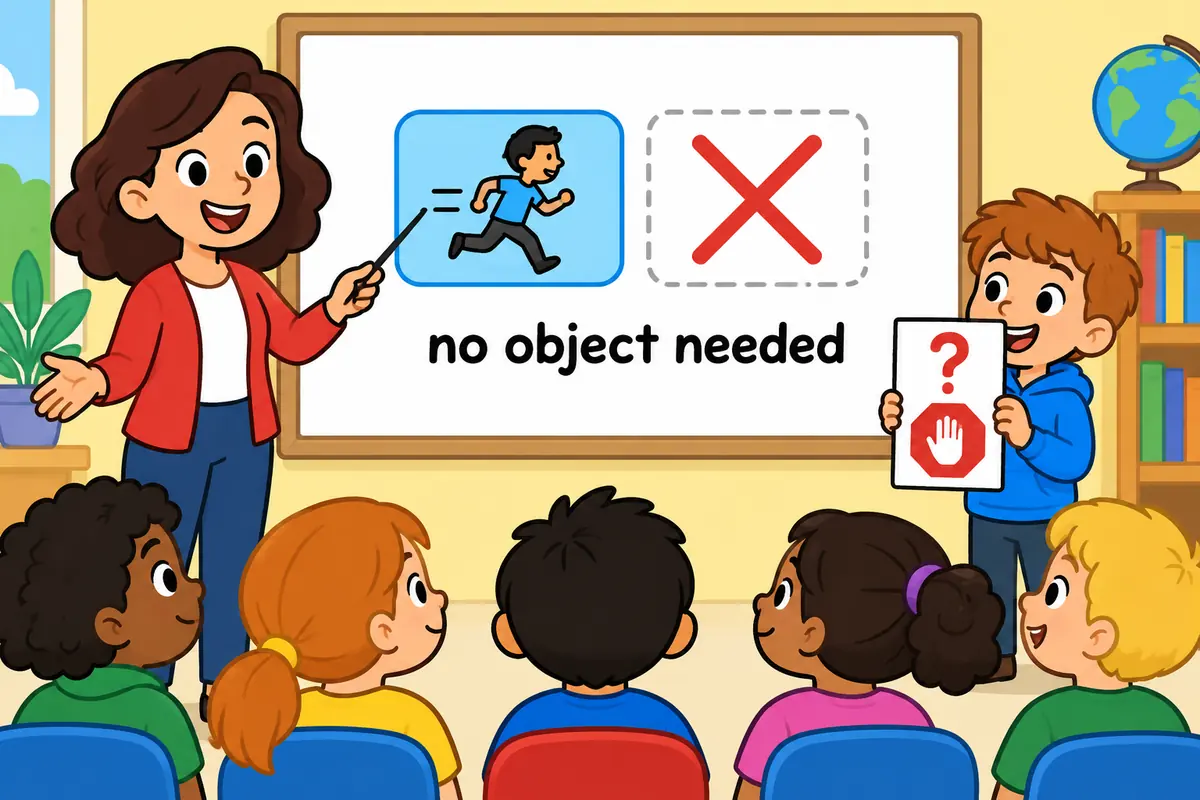
Flounder never takes an object. The subject is the person or thing in trouble, and any preposition that follows names the medium or the reason. Five patterns cover most real uses.
| Pattern | Example | What it signals |
|---|---|---|
| flounder alone | The new business floundered. | States the difficulty without naming a cause. |
| flounder in + noun | The team floundered in the heavy rain. | Names the medium or condition. |
| flounder for + noun | She floundered for words. | Shows a failing search for something. |
| flounder through + noun | He floundered through the presentation. | Survives an event without control. |
| flounder on + noun | The talks floundered on the question of pay. | Names the exact sticking point. |
When the struggle is mostly physical and panicky, flail is the closer verb, because it pictures wild waving limbs. Flounder can be still and silent, as a company does for months before it collapses. The verb describes the subject rather than the cause, so the cause arrives later in a phrase such as without training or under pressure.
Flounder in a sentence: examples across contexts
Flounder travels from swimming pools to boardrooms without changing its shape. These twelve sentences keep the verb intransitive while the setting changes.
| Context | Example sentence | Why this works |
|---|---|---|
| Classroom | The pupil floundered for an answer at the board. | Shows effort without a direct object. |
| Workplace email | We floundered without a clear brief last quarter. | Names the difficulty rather than blaming a person. |
| News report | The ferry company floundered under mounting debts. | Uses a real business subject in trouble. |
| Legal writing | The claim floundered on a single missing signature. | Flounder on pins the exact failing point. |
| Science writing | Early trials floundered for lack of funding. | States the cause without agency. |
| Sports commentary | The defence floundered after the injury. | Describes collective loss of control. |
| Conversation | I floundered a bit in my first driving lesson. | Honest, everyday self-description. |
| Academic writing | The argument flounders when the data are examined closely. | Present tense for a general weakness. |
| Business writing | The start-up floundered in its second year. | Dates the decline without exaggeration. |
| Literary prose | She floundered through the dark corridor, one hand on the wall. | Physical sense in vivid narrative. |
| Parent to child | Everyone flounders when they first learn to swim. | Reassuring general statement. |
| Government report | The scheme floundered on unclear responsibilities. | Formal cause stated with flounder on. |
| Job interview | The candidate floundered when asked about the gap in her record. | Names the moment control was lost. |
| Volunteer group | The appeal floundered without enough helpers. | Shows a cause through a preposition. |
What is the difference between flounder, falter, founder and blunder?
Four verbs crowd this space. falter means to lose strength or confidence for a moment, blunder means to make a careless mistake, and stumble means to trip or to hesitate briefly. The crucial pair, though, is flounder and founder.
| Attribute | flounder | falter | founder |
|---|---|---|---|
| Core idea | Struggle without control | Lose strength or nerve | Sink or fail completely |
| Duration | Often weeks or months | A brief moment | The end point |
| Outcome | May still recover | May still recover | Total failure |
| Typical subject | A person, team or company | A voice, step or campaign | A ship, plan or business |
| Transitive | No | No | No |
Verdict: choose flounder for an ongoing, clumsy struggle, falter for a sudden wobble in strength, and founder when the effort ends in complete failure. Success, at the far end, brings flourish or thrive.
Common collocations with flounder
Flounder keeps its company predictable. Learning these fixed partners is faster than memorising rules, because each one signals a slightly different kind of trouble. Each partner narrows the meaning, so flounder in differs from flounder for even though the verb itself is unchanged.
| Collocation | Example | What it adds |
|---|---|---|
| flounder in debt | The club floundered in debt for years. | Names the conditions of the struggle. |
| flounder for words | He floundered for words at the ceremony. | The most common spoken use. |
| flounder through | She floundered through her first lesson. | Survival without mastery. |
| flounder around | They floundered around for a plan. | Motion without direction. |
| flounder on | The deal floundered on one clause. | Pinpoints the obstacle. |
| flounder badly | The launch floundered badly at first. | Grades the degree of trouble. |
| flounder without + noun | The trainees floundered without clear instructions. | Names what was missing. |
| flounder after + noun | The firm floundered after the founder left. | Dates the start of the decline. |
Word forms and grammar of flounder
Flounder inflects regularly and has no passive form, because it has no object to promote. The participle floundering is the form most often used as an adjective.
| Form | Part of speech | Example |
|---|---|---|
| flounder | verb, base form | Without guidance, new staff flounder. |
| flounders | verb, third person | The scheme flounders whenever funding stops. |
| floundered | verb, past and participle | The plan floundered after the first month. |
| floundering | verb, present participle | He was floundering in the deep end. |
| floundering | adjective | They rescued the floundering project. |
| flounder | noun, unrelated fish | A flat flounder lay on the ice. |
Common mistakes with flounder
- Incorrect:
The manager floundered the whole project.Correct: The whole project floundered under the manager. Rule: Flounder is intransitive, so it never takes an object. - Incorrect:
The ship floundered in the storm.Correct: The ship foundered in the storm. Rule: Founder means to sink or fail completely; flounder means to struggle. - Incorrect:
She floundered to reply.Correct: She floundered for a reply. Rule: The idiom is flounder for something, not flounder to do something. - Incorrect:
He answered flounderingly.Correct: He answered in a floundering way. Rule: There is no standard adverb flounderingly; use a phrase instead. - Incorrect:
The economy floundered the crisis.Correct: The economy floundered during the crisis. Rule: A preposition such as during or in carries what flounder cannot.
Practice using flounder
Work through the six items, then read the reasons to check your grasp of transitivity and the founder contrast.
- Fill the gap: Without a clear plan, the campaign ______ for months.
- Choose the better word: In heavy seas the small boat began to (flounder / founder).
- Correct the error: The new coach floundered the team in his first season.
- Build a sentence: use flounder for words about a pupil at a school assembly.
- Spot the register: which belongs in a report — The scheme floundered on unclear roles, or Things just kind of flopped about?
- Rewrite with a preposition: rewrite The talks failed because of pay using flounder on.
Answers
- floundered — the campaign is the subject in trouble, and no object follows.
- founder — a boat in heavy seas sinks, which is founder, not the struggling sense of flounder.
- The team floundered under the new coach — flounder takes no object, so the team stays the subject.
- Model answer: The pupil floundered for words at the assembly.
- The scheme floundered on unclear roles — a report keeps the precise verb and drops the vague slang.
- The talks floundered on the question of pay — flounder on names the exact obstacle.
The bottom line
Use flounder in a sentence when someone or something struggles without control, and keep the verb intransitive so the subject stays in trouble. Two nuances decide most choices: a preposition such as in, for or on adds the cause or the medium, and founder is the separate verb for complete failure. When the struggle ends in success, flourish and thrive take over.
Frequently asked questions about flounder
Is flounder a verb or a noun?
Flounder is both, but the two words are unrelated. The verb means to struggle or be in difficulty, as in the team floundered. The noun names a flat sea fish. Only the verb belongs in phrases about failure, so watch the context when the word appears.
What is the difference between flounder and founder?
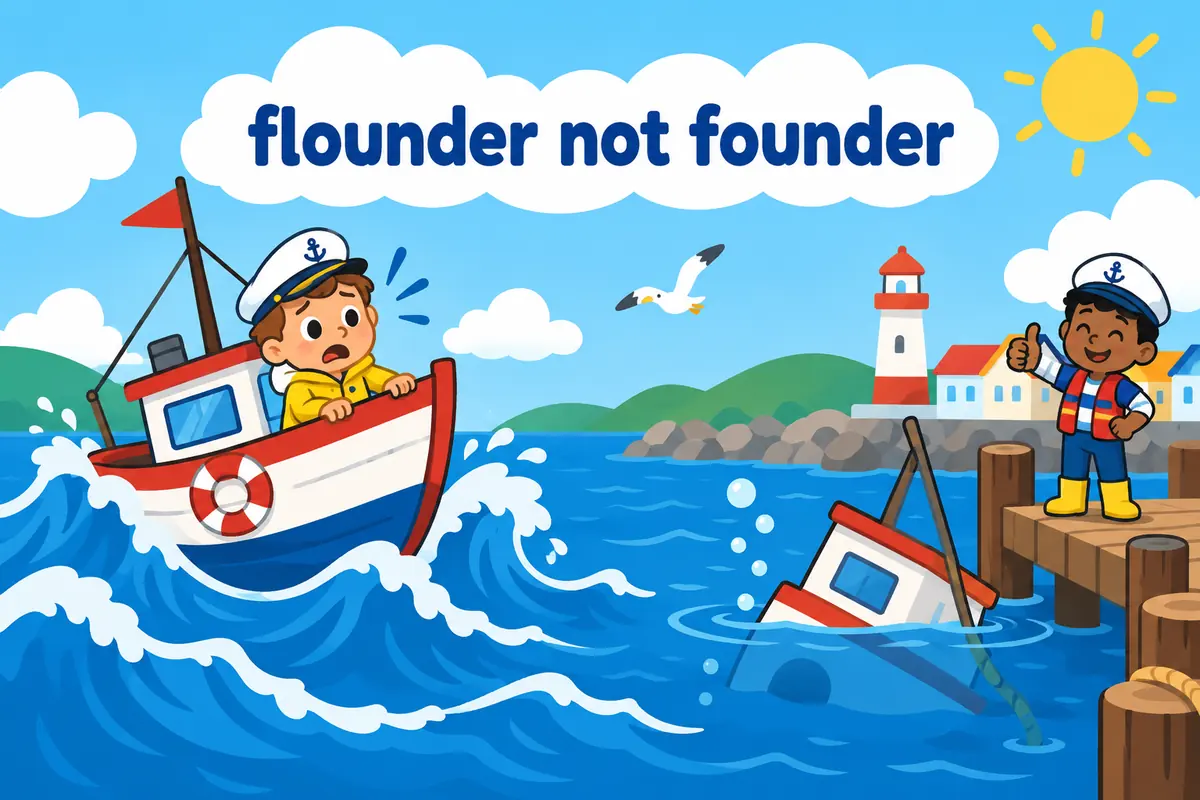
Flounder means to struggle clumsily and may still recover. Founder means to fill with water and sink, or to fail completely. A business can flounder for a year and then recover, but once it founders the effort is over. One letter marks the difference.
Can flounder take an object?
No. Flounder is intransitive, so the person or thing in trouble is always the subject. You can say the team floundered or the team floundered in the rain, but never the coach floundered the team. For an object, choose a transitive verb such as mishandle.
What is the opposite of flounder?
The opposite is success rather than a single word, so flourish and thrive serve best. A floundering company struggles month after month, while a thriving one grows. If you need an adjective for the struggling state, use floundering before the noun.