
Frolic means to play and move about in a lively, carefree way, and as a noun it names that playful activity. To use frolic in a sentence, pair it with movement: “The puppies frolicked in the long grass.” The verb describes cheerful play rather than a contest, so nobody keeps score.
Frolic at a glance
- Frolic is both a verb and a noun; its forms are frolics, frolicked and frolicking.
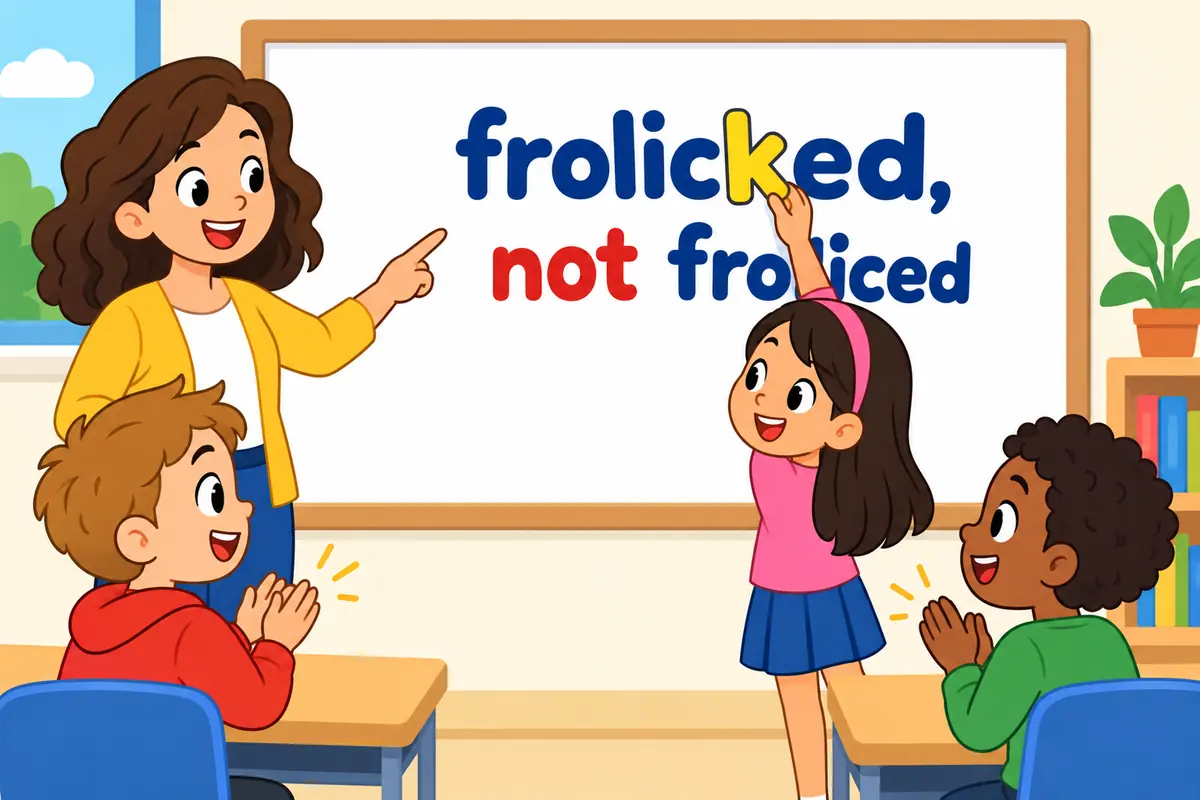
- The verb doubles the k before -ed and -ing but keeps a single k in frolics.
- The usual subjects are children, animals and light-hearted adults at play.
- Frolic belongs to warm, literary description and to headlines about carefree fun.
- The commonest error is writing froliced and frolicing with a single k.
What does frolic mean?
Frolic is a verb and a noun meaning cheerful, energetic play. The Cambridge entry for frolic keeps the two parts of speech together, and both point the same way: movement that expresses delight. As a noun, a frolic can also mean a light-hearted adventure, as in an afternoon frolic by the river.
| Sense | Plain meaning | Example sentence |
|---|---|---|
| Verb | Play and move about cheerfully | The lambs frolicked along the fence line. |
| Noun: activity | Lively, playful behaviour | There was much frolic in the garden after school. |
| Noun: outing | A light-hearted adventure or escapade | The trip turned into a harmless weekend frolic. |
Frolic is not a synonym for exercise or for a game with rules. It carries no competition, so a strict race or a scored match is never a frolic, however energetic. When the movement is serious, choose train, compete or romp about instead, and save frolic for play that is purely for joy.
How do you use frolic in a sentence?
Put the playful subject first and let the verb carry the movement: subject + frolic + place. Four patterns cover most real sentences, and the noun form usually follows words such as a or much.
| Pattern | Example | What it signals |
|---|---|---|
| subject + frolic + preposition | Sheep frolicked on the hillside. | Names who plays and where, the everyday shape. |
| frolic + with + noun | The seal frolicked with the dolphins. | Shows playful company rather than a lone action. |
| a + frolic (noun) | They had a frolic in the snow. | Turns the play into a countable event. |
| present participle | Children went frolicking through the leaves. | Backgrounds the play as an ongoing scene. |
Frolic in a sentence: examples across contexts
Frolic keeps its happy tone wherever it goes. The eight sentences below move from a nursery to a nature documentary, and each one shows movement rather than simply naming fun.
| Context | Example sentence | Why this works |
|---|---|---|
| Nursery | The toddlers frolicked among the cushions. | A safe, concrete setting suits the word’s warmth. |
| Nature writing | Otter cubs frolicked where the stream widens. | Animals make the play feel instinctive. |
| Sport feature | The mascot frolicked along the touchline at half-time. | Frames non-competitive movement inside a formal event. |
| Travel blog | We frolicked in the waves until sunset. | First person turns the play into a shared memory. |
| Weather report | Lambs frolicked under the first warm sky of spring. | Links the play to a season a reader can picture. |
| Poetry | Light frolicked on the surface of the pond. | Extends the word to nature without a creature. |
| History essay | Courtiers frolicked while the harvest failed. | Juxtaposes careless play with hardship for contrast. |
| Advertising | Families frolic across the sand in the closing shot. | Compresses a carefree mood into one verb. |
Frolic vs romp
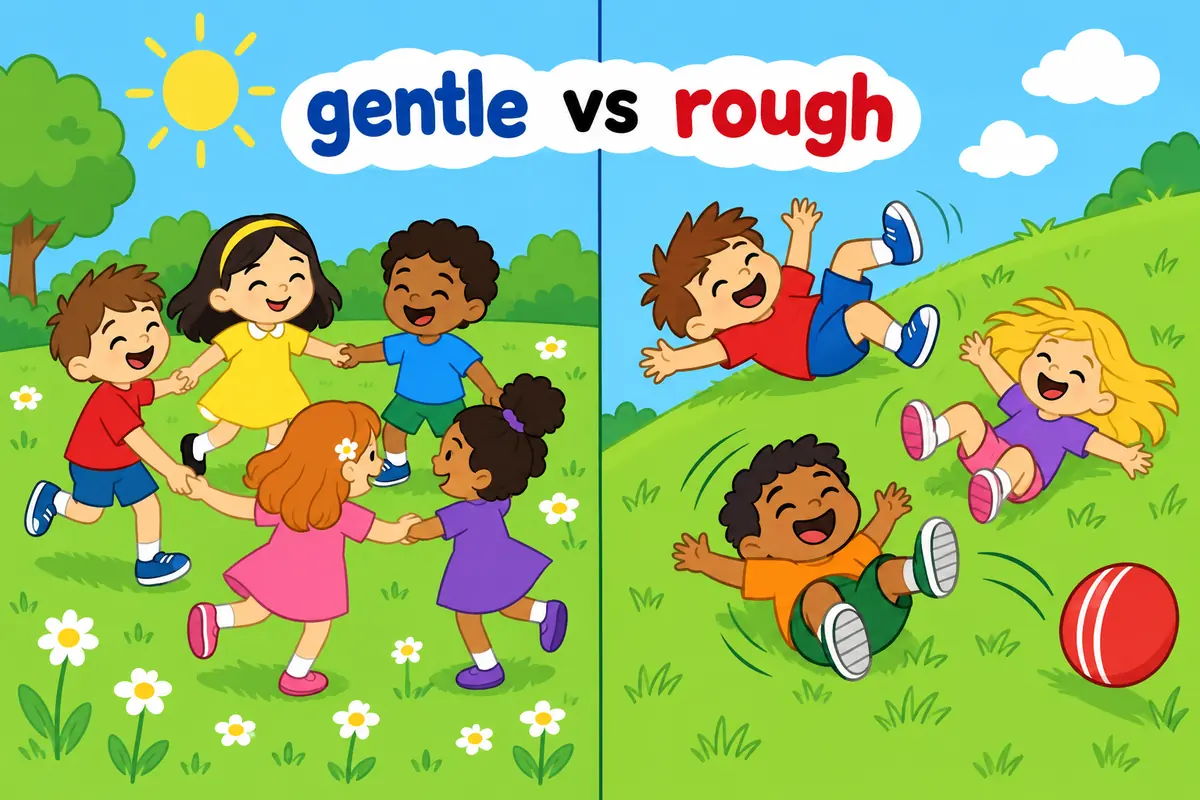
Frolic and romp both describe play, and the difference is energy rather than meaning. A romp through the park is boisterous and a little rough; a frolic is lighter and more graceful.
| Attribute | frolic | romp |
|---|---|---|
| Energy | Light, dancing, carefree | Boisterous, tumbling, loud |
| Typical subject | Children, lambs, puppies | Children, dogs, sports teams |
| Tone | Gentle and charming | Rough and comic |
| Implies conflict | No | Sometimes, playful wrestling |
| Usual register | Literary and warm | Informal and journalistic |
Verdict: choose frolic for delicate, joyful movement and romp when the play involves noise, tumbling and a little chaos.
Frolic also differs from its neighbours in scale. Young lambs gambol in the grass in quick, skittish bursts, while a dancer might cut a caper in a single high leap. Where adults celebrate rather than play, they are more likely to revel late into the night, and where an outing carries a hint of mischief, writers reach for a harmless lark.
Word forms and grammar of frolic
Frolic is regular except for one doubled letter. The table also gives the closely related adjective, which is the form writers reach for when they want to describe behaviour rather than movement.
| Form | Part of speech | Example |
|---|---|---|
| frolic | verb, base form | The pups love to frolic at dawn. |
| frolics | verb, third person singular | He frolics in the surf every summer. |
| frolicked | verb, past and past participle | The children frolicked until dusk. |
| frolicking | verb, present participle | They spent the morning frolicking on the lawn. |
| frolic | noun | The whole outing was a joyful frolic. |
| frolicsome | adjective | Her frolicsome mood lifted the room. |
| froliced | non-standard spelling | Write frolicked with two k’s. |
Common mistakes with frolic
- Incorrect:
The children froliced in the yard.Correct: The children frolicked in the yard. Rule: Frolic doubles its final k before -ed, so the past tense has two k’s. - Incorrect:
They were frolicing by the lake.Correct: They were frolicking by the lake. Rule: The same doubling applies before -ing. - Incorrect:
The team frolicked to win the final.Correct: The team romped to win the final. Rule: Frolic carries no competition, so a result belongs with a different verb. - Incorrect:
He frolicked the ball across the field.Correct: He dribbled the ball across the field. Rule: Frolic is intransitive; it never takes a direct object.
Practice using frolic
Work through the five items, then read the reason beside each answer.
- Fill the gap: The kittens ______ across the kitchen floor last night.
- Choose the better word: The players (frolicked / romped) to a noisy ten-goal win.
- Correct the error: The dolphins were frolicing beside the boat.
- Build a sentence: use a frolic as a noun about an afternoon in the park.
- Spot the register: which suits a poem — the stream frolicked over the stones, or the stream had a frolic?
Answers
- frolicked — the past tense doubles the k, so the spelling has two k’s.
- romped — a noisy lopsided win is boisterous, which is romp rather than frolic.
- The dolphins were frolicking beside the boat — the participle also doubles the k.
- Model answer: The children turned the park into a frolic of hide-and-seek and races.
- The stream frolicked over the stones — a poem wants the moving verb, not the heavier noun.
The bottom line
Use frolic in a sentence for cheerful, carefree movement, and remember the two details that decide most errors: the verb doubles its k in frolicked and frolicking, and it never takes an object. When the play grows rough or competitive, a verb such as romp or race fits better.
Frequently asked questions about frolic
Is frolic a verb or a noun?
Frolic works as both. As a verb it means to play and move about happily, as in the lambs frolicked in the field. As a noun it names that playful activity or a light-hearted outing, as in the picnic was a pleasant frolic. The two uses share one meaning.
Why does frolic double the k?
Frolic is stressed on its second syllable, so the final k doubles before a suffix that begins with a vowel. That rule produces frolicked and frolicking with two k’s. The plural and third-person form frolics keeps one k because the s does not begin with a vowel.
What is the difference between frolic and play?
Play is the general word for any enjoyable activity, including games with rules. Frolic is narrower: it always suggests lively physical movement and a carefree mood. A quiet board game is play but never a frolic, and a frolic is always something you can watch.
Can frolic describe adults?
Yes, though it usually keeps a light, slightly literary tone. An adult who frolics is being playful and unguarded, as in the friends frolicked in the surf. In formal writing the word can sound whimsical, so a report of serious activity rarely uses it.
Have you ever felt the urge to frolic in a meadow on a sunny day, carefree and joyful? To frolic means to play or move around in a cheerful and lively way. This word often brings to mind images of skipping, dancing, and having a great time with friends.
When using “frolic” in a sentence, you are describing a playful and light-hearted activity. Whether it’s children frolicking in the park or animals frolicking in the snow, this word conveys a sense of happiness and spontaneity. Whether alone or with others, to frolic is to embrace the simple pleasure of letting go and enjoying the moment.
7 Examples Of Frolic Used In a Sentence For Kids
- Frolic in the park with your friends.
- Let’s frolic in the rain and splash in the puddles.
- The puppies love to frolic in the yard.
- We can frolic like playful kittens.
- Children often frolic and laugh together.
- The bunny loves to frolic in the grass.
- Frolic and play in the sunshine.
14 Sentences with Frolic Examples
- Frolic in the nearby park after a long day of lectures.
- Many college students prefer to frolic by the beach during their breaks.
- A group of friends decided to frolic in the rain on campus.
- Let’s organize a frolic night at the hostel for everyone to unwind.
- The annual college fest is a great opportunity to frolic and enjoy various activities.
- Taking a break from studies, the students headed to the nearby forest to frolic.
- After exams, the college campus turns into a lively place with students frolicking around.
- Attending a music concert is a popular way for college students to frolic and have fun.
- A picnic by the lakeside is a perfect spot to frolic with friends on weekends.
- During the cultural night, students frolic by performing dances from different regions.
- The sports field is always buzzing with students frolicking around after classes.
- The college club organized a frolic meetup for its members to socialize.
- Frolic at the annual sports day with various games and activities for students to enjoy.
- Planning a road trip with friends is a great way to frolic and explore new places during holidays.
How To Use Frolic in Sentences?
To use the word Frolic in a sentence, think of playful or lively activities. For example, “The children were full of energy and decided to frolic in the park.” In this sentence, frolic is used to describe the children playing and having fun.
Remember that frolic is a verb, so it is used to describe an action. You can use it in various tenses depending on the context of your sentence. For instance, “We frolicked in the snow all day,” uses the past tense form of the word frolic to describe an action that has already taken place.
When constructing a sentence with the word frolic, make sure it fits the tone and meaning you want to convey. For a light-hearted and joyful context, using frolic to describe carefree and fun activities is ideal.
To practice using frolic in a sentence, try incorporating it into everyday conversations or writing exercises. This will help you become more comfortable with the word and understand its nuances in different contexts.
By following these tips and examples, you can effectively incorporate frolic into your vocabulary and communicate more expressively in your writing and speech.
Conclusion
In conclusion, the sentences with the keyword “frolic” demonstrated the playful and carefree nature of individuals engaging in joyous activities. These sentences depicted scenes of happiness and light-heartedness, showcasing the enjoyment and freedom that come with frolicking. From children gleefully frolicking in the meadow to couples dancing and frolicking under the moonlight, each sentence painted a vivid picture of people embracing the moment and having fun without any worries.
Through these examples, it is evident that frolicking represents a delightful form of leisure, allowing individuals to let go of inhibitions and revel in the simple pleasures of life. These sentences served as a reminder of the joy and spontaneity that come with frolic, encouraging us to embrace lightheartedness and laughter in our daily lives.


