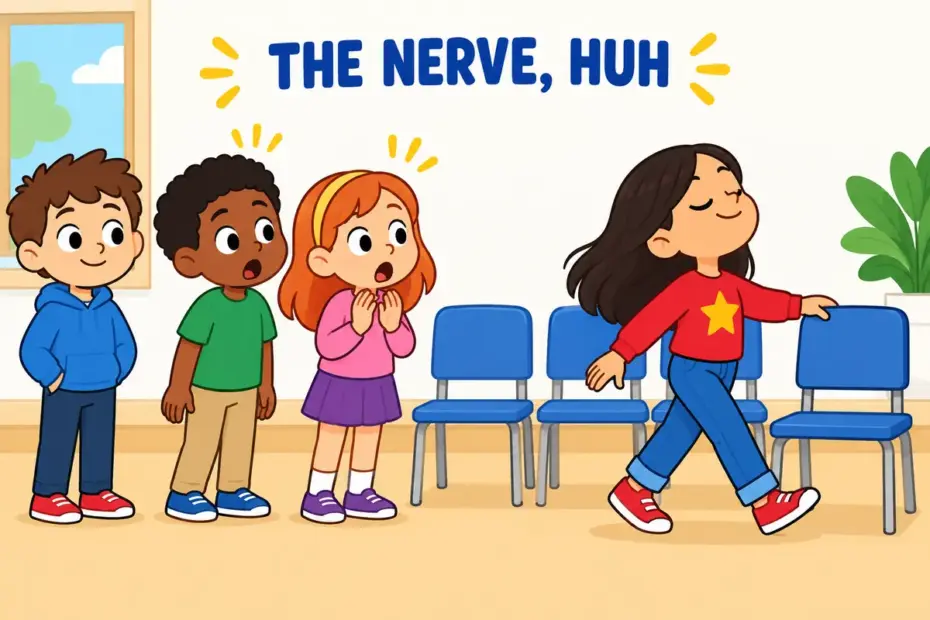
Gall means bold and rude behaviour, and it also names a bitter feeling like resentment. To use gall in a sentence, decide which sense you need: the gall to question a manager, or words full of gall. The verb galls means to annoy, so the word works as a noun and a verb.
Gall at a glance
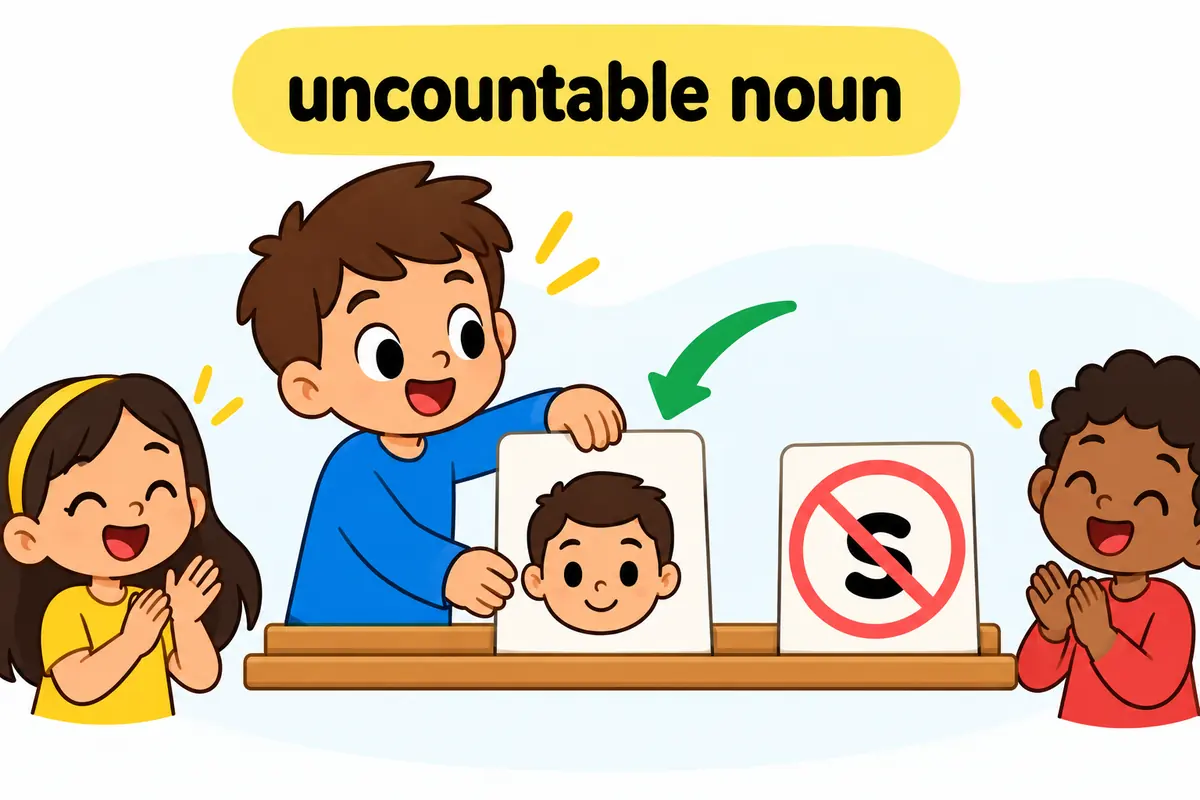
- Gall is most often an uncountable noun, so it takes the gall, not a gall, in the rudeness sense.
- Its bold sense means insolent daring that shocks or offends the listener.
- Its bitter sense means deep resentment, and it belongs to literary and formal writing.
- The verb galls means to annoy or humiliate, as in it galls me that he never called.
- It is not a compliment: calling courage gall is an insult, unlike praising nerve.
- The commonest error is confusing the word with the homophone Gaul, an ancient region.
What does gall mean?
Gall is a noun meaning bold, insolent rudeness, or a bitter feeling of resentment; the same spelling is also a verb meaning to annoy someone deeply. The Cambridge entry for gall lists the rudeness and the irritation senses side by side, and the choice between them is decided by grammar rather than by context alone.
| Sense | Plain meaning | Example sentence |
|---|---|---|
| Bold rudeness (noun) | Insolent daring that shocks the listener | She had the gall to ask for a refund. |
| Bitterness (noun) | Deep, sour resentment, often in literary prose | His parting words carried no gall. |
| Bile (noun, old use) | The bitter fluid once linked to ill temper | The remark was sour as gall. |
| Plant swelling (noun) | A growth on a leaf or stem caused by an insect | An oak gall hung from the twig. |
| Annoy (verb) | To irritate or humiliate someone | It galls me that he never apologises. |
One limitation matters. Gall is not a neutral word for confidence: the bold sense is always critical, so describing someone’s courage as gall turns it into an insult, and the bitter sense is stronger than ordinary disappointment. Where you only mean friendly boldness, nerve or the plain word courage serves better.
How do you use gall in a sentence?
Most sentences use one of two fixed shapes: have the gall to do something for the rudeness sense, or it galls me that something happened for the verb. Because the noun is uncountable in that sense, it never becomes galls with an -s when it means rudeness.
| Pattern | Example | What it signals |
|---|---|---|
| have the gall to + verb | She had the gall to complain. | The fixed pattern for shocking rudeness. |
| find the gall | Where did he find the gall? | A question form of the same sense; gall stays singular. |
| gall rose in someone | Gall rose in her throat. | A literary image for mounting bitterness. |
| it galls + person + that-clause | It galls him that the post went to a rival. | The verb sense, which needs an it-clause. |
| be galled by + noun | She was galled by the unfair remark. | Passive verb sense; the cause follows by. |
The rudeness sense shades into other words very precisely. Where the daring is admired rather than condemned, audacity is the word, and the milder impudence stops short of open disrespect. The bitter sense is closer to bitterness, a lasting sour feeling rather than a single bold act.
Gall in a sentence: examples across contexts
Gall travels from the schoolyard to the courtroom without changing its spelling. Each of the nine sentences below shows which sense is at work, so a reader can copy the pattern instead of guessing at it.
| Context | Example sentence | Why this works |
|---|---|---|
| Classroom | He had the gall to copy my answers while I watched. | A small but vivid act shows the bold-rudeness sense. |
| Workplace email | It galls the whole team that the deadline was moved again. | The verb sense names the irritation directly. |
| News report | The minister’s gall drew angry questions in the chamber. | An abstract noun suits formal reporting. |
| Literary prose | Gall rose in her as she read the letter. | The bitterness image belongs to narrative writing. |
| Legal writing | The claimant had the gall to dispute a debt that was already paid. | The fixed pattern survives in formal complaints. |
| Sports commentary | It galled the veteran to watch the rookie take the record. | Uses the verb to show wounded pride. |
| Everyday conversation | The gall of that man, ignoring the queue. | A short exclamation shows the spoken register. |
| Opinion writing | There is real gall in criticising a plan while blocking every alternative. | An abstract subject keeps the tone measured. |
| Science note | An oak gall forms when a wasp lays eggs in a leaf. | The plant sense is technical and neutral. |
The last row is the odd one out: only there does gall name a physical object rather than a human attitude.
Gall vs nerve and cheek
Gall overlaps with two words for boldness and is interchangeable with neither. have the nerve to ask can even be a compliment, while gall never is, and in British English cheek to complain is the everyday version of the same idea.
| Attribute | gall | nerve | cheek |
|---|---|---|---|
| Charge against the person | Insulting and brazen | Neutral and admiring | Forward but playful |
| Typical sentence | the gall to lie | the nerve to try | the cheek to ask |
| Register | Literary or indignant | Everyday, both regions | Mainly British, informal |
| What it implies | The act crossed a line | The act took courage | The act was amusingly bold |
| Can it praise? | No, never | Often yes | Sometimes, with a smile |
Verdict: use nerve when boldness might be admired, cheek for light British disapproval, and gall when the boldness is meant to shock you. Gall can also edge into spite, where the aim is to wound rather than to be bold.
Word forms and grammar of gall
As a noun in the rudeness sense gall is uncountable, so it has no plural. As a verb it inflects regularly, and its participle galling is common as an adjective in British writing.
| Form | Part of speech | Example |
|---|---|---|
| gall | noun, uncountable | She had the gall to laugh. |
| gall | verb, base form | Such waste galls the taxpayer. |
| galls | verb, third person singular | It galls her that nobody replied. |
| galled | verb, past and past participle | The defeat galled the whole squad. |
| galling | adjective | Losing by one point was a galling result. |
| galls | noun, plural of the plant sense | Wasp galls dotted the oak leaves. |
Notice that galls can be a plural noun for the plant swellings or a singular verb for the irritation; only the rudeness sense resists an -s.
Common mistakes with gall
- Incorrect:
He had a gall to argue with the referee.Correct: He had the gall to argue with the referee. Rule: The rudeness sense is uncountable, so it takes the, not a. - Incorrect:
He is full of galls today.Correct: He has plenty of gall today. Rule: The attitude noun has no plural form. - Incorrect:
Julius Caesar conquered the galls.Correct: Julius Caesar conquered Gaul. Rule: Gaul is the place name; gall must never replace it. - Incorrect:
It galls to lose fairly.Correct: It galls me to lose fairly. Rule: The verb needs a person as its object. - Incorrect:
I admire his gall for speaking up.Correct: I admire his nerve for speaking up. Rule: Gall cannot praise; replace it with nerve when admiration is meant.
Practice using gall
Work through the six items, then check the reason attached to each answer.
- Fill the gap: She had the ______ to suggest that I was mistaken.
- Choose the better word: Everyone praised her (gall / nerve) in raising the difficult question.
- Correct the error: It galls that the tickets sold out so fast.
- Build a sentence: use gall as a verb about an unfair rule.
- Spot the register: which belongs in a novel – gall rose in his throat, or he was well galled?
- Rewrite for praise: replace gall with a word that can admire boldness in the sentence she had the gall to try.
Answers
- gall – the fixed phrase have the gall names shocking boldness.
- nerve – only nerve can carry praise; gall would turn the compliment into an insult.
- It galls me that the tickets sold out so fast – the verb needs a person as its object.
- Model answer: The new rule galls everyone who works the late shift.
- Gall rose in his throat – the literary image suits a novel, while galled is flat and informal.
- She had the nerve to try – nerve permits admiration, which gall forbids.
The bottom line
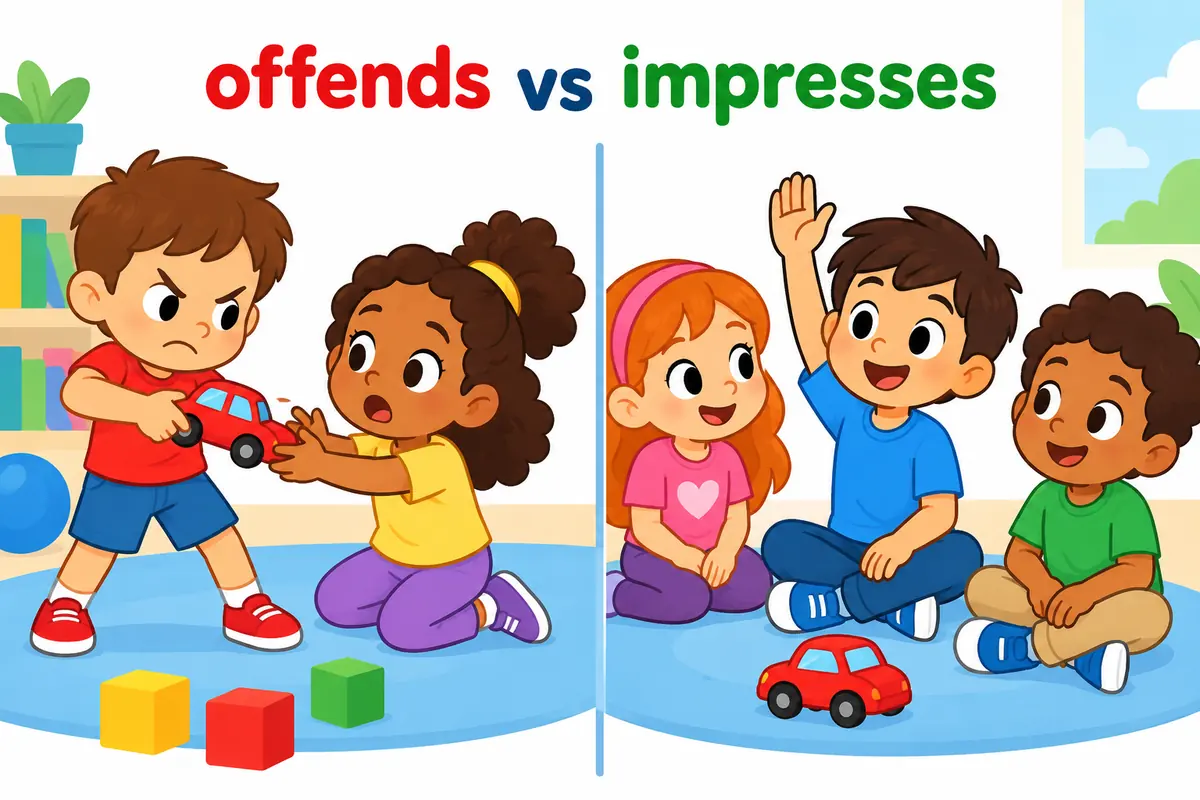
Use gall in a sentence for insolent boldness or for deep bitterness, and let the grammar do the rest: have the gall to do something for the noun, and it galls someone that something happened for the verb. Two details decide the tone: the word never praises courage, and the rudeness sense is uncountable, so it is always the gall rather than a gall.
Frequently asked questions about gall
Is gall a formal word?
Gall in the rudeness sense sits between formal and literary writing, and it is a little sharper than nerve or cheek. The bitterness sense is decidedly literary. In casual speech, people reach for cheek or nerve far more often than for gall, which sounds pointed and deliberate.
What part of speech is gall?
Gall is mainly a noun, meaning insolent boldness or bitter resentment, and in that sense it is uncountable. It is also a verb meaning to annoy, as in it galls me. A separate and technical noun sense names the swelling a wasp or fungus makes on a plant.
Can gall be a compliment?
No. Even at its mildest, gall condemns the boldness it names, because the speaker thinks the person has crossed a line. When courage or daring deserves praise, use nerve, daring or plain courage instead. Choosing gall would quietly reverse the meaning of the compliment.
How is gall different from Gaul?
Gall and Gaul sound the same but share nothing else. Gaul is the name of an ancient region in Europe, and its people were the Gauls, always written with a u. Gall, without the u, names boldness, bitterness or plant swellings, so the two spellings must never be mixed.
Ever found yourself feeling irritated, annoyed, or even bold, to the point where you just couldn’t hold back a cutting remark or a display of anger? That fiery sensation rising within you and taking over your words or actions is what we refer to as “gall.” In the realm of emotions, gall represents that intense blend of frustration, daring, and pride that pushes us to speak our minds without reservations.
This potent mixture of emotions can often lead us to say things we may later regret or behave in ways that surprise even ourselves. The presence of gall can be a double-edged sword, fueling confident assertions and bold decisions but also risking offending others or causing needless conflict.
7 Examples Of Gall Used In a Sentence For Kids
- The gall on the tree looks like a small fruit.
- I didn’t like the taste of the gall I accidentally put in my mouth.
- The gall was sticky and didn’t smell good.
- Birds often build their nests near gall because it provides protection.
- Be careful not to touch the gall on the plant, it may have thorns.
- Some insects like to lay their eggs inside the gall.
- The gall on the ground was shiny and red.
14 Sentences with Gall Examples
- I can’t believe he had the gall to copy my entire assignment and submit it as his own.
- It takes a lot of gall to ask the professor for an extension on a paper that was due a week ago.
- She showed some serious gall by walking into the exam without having studied at all.
- You have some gall to ask me for notes when you haven’t attended a single class all semester.
- The student had the gall to argue with the professor about their grade in front of the entire class.
- It’s going to take a lot of gall to pull an all-nighter and finish this project before the deadline.
- His gall knows no bounds – he’s always pushing the boundaries of what’s acceptable in class.
- I can’t believe the gall of some people to cheat during exams and think they won’t get caught.
- She had the gall to ask for extra credit even though she skipped half of the lectures.
- The amount of gall it takes to plagiarize someone else’s work and not expect any consequences is astounding.
- You have some serious gall to come to the lecture unprepared and expect to just bluff your way through.
- It’s going to take a lot of gall to approach the professor for a recommendation letter after failing their course.
- I admire her gall to stand up for what she believes in, even if it means going against the majority.
- He had the gall to challenge the professor’s opinion during the debate, knowing it could affect his grade.
How To Use Gall in Sentences?
To use the word Gall correctly in a sentence, you must understand its meaning.
Gall can be used as a noun to describe a feeling of bitterness, resentment, or annoyance. For example, “She felt a gall rise in her throat when she saw the unfair treatment.”
Alternatively, gall can also refer to a sore or blister-like, rough spot on a plant caused by insects or disease. For instance, “The rose bushes were covered in galls from the infestation.”
When using gall as a verb, it means to irritate or vex someone. You could say, “His rude behavior continued to gall her throughout the evening.”
To correctly incorporate gall into a sentence, identify whether it is being used as a noun or a verb. Remember to consider the context of the sentence and ensure that the meaning of gall aligns with the message you want to convey.
Practice using gall in sentences to become more comfortable with its usage and to improve your vocabulary.
Conclusion
In summary, the examples of sentences with “gall” demonstrate instances where individuals display nerve, boldness, or audacity in their actions. These sentences capture situations where someone exhibits the confidence to act without fear of consequences, often with a hint of arrogance or disregard for others. Whether in a political context, a personal confrontation, or a daring decision, the word “gall” is used to convey a sense of daring or impudence that draws attention to the speaker’s boldness.
Overall, the use of “gall” in sentences showcases how individuals can exhibit audacity or nerve in various situations. These examples serve to highlight the importance of confidence and boldness in achieving one’s goals, even if it means taking risks or facing criticism.


