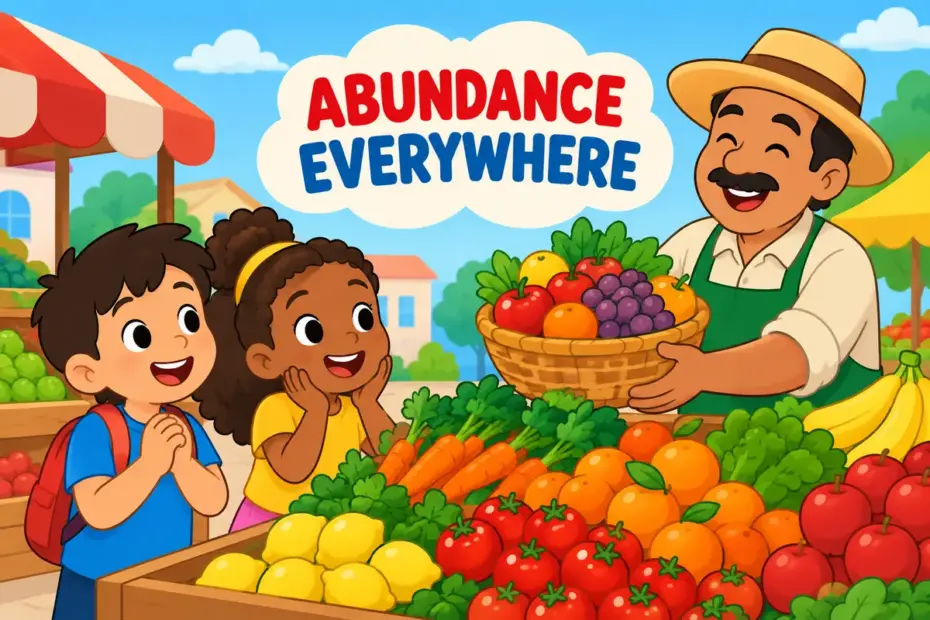
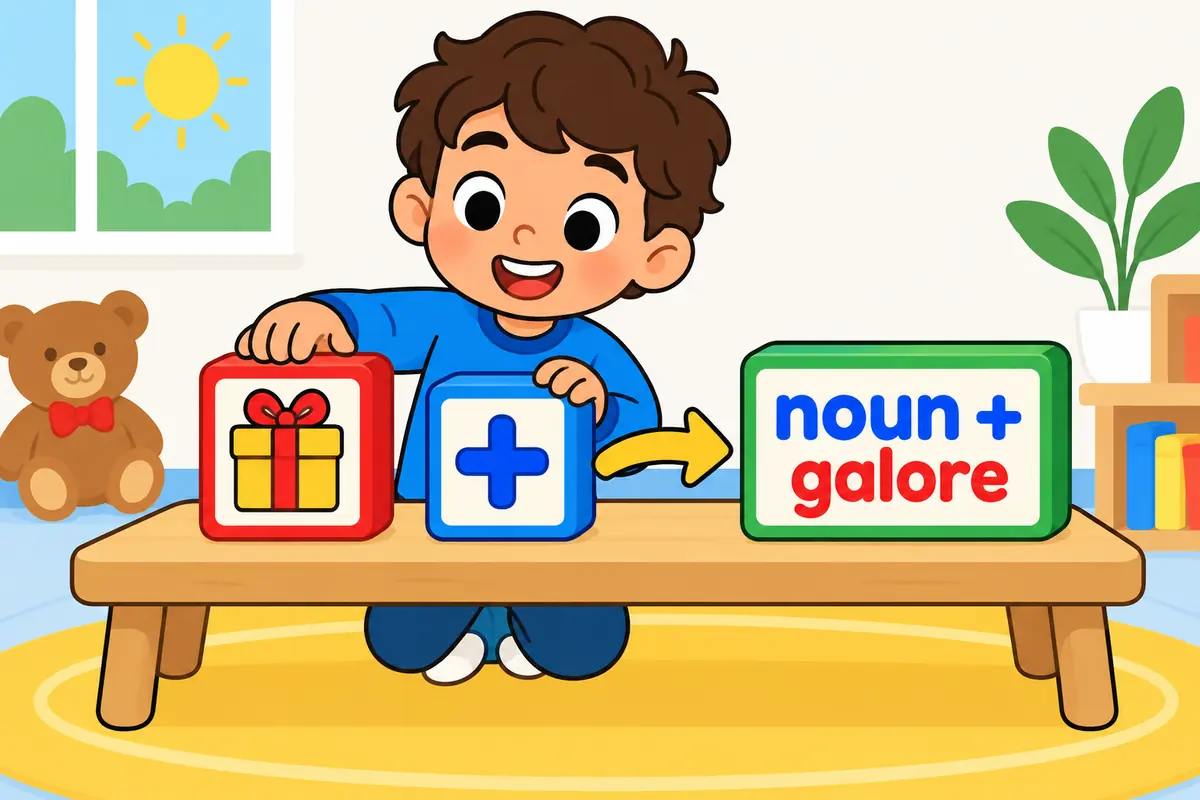
Galore means in abundance, and it always follows the noun it describes: prizes galore. To use galore in a sentence, put the thing first and the word second, as in “There were bargains galore at the market.” It never comes before the noun, which is the mistake learners make most.
Galore at a glance
- Galore is an adjective that follows its noun, a pattern called postpositive.
- It means in abundance, plentiful or in large numbers.
- It usually modifies a plural or mass noun: bargains galore, food galore.
- The tone is informal and emphatic, common in headlines, adverts and speech.
- It has no comparative form, so more galore is never correct.
- The commonest error is putting galore in front of the noun.
What does galore mean?
Galore is an adjective meaning in abundance or plentiful, and it follows the noun it modifies rather than preceding it. A shop with bargains galore holds many bargains, so the word adds emphasis to a quantity that is already there. The Cambridge entry for galore records this trailing pattern, and a plentiful supply of anything can carry the same idea in a plainer, more neutral word.
One limitation is worth stating. Galore is emphatic and slightly informal, so a business report that says complaints galore reads as a joke rather than a finding. In measured prose, many, numerous or abundant keeps the meaning without the wink.
How do you use galore in a sentence?
The grammar is fixed, so the only real decisions are which noun comes first and how the abundance is framed. Four frames cover almost every sentence you will meet.
| Pattern | Example | What it signals |
|---|---|---|
| noun + galore | The festival offered music galore. | The noun comes first and galore trails it. |
| there + be + noun + galore | There were prizes galore at the fair. | Existential there introduces the abundance. |
| noun + galore + place phrase | There are cafés galore in the old town. | A place phrase anchors where the plenty is. |
| noun + galore in headlines | Festive treats galore at the winter market. | Headlines drop the verb to compress the line. |
A practical test keeps the order right: say the noun aloud first, then add galore, and listen for the natural rhythm of bargains galore rather than galore bargains. A numerous set of examples can always be rewritten this way.
Galore in a sentence: examples across contexts
The word changes tone more than meaning across these registers, from headlines that compress it to prose that keeps the noun in front.
| Context | Example sentence | Why this works |
|---|---|---|
| Advertising | Prices slashed, with discounts galore this weekend. | A short clause suits the emphatic, salesy tone. |
| News headline | Storm clean-up brings volunteers galore. | Drops the verb and keeps the lively register. |
| Conversation | There was cake galore at the party. | The existential frame is the everyday spoken shape. |
| Travel writing | The night market had snacks galore. | A concrete scene carries the abundance. |
| Sports report | The final delivered chances galore for both sides. | Keeps the noun first in a looser register. |
| Book review | The memoir offers anecdotes galore but little reflection. | Balances plenty against a lack. |
| Classroom | The science fair had experiments galore. | A concrete event makes the word vivid for pupils. |
| Food writing | The harvest table held vegetables galore. | A mass of food suits the plural-or-mass rule. |
| Workplace email | The new office has windows galore and no storage. | Sets a bright tone then undercuts it. |
Every row keeps galore after its noun, including the headline, which shows the position is the one thing that never varies.
Galore vs abundant
These two adjectives say much the same thing and behave in opposite ways. Abundant stands before the noun in neutral prose; galore trails it and lifts the tone.
| Attribute | galore | abundant |
|---|---|---|
| Position | After the noun | Before the noun |
| Register | Informal, emphatic, journalistic | Neutral to formal |
| Typical pair | bargains galore | abundant rainfall |
| Effect | Adds a lively, spoken tone | States quantity plainly |
| Comparatives | None | More abundant |
Two near-relatives sit alongside them. Teeming suggests a crowd or swarm and is followed by with, while rife usually carries an unwelcome sense, as in rife with errors. Verdict: reach for galore for informal emphasis, and for abundant in a report.
Word forms and grammar of galore
Galore has one form, one position and no degrees. The table also lists aplenty, the closest word with the same trailing pattern.
| Form | Part of speech | Example |
|---|---|---|
| galore | adjective, invariable | There were books galore on the stall. |
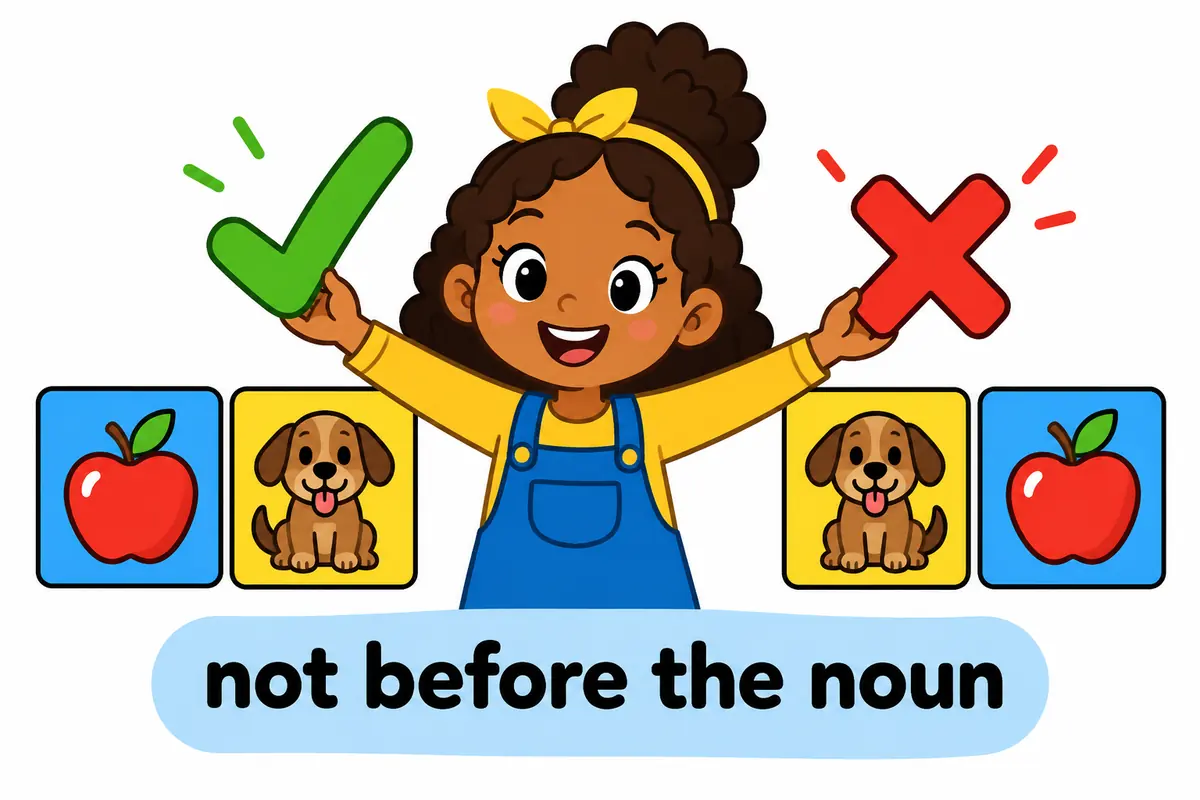
| galore | postpositive only | Not galore books; the noun must come first. |
| aplenty | adjective, similar pattern | There was food aplenty after the harvest. |
| galore | no comparative | Not more galore; use even more instead. |
Common mistakes with galore
- Incorrect:
Galore prizes filled the table.Correct: Prizes galore filled the table. Rule: Galore must follow the noun. - Incorrect:
There were galore people.Correct: There were people galore. Rule: The trailing position holds even after there were. - Incorrect:
The shop was galore with toys.Correct: The shop had toys galore. Rule: Galore is not a with-adjective like full; drop the preposition. - Incorrect:
This year is more galore than last.Correct: This year offers more treats than last. Rule: Galore cannot be compared. - Incorrect:
She has galore energy.Correct: She has energy galore. Rule: Position again; the noun leads.
Practice using galore
Fix the order and the register in each item, then check the reasoning below.
- Fill the gap: The summer fair had rides ______.
- Choose the better word: The report noted (galore / abundant) rainfall across the region.
- Correct the error: Galore snacks were waiting on the table.
- Build a sentence: use food + galore about a neighbourhood festival.
- Spot the register: which belongs in a news headline — treats galore at the winter market, or there were a great many treats?
- Rewrite with the noun first: The garden had flowers in abundance.
Answers
- rides galore — the noun comes before the word.
- abundant — a formal report wants the pre-noun form.
- Snacks galore were waiting — galore trails the noun, not leads it.
- Model answer: There was food galore at the summer festival.
- treats galore at the winter market — the headline suits the compressed, lively form.
- The garden had flowers galore — the noun moves ahead of the abundance word.
The bottom line
Use galore in a sentence to stress that something exists in large amounts, and keep it after the noun every time. The two details that decide most sentences are the fixed position, noun first and galore second, and the informal, emphatic tone that suits headlines and speech more than reports. Where the register is formal, abundant or plentiful carries the same meaning cleanly.
Frequently asked questions about galore
Can galore come before a noun?
No. Galore is postpositive, which means it always follows the noun it describes, as in bargains galore. Putting it first, as in galore bargains, sounds wrong to native speakers and marks the writer as a learner. The single exception is poetry that deliberately breaks word order.
Is galore formal or informal?
Galore sits in the informal, emphatic range, so it fits headlines, advertising and conversation. A formal report prefers abundant, plentiful or numerous, which state the same quantity without the lively tone. Using galore in a legal or academic document reads as a joke rather than a finding.
What does galore mean after a noun?
After a noun, galore means that the noun exists in large amounts or numbers, so chances galore means many chances. The word does not name a precise quantity, only an emphatic plenty. It usually attaches to a plural or mass noun rather than a single countable item.
Which nouns does galore modify?
Galore most often modifies plural count nouns and mass nouns: discounts galore, food galore, chances galore. A singular countable noun sounds odd with it, so one bargain galore is unnatural. When you need a singular noun, switch to an adjective such as abundant, which handles both.
Are you looking to add flair to your writing with an abundance of examples? In this guide, we’ll explore the concept of “galore” and how you can effectively incorporate it into your sentences.
“Galore” is a term that signifies abundance or plentifulness. When used in a sentence, it conveys the idea of a large quantity or an excessive amount of something. Whether you’re describing a surplus of options, opportunities, or items, “galore” can help elevate your writing and make it more engaging. Ready to master the art of using “galore” in your sentences? Let’s dive in!
7 Examples Of Galore Used In a Sentence For Kids
- Galore of candies for everyone to enjoy at the party.
- The garden is full of flowers galore.
- In the park, there are swings galore for us to play.
- At the beach, we found seashells galore.
- The library has books galore for us to read.
- In the sky, there are stars galore shining bright.
- The market has fruits and vegetables galore for us to buy.
14 Sentences with Galore Examples
- The college canteen offers galore of snacks and beverages to satisfy students’ cravings.
- During college fests, there are galore of competitions and activities for students to participate in.
- The library has galore of books and resources for students to enhance their knowledge.
- Students can find galore of study materials and notes online to prepare for their exams.
- College festivals are filled with galore of performances, food stalls, and fun activities for students to enjoy.
- The campus bookstore has galore of stationery items, textbooks, and merchandise for students to purchase.
- Students can choose from galore of clubs and societies to join based on their interests and hobbies.
- There are galore of internship opportunities available for college students to gain practical experience.
- The college gym offers galore of fitness classes and equipment for students to stay active and healthy.
- During cultural events, students can showcase galore of talents such as singing, dancing, and acting.
- The college hostel provides galore of facilities including laundry services, Wi-Fi, and recreational areas for students.
- Students can attend galore of workshops and seminars to enhance their skills and knowledge outside of the classroom.
- The college campus has galore of green spaces and gardens for students to relax and unwind.
- The university cafeteria serves galore of delicious and affordable meals for students with varying dietary preferences.
How To Use Galore in Sentences?
Galore means in abundance or excess and is commonly used to express a large quantity of something.
To use galore in a sentence, simply plug it in where it best fits to describe a surplus of a particular item or action. For example: “The picnic table was filled with sandwiches galore.” This sentence conveys that there were numerous sandwiches on the table.
Remember to place galore after the noun it describes or, as in the example above, at the end of the sentence for better clarity. It can be used with a variety of nouns, such as food, gifts, decorations, colors, and more to emphasize the plentiful nature of the subject.
Practice incorporating galore into your sentences to become more comfortable with using the word correctly. You can experiment with different settings and scenarios to enhance your proficiency.
Overall, using galore in a sentence is a straightforward way to convey abundance and excess. By following these tips and guidelines, you can effectively utilize this word in your writing and speech to add emphasis and vibrancy to your descriptions.
Conclusion
In conclusion, the variety of sentences with “galore” demonstrate its versatility and usefulness in expressing abundance or plentifulness in a wide range of contexts. From describing a surplus of food at a buffet to an excess of clothes in a fashion store, “galore” adds a vivid and descriptive element to language that vividly conveys an overwhelming quantity of something.
By incorporating “galore” into sentences, writers and speakers can effectively emphasize the sheer abundance of a particular item or concept, making their communication more colorful and engaging. Whether used in casual conversation or formal writing, the word “galore” serves as a versatile tool for expressing the idea of copiousness across various subjects and scenarios.


