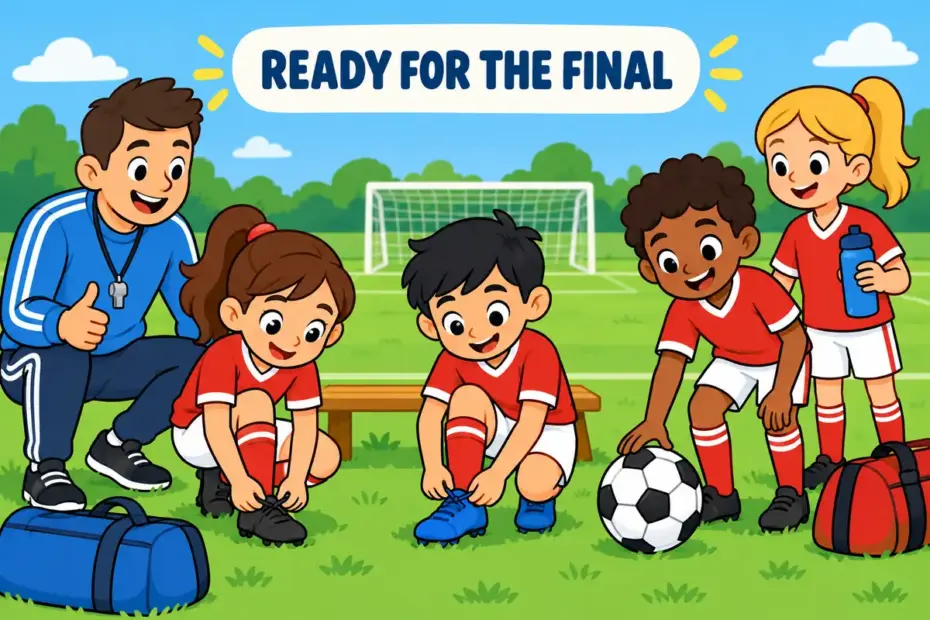
Gear up means to get ready for something, usually by collecting what you need and making a plan. To use gear up in a sentence, pair it with for before the event: the team geared up for the final. The verb is nearly always intransitive, so the preparation itself is the subject, not a person you gear.
Gear up at a glance
- Gear up is a phrasal verb meaning to get ready for something that is coming.
- The dominant pattern is gear up for plus an event, or gear up to plus a verb.
- Gear up is usually intransitive, so the subject does the preparing rather than receiving it.
- Common collocations include gear up for the final, gear up for winter and gear up for the launch.
- The commonest learner error is dropping for, which leaves the sentence without its event.
What does gear up mean?
Gear up is a phrasal verb meaning to get ready for something that is about to happen. The Cambridge entry for gear up records both the readiness sense and the more literal sense of putting on equipment, and the difference decides the sentence. Where a writer wants the plain, register-neutral verb instead, they can prepare for an event, because gear up adds a note of momentum that prepare does not carry.
| Sense | Plain meaning | Example sentence |
|---|---|---|
| Get ready | Prepare for an event that is near | The town geared up for the festival. |
| Put on gear | Dress in equipment for an activity | Climbers gear up at the foot of the wall. |
| Make ready as a group | A team or crowd builds readiness together | The whole squad geared up for the replay. |
How do you use gear up in a sentence?
Gear up changes shape around the event it points to: for introduces a noun, to introduces a verb, and an object, when a writer adds one, sits between gear and up rather than after the particle.
| Pattern | Example | What it signals |
|---|---|---|
| gear up for + noun | We geared up for the storm. | Names the event being prepared for. |
| gear up to + verb | The squad geared up to defend its lead. | Names the action that follows preparation. |
| gear + object + up | The coach geared the players up for the replay. | An object splits the verb from its particle. |
| be geared up | The volunteers were geared up and waiting. | States readiness as a completed condition. |
| gear up + early / outside | Fans geared up early outside the stadium. | Adds when or where the preparation happened. |
Gear up in a sentence: examples across contexts
Gear up shifts register more than it shifts meaning. The eight sentences below keep the same phrasal verb while moving from a classroom to a news report, and each one names the event waiting at the end of the preposition.
| Context | Example sentence | Why this works |
|---|---|---|
| Classroom | The class geared up for the spelling bee by making flash cards. | Names the event and the concrete preparation. |
| Workplace email | The support team is gearing up for the busy season. | Continuous form shows preparation in progress now. |
| News report | Residents geared up for the storm as the river rose. | Pairs the preparation with a visible cause. |
| Sports report | United geared up for the derby behind closed doors. | Uses the verb exactly where sports writing expects it. |
| Travel writing | Hikers gear up at the trailhead before the climb. | Borrows the literal sense of putting on equipment. |
| Conversation | We had better gear up if the in-laws arrive at noon. | Relaxed tone, with the event supplied by context. |
| Academic writing | The laboratory geared up to repeat the trial with larger samples. | To plus a verb suits a planned procedure. |
| Everyday planning | Shops geared up for the holiday rush in late November. | Seasonal event plus commercial preparation in one line. |
Only the sports and conversation sentences would sound odd in a formal report; the verb keeps its meaning everywhere but changes its company.
Gear up vs prepare
Gear up and prepare describe the same act from different angles, and the table separates the choice.
| Attribute | gear up | prepare |
|---|---|---|
| Register | Brisk, journalistic and sporty | Neutral, at home anywhere |
| Typical event | One that is imminent | Any future task, near or far |
| Object | Rarely takes one | Takes one freely: prepare the meal |
| Emphasis | Readiness and momentum | The steps carried out beforehand |
| Formality | Informal through journalistic | Works at every level |
Choose gear up when an approaching event demands visible readiness; choose prepare, or brace for bad news, when the emphasis falls on the work done in advance. A household gets ready for anything in plain speech, but a newspaper says a city geared up for a heatwave.
Word forms and grammar of gear up
Gear up inflects through the verb gear, and the unhyphenated verb should not be confused with the hyphenated noun gear-up.
| Form | Part of speech | Example |
|---|---|---|
| gear up | phrasal verb, base form | We should gear up soon. |
| gears up | phrasal verb, third person singular | She gears up for every recital. |
| geared up | phrasal verb, past and past participle | They geared up for the audit. |
| gearing up | phrasal verb, present participle | The city is gearing up for the parade. |
| gear-up | noun, hyphenated | A pre-match gear-up session was scheduled. |
| gear | noun, different meaning | Bring your climbing gear. |
The particle does the work in many phrasal verbs, but its sense belongs to the whole verb: back up a claim has nothing to do with getting ready. Only the verb changes the meaning, never up alone.
Common mistakes with gear up
- Incorrect:
We geared up the exam.Correct: We geared up for the exam. Rule: for introduces the event being prepared for. - Incorrect:
They geared up to the storm.Correct: They geared up for the storm. Rule: to introduces a verb, for introduces a noun. - Incorrect:
The players geared up for to win.Correct: The players geared up to win. Rule: use to, not for to, before a verb. - Incorrect:
The city is gear up for the games.Correct: The city is gearing up for the games. Rule: after is, the -ing form is required. - Incorrect:
She geared up for the meeting yesterday.Correct: She geared up for the meeting yesterday. Rule: past time takes the simple past geared.
Practice using gear up
Work through the six items, then check the reasoning rather than only the key.
- Fill the gap: The whole village ______ for the harvest festival.
- Choose the better word: After the warning, the crew (geared up / prepared up) for the storm.
- Correct the error: The team geared up to the final.
- Build a sentence: use gear up for about a class preparing for a science fair.
- Spot the register: which belongs in a news report — the port geared up for record traffic, or we all got our gear on?
- Rewrite in the past: The staff is gearing up for the inspection.
Answers
- geared up — the festival is the event, so for follows the verb.
- geared up — prepare never takes up; only gear up carries the particle.
- The team geared up for the final — to needs a verb, and final is a noun.
- Model answer: The class geared up for the science fair by testing its model twice.
- The port geared up for record traffic — a news report avoids the casual gear on.
- The staff geared up for the inspection — finished past time takes the simple past.
The bottom line
Use gear up in a sentence when an event is close and the preparation is active, and let for carry the event. Two details decide most sentences: the verb is usually intransitive, so the subject does the preparing, and to before a verb keeps gear up grammatical where for before a noun keeps it clear. Where a neutral verb serves better, prepare does the same job quietly.
Frequently asked questions about gear up
Is gear up one word or two?
Gear up is written as two words, because up is a particle that belongs to the verb. The unhyphenated verb contrasts with the hyphenated noun gear-up, which describes equipment or preparation and does take a hyphen, as in a gear-up session.
Does gear up need the word for?
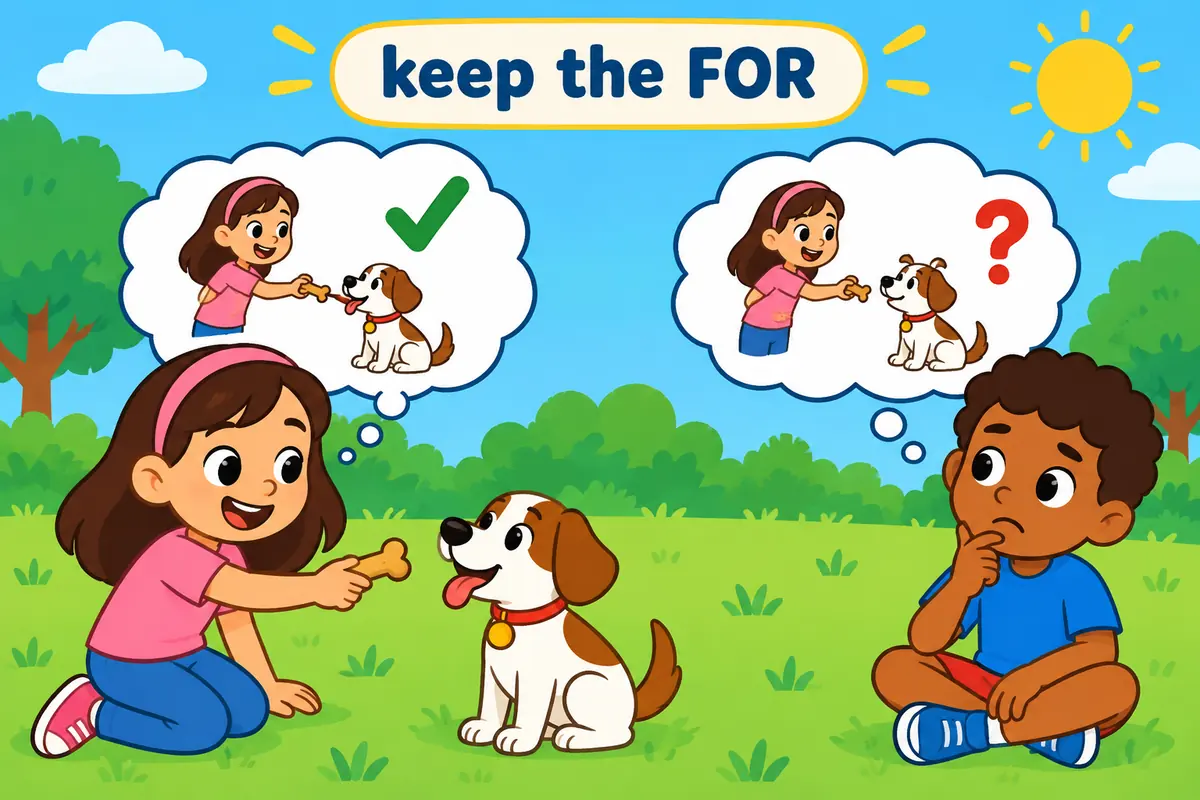
Gear up usually takes for before the event it anticipates, as in gear up for the exam. Use to before a verb, as in gear up to race. Without either word the sentence feels unfinished: the crowd geared up means the crowd got ready for something the reader was never told.
Can gear up be used in formal writing?
Gear up suits news reports, sports writing and workplace planning, where it reads as brisk rather than casual. It is out of place in a legal document, where prepare for carries the same meaning without the sporting overtone. Match the register your reader expects.
What is the difference between gear up and gear toward?
Gear up means to prepare for an event in the near future, as in gear up for the tournament. Gear toward means to design something for a particular group or purpose, as in a course geared toward beginners. The first describes readiness; the second describes direction.
Have you ever wondered what it really means to “gear up”? This common expression simply refers to preparing or getting ready for some upcoming activity or task. It often denotes a sense of readiness and anticipation.
When someone mentions “gearing up,” they are talking about getting all the necessary equipment, tools, or mindset in place to tackle a specific challenge or venture. Whether it’s preparing for a game, a project, or even just a new day, the phrase signifies a proactive approach to being fully equipped and mentally prepared.
7 Examples Of Gear Up Used In a Sentence For Kids
- Gear up for a fun day of learning!
- Let’s gear up with our pencils and notebooks.
- It’s time to gear up for outdoor playtime.
- Remember to gear up with your school bag and water bottle.
- Don’t forget to gear up with your favorite storybook.
- Let’s all gear up for a sing-along session.
- Time to gear up for some coloring and drawing activities.
14 Sentences with Gear Up Examples
- Gear up for your upcoming exams by creating a study schedule and sticking to it.
- Make sure to gear up for college festivals and events to make the most of your experience.
- Don’t forget to gear up for internship opportunities by updating your resume and practicing for interviews.
- Gear up for group projects by communicating effectively with your team members and dividing tasks efficiently.
- You need to gear up for your presentations by rehearsing and preparing visual aids.
- Make sure to gear up for networking events by practicing your introductions and preparing some conversation topics.
- It’s important to gear up for job fairs by researching companies and preparing questions to ask recruiters.
- Gear up for extracurricular activities by joining clubs and organizations that interest you.
- Don’t forget to gear up for your final year project by selecting a topic early and planning your research.
- You should gear up for campus recruitment drives by updating your LinkedIn profile and attending workshops on interview skills.
- Make sure to gear up for sports tournaments by training regularly and staying hydrated.
- It’s important to gear up for guest lectures by reading up on the speaker’s background and preparing questions.
- Don’t forget to gear up for workshops and training sessions by taking notes and actively participating in discussions.
- You need to gear up for industry visits by researching the companies you will be visiting and preparing questions for the representatives.
How To Use Gear Up in Sentences?
To use Gear Up in a sentence, start by identifying the main action or verb you want to emphasize in your sentence. Once you have chosen the main action, place it right after the bolded phrase “Gear Up” to draw attention to it.
For example, if you want to highlight the action of “running” in your sentence, you would write: “Gear Up running, I hit the trail for my morning workout.”
Another way to use Gear Up is to emphasize the object or noun in your sentence. To do this, put the important noun right after the bolded “Gear Up” to make it stand out.
For instance, if you want to emphasize the activity of “swimming,” you could write: “Gear Up swimming, I jumped into the pool for a refreshing dip.”
You can also place an adverb or adjectival phrase right after the bolded “Gear Up” to add more detail or description to your sentence.
For example, if you want to specify the time of day when you are “cycling,” you might write: “Gear Up cycling early in the morning, I enjoyed the peaceful streets.”
Remember that the main idea is to place the key element of your sentence right after the bolded phrase “Gear Up” to give it prominence and make it the focal point of your sentence.
Conclusion
In conclusion, the phrase “gear up” is commonly used to indicate getting ready or preparing for a task, event, or challenge. Whether it’s gearing up for a big game, gearing up for an important presentation, or simply gearing up for the day ahead, this expression highlights the act of getting oneself mentally and physically prepared. It emphasizes the need to focus, gather resources, and be ready to take on whatever lies ahead.
By using the phrase “gear up,” individuals convey a sense of determination, readiness, and motivation. It serves as a reminder to be proactive, organized, and committed to success. So, next time you hear someone talk about gearing up, remember that it’s all about getting set to tackle the next challenge head-on with the right mindset and preparation.


