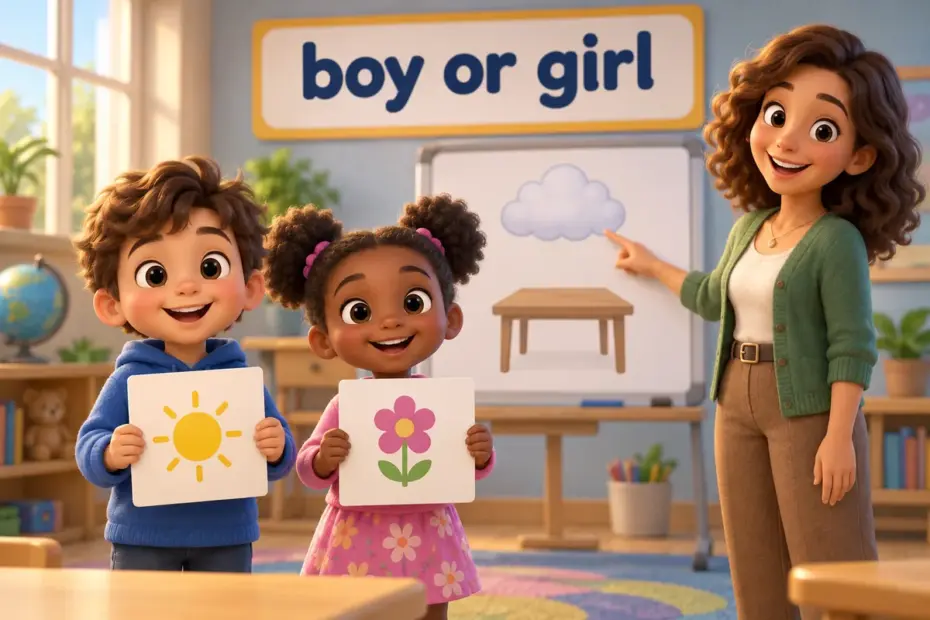
The gender of nouns in English is mostly natural gender, so a noun is masculine or feminine only when it names a male or a female creature. Most objects take neuter pronouns, and the language shows the pairs through separate words rather than through an ending on every noun. This guide covers the types and the markers.
Gender of nouns in English at a glance
- English uses natural gender, which follows meaning rather than word shape.
- The four categories are masculine, feminine, common and neuter.
- Gender appears in word pairs such as father and mother, not in most endings.
- Objects and ideas are neuter and take the pronoun it.
- The commonest modern shift is replacing an -ess form with a neutral noun.
What are the types of gender in English nouns?
English sorts nouns by whether they name a male, a female, either, or neither. A masculine noun names a male, a feminine noun names a female, a common noun can name either, and a neuter noun names a thing or an idea. Unlike French or Spanish, English does not assign gender to every object, so a table has no gender at all. The table shows the four types.
| Type | What it names | Examples |
|---|---|---|
| Masculine | a male person or animal | father, king, uncle, bull |
| Feminine | a female person or animal | mother, queen, aunt, cow |
| Common | either sex, no change of word | teacher, doctor, child, cousin |
| Neuter | a thing, place or idea | table, city, honesty, cloud |
Only the first two types are tied to sex; the other two cover everyone and everything else. More example nouns across the alphabet sit in nouns that start with c. To place a new noun, ask two questions: does it name a living creature, and if so, is that creature male or female? A noun that fails the first question is neuter, and one that can name either sex without changing is common. This short test covers almost every noun a learner meets, and it keeps the four types from blurring together.
How is the gender of a noun shown in English?
English marks gender in four main ways: a different word, a feminine suffix, a compound, or a word placed before the noun. The method varies by noun, so a learner meets father and mother as separate words but waiter and waitress as a base plus a suffix. The table lists the patterns with a pair for each.
| Method | Masculine | Feminine |
|---|---|---|
| A different word | brother | sister |
| A different word | king | queen |
| Feminine suffix | waiter | waitress |
| Feminine suffix | hero | heroine |
| A compound | boyfriend | girlfriend |
| A compound | landlord | landlady |
| Word placed before | male nurse | female nurse |

Gender of nouns in English: examples across contexts
Gender shows up in family terms, jobs, animals and formal writing. The examples below place each type in a real sentence, and further everyday frames sit in gender sentence examples.
| Context | Sentence | Gender in focus |
|---|---|---|
| Family | My aunt visited her brother. | feminine aunt and masculine brother |
| Workplace | The actor thanked the director. | common nouns with no sex marked |
| Farm | The bull followed the cow. | masculine bull and feminine cow |
| School | Every pupil brought a book. | common noun covers all pupils |
| Royal news | The queen greeted the king. | separate words mark the pair |
| Hospital | The nurse checked the patient. | common nouns name either sex |
| Nature writing | The mountain stood silent. | neuter noun takes it |
| Formal letter | The chairperson called the meeting. | a neutral job title |
| Storytelling | The widow and the widower met. | suffix marks the feminine form |
| Sports report | The host team won its match. | a group noun takes it |
Which word should you use today?
Modern English favours neutral nouns for jobs and roles, so a form that was once standard can now sound dated or even insulting. Choose the neutral word in professional writing, and keep an -ess form only when it is the accepted title, such as in acting awards. The table sets the older form against the usual choice now.
| Traditional form | Neutral choice now | Field |
|---|---|---|
| actress | actor | acting |
| waitress | server | hospitality |
| stewardess | flight attendant | aviation |
| chairman | chair or chairperson | business and boards |
| businessman | businessperson | commerce |
| policeman | police officer | public services |
One sentence shows the shift: a modern report says the actor won the award, while an older one said the actress won it. Titles such as Mr, Mrs and Miss work the same way, because many writers now prefer Ms for a woman rather than marking marital status. The change reaches pronouns too, where singular they replaces a default he for a person of unknown sex. The wider pattern behind these choices appears in gender role sentence examples.
Word forms and grammar of gender
Only a small set of endings carries gender, and most of them are rare or dated. The table lists the common suffixes, the pairs they build, and the forms a learner should treat with care.
| Ending | Masculine form | Feminine form |
|---|---|---|
| -ess | actor | actress (now less used) |
| -ess | host | hostess |
| -ine | hero | heroine |
| -trix | aviator | aviatrix (rare) |
| -ette | usher | usherette (dated) |
| no ending | teacher | teacher |
Two habits keep gender agreement correct. First, decide the sex of the noun before choosing a pronoun, and let a thing be it. Second, prefer a neutral noun when the sex is unknown, because a marked form can sound dated. These two habits cover the great majority of sentences, while the rare suffixes matter mainly for reading older texts. A learner who opens an older novel will still meet authoress and aviatrix, so the endings are worth recognising even when modern writing advises against them.
Common mistakes with gender
Mistake 1: giving objects a gender. Incorrect: The table, she is wobbling. Correct: The table is wobbling, and it is uneven. Rule: inanimate nouns are neuter and take it.
Mistake 2: a dated -ess form. Incorrect: The authoress signed copies. Correct: The author signed copies. Rule: neutral job titles are standard now.
Mistake 3: he for an unknown person. Incorrect: If a driver is tired, he should rest. Correct: If a driver is tired, they should rest. Rule: use they for a person of unknown or either sex.
Mistake 4: mismatched pronoun. Incorrect: The team lost their first match, so it trained. Correct: The team lost its first match, so it trained. Rule: a group acting as one unit takes it.
Mistake 5: a compound with the wrong half changed. Incorrect: landlady and landlordess. Correct: landlord and landlady. Rule: it is the second element of these compounds that changes.
Practice using the gender of nouns
- Label the gender: king, table, teacher, mother.
- Give the feminine pair: waiter, hero, host.
- Correct the error: The committee lost their vote.
- Build a sentence: use a neuter noun and the pronoun it.
- Choose the better word for a modern report: actor or actress.
- Spot the register: which suits a job advert, waitress wanted, or server wanted?
Answers
- king is masculine, table is neuter, teacher is common, mother is feminine.
- waitress, heroine, hostess, though the neutral actor and host are often preferred.
- The committee lost its vote; a group acting as one unit takes it.
- Sample: The river was wide, and it moved slowly; a place noun is neuter.
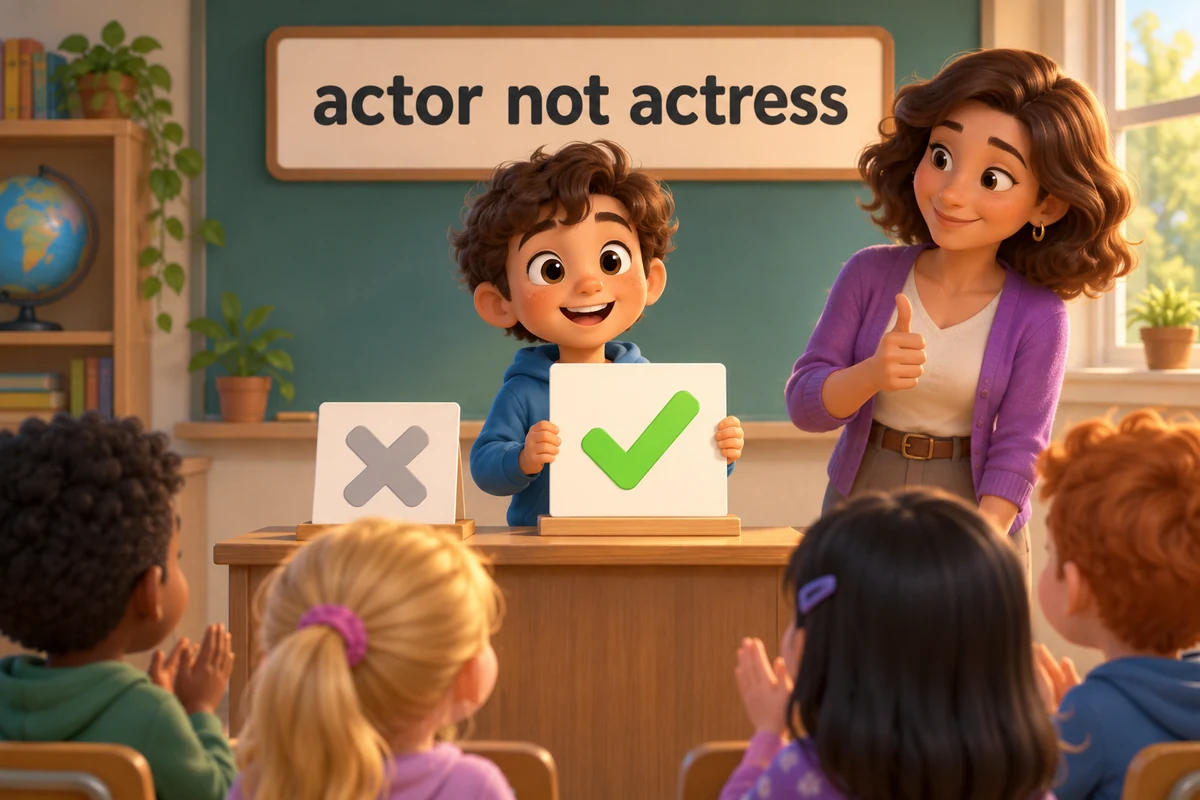
- actor; the neutral form is standard in modern writing.
- server wanted; it avoids marking gender in a job advert.
The bottom line
The gender of nouns in English rests on meaning, not on a grammatical system for every word. Keep the four types in mind, learn the word pairs and the few suffixes, and treat most objects as neuter with the pronoun it. In modern writing, choose a neutral job title unless a marked form is the accepted name.
Frequently asked questions about gender
Does English have grammatical gender?
English has natural gender rather than a full grammatical gender system. A noun is masculine or feminine only if it names a male or a female, so most nouns are neuter and take it. French and Spanish assign gender to every noun, but English does not, which makes agreement simpler.
How do you show the gender of a noun in English?
English shows gender with a different word, a suffix, a compound or a word placed before the noun. Father and mother are separate words, waiter and waitress use a suffix, and landlord and landlady form a compound. Objects take no marker at all.
Which nouns are neuter in English?
Nouns that name objects, places, ideas and most animals are neuter and take the pronoun it. Examples include table, city, honesty and cloud. Some animals take he or she when the sex matters, as in a cow and her calf, but it is the default.
Why are some -ess words like actress falling out of use?
Many -ess forms are dropping out of use because a neutral title fits both sexes and avoids marking gender where it is not needed. Actor, server and flight attendant now serve for everyone. A few marked forms survive in fixed names, such as acting awards.