
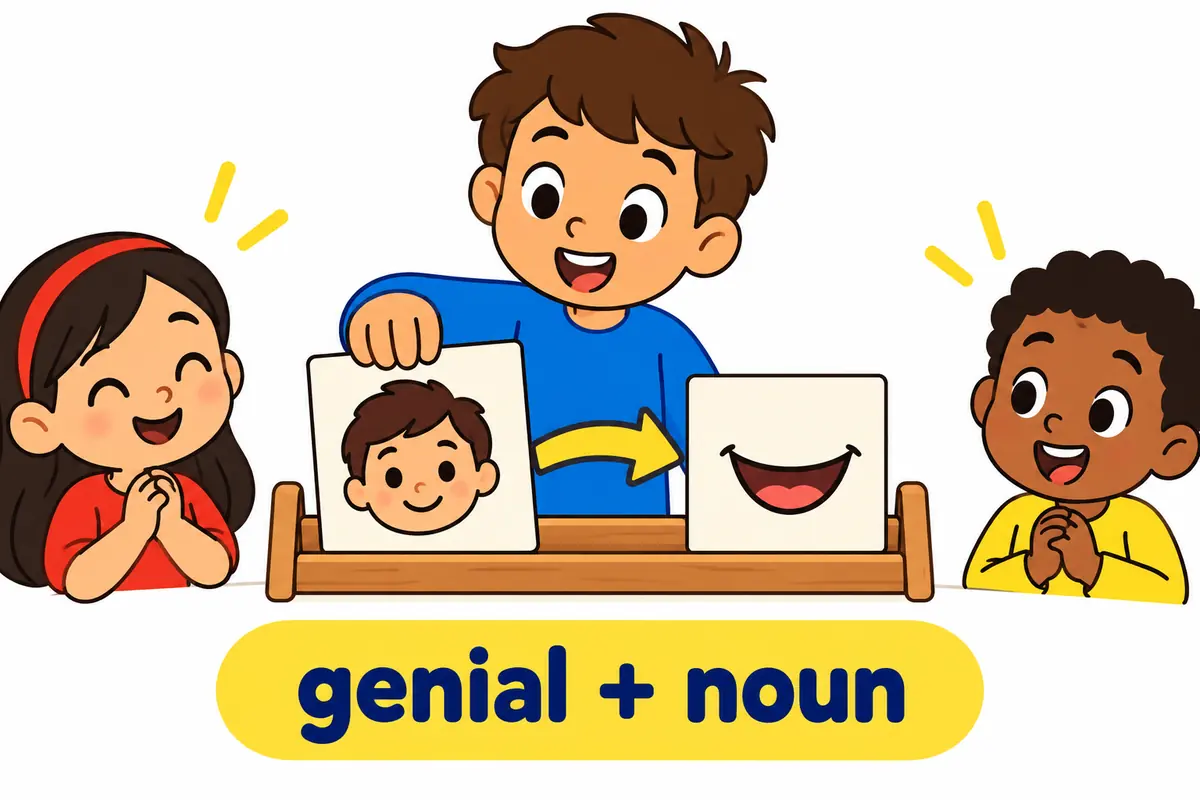
Genial means friendly and cheerful, and it can also describe a mild, kindly climate or surrounding. To use genial in a sentence, put it before the person or place it describes: “a genial host”, “a genial morning”. The adjective rarely stands alone, so it almost always leans on the noun beside it.
Genial at a glance
- Genial is an adjective meaning warm, friendly and good-humoured.
- It normally comes before the noun it describes, as in a genial teacher.
- Its second sense describes mild, pleasant weather or a kindly place.
- Typical partners are host, manner, smile, face and climate.
- It belongs to neutral to formal writing and sounds warmer than polite.
- The commonest error is confusing it with venal, which means open to bribery.
What does genial mean?
Genial is an adjective meaning friendly and cheerful in manner, or mild and pleasant when it describes weather or surroundings. The Cambridge entry for genial keeps the personal warmth and the kindly climate close together, so context decides which is meant.
| Sense | Plain meaning | Example sentence |
|---|---|---|
| Warm and friendly | Good-humoured and welcoming toward other people | The genial host greeted every guest by name. |
| Mild and pleasant | Of weather or a place, gentle and kindly | A genial spring warmed the orchard early. |
One limitation is worth stating. Genial describes manner and atmosphere, not looks, and it is milder than charming. It cannot praise someone’s talent or intelligence, so it is the wrong word when the warmth is not the point. The near-synonym affable stresses ease in conversation rather than a sunny mood, and jovial adds louder, heartier good humour.
How do you use genial in a sentence?
Genial almost always sits directly before its noun, and it pairs most naturally with words for people and for the way they behave. The patterns below cover the personal sense and the less common weather sense, and they show why the adjective rarely appears after the verb to be.
| Pattern | Example | What it signals |
|---|---|---|
| genial + person noun | a genial headmaster | Describes a settled, likeable manner. |
| genial + manner noun | his genial smile | Points to a specific sign of warmth. |
| be genial to + person | She was genial to every newcomer. | Behaviour directed at a particular group. |
| a genial + place or season | a genial climate | The milder sense, used of weather and surroundings. |
| remain genial under + noun | He remained genial under pressure. | Shows the warmth as steady rather than brief. |
When a sentence concerns polite relations between groups rather than one person’s mood, cordial is the more formal word, as in a cordial exchange between the two committees.
Genial in a sentence: examples across contexts
Genial holds its meaning while the setting changes from a staffroom to a travel guide. Each of the nine sentences below keeps the warmth or the mild weather in clear view, so the sense is never left to guesswork.
| Context | Example sentence | Why this works |
|---|---|---|
| Classroom | Our genial caretaker always had a joke for the first arrivals. | A person noun plus a habit shows settled warmth. |
| Workplace email | Thank you for the genial welcome to the new team. | A warmth noun suits a short formal thank-you. |
| News report | Colleagues remembered the editor as a genial but exacting leader. | Pairs warmth with a contrast, which stops it sounding bland. |
| Travel writing | The town enjoys a genial climate for most of the year. | The climate sense belongs to descriptive writing. |
| Literary prose | A genial November softened the empty streets. | Weather as a gentle character suits narrative. |
| Sports report | The genial coach kept his temper after a harsh defeat. | The steadiness of the manner is the point. |
| Everyday conversation | Nan was genial to everyone, even the meter reader. | The to pattern shows warmth toward all comers. |
| Business profile | Her genial manner hid a very sharp negotiating mind. | Warmth set against another quality adds interest. |
| Letter of reference | He was a genial colleague who defused every argument. | A specific effect justifies the praise. |
The weather examples are the minority, which matches how the word is used in practice: most genial sentences describe people.
Genial vs congenial and venal
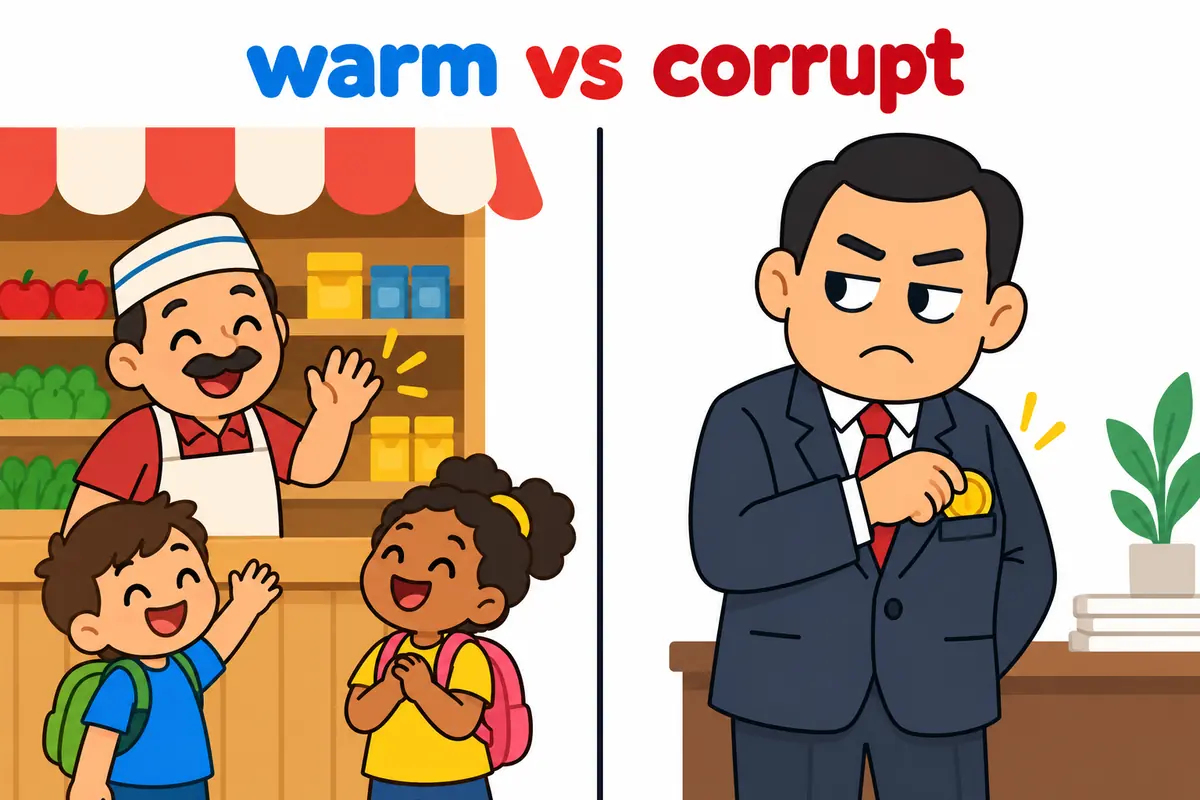
Genial is regularly confused with two words that look and sound like it. congenial means pleasant or well suited to your tastes, and venal means open to bribery. Neither means warm and friendly, which is genial’s job alone.
| Attribute | genial | congenial | venal |
|---|---|---|---|
| Core meaning | Warm and cheerful | Pleasant and well suited | Open to bribery |
| Typical noun | host, smile, manner | companion, task, atmosphere | official, judge, politician |
| What it describes | Somebody’s manner | A comfortable fit | Somebody’s morals |
| Register | Neutral to warm | Semi-formal | Formal and critical |
| Common error | writing it for bribery | writing it for a sunny mood | writing it for harmless warmth |
Verdict: choose genial for a warm, cheerful manner, congenial for a pleasant fit between people or tasks, and venal only when corruption is meant. A single swapped letter turns a kindly greeting into an accusation of bribery.
Word forms and grammar of genial
Genial is an adjective, and its family is small and regular. The adverb genially describes how someone behaves, while the noun geniality names the quality itself.
| Form | Part of speech | Example |
|---|---|---|
| genial | adjective | a genial receptionist |
| genially | adverb | He genially waved us through. |
| geniality | noun | Her geniality put the room at ease. |
| ungenial | adjective, rare | An ungenial host hurried us out. |
| congenial | adjective, different meaning | A congenial task suits her. |
| venal | adjective, different meaning | A venal official took the bribe. |
The two look-alikes appear here on purpose: congenial and venal are the words a careless writer reaches for when genial is meant.
Common mistakes with genial
- Incorrect:
He was a congenial teacher who knew every pupil’s name.Correct: He was a genial teacher who knew every pupil’s name. Rule: Congenial means pleasing or well suited, not warm and friendly. - Incorrect:
The genial judge accepted a payment.Correct: The venal judge accepted a payment. Rule: Venal means open to bribery; genial means warmly friendly. - Incorrect:
She is a genial.Correct: She is genial. Rule: Genial is an adjective and cannot be the noun after a. - Incorrect:
His genial talent won the prize.Correct: His genial manner won over the panel. Rule: Genial describes manner and atmosphere, never skill. - Incorrect:
It is a genial of climate.Correct: It is a genial climate. Rule: The adjective attaches to the noun, without of.
Practice using genial
Work through the six items, then check the reason beside each answer.
- Fill the gap: Our ______ neighbour lent us a ladder without being asked.
- Choose the better word: The corrupt official was (genial / venal).
- Correct the error: The team found the task congenial and the leader warm-hearted, and everyone called him congenial.
- Build a sentence: use genial about a shopkeeper who greets children by name.
- Spot the register: which belongs in a reference – a genial colleague, or a totally genial guy?
- Rewrite with the adverb: He greeted the guests warmly. Use genially instead.
Answers
- genial – the neighbour’s ready kindness shows a warm, cheerful manner.
- venal – corruption is the meaning; genial would wrongly suggest friendliness.
- The leader was genial – warmth of manner is genial, while congenial describes the task.
- Model answer: The genial shopkeeper greeted the children by name each morning.
- A genial colleague – a reference avoids totally and keeps the phrasing measured.
- He genially greeted the guests – the adverb describes how he behaved.
The bottom line
Use genial in a sentence for a warm, cheerful manner or for a mild, kindly climate, and place it directly before the person or place it describes. Two details decide the word: it is gentler than charming and never praises talent, and its look-alikes congenial and venal mean suited and corrupt, so a single mixed letter reverses the sense.
Frequently asked questions about genial
Is genial a positive word?
Yes. Genial praises warmth and good humour, and it is a mild compliment rather than a strong one. It describes how a person behaves toward others, so it fits a host, a colleague or a shopkeeper. It does not comment on looks, talent or intelligence, which is why it stays gentle and safe.
What is the noun form of genial?
The noun is geniality, meaning the quality of being warm and cheerful, as in her geniality eased the meeting. The adverb is genially, describing how someone acts. Genial itself remains an adjective, so it never becomes a noun with a or an in front of it.
Can genial describe weather?
Yes, though less often than it describes people. A genial climate or a genial spring is mild and gently pleasant. This sense is commoner in descriptive and travel writing than in speech. If you want to avoid any doubt, mild or pleasant works just as well.
How do you remember genial versus venal?
Attach each word to its meaning. Genial shares its opening with genuine and generous, both warm ideas, so it means friendly. Venal begins like vendetta and contains the idea of a deal, so it means open to bribery. The letter g marks warmth, and the letter v marks corruption.
Have you ever come across a genial sentence and found yourself immediately drawn to its charm and warmth? A genial sentence is one that is friendly, pleasant, and kind in its expression, creating a sense of goodwill and approachability towards the reader or listener.
In writing, a genial sentence can help set a positive tone, establish rapport with the audience, and make the message more engaging and relatable. By using genial sentences, writers can create a welcoming atmosphere that invites readers to connect with the content on a personal level.
7 Examples Of Genial Used In a Sentence For Kids
- Genial means friendly and nice.
- It’s great to have a genial friend to play with.
- Let’s be genial to everyone in our class.
- It’s important to always be genial and polite.
- A genial smile can make someone’s day better.
- We should always try to be genial and helpful.
- Being genial makes us happy and kind.
14 Sentences with Genial Examples
- Genial professors can make a huge difference in your college experience.
- Having a genial study group can help you ace those tough exams.
- It’s always a genial feeling when you finally understand a difficult concept.
- A genial approach to networking can open up many opportunities in college.
- Genial classmates can make even the most boring lectures enjoyable.
- Taking breaks and engaging in genial conversations can help reduce college stress.
- Joining a genial club or organization can enrich your college experience.
- Creating a genial and supportive environment in your dorm room can improve your mental well-being.
- Attending genial campus events can help you unwind and have fun after a busy week.
- Getting involved in genial community service projects can broaden your perspectives in college.
- Building genial relationships with your professors can lead to valuable mentorship opportunities.
- Being a genial roommate can make living in a college hostel more enjoyable for everyone.
- Establishing genial connections with alumni can provide valuable insights into different career paths.
- Embracing a genial attitude towards challenges can help you grow and learn in college.
How To Use Genial in Sentences?
Genial is a word that describes something friendly, cheerful, and pleasant. When using Genial in a sentence, it is important to consider the context in which it is being used.
Here’s a guide on how to use Genial in a sentence for beginners:
-
Choose the right context: Ensure that the situation you are describing is indeed friendly or pleasant before using the word Genial.
-
Placement in a sentence: Genial is usually placed before a noun to describe it. For example, “She had a genial smile” or “The genial atmosphere lifted everyone’s spirits.”
-
Tone of the sentence: Make sure the overall tone of your sentence matches the meaning of Genial. It is a positive word, so it should be used in situations that are optimistic or cheerful.
-
Synonyms: If you are unsure about using Genial, you can always use synonyms like friendly, amiable, or affable to convey a similar meaning.
-
Practice: Try incorporating Genial into your sentences to become more comfortable with using it. This will help you remember to use it appropriately in the future.
By following these tips, you can confidently use the word Genial in a sentence to accurately convey a sense of friendliness and pleasantness.
Conclusion
In conclusion, sentences that are genial in nature convey warmth, friendliness, and a pleasant attitude. They are characterized by a cheerful and kind tone, aimed at creating a positive interaction with the reader or listener. Genial sentences often use polite language, express goodwill, and foster a sense of camaraderie.
Whether in written or spoken form, genial sentences help to establish a welcoming atmosphere and build rapport with others. By choosing to use genial language, individuals can enhance communication, show consideration for others, and create a more amicable interaction. Overall, genial sentences play a crucial role in fostering positive relationships and promoting harmonious exchanges between people.


