Geography in a Sentence: Meaning and Examples
Geography is the study of places and the relationships between people and their environments. “Geography helps explain why towns grow near rivers” connects location with human activity. The subject includes both physical features of Earth and the ways societies interact with their surroundings.
Key facts at a glance
- Geography studies places and relationships between people and environments.
- Physical geography examines natural features and processes; human geography studies societies and spatial patterns.
- Geographers ask where things are, why they are there, and how they change.
- A good example sentence connects a place to a feature, activity, or pattern.
What does geography mean?
Geography is the study of places and relationships between people and their environments. National Geographic explains that geographers examine Earth’s physical surface, human societies, and interactions between culture and the natural environment. Geography asks where things are, why they are there, and how they change over time.
This definition makes geography more than memorizing country names or capitals. Maps, climate, settlement, migration, land use, and trade can all be geographic topics when they involve location, spatial patterns, or human–environment relationships.
How do you use geography in a sentence?
Use geography as a noun for the field of study or the physical arrangement of an area. Add a place or feature so the sentence shows what the word means: “The geography of the valley shaped the route of the railway.”
| Use | Example sentence |
|---|---|
| School subject | We used a map in geography class. |
| Physical setting | The island’s geography includes cliffs and sheltered bays. |
| Human patterns | Geography can explain how transport links affect settlement. |
| Location and change | The team studied how geography influenced the town’s growth. |
What is the difference between physical and human geography?
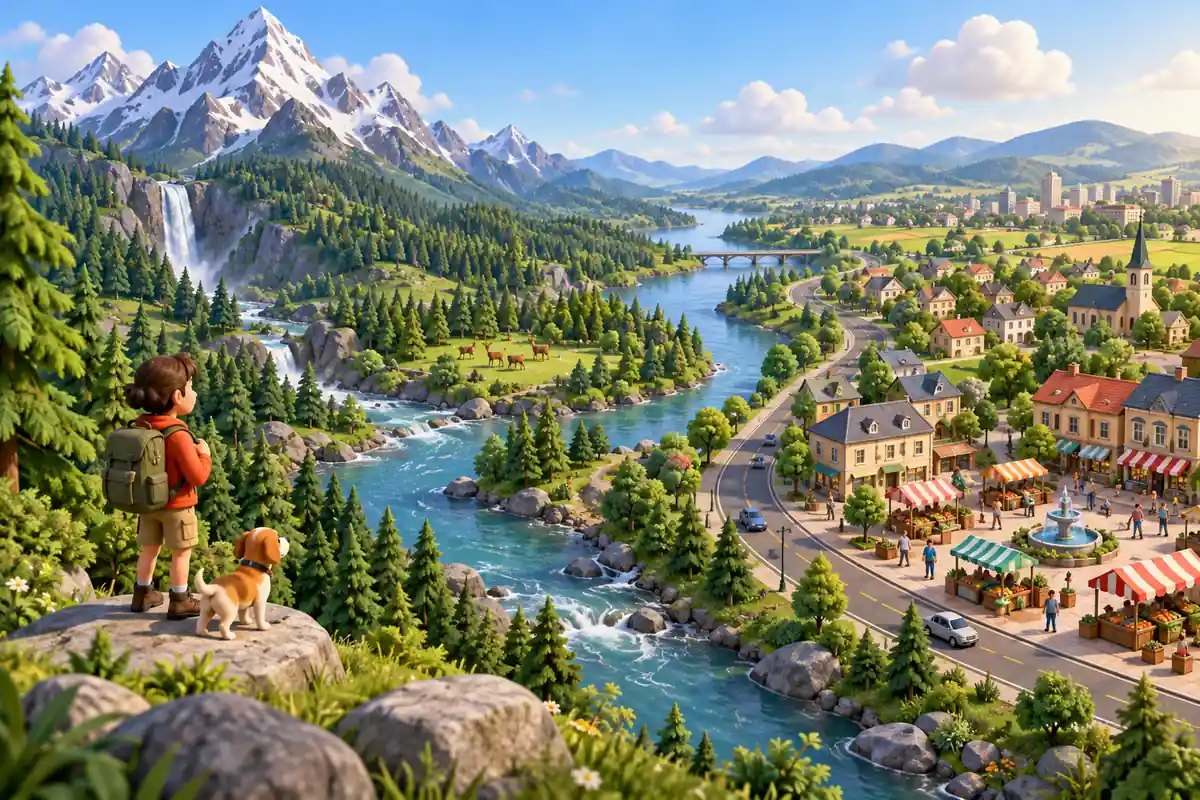
Physical geography studies natural features and processes such as landforms, climate, rivers, and ecosystems. Human geography studies people, communities, cultures, economies, and their spatial relationships. Many real questions connect both branches.
For example, physical geography can describe floodplains, while human geography can examine how homes and roads are arranged on them. A strong sentence names both sides when explaining why an environmental feature matters to a community.
How is geography different from geology?
Geography studies places, environments, and spatial relationships; geology studies Earth’s materials, structure, and history. The subjects overlap when a geographic question depends on rocks or landforms, but they emphasize different questions and methods.
“Geography maps where volcanoes affect settlements” emphasizes location and people. “Geology examines how magma forms volcanic rock” emphasizes Earth processes and materials. Choose the subject name that matches the main question.
How can you make a geography sentence specific?
Include a named place, a geographic feature or pattern, and a relationship. “The river shaped the town” is broad; “The river’s floodplain provided fertile soil for farms east of the town” names a feature, a location, and a human use.
Check scale as well. A neighborhood map, a national migration pattern, and a global climate zone operate at different scales. Stating the scale helps readers understand how a geographic process appears in the example.
Frequently asked questions
What is a simple sentence with geography?
“Geography explains how rivers influence settlement” is a simple sentence that connects a physical feature with human activity. Another example is “The class studied geography with maps.” Add a location or pattern when you want the sentence to be more specific.
What does geography study?
Geography studies places and relationships between people and environments. It includes natural features such as rivers and climates, human patterns such as settlement and transport, and interactions between societies and the places where they live when learning about many places.
What is a geography example for kids?
“Mountains can make travel between towns difficult” is a clear geography example because it connects a landform with movement between places. A map activity can add detail by showing where the mountain range and towns are located on a map.
Is geography only about maps?
No. Maps are tools for showing location and spatial patterns, but geography also studies environments, societies, movement, culture, and change over time. A sentence about why people settle near a river is geographic even if it does not mention a map.
Conclusion
Use geography in a sentence to describe the study of places and relationships between people and environments. Specific examples connect a named location to physical features, human activity, or spatial patterns. Distinguish geography from geology by asking whether the focus is place and relationships or Earth materials and processes.
Are you curious about how the world around us is interconnected and shaped by various landscapes and environments? If so, you are delving into the fascinating realm of geography.
Geography is the study of the Earth’s physical features, its atmosphere, and human activity as they relate to location and spatial interactions. It seeks to understand the complexities of the Earth’s surface and how people, cultures, and natural phenomena are influenced by and in turn influence their surroundings.
7 Examples Of Geography Used In a Sentence For Kids
- Geography is all about learning about different places on Earth.
- We can use maps to help us understand geography better.
- Geography teaches us about mountains, rivers, and oceans.
- Let’s explore the world through geography lessons.
- Understanding geography helps us appreciate the world around us.
- Studying geography can be fun and interesting.
- Let’s go on a journey of discovery with geography!
14 Sentences with Geography Examples
- The geography of India includes a diverse range of landscapes, from the Himalayan mountains to the coastal plains.
- Understanding the geography of a region is crucial for predicting weather patterns and natural disasters.
- Studying the geography of ancient civilizations can provide valuable insights into their ways of life and cultural practices.
- Colleges often offer courses in physical geography to help students grasp the Earth’s natural processes.
- Geography students may analyze population distribution to understand how humans interact with their environments.
- GIS (Geographic Information Systems) technology has revolutionized the way geography data is collected and analyzed.
- Geography field trips can offer hands-on experiences that enhance classroom learning.
- Examining the geography of a country can shed light on its economic development and resource exploitation.
- Urban geography explores how cities are planned and developed to accommodate growing populations.
- Ecosystems are a key focus in environmental geography studies, examining how different species interact within their habitats.
- Remote sensing is a valuable tool in modern geography, allowing for the collection of data from a distance using drones and satellites.
- Climate change is a pressing issue in contemporary geography, as researchers study its effects on ecosystems and human societies.
- Geography students often conduct fieldwork to collect data and observations firsthand, enhancing their research skills.
- Cultural geography investigates how human societies shape and are influenced by their surroundings, including language, religion, and traditions.
How To Use Geography in Sentences?
Geography is the study of the Earth’s landscapes, environments, and the factors that shape them. When using the word geography in a sentence, it is important to keep in mind its meaning and relevance to the context. For example, “Studying geography helps us understand how natural disasters like hurricanes are formed.”
To use geography effectively in a sentence, start by identifying the geographical aspect you want to highlight. This could be related to landforms, climate, population, or any other geographical feature. Remember to provide context or explanation to help your audience understand the significance of geography in the statement. For instance, “The mountains and valleys in this region are a result of the area’s unique geography.”
You can also use geography figuratively to describe a person’s knowledge or understanding of a particular area or subject. For example, “Her extensive geography of the fashion industry makes her a valuable resource.”
In summary, when using geography in a sentence, make sure to clearly convey the geographical concept or reference you are discussing. Provide context or explanation to enhance comprehension, and feel free to use geography both literally and figuratively to add depth to your writing.
Conclusion
In conclusion, exploring sentences with geography can enhance our understanding of the world’s physical features, human interactions, and cultural diversity. By studying geographical sentences, we can grasp the essential concepts related to landforms, climates, regions, and spatial relationships. These sentences provide valuable insights into how geographical factors influence various aspects of our lives, such as economy, politics, and social interactions.
Moreover, sentences with geography serve as effective tools for communication and education, enabling us to articulate ideas about places, environments, and global connections. By utilizing geographical sentences, we can foster a deeper appreciation for the Earth’s complexity and interconnectedness, promoting curiosity and awareness about the diverse landscapes and societies that make up our planet.


