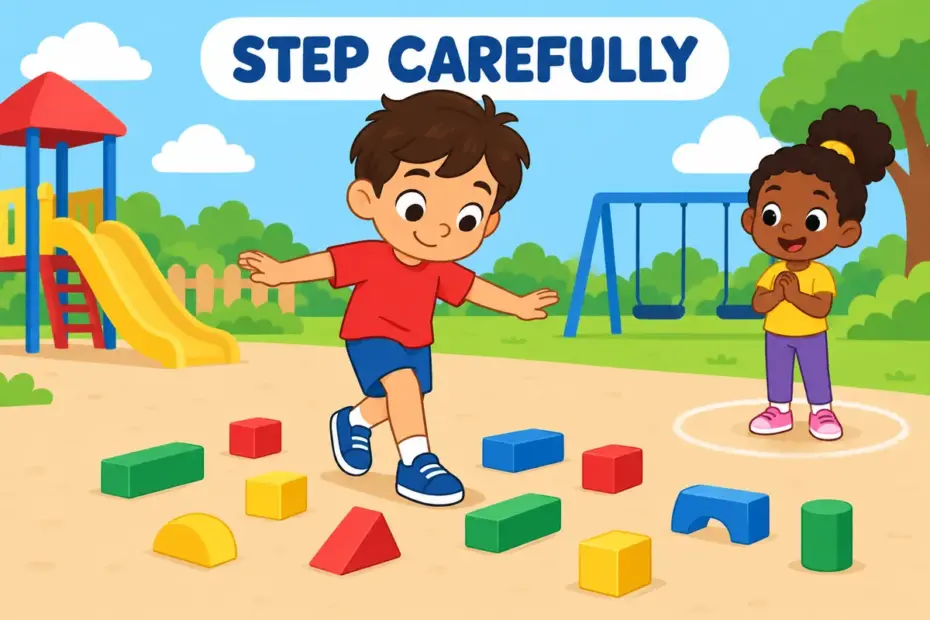
Gingerly means in a careful, cautious way, with attention to every movement. To use gingerly in a sentence, place it with a verb of handling or movement: “She stepped gingerly over the broken glass.” The word is an adverb, so it describes how an action is done rather than how somebody feels.
Gingerly at a glance
- Gingerly is an adverb meaning cautiously; it also works as an adjective meaning careful.
- It usually follows or precedes a verb of movement or handling: step, walk, touch, lift, open.
- Common companions are over, around and into, which name the obstacle or the surface.
- It carries a hint of nervousness that plain carefully does not always suggest.
- The commonest error is adding -ly, since gingerly is already an adverb.
What does gingerly mean?
Gingerly is an adverb meaning in a careful, cautious or hesitant way, and it also serves as an adjective meaning careful. The Cambridge entry for gingerly records both uses, and the adverb is by far the commoner. One sense covers nearly every sentence: an action is carried out with slow, deliberate care, as if the result might hurt.
Gingerly suits verbs that involve contact and risk, which is why it clusters around movement and handling. She walked gingerly on the bruised ankle, he lifted the lid gingerly, they picked their way gingerly through the wet concrete. The caution is physical or emotional, but the word always describes the doing, not the feeling.
One limitation matters here. Gingerly is not a general word for careful thought, so it sounds odd with mental verbs. Nobody reads gingerly or decides gingerly. It is also too vivid for neutral instructions, where handle it carefully is the plainer choice, and it never means slow for its own sake.
How do you use gingerly in a sentence?
Gingerly is a flat adverb, meaning it keeps the same form as the adjective and never takes -ly. It usually sits right after the verb it modifies, though a front position adds emphasis, and it often pairs with over, around or into to name what is being avoided.
| Pattern | Example | What it signals |
|---|---|---|
| verb + gingerly | She stepped gingerly across the ice. | The standard order; the adverb follows the action. |
| gingerly + verb | Gingerly, he lifted the lid. | Front position with a comma adds emphasis to the care. |
| gingerly + over/around + object | They moved gingerly around the glass. | Names the obstacle that causes the caution. |
| verb + object + gingerly | He opened the box gingerly. | Keeps the object next to the verb and the manner last. |
| be + gingerly (adjective) | His first touch was gingerly. | The rarer adjective use after a linking verb. |
Its close cousins are cautiously and tentatively, which overlap in meaning but differ in the kind of hesitation they suggest.
Gingerly in a sentence: examples across contexts
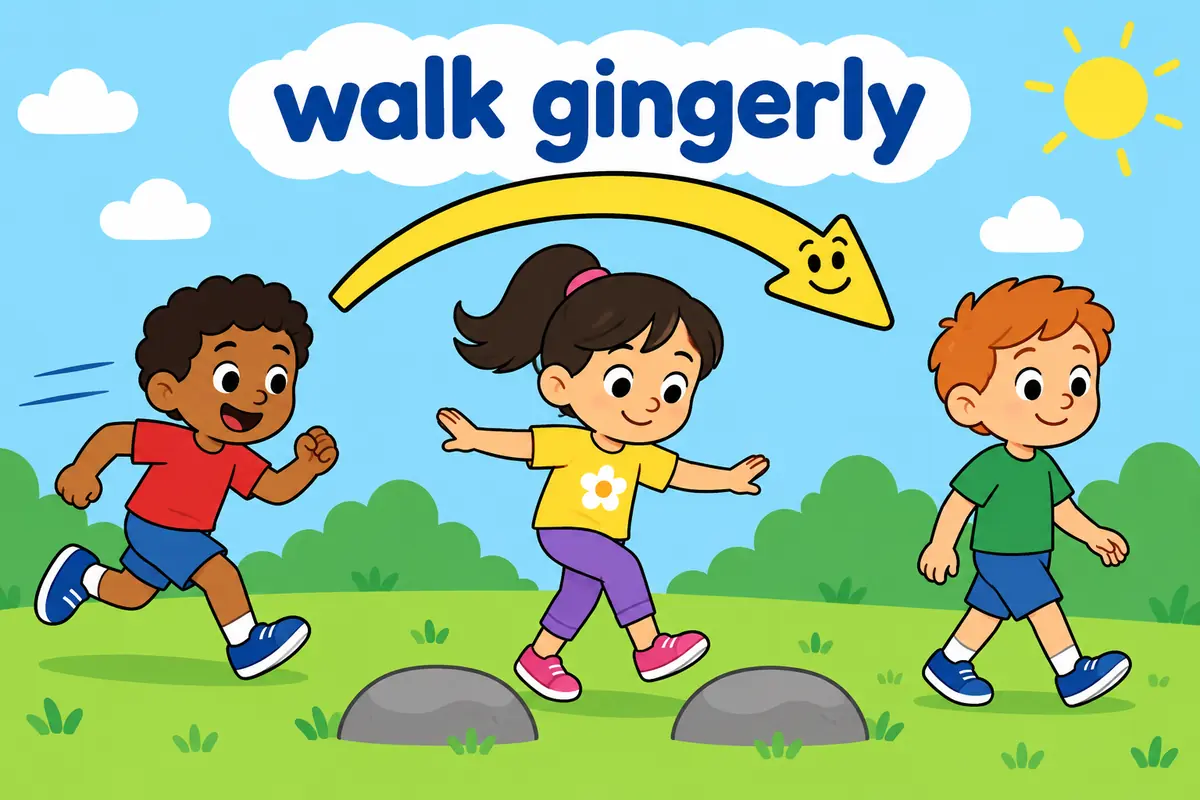
Gingerly barely changes meaning across settings, but the reason for the caution changes the sentence. The eight examples below move from a playground to a news report, and each one shows what is being handled with care.
| Context | Example sentence | Why this works |
|---|---|---|
| Classroom | Maya carried the model volcano gingerly to the front desk. | A fragile object makes the caution easy to picture. |
| Playground | He walked gingerly across the hot sand in bare feet. | The discomfort explains why the movement is careful. |
| Workplace | She opened the fragile parcel gingerly and checked the glass. | Names the risk and the reason for the care. |
| Medical writing | The patient stepped gingerly on the injured foot. | A clinical fact expressed through movement. |
| News report | Rescuers moved gingerly around the unstable wall. | The obstacles justify the slow, careful action. |
| Kitchen | He lifted the hot tray gingerly with two cloths. | A physical danger drives the adverb. |
| Conversation | I tiptoed gingerly past the sleeping dog. | The spoken register keeps the vivid image. |
| Academic prose | The two leaders approached the subject gingerly. | Extends the word to a delicate matter, not a physical one. |
Where the movement is confident rather than wary, the contrast is boldly, which describes a very different manner with the same kind of verb.
Gingerly vs cautiously
Gingerly and cautiously both describe careful action, but they suggest different reasons for the care. Gingerly points to a delicate physical handling, often with a flinch of nervousness, while cautiously points to a judgement about risk and can apply to decisions as well as movement.
| Attribute | gingerly | cautiously |
|---|---|---|
| Core job | Handle or move with delicate care | Act with attention to risk |
| Typical verbs | step, lift, touch, carry, open | proceed, speak, invest, answer |
| Kind of hesitation | Physical and nervous | Calculated and general |
| Works with decisions? | No; it needs an action or a movement | Yes, as in she answered cautiously |
| Example | He lifted the trapped bird gingerly. | He invested cautiously after the crash. |
Verdict: choose gingerly when a hand, a foot or a body moves with delicate care, and cautiously when the care comes from weighing a risk. Where the fear is obvious, warily names the suspicion that gingerly only hints at.
Word forms and grammar of gingerly
Gingerly has the same form as an adverb and an adjective, and it does not change for comparison in the usual -er way. The table sets out the forms that exist and the one that does not.
| Form | Part of speech | Example |
|---|---|---|
| gingerly | adverb | She lowered herself gingerly into the chair. |
| gingerly | adjective | He took a gingerly step onto the ramp. |
| more gingerly | comparative, adverb | He stepped more gingerly than before. |
| most gingerly | superlative, adverb | She moved most gingerly of all. |
| gingerlyly | non-standard | Avoid the invented form in every context. |
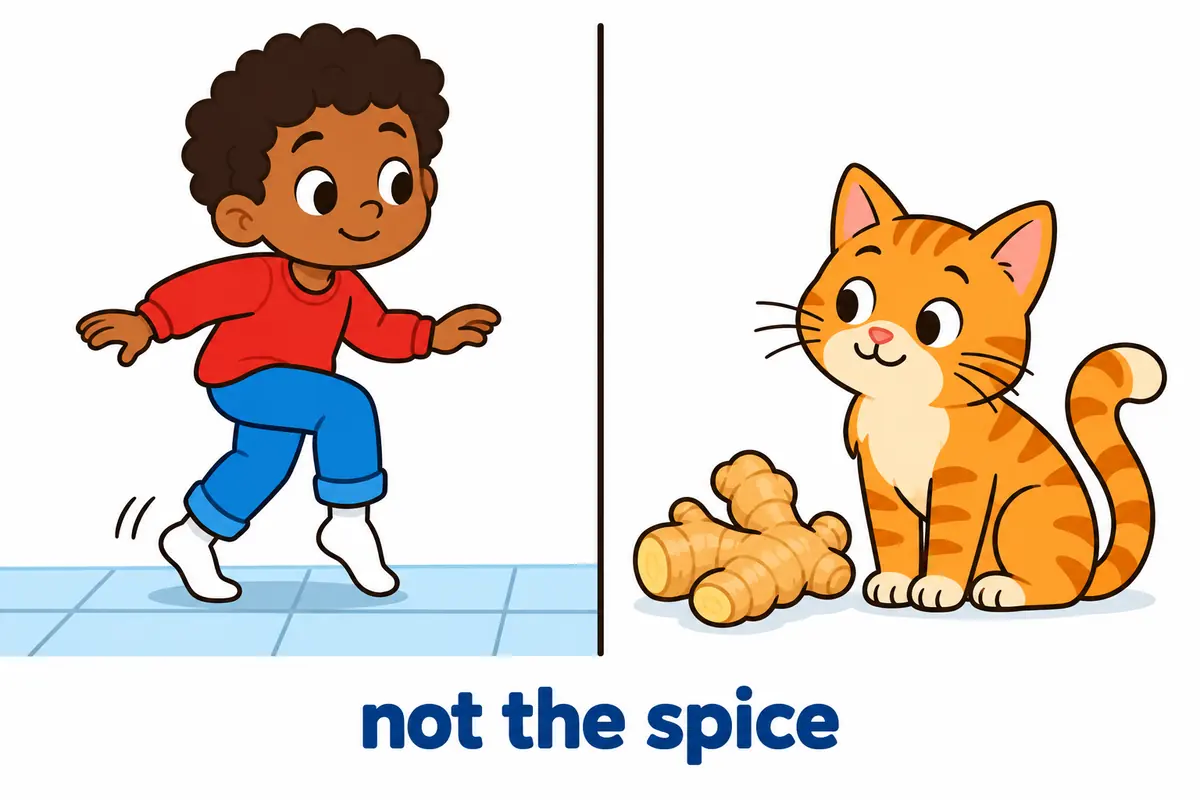
The adverb gingerly has nothing to do with the spice. The word ginger names the root and the colour, and only the spelling looks alike, so keep the two apart when you write.
Common mistakes with gingerly
- Incorrect:
She walked gingerlyly across the room.Correct: She walked gingerly across the room. Rule: Gingerly is already an adverb, so it never takes an added -ly. - Incorrect:
He was gingerly to touch the wire.Correct: He was wary of touching the wire. Rule: Gingerly cannot take an infinitive of purpose; use wary or careful with a person. - Incorrect:
The soup tasted gingerly.Correct: The soup tasted of ginger. Rule: Gingerly describes cautious movement, not the spice ginger. - Incorrect:
She opened the box more gingerlier than before.Correct: She opened the box more gingerly than before. Rule: Form the comparative with more, never with -er. - Incorrect:
He gingerly the door opened.Correct: He gingerly opened the door. Rule: The adverb sits with the verb it modifies, not before the subject.
Practice using gingerly
Work through the six items, then read the reasoning rather than only the key.
- Fill the gap: After the fall, he walked ______ down the stairs.
- Choose the better word: The investors (gingerly / cautiously) waited for the results.
- Correct the error: She picked up the kitten gingerlyly.
- Build a sentence: use gingerly + over about crossing a wet floor.
- Spot the register: which belongs in a safety notice, move gingerly across the wet floor, or kind of creep across the wet floor?
- Rewrite in the comparative: He stepped carefully. Use gingerly and make it a comparison.
Answers
- gingerly — the adverb follows the movement verb and keeps its flat form.
- cautiously — a decision rather than a physical action suits cautiously, not gingerly.
- She picked up the kitten gingerly — the adverb never takes an extra -ly.
- Model answer: I stepped gingerly over the wet floor. The adverb sits after stepped and pairs with over.
- Move gingerly across the wet floor — a notice needs the precise word and no vague filler.
- He stepped more gingerly — the comparative uses more, never gingerlier.
The bottom line
Use gingerly in a sentence when a person handles or moves something with delicate, nervous care, and keep it beside the verb of action. Two nuances decide most sentences: it is already an adverb, so it never takes -ly, and it describes cautious movement rather than cautious thought. For a decision, cautiously is the better fit.
Frequently asked questions about gingerly
Is gingerly an adverb or an adjective?
Gingerly is usually an adverb, as in she stepped gingerly, and it can also be an adjective, as in a gingerly touch. Both uses keep the same spelling. The adverb is far commoner, which is why learners are often surprised to meet it before a noun in careful writing.
Can gingerly describe a sound, taste or smell?
No. Gingerly describes how an action is performed, not a sensation, so it fits verbs of movement and handling rather than the senses. The soup tasted gingerly is wrong because tasting is not a careful action. For a ginger flavour in food, the correct word is ginger, not gingerly.
Is gingerly a synonym of cautiously?
They overlap but are not identical. Gingerly suggests a delicate physical handling with a hint of nervousness, while cautiously suggests a judgement about risk and can describe decisions, speech and plans. A person steps gingerly over glass but answers a question cautiously. Choose by whether the care is physical or strategic.
Does gingerly suggest fear?
Gingerly suggests nervousness rather than full fear. The person expects a small hurt or a fragile object, so they slow down and take care, as when lifting a trapped bird. Fear would be shown by backing away or freezing, while gingerly keeps the action moving, just very carefully and with obvious hesitation.
Gingerly in a sentence means carefully or cautiously, often because something is fragile, uncertain, or uncomfortable. “She lifted the vase gingerly” shows the action and its manner. Gingerly is commonly an adverb modifying a verb. Add the reason for caution when it helps readers understand why the movement is deliberate.
Gingerly at a glance
- Gingerly commonly functions as an adverb meaning carefully or cautiously, often with slow deliberate movement.
- Gingerly is commonly an adverb describing cautious manner; it does not take tense or person endings like a verb.
- Do not replace gingerly with slowly automatically; caution and speed are different attributes of an action.
- Context should make the intended sense clear before adding decorative description.
What does gingerly mean?
Gingerly commonly functions as an adverb meaning carefully or cautiously, often with slow deliberate movement. The dictionary entry for gingerly documents the basic vocabulary sense; the examples here show how that sense works in complete sentences.

Gingerly in a sentence: clear examples
- She lifted the vase gingerly.
- He gingerly stepped over the stones.
- Gingerly, the conservator opened the cover.
- They approached the sensitive topic gingerly.
- The child placed the model gingerly on the shelf.
- She carried the fragile bowl gingerly.
- He lowered the old frame gingerly onto the cloth.
- The team gingerly tested its first assumption.
- She gingerly moved the chair away from the wall.
- The visitor sat down gingerly on the low bench.
How does the context change the meaning?
| Use | Meaning or pattern | Example |
|---|---|---|
| After action | lifted gingerly | She lifted the vase gingerly. |
| Before action | gingerly stepped | He gingerly stepped over the stones. |
| Sentence opening | Gingerly, + clause | Gingerly, the conservator opened the cover. |
| Figurative care | approached gingerly | They approached the sensitive topic gingerly. |
Which grammar patterns are useful?
Place gingerly near the action it modifies: lifted gingerly, gingerly lifted, or “Gingerly, she lifted the lid.” An opening adverb often takes a comma. The word does not change form with the subject or tense because it describes manner rather than carrying the verb’s grammatical endings.
Gingerly and gently overlap, but gently emphasizes softness or low force while gingerly emphasizes caution. “He gently closed the door” need not imply concern about damage; “He gingerly closed the cracked lid” makes the cautious handling more prominent.
How can you avoid unclear word choices?
Slowly is not always equivalent to gingerly. Someone can move slowly without caution, or act cautiously without taking a long time. Name the fragile object, uncertain situation, or difficult footing when you want the cautious quality to be visible.
Do not connect gingerly to the food ingredient ginger in an ordinary usage explanation. The modern manner word does not mean adding ginger. A figurative example such as “approached the subject gingerly” describes careful discussion, not physical walking.

Frequently asked questions about gingerly
What is a short sentence with gingerly?
“She lifted the vase gingerly.” is a short example using gingerly. The sentence supplies a concrete setting so the meaning can be understood without a separate definition. For a classroom exercise, ask learners to identify the key relationship, then change one detail while keeping the same grammatical pattern.
Which related forms should I learn with gingerly?
Gingerly is commonly an adverb describing cautious manner; it does not take tense or person endings like a verb. Learn related forms in a complete sentence. A change in grammatical role can require a different form even when the underlying idea remains similar. Read the surrounding subject, verb, and modifiers before deciding which form belongs.
What mistake should I check before using gingerly?
Do not replace gingerly with slowly automatically; caution and speed are different attributes of an action. Check the intended meaning as well as the spelling. A sentence can be grammatically complete yet suggest the wrong relationship. When revising, name the subject and explain what the surrounding phrase contributes, then remove any word that creates an unintended implication.
Can I replace gingerly with a simpler word?
Carefully or cautiously is a plain alternative, while gently highlights softness rather than necessarily emphasizing uncertainty or risk. Choose a replacement that preserves the intended meaning and level of formality. Test it in the whole sentence: a near synonym may fit one sense while failing in another. Keep the original word when its distinction matters to the reader.
“Have you ever carefully moved or touched something with extreme caution? This delicate and precise manner of handling objects or performing tasks is what we refer to as ‘gingerly.’ When someone is being gentle and cautious in their actions, they are navigating their movements gingerly.”
Gingerly, an adverb often used to describe a thoughtful and careful approach, implies a sense of attentiveness and lightness in one’s touch or movements. This term is commonly utilized when describing actions that require sensitivity and precision to avoid causing harm or damage.
7 Examples Of Gingerly Used In a Sentence For Kids
- Gingerly walk on the stepping stones in the garden.
- She gingerly picked up the fallen flower petal.
- Gingerly pet the soft fur of the bunny.
- Hold the glass gingerly so it doesn’t spill.
- The butterfly landed on the flower gingerly.
- Gingerly place the colorful blocks on top of each other.
- Carefully and gingerly water the small plant.
14 Sentences with Gingerly Examples
- Gingerly balancing textbooks and notebooks in hand, the college student navigated through the crowded hallway.
- The student gingerly opened the brand new laptop they had just purchased for their online classes.
- Gingerly stepping over sleeping classmates in the hostel room, the tired student made their way to the bathroom.
- With a gingerly placed hand, the student adjusted the microscope to get a better view of the specimen.
- The student gingerly approached the podium to give their presentation in front of the class.
- Gingerly sipping the piping hot chai to avoid burning their tongue, the student enjoyed a break between lectures.
- Gingerly maneuvering through the sea of bikes parked outside the college, the student searched for their own two-wheeler.
- The student gingerly flipped through the pages of their borrowed library book, careful not to damage it.
- Gingerly handling the chemicals during the chemistry experiment, the student followed the instructions step by step.
- Gingerly unpacking the fragile equipment for the physics lab, the student made sure everything was set up correctly.
- The student gingerly pressed the buttons on the calculator, trying to solve the complex math problem assigned by the professor.
- Gingerly moving the heavy boxes of books to their new apartment, the student enlisted the help of a few friends.
- With a gingerly written note, the student apologized for missing the deadline and asked for an extension on their assignment.
- The student gingerly tried out yoga for the first time, following an online class to relieve stress and improve flexibility.
How To Use Gingerly in Sentences?
To use “Gingerly” in a sentence, follow these steps:
-
Understand the meaning: Gingerly is an adverb that means to do something cautiously or delicately, often to avoid causing harm or damage.
-
Choose the appropriate context: Think about situations where you want to convey a sense of carefulness or gentleness in an action.
-
Construct your sentence: Start your sentence with the subject (the person or thing performing the action), followed by the adverb “Gingerly” to describe how the action is being carried out.
-
Example sentences:
- She gingerly picked up the fragile glass vase.
- He gingerly stepped over the puddle to avoid getting his shoes wet.
- The nurse gingerly bandaged the patient’s tender wound.
- The chef gingerly added a pinch of spice to the dish, careful not to overpower the flavors.
-
Practice using a variety of verbs in combination with Gingerly to convey different actions performed cautiously.
-
Remember to pay attention to the context of the sentence to ensure the usage of Gingerly is appropriate.
By following these steps, you can effectively incorporate Gingerly into your sentences to communicate a sense of caution or delicacy in your actions.
Conclusion
In conclusion, handling fragile items requires a delicate touch and attention to detail, as seen in the sentences where individuals gingerly held the delicate vase or gingerly stepped over the icy patch. The word “gingerly” signifies a cautious and gentle approach to prevent damage or harm. By using this adverb, the writers vividly convey the careful and meticulous actions taken in these situations.
Whether it’s navigating a treacherous terrain or handling precious objects, the word “gingerly” prompts us to proceed with care and precision. It serves as a reminder to handle things with gentleness and caution, emphasizing the importance of being mindful of our actions to avoid any negative consequences.


