Gluttony is the habit of eating and drinking far more than you need, and it names the excess itself rather than a single large meal. To use gluttony in a sentence, treat it as a quality or a sin: “His gluttony at the feast shocked the guests.” The noun is usually uncountable, so it rarely takes a plural.
Gluttony at a glance
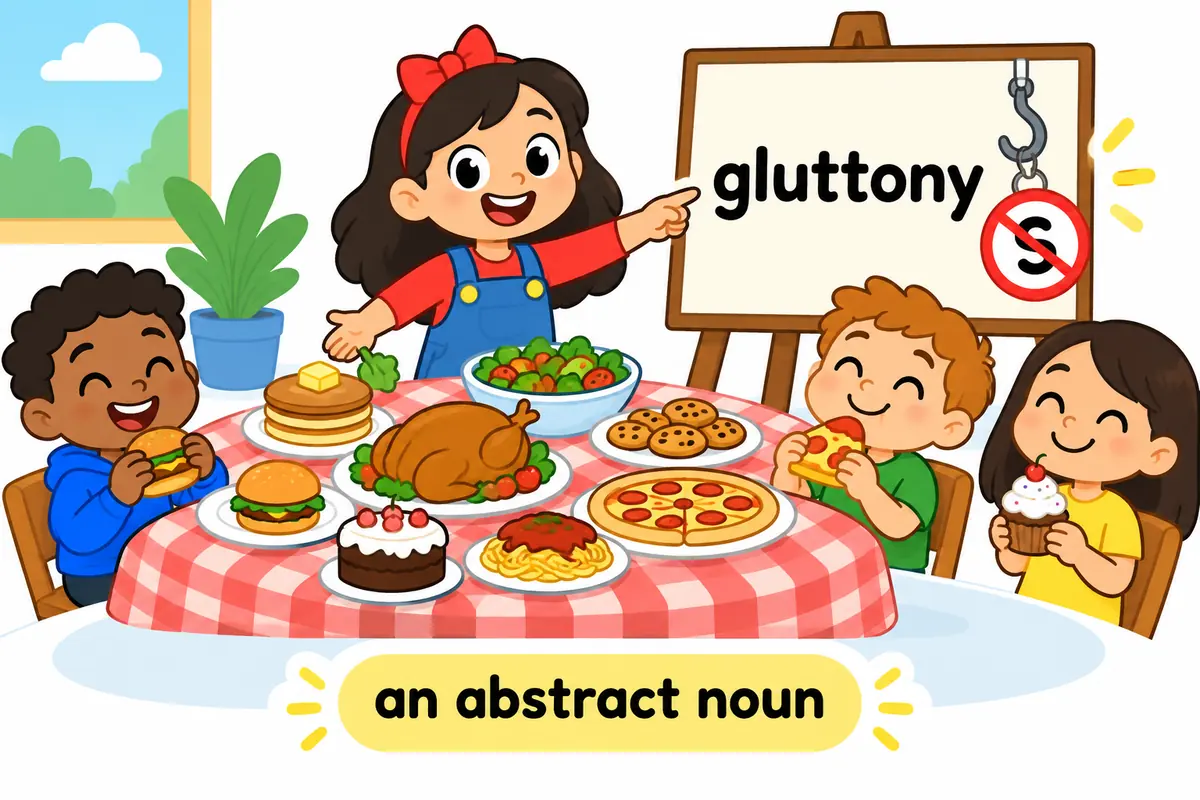
- Gluttony is an uncountable noun meaning over-indulgence in food or drink.
- Its family is the noun gluttony, the person noun glutton and the adjective gluttonous.
- The word carries a moral or religious charge, strongest in the phrase the sin of gluttony.
- It can be used figuratively for an excessive appetite for anything, as in a gluttony for praise.
- The commonest error is confusing gluttony with greed, which targets money and power.
What does gluttony mean?
Gluttony is a noun meaning the habit of eating or drinking to excess, and it is traditionally listed as one of the seven deadly sins. The Cambridge entry for gluttony defines it as the act of eating too much. Because the word measures a pattern rather than one occasion, a single huge dinner is better called overeating, and a craving for more of anything can be simply an appetite.
| Sense | Plain meaning | Example sentence |
|---|---|---|
| Excess in eating | Habitual over-indulgence in food | The old stories warn against gluttony. |
| Figurative appetite | An excessive hunger for something | His gluttony for applause drove the whole act. |
One limitation is worth stating plainly. Gluttony is a strong, faintly old-fashioned word with a moral edge, so a doctor or a friend would say overeating or an unhealthy diet instead. The word judges a behaviour and never a body, and using it to describe someone’s size is rude rather than precise.
How do you use gluttony in a sentence?
Gluttony behaves like most abstract nouns. It takes a possessive or a definite article, appears after prepositions such as of and for, and rarely stands as the object of an everyday action verb. The sense of pure excess runs through every pattern.
| Pattern | Example | What it signals |
|---|---|---|
| possessive + gluttony | Her gluttony cost her the race. | Blames a named person’s habit. |
| the sin of + gluttony | The sermon named the sin of gluttony. | Religious or moral framing. |
| gluttony + for + noun | His gluttony for praise never eased. | The figurative appetite sense. |
| a glutton for + noun | She is a glutton for hard work. | The idiom about a person, not food. |
| accuse of + gluttony | Critics accused the court of gluttony. | Formal, public criticism. |
Gluttony in a sentence: examples across contexts
Gluttony moves easily from a pulpit to a food column, but its moral weight rises and falls with the setting. The nine sentences below show where the word is at home and where it sounds deliberately old-fashioned.
| Context | Example sentence | Why this works |
|---|---|---|
| Sermon | The priest warned that gluttony dulls the mind as well as the body. | Moral framing is the word’s home. |
| Health article | Doctors prefer the term overeating, though gluttony names the older idea. | Notes the register difference openly. |
| History essay | Banquets became displays of gluttony that poorer citizens resented. | Ties private excess to public anger. |
| Literature | The novel treats gluttony as a quiet, everyday vice. | Shows the word inside literary criticism. |
| Food writing | A tasting menu is not gluttony when the portions stay small. | Draws a careful line around the word. |
| Conversation | Calling it gluttony seems harsh for one slice of cake. | Tests how strong the word feels. |
| Psychology paper | Researchers studied gluttony as a failure of self-control. | Keeps the term academic and neutral. |
| News report | The inquiry described years of gluttony at the public’s expense. | Figurative use for institutional excess. |
| Parenting | She taught her children that gluttony means taking more than your share. | Everyday moral teaching. |
Gluttony vs greed
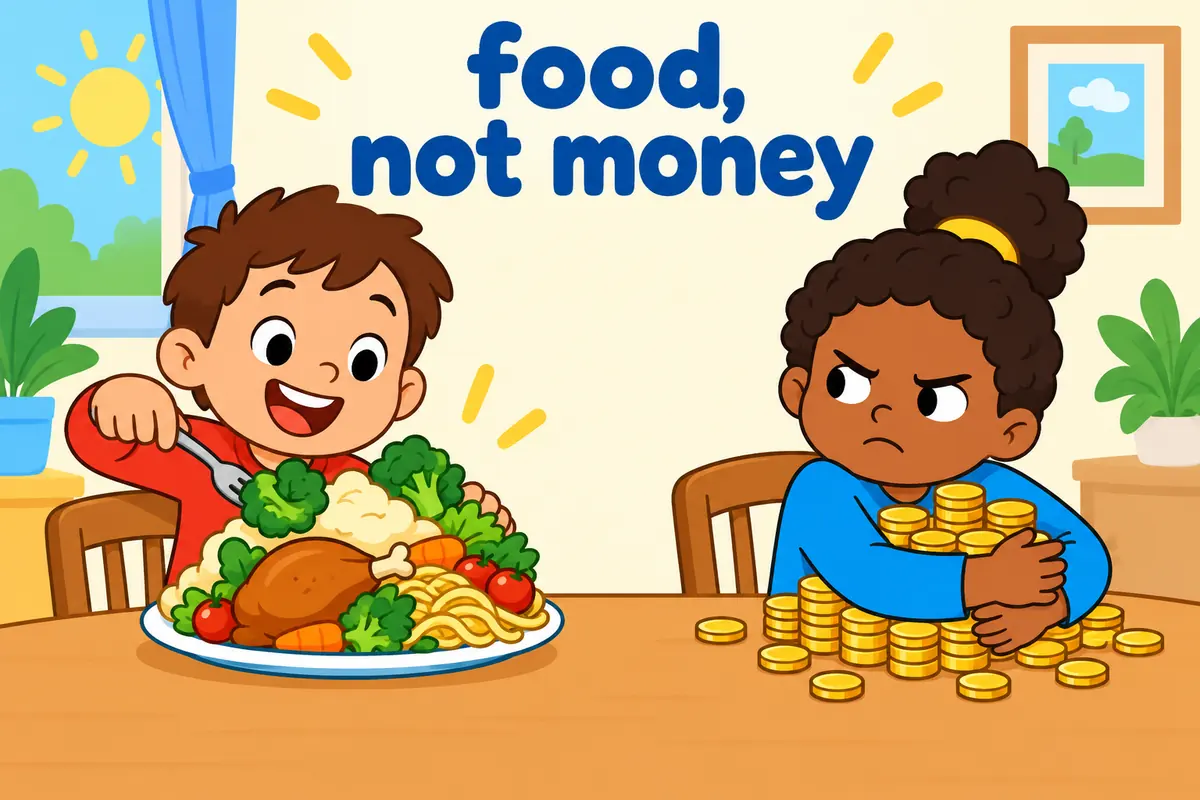
Gluttony and greed sit side by side in lists of vices, and they are not synonyms. Greed is the desire for more money, power or possessions; gluttony is the desire for more food or drink. One wants to own, the other wants to consume, and only one of them fits a plate.
| Attribute | gluttony | greed |
|---|---|---|
| Object of desire | Food and drink | Money, power, possessions |
| Traditional home | Lists of deadly sins | Lists of deadly sins |
| Typical verb | eat, drink, feast | hoard, grab, acquire |
| Figurative reach | An appetite for anything | An appetite for gain |
| Everyday tone | Old-fashioned and moral | Common and general |
Verdict: choose gluttony for excess at the table, and greed for wanting more of anything you can keep. When the pleasure is milder and less moralised, plain indulgence is the kinder word.
Word forms and grammar of gluttony
Gluttony keeps a small family, and each member has a fixed job. The abstract noun is uncountable, the person noun names someone, and the adjective takes the -ous ending that learners often forget.
| Form | Part of speech | Example |
|---|---|---|
| gluttony | noun, abstract | Gluttony was listed among the deadly sins. |
| glutton | noun, a person | The story calls him a glutton, not a gourmet. |
| gluttonous | adjective | A gluttonous meal left everyone sleepy. |
| gluttonously | adverb | He ate gluttonously at every party. |
| gluttony person | non-standard | Correct: a gluttonous person. |
Common mistakes with gluttony
The errors below come from making an uncountable noun countable, from reaching for greed when the subject is food, and from using the noun where an adjective belongs.
- Incorrect:
He ate three helpings, a real gluttony.Correct: He ate three helpings, a real act of gluttony. Rule: Gluttony is uncountable, so a single occasion needs act of. - Incorrect:
Her gluttony for money ruined the company.Correct: Her greed for money ruined the company. Rule: Gluttony is about food and drink; greed is about gain. - Incorrect:
He is a gluttony person.Correct: He is a gluttonous person. Rule: The adjective ends in -ous; gluttony is the noun. - Incorrect:
Gluttonies were common at the emperor’s table.Correct: Gluttony was common at the emperor’s table. Rule: The abstract noun has no plural form. - Incorrect:
The diet was full of gluttony foods.Correct: The diet was full of fattening foods. Rule: Gluttony names a behaviour, not a quality of food.
Practice using gluttony
Work through the six items, then check the reasoning rather than only the answer.
- Fill the gap: The parable warns that ______ can enslave a person more surely than hunger.
- Choose the better word: His (gluttony / greed) for gold destroyed the family firm.
- Correct the error: After the banquet, the guests were accused of a gluttony.
- Build a sentence: use gluttony about a celebration where everyone eats too much.
- Spot the register: which belongs in a health leaflet — gluttony is a deadly sin, or regular overeating raises the risk?
- Rewrite with the adjective: The meal showed his habit of gluttony. Use gluttonous.
Answers
- gluttony — the noun names the habit, and the uncountable form needs no article.
- greed — gold is money, so greed fits; gluttony would point at food.
- The guests were accused of gluttony — drop a, because the noun is uncountable.
- Model answer: The wedding feast slipped from plenty into gluttony by dessert.
- Regular overeating raises the risk — a health leaflet avoids the moral word gluttony.
- He ate a gluttonous meal — the adjective before the noun replaces the abstract noun.
The bottom line
Use gluttony in a sentence for a settled habit of eating or drinking to excess, and keep it uncountable and moral in tone. The two nuances that decide most sentences are these: a single big meal is overeating rather than gluttony, and the word targets food while greed targets gain. Where the tone should be gentler, voracity and appetite describe the same hunger without the judgement.
Frequently asked questions about gluttony
Is gluttony countable?
No, gluttony is normally uncountable, so you write gluttony was common rather than gluttonies were common. When you need to point at one occasion, add a counter such as an act of gluttony or a display of gluttony. This is the same pattern as other abstract nouns like honesty and patience.
What is the adjective for gluttony?
The adjective is gluttonous, as in a gluttonous appetite, and the adverb is gluttonously, as in he ate gluttonously. The person who over-indulges is a glutton, a noun. Learners often reach for gluttony in the adjective slot, which produces the non-standard a gluttony person.
Can gluttony mean something other than eating?
It can be used figuratively for any excessive appetite, so a writer might speak of a gluttony for praise or a gluttony for attention. Even then the word keeps its flavour of too much, drawn from the original sense about food. The figurative use is literary rather than everyday, and plain greed is more common.
What is the difference between gluttony and overeating?
Overeating is a neutral, descriptive word for eating too much on an occasion. Gluttony is a moral judgement about a settled habit and carries a religious or old-fashioned charge. A doctor writes about overeating, while a sermon names gluttony, and the two words rarely swap places.
Gluttony, an excessive indulgence in food or drink, is a common term often associated with overeating or overconsumption. This sinful behavior can lead to various health issues and negative consequences if left unchecked.
In today’s fast-paced world filled with tempting treats and large portion sizes, it’s easy to fall into the trap of gluttony. Understanding the dangers of this behavior and learning to practice moderation are crucial for maintaining a balanced and healthy lifestyle.
7 Examples Of Gluttony Used In a Sentence For Kids
- Gluttony means eating too much food.
- It’s not good to be greedy and show gluttony.
- Eating fruits and vegetables is healthy, unlike gluttony.
- Remember to share your snacks and not give in to gluttony.
- Gluttony can make you sick and unhappy.
- Let’s avoid gluttony and eat in moderation.
- Being kind and sharing is better than gluttony.
14 Sentences with Gluttony Examples
- During exam season, gluttony often leads to poor food choices and unhealthy eating habits among college students.
- Late-night study sessions are often accompanied by bouts of gluttony, as students snack on unhealthy foods to keep themselves awake.
- The college canteen is a hub of gluttony, with students indulging in fried snacks and sugary drinks between classes.
- When stressed about assignments and deadlines, students tend to resort to gluttony as a coping mechanism, consuming large amounts of comfort food.
- Group outings to fast food joints are common among college students, where gluttony takes over and leads to overeating.
- The temptation of unlimited buffets at college events often leads to a display of gluttony among students, as they try to get their money’s worth.
- Packed with cheap and tasty street food options, college campuses can be a breeding ground for gluttony among students looking for quick bites.
- Celebratory dinners after exams often turn into displays of gluttony, with students indulging in large portions of food to mark the occasion.
- Gluttony becomes a problem for college students living in hostels, as they have easy access to snacks and junk food at all hours.
- Holidays and festival seasons bring about a wave of gluttony, with students feasting on traditional sweets and rich dishes with abandon.
- The culture of food challenges on social media platforms encourages a sense of gluttony among college students, who strive to outdo each other in consuming large quantities of food.
- The competitive spirit of college sports events sometimes spills over into gluttony contests, where students try to see who can eat the most in a given time frame.
- Exploring different cuisines and food joints is a common pastime for college students, often leading to bouts of gluttony as they indulge in diverse culinary experiences.
- Student potluck gatherings can turn into showcases of gluttony, as everyone brings their favorite dishes and students end up overeating to try everything.
How To Use Gluttony in Sentences?
To use Gluttony in a sentence, begin by understanding its meaning. Gluttony refers to excessive eating or drinking. When crafting a sentence using this word, consider using it in a context where someone is consuming more than what is necessary or healthy. For example, “After the Thanksgiving feast, his gluttony was evident as he went back for a third plate of food.”
When incorporating Gluttony into a sentence, keep in mind the tone and context of the sentence. It is essential to ensure that the usage of the word accurately conveys the idea of overindulgence. You can also use Gluttony figuratively to describe excessive desire or consumption of anything beyond food, such as money or power. Remember that clarity is key when using this term, so make sure that the sentence conveys the intended meaning clearly and effectively.
As you become more familiar with using Gluttony in sentences, challenge yourself to incorporate it in various contexts to expand your vocabulary and improve your writing skills. With practice, you will become more comfortable using this word and adding depth to your sentences. Enjoy experimenting with Gluttony in your writing to enhance your communication skills and express yourself more confidently.
Conclusion
In examining sentences with the keyword “gluttony,” it is evident that this term refers to excessive indulgence in eating or drinking. The examples provided illustrate situations where individuals are portrayed as consuming food or drink in large or uncontrolled amounts, often to the detriment of their health or well-being.
These sentences highlight the negative consequences associated with gluttony, such as obesity, wastefulness, and lack of self-control. Through the use of such language, the concept of gluttony serves as a cautionary tale about the dangers of overconsumption and the importance of moderation in maintaining a balanced and healthy lifestyle.


