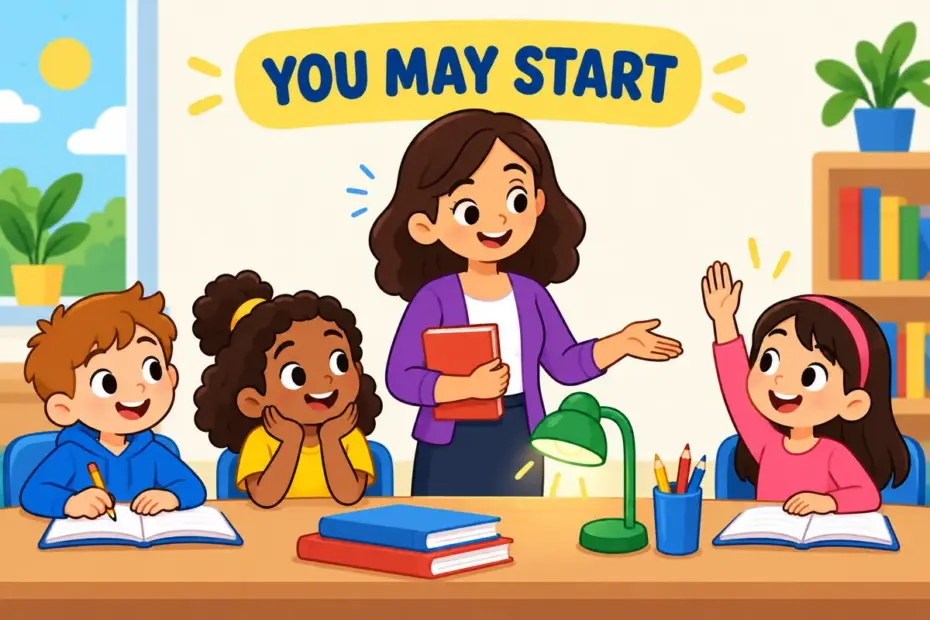
Go ahead is a phrase that grants permission to start or describes something continuing as planned. In a sentence it can stand alone as an answer — “Go ahead” — or act as a verb: “The match went ahead despite the rain.” The same words become a noun, the go-ahead, when they name the permission itself.
Go ahead at a glance
- The phrase works as a verb (go ahead), a noun (the go-ahead) and an adjective (a go-ahead firm).
- As a verb it is intransitive: you go ahead with a plan, never go ahead a plan.
- The noun is usually hyphenated and takes an article, as in the project got the go-ahead.
- In speech the bare imperative Go ahead is the commonest way to grant permission.
- The commonest error is dropping with before the thing that is being started.
What does go ahead mean?
Go ahead does three jobs, and only two of them are verbs. As a verb phrase it means to proceed or to let somebody proceed; as a noun, written the go-ahead, it means official permission to start; as an adjective it describes an enterprising person or firm. The Cambridge entry for go ahead separates the proceed sense from the permission sense, and the difference decides whether you need with. Where the thing beginning is simply a later stage of work, proceed carries the same idea in a more formal register.
| Sense | Part of speech | Plain meaning | Example sentence |
|---|---|---|---|
| Proceed | verb phrase | Continue as planned | The match went ahead in the rain. |
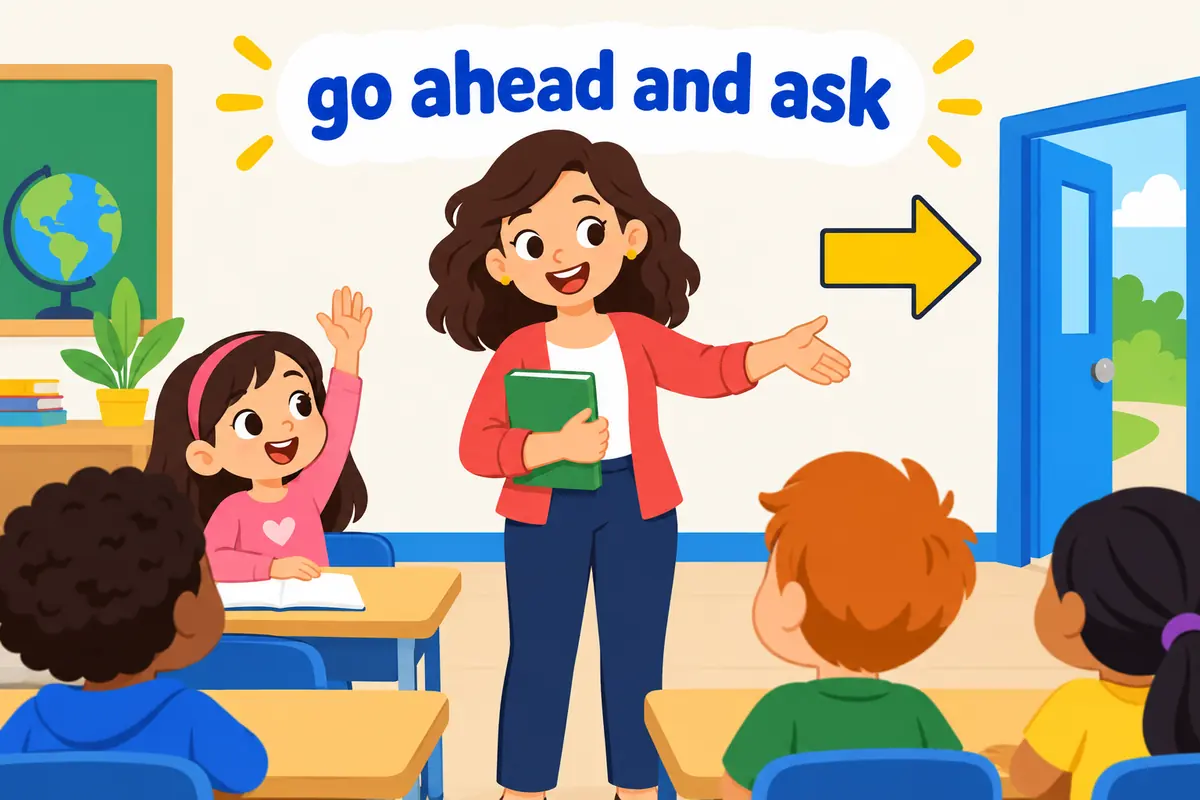
| Grant permission | imperative phrase | Tell someone to start | Go ahead and ask your question. |
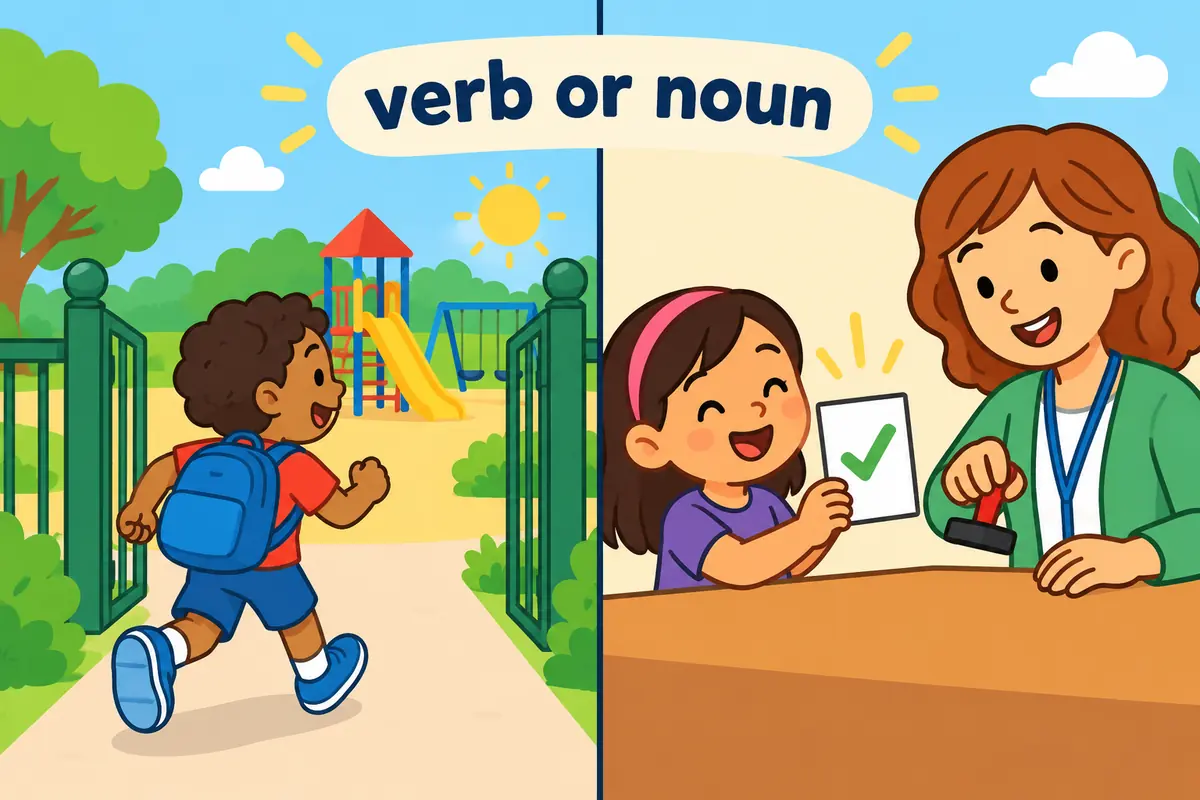
| Give the green light | noun | Formal permission to begin | The board gave the plan the go-ahead. |
| Enterprising | adjective | Eager to try new things | A go-ahead bakery opened on the corner. |
One limitation is worth stating plainly. Go ahead fits a decision that was pending, postponed or waited on, and it implies that somebody could still say no. It is a poor choice for an action that simply happened with no gate to pass, where begin, start or take place is the plainer word.
How do you use go ahead in a sentence?
The verb phrase needs no object, but it usually carries with when you name the plan. The noun version takes an article, and the imperative version takes and before the next verb. Five patterns cover almost every real sentence.
| Pattern | Example | What it signals |
|---|---|---|
| Go ahead and + verb | Go ahead and send the form. | Permission from one speaker to another. |
| go ahead with + noun | They went ahead with the concert. | Names the plan that proceeds. |
| go ahead as planned | The wedding went ahead as planned. | Confirms a delay changed nothing. |
| get / give the go-ahead | The crew got the go-ahead at dawn. | The noun form, always with the. |
| Go ahead (as an answer) | “Go ahead.” | A complete utterance that grants permission. |
If you want to encourage somebody to keep moving on a course they chose, pursue makes the ongoing effort explicit, while go ahead only opens the gate. A useful test: if the action could not have been blocked, go ahead is the wrong phrase.
Go ahead in a sentence: examples across contexts
Go ahead shifts easily between registers, and the hyphen is the clearest clue to which job it is doing. The ten sentences below move from the playground to the minutes of a meeting.
| Context | Example sentence | Why this works |
|---|---|---|
| Classroom | The teacher told us to go ahead with the poster. | With names the task that was authorised. |
| Workplace email | Please go ahead and book the venue for Friday. | The imperative plus and is polite and clear. |
| Meeting minutes | The committee gave the repair the go-ahead. | The noun with the records a formal decision. |
| News report | The parade went ahead as planned. | As planned stresses that a threat failed to stop it. |
| Sports commentary | Officials let the final go ahead after the storm. | The verb takes a bare object here: let the final go ahead. |
| Business writing | We are waiting for the go-ahead from head office. | The noun follows a preposition cleanly. |
| Parenting | Go ahead and choose the story tonight. | And turns permission into a shared decision. |
| Conversation | “Go ahead.” | A one-word reply that means the way is clear. |
| Travel writing | The trip went ahead despite the rail strike. | Despite contrasts the obstacle with the outcome. |
| Company profile | A go-ahead studio took the risky commission. | The adjective describes a daring firm. |
The noun and adjective both keep the hyphen, which is the quickest way to tell them from the two-word verb at a glance.
Go ahead vs proceed and go on
Three expressions move an action forward, but only go ahead depends on a gate being opened. proceed is the formal verb for continuing a process; go on carries the same sense in conversation; go ahead signals that permission or a decision released the action.
| Attribute | go ahead | proceed | go on |
|---|---|---|---|
| Core job | Start after a green light | Continue a process | Keep going informally |
| Needs permission | Often, implied | No | No |
| Typical object | with + a plan | with + a step | with + an activity |
| Register | Neutral to business | Formal | Informal |
| Noun form | the go-ahead | proceedings | none |
Verdict: choose go ahead when something awaited approval, proceed when a formal process carries on, and go on when the tone is casual. To name the opposite, halt stops an action that was already moving.
Word forms and grammar of go ahead
Because go ahead is a fixed expression, only the verb changes and the particle never moves. The table also shows the noun and adjective spellings, which confuse many writers.
| Form | Part of speech | Example |
|---|---|---|
| go ahead | verb phrase, base | They will go ahead if the weather holds. |
| went ahead | verb phrase, past | The show went ahead without power. |
| going ahead | verb phrase, present participle | We are going ahead with the survey. |
| the go-ahead | noun | The build has the go-ahead. |
| go-ahead | adjective | A go-ahead team tried the new method. |
Inside the verb phrase nothing may be inserted: go right ahead and go ahead both work, but go the plan ahead does not. You may also advance a schedule without any permission, which is why advance and go ahead are only loose cousins.
Common mistakes with go ahead
- Incorrect:
They went ahead the concert.Correct: They went ahead with the concert. Rule: The verb phrase is intransitive, so the plan needs with before it. - Incorrect:
The board gave go-ahead to the project.Correct: The board gave the go-ahead to the project. Rule: The noun is countable and needs an article. - Incorrect:
Go ahead to open your books.Correct: Go ahead and open your books. Rule: The imperative joins the next action with and, not to. - Incorrect:
We got the go ahead yesterday.Correct: We got the go-ahead yesterday. Rule: The noun is hyphenated, unlike the two-word verb. - Incorrect:
The go-ahead meeting started.Correct: The go-ahead meeting started, meaning the enterprising one. Rule: The adjective means daring, not official; check the sense before you write it.
Practice using go ahead
Work through the six items, then compare your wording with the reasoned answers.
- Fill the gap: The council finally gave the new bridge the ______.
- Choose the better word: Once the forms arrived, we decided to (go ahead / advance) with the sale.
- Correct the error: Please go ahead to take a seat.
- Build a sentence: use go ahead with about a class trip that was almost cancelled.
- Spot the register: which belongs in meeting minutes — the plan got the go-ahead, or the plan got the thumbs-up?
- Add the particle: The team went ahead the repair after the flood.
Answers
- go-ahead — the noun needs the article and the hyphen.
- go ahead — a permission gate was passed, which advance does not convey.
- Please go ahead and take a seat — the imperative uses and, not to.
- Model answer: We went ahead with the trip after the forecast improved.
- The plan got the go-ahead — minutes prefer the precise noun to the idiom thumbs-up.
- The team went ahead with the repair — with links the verb to the plan.
The bottom line
Use go ahead in a sentence when something starts after a pending decision, and choose the spelling that matches the job: the two-word verb, the hyphenated noun or the hyphenated adjective. Two details settle most sentences: the verb needs with before the plan, and the phrase always implies a gate that could have stayed shut. To name steady movement rather than a start, continue is the safer verb.
Frequently asked questions about go ahead
Is go ahead one word or two?
The verb is written as two words, as in the game went ahead. The noun and the adjective are hyphenated, as in the board gave the go-ahead and a go-ahead designer. Choosing the right spelling shows the reader instantly which of the three jobs the phrase is doing.
What does go ahead mean as an answer?
Used alone, Go ahead is an imperative that grants permission. It tells the listener the way is clear and that no further approval is needed. The tone depends on context: a warm voice makes it welcoming, while a flat voice can make the same two words sound impatient.
Can you say go ahead without with?
Yes, when no plan is named. The bare verb stands alone in sentences like the ceremony went ahead, where it simply means the event took place. Add with as soon as you name the thing: they went ahead with the ceremony. Dropping with before a noun is the commonest mistake.
Is go ahead formal enough for business writing?
Yes. The noun form suits reports and emails, as in the project has the go-ahead. The imperative is slightly conversational, so a formal message may prefer please proceed. Both are correct; the noun go-ahead is the safest choice in minutes and proposals.
“Ever struggled with knowing when it’s appropriate to grant someone permission to proceed? This is where the phrase ‘go ahead’ comes into play. It is a commonly used expression that signifies giving someone the green light to go on with a particular action or task.”
“‘Go ahead’ holds the power to convey encouragement, authorization, or simply acknowledgment of someone’s readiness to carry out an activity. This versatile phrase is handy in a variety of situations where a verbal cue to commence action is needed.”
7 Examples Of Go Ahead Used In a Sentence For Kids
- Go ahead and color your favorite picture.
- Go ahead and share your toys with your friends.
- Go ahead and sing your favorite rhymes out loud.
- Go ahead and try counting from 1 to 10.
- Go ahead and give a big smile to everyone.
- Go ahead and take a deep breath to relax.
- Go ahead and give a high-five to your classmates.
14 Sentences with Go Ahead Examples
- Go ahead and submit your assignment before the deadline.
- It’s your turn to present in class, go ahead and start your presentation.
- Go ahead and register for that workshop, it will be helpful for your future career.
- If you have any questions about the syllabus, go ahead and ask the professor.
- Go ahead and join that club, it’s a great way to meet new people.
- Wanna try that new restaurant near campus? Go ahead and make a reservation.
- Feeling overwhelmed with your workload? Go ahead and talk to your academic counselor.
- Go ahead and apply for that internship, it could be a valuable experience.
- Want to take a break from studying? Go ahead and grab a coffee with friends.
- Go ahead and participate in that debate competition, it will enhance your public speaking skills.
- Need help with your project? Go ahead and ask a classmate for assistance.
- If you’re interested in volunteering opportunities, go ahead and sign up for a community service program.
- Before the semester ends, go ahead and review all your notes for the final exams.
- Go ahead and explore different career options before deciding on your major.
How To Use Go Ahead in Sentences?
To use Go Ahead correctly in a sentence, it is important to understand its meaning and usage. Go Ahead is commonly used as a phrase to give permission or encouragement to someone to proceed with a particular action.
Here are some examples to help clarify its usage:
- Permission: “I give you my Go Ahead to submit the project proposal by the end of the week.”
- Encouragement: “If you feel confident about your decision, then Go Ahead and share your ideas during the meeting.”
When incorporating Go Ahead into a sentence, it is important to place it before the action that the individual is being permitted or encouraged to do. Remember to always follow Go Ahead with the action verb in the correct tense.
It is also worth noting that Go Ahead can be used in both formal and informal contexts, making it a versatile phrase for various situations. Remember, the tone and context of the conversation will determine how Go Ahead should be used.
To summarize, when using Go Ahead in a sentence:
1. Understand the meaning of the phrase as giving permission or encouragement.
2. Place Go Ahead before the action verb in the sentence.
3. Consider the tone and context of the conversation to determine the appropriate usage.
By following these guidelines, you can effectively incorporate Go Ahead into your conversations and written communications.
Conclusion
In summary, the phrase “go ahead” is commonly used to give permission or approval for someone to proceed with a certain action or decision. This simple phrase conveys a sense of encouragement and support, allowing individuals to move forward with confidence. It can be used in a variety of situations, whether in everyday conversations, professional settings, or formal requests.
By using “go ahead” in your communication, you can signal approval, grant permission, or encourage someone to take the next step. This phrase is versatile and effective in conveying a clear and positive message, making it a useful tool for facilitating smooth interactions and decision-making processes.


