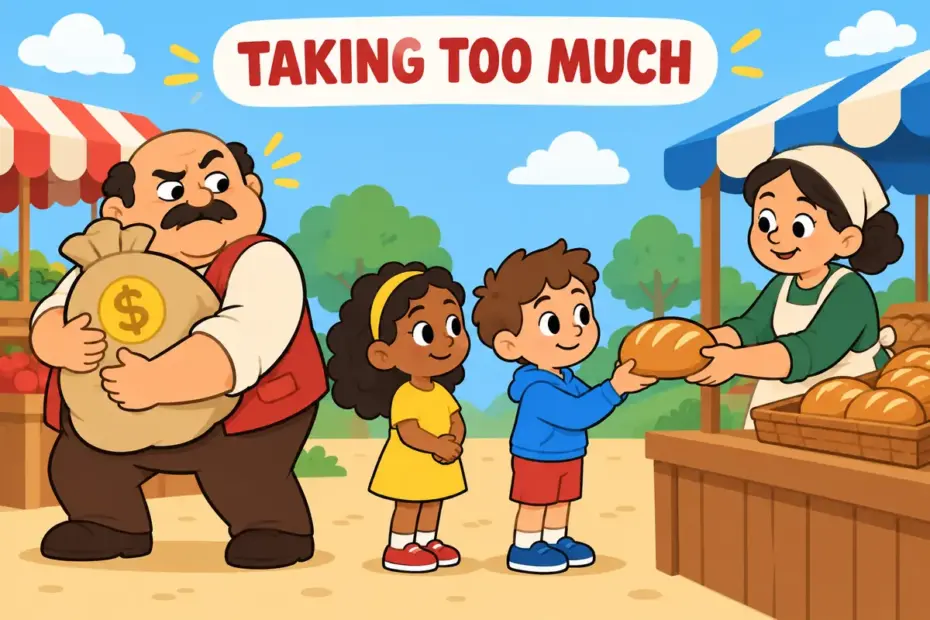
Grasping describes someone greedy and eager to get money or possessions, and it is also the present participle of the verb grasp. To use grasping in a sentence, put it before a noun, as in “a grasping landlord.” The adjective is formal and openly disapproving.
Grasping at a glance
- Grasping is an adjective meaning greedy and eager for money or possessions.
- It is also the present participle of the verb grasp, meaning to hold or understand.
- As an adjective it usually comes before a noun: a grasping landlord.
- The word is formal and carries clear disapproval.
- The closest everyday synonyms are greedy, selfish and stingy.
- The commonest error is reading grasping as literal holding when it means greed.
What does grasping mean?
Grasping is an adjective meaning excessively eager to get and keep money or possessions. The Cambridge entry for grasping gives that disapproving sense, and the same form doubles as the participle of grasp, which means to hold or to understand. Its formal near-synonym avaricious raises the register even further.
| Sense | Plain meaning | Example sentence |
|---|---|---|
| Greedy, adjective | Wanting far more money or property than is fair | The grasping developer ignored the tenants. |
| Holding, participle | Holding something tightly in the hand | The child ran in, grasping a coin. |
One limitation is worth stating plainly. Grasping is a moral judgement, so it is the wrong word for someone who is merely careful with money; frugal and prudent are neutral, and grasping suggests the person takes more than their share. It also never means poor, which is a different idea altogether.
How do you use grasping in a sentence?
Grasping behaves in two grammatically different ways, and the position of the word tells the reader which sense is meant. Four patterns cover almost every real sentence.
| Pattern | Example | What it signals |
|---|---|---|
| grasping + noun | A grasping landlord raised the rent twice. | Attributive adjective before a noun, the usual greedy sense. |
| be + grasping | Neighbours said he was grasping. | Predicative adjective after a linking verb. |
| grasping at / for (verb) | She was grasping at the last free seat. | Literal verb use, reaching with the hand. |
| grasping for (figurative) | He was grasping for more control. | Figurative reach, close to the greedy sense but verbal. |
The practitioner rule is simple: if the word sits before a noun or after be, it means greedy; if it is followed by at or for, it is the verb and describes a reach.
Grasping in a sentence: examples across contexts
Grasping changes force more than meaning. The nine sentences below keep the same word while moving from a playground to a shareholders’ meeting, and each one shows why the judgement lands.
| Context | Example sentence | Why this works |
|---|---|---|
| Classroom | The story warns against a grasping king who taxes every field. | The fairytale frame makes the judgement safe and clear. |
| Workplace | Staff resented the grasping manager who claimed every bonus. | Names the concrete act that earns the label. |
| News report | Critics called the landlord grasping for raising rents twice in a year. | Attributes the judgement to named critics rather than stating it flatly. |
| Business writing | A grasping supplier can damage a long partnership. | Uses the adjective to warn about behaviour, not a person. |
| Literary essay | The novel paints its grasping merchant with unexpected sympathy. | Shows the word at work inside character analysis. |
| Legal writing | The judgment described the scheme as grasping and predatory. | Paired with a stronger adjective inside a formal summary. |
| History essay | Grasping officials drained the province long before the revolt. | Applies the adjective to a group and implies a cause. |
| Sales email | We do not want to look grasping, so the discount is clearly explained. | Reputation is the concern, which fits a commercial tone. |
| Conversation | It felt grasping to ask for more when everyone else had given. | The adjective describes a feeling about an act, not a fixed trait. |
Only the last sentence uses grasping for a single act rather than a settled character, which is the loosest the adjective gets in ordinary speech.
Grasping vs greedy, stingy and selfish
Grasping overlaps with three adjectives and sharpens a different point from each. greedy is the everyday word for wanting more; stingy means unwilling to spend or share what one has; selfish concerns disregard for others in general.
| Attribute | grasping | greedy | stingy |
|---|---|---|---|
| Core meaning | Eager to take and keep more | Wanting more than enough | Reluctant to give or spend |
| Direction | Grabbing inward | Appetite outward | Holding back |
| Register | Formal, literary | Neutral, everyday | Informal, mildly insulting |
| Typical subject | A person or institution in power | A person or appetite | A person with money |
| Implies unfairness | Yes, taking more than a fair share | Often | No, only meanness |
Verdict: choose greedy for a plain appetite, stingy for someone who will not share, and grasping when the person uses power to take more than is fair.
Word forms and grammar of grasping
Grasping is one shape of a verb that also works as a noun, and learners often mix the forms. The table lists the real ones, including the rare noun built from the adjective.
| Form | Part of speech | Example |
|---|---|---|
| grasp | verb, base form | She grasped the rope with both hands. |
| grasps | verb, third person singular | He grasps the idea quickly. |
| grasped | verb, past and past participle | The class grasped the rule at last. |
| grasping | verb participle or adjective | They are a grasping pair of dealers. |
| grasp | noun | He had a firm grasp of the facts. |
| graspingness | noun, rare | Nobody dared mention his graspingness. |
The near-synonym covetous belongs to the same family of disapproval, but it fixes on wanting what another person owns rather than on taking more than is fair.
Common mistakes with grasping
- Incorrect:
He was grasping of money.Correct: He was grasping, or he was grasping for money. Rule: The adjective takes no of phrase; if you need one, use the verb with for. - Incorrect:
She is very grasping with her time.Correct: She is very stingy with her time. Rule: Grasping concerns money and possessions, while stingy covers unwillingness to give anything. - Incorrect:
The drowning swimmer was grasping the rope.Correct: The drowning swimmer was grasping at the rope. Rule: When the object is moving or a reach is meant, the verb takes at. - Incorrect:
He was a graspping businessman.Correct: He was a grasping businessman. Rule: The word has one p in the middle, so it is not spelled like grabbed. - Incorrect:
They lived in grasping conditions.Correct: They lived in grinding poverty. Rule: The adjective means greedy, never poor, so a rapacious dealer and a poor family are different cases.
Practice using grasping
Work through the six items, then check the reasoning rather than only the answer.
- Fill the gap: The villagers refused to sell to the ______ merchant.
- Choose the better word: She never buys treats for anyone, so her friends call her (grasping / stingy).
- Correct the error: The swimmer was grasping the drifting log.
- Build a sentence: use grasping for about a player reaching for more fame.
- Spot the register: which belongs in a business report — a grasping supplier, or a greedy shop?
- Rewrite as an adjective: The landlord grabs everything he can. Use grasping instead.
Answers
- grasping — the adjective before a noun gives the greedy, disapproving sense.
- stingy — the complaint is not sharing, not taking more than a fair share.
- The swimmer was grasping at the drifting log — a moving object calls for the verb with at.
- Model answer: The young player was grasping for more fame than the game could give.
- A grasping supplier — a formal report prefers the literary adjective to the casual greedy shop.
- The landlord is grasping — the adjective replaces the verb phrase.
The bottom line
Use grasping in a sentence when someone takes or hoards more than is fair, and keep it before a noun or after be. The two nuances that decide most sentences are these: grasping is the participle of grasp as well as a greedy adjective, so the position of the word fixes the sense, and it is a strong moral judgement rather than a neutral description of thrift. A careful saver is frugal, not grasping.
Frequently asked questions about grasping
Is grasping an adjective or a verb?
Grasping is both. As an adjective it means greedy and usually sits before a noun, as in a grasping landlord. As the present participle of grasp it describes holding or reaching, as in grasping the rope. Word order and any following preposition usually make the intended sense clear to a reader.
What does grasping mean about a person?
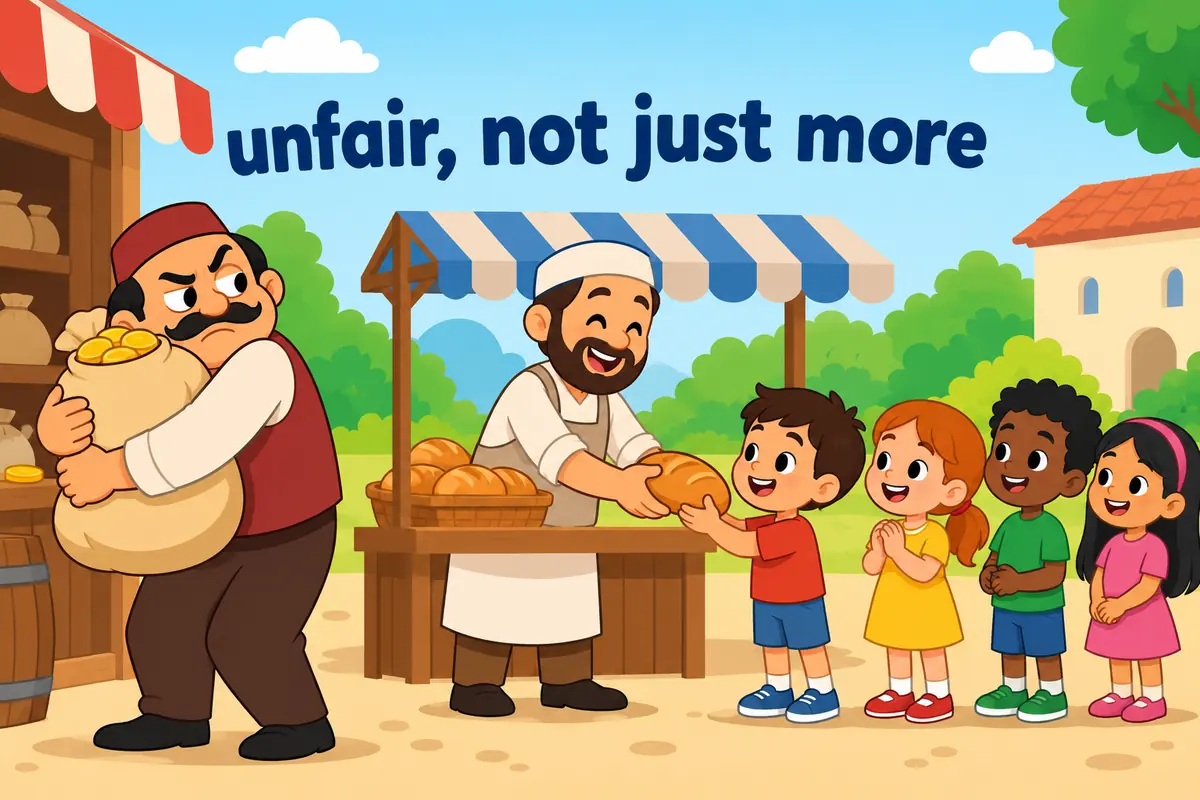
When it describes a person, grasping means greedy and eager to take more money or property than is fair. It is a firm judgement, so it suits a landlord who raises rents twice, not a friend who simply saves carefully. The word also implies power, because a grasping person is usually able to take.
What is the difference between grasping and greedy?
Grasping and greedy both describe wanting more, but grasping is more formal and stresses taking an unfair share, while greedy is the plain everyday word for a large appetite. A greedy child wants the whole cake; a grasping landlord takes more rent than the lease allows. Grasping also carries a stronger sense of disapproval.
How do you use grasping in a sentence?
Place grasping before a noun or after be when you mean greedy, as in a grasping dealer or the dealer was grasping. Follow it with at or for when it is the verb, as in grasping at a straw. Because the word is a judgement, naming the unfair act in the same sentence keeps the tone accurate.
Have you ever struggled with understanding a concept and wished for a clear demonstration or explanation to fully comprehend it? That’s where examples sentences with “grasping” come in handy. These sentences provide practical instances that help readers grasp the meaning of a word or a complex idea effortlessly.
By using example sentences with “grasping,” readers can visualize how a term is used in context, making it easier to remember and apply in their own writing. These sentences serve as a guiding light, illuminating the intricacies of language and aiding in the comprehension of new concepts.
7 Examples Of Grasping Used In a Sentence For Kids
- Grasping a ball helps us play catch.
- We are grasping a pencil to write.
- Grasping a flower gently is important.
- Grasping a book and turning its pages is fun.
- Lets practice grasping objects with both hands.
- Grasping a toy tightly can be rough.
- Grasping a friend’s hand when crossing the road is safe.
14 Sentences with Grasping Examples
- Grasping the concepts of macroeconomics can be challenging for some students.
- Students often have a tough time grasping the intricacies of organic chemistry.
- Grasping the importance of time management is crucial for success in college.
- Some students struggle with grasping the significance of networking in their field.
- Grasping the key points of a research paper can help in writing a comprehensive analysis.
- Students find grasping the fundamentals of computer programming to be a complex task.
- Grasping the nuances of a foreign language can open up new opportunities for students.
- Effective note-taking is essential for grasping the material covered in lectures.
- Grasping the requirements of a particular course can help students plan their academic schedule.
- Grasping the implications of plagiarism can prevent serious consequences for students.
- Successfully grasping the basics of statistics can improve analytical skills.
- Some students have difficulty grasping the formatting guidelines for academic papers.
- Grasping the concepts of environmental science can lead to a greater understanding of sustainability issues.
- Developing critical thinking skills is vital for grasping complex theories and concepts in various subjects.
How To Use Grasping in Sentences?
Grasping is an important skill in writing. Grasping means understanding or comprehending something. It can also refer to physically holding onto or seizing something.
To use grasping in a sentence, you can say, “She had a hard time grasping the concept of algebra.” In this sentence, grasping is used to show the difficulty the person had in understanding algebra.
Another example could be, “The child tightly grasped his mother’s hand as they crossed the street.” Here, grasped is used to show how the child was holding onto his mother’s hand.
When using grasping in a sentence, it’s important to ensure that the context is clear and that the word is used correctly. Grasping can convey different meanings depending on how it is used in a sentence.
Practice using grasping in sentences to become more comfortable with its usage. As you continue to read and write, you will become more familiar with how to incorporate grasping effectively into your writing.
Conclusion
In conclusion, the examples provided above illustrate how sentences with “grasping” can be used to depict a variety of scenarios where understanding, seizing, or comprehending something is essential. These sentences showcase the act of mentally capturing or physically holding onto an idea, concept, or object.
Whether it’s the concept of grasping a difficult mathematical problem, the literal act of grasping an object with one’s hand, or even grasping the gravity of a situation, sentences with “grasping” convey the importance of comprehension and awareness. By examining these examples, we can appreciate how versatile and powerful this word can be in embodying the actions of understanding, holding onto, or perceiving something in various contexts.


