A gripe is a complaint, usually a small or repeated one, and to gripe is to complain in an annoyed way. To use gripe in a sentence, name the complaint with about: “The staff had one gripe about the new rota.” The word is informal and slightly dismissive.
Gripe at a glance
- Gripe is both a noun and a verb; its plural is gripes and its participle is griping.
- As a noun it means a minor complaint; as a verb it means to complain persistently.
- The verb usually takes about before the thing complained of, or a that-clause after it.
- It is informal and belongs to speech, sports pages and opinion columns.
- The commonest error is using gripe for a formal written complaint.
What does gripe mean?
Gripe is a countable noun and a verb meaning a minor or repeated complaint, or the act of making one. The Cambridge entry for gripe records the informal complaint sense, and the word always carries a hint that the annoyance is small. A gripe is aired to a sympathetic listener rather than filed on record.
| Sense | Plain meaning | Example sentence |
|---|---|---|
| Minor complaint | A small annoyance someone mentions | Her main gripe was the constant noise. |
| Ongoing complaint | A repeated grumble | The gripes about parking never stop. |
| Complain | To grumble about something | They griped about the long queue. |
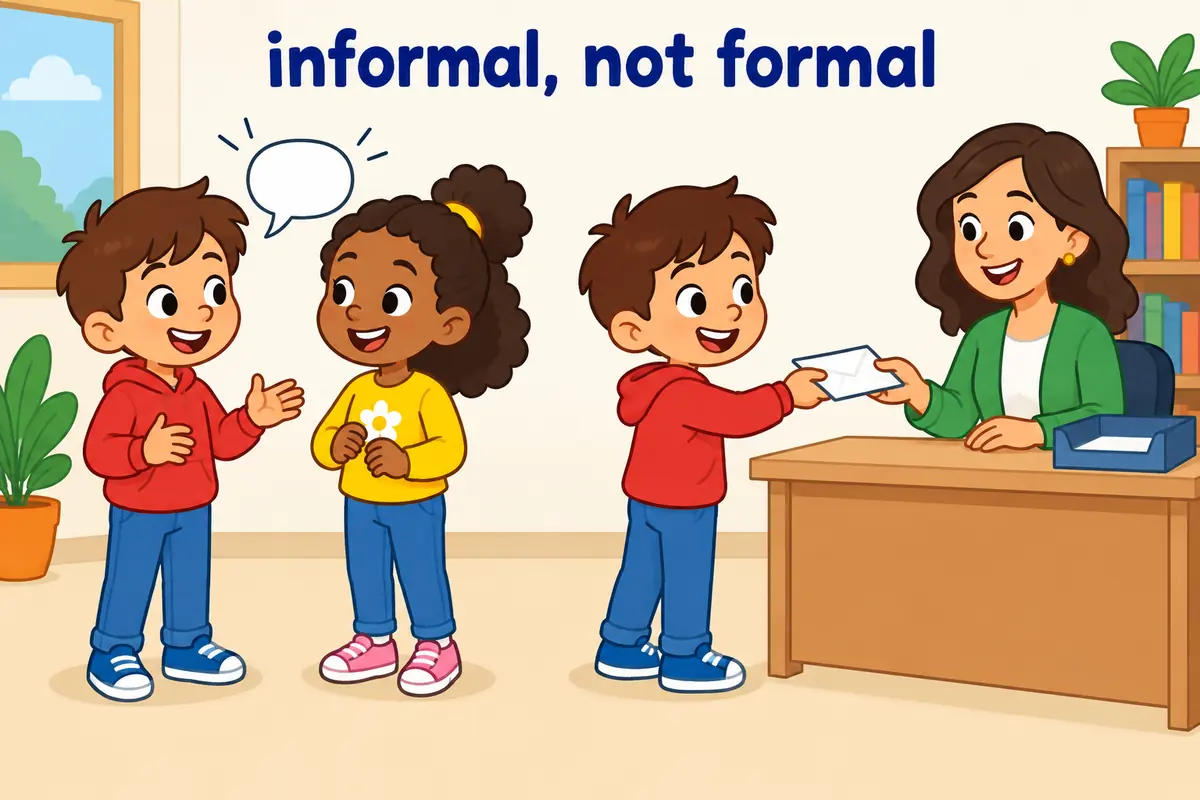
Gripe is informal and slightly dismissive. Calling a concern a gripe suggests it is minor, so a serious wrong needs a stronger word. In a formal letter, complaint or grievance is the safer choice, and a well-run office treats a written complaint differently from a passing gripe.
How do you use gripe in a sentence?
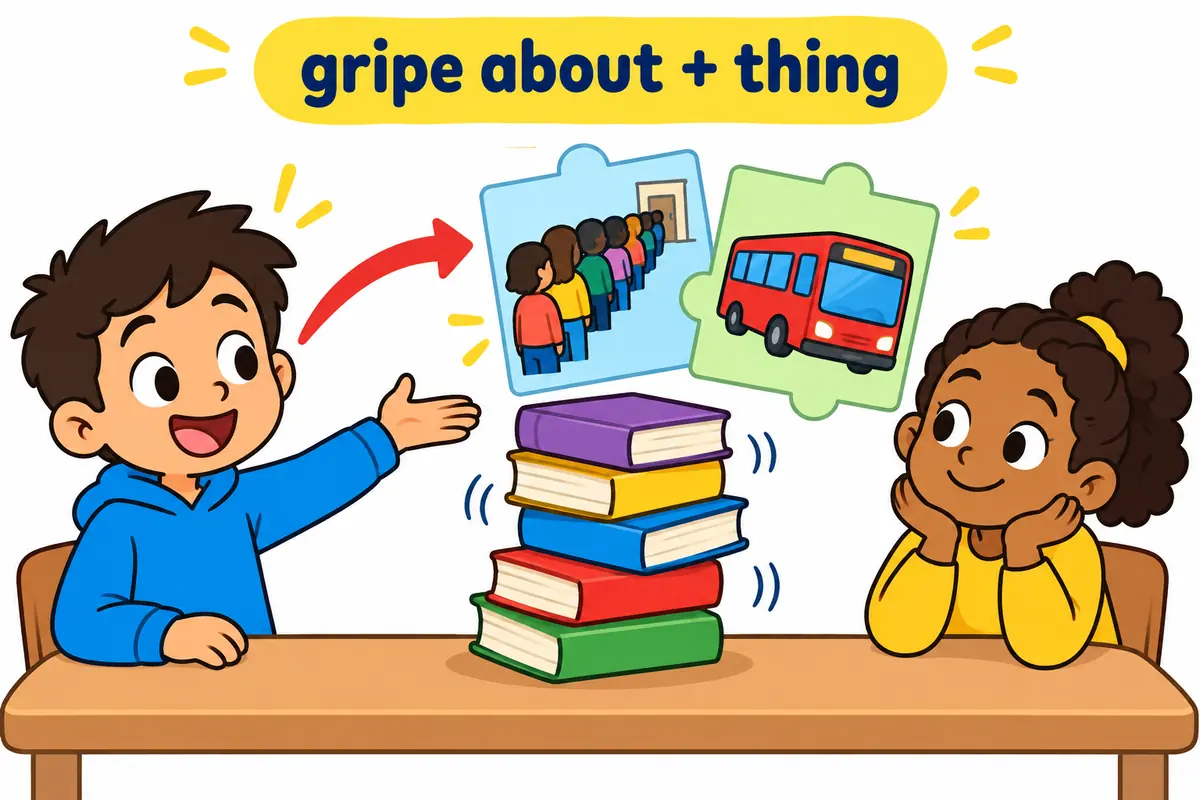
Gripe works as a noun with about or with, and as a verb with about or a that-clause. The five patterns below cover almost every natural sentence.
| Pattern | Example | What it signals |
|---|---|---|
| have a gripe about | I have one gripe about the timetable. | Noun plus about names the complaint. |
| gripe about + noun | The players griped about the referee. | The commonest verb pattern. |
| gripe that + clause | She griped that the lift was always broken. | A that-clause reports the content. |
| a gripe with + target | He has a gripe with the new policy. | with marks the target of annoyance. |
| gripe to + person | They griped to anyone who would listen. | Names the audience, not the cause. |
Gripe in a sentence: examples across contexts
The nine sentences below keep the same word while moving from a classroom to an opinion column, and each one names the complaint. Where the speaker is only mildly unhappy, grumble about a delay can sound gentler.
| Context | Example sentence | Why this works |
|---|---|---|
| Classroom | The only gripe about the trip was the early start. | Minor complaint introduced with about. |
| Workplace email | My one gripe is the meeting that could have been an email. | Informal tone suits a friendly note. |
| News report | Fans griped about the ticket prices all season. | Verb plus about in reporting. |
| Sports page | The manager griped that his team got no rest. | that-clause reports the complaint. |
| Conversation | Stop griping and help me carry these boxes. | Direct imperative use. |
| Opinion column | The column lists the usual gripes about city traffic. | Noun plural for a set of complaints. |
| Customer service | A common gripe is the wait on the helpline. | Names a frequent complaint. |
| Diary | I had a gripe with the way the decision was made. | with marks the target. |
| Academic prose | Informal gripes rarely appear in peer review. | Shows the register contrast. |
Gripe vs complaint and grievance
Gripe overlaps with two nouns of very different weight. A formal complaint is a statement of dissatisfaction that goes on record, while a grievance is a serious wrong raised against a person or body. Gripe keeps its light, spoken tone.
| Attribute | gripe | complaint | grievance |
|---|---|---|---|
| Core meaning | A minor, often repeated annoyance | A formal statement of dissatisfaction | A serious wrong that is raised |
| Register | Informal | Neutral to formal | Formal, often legal |
| Typical use | Speech, sport, opinion | Letters, service, records | Employment, law, unions |
| Strength | Light and dismissive | Serious and on record | Heavy and procedural |
| Verb form | to gripe | to complain | to raise a grievance |
Verdict: use gripe for a passing annoyance, complaint for anything written down, and grievance only when the wrong is serious enough to need a formal process. In American speech a person may have a beef, a stronger and more personal version of a gripe, while a neighbour who will moan about the weather is doing much the same thing.
Word forms and grammar of gripe
Gripe inflects regularly and keeps the same spelling as both a noun and a verb. Its confusables are close in sound rather than in meaning: to grate on someone is to irritate, and to grieve is to mourn, so neither can replace it.
| Form | Part of speech | Example |
|---|---|---|
| gripe | noun, singular | One gripe led to a long debate. |
| gripes | noun plural or verb third person | The gripes about the canteen continue. |
| griped | verb, past tense | They griped for an hour. |
| griping | verb, present participle | He is always griping about the weather. |
| gripe | verb, base form | Do not gripe; suggest a fix. |
Common mistakes with gripe
- Incorrect:
She filed a gripe with the company about the faulty product.Correct: She filed a complaint with the company about the faulty product. Rule: Gripe is informal, while an official record takes complaint. - Incorrect:
He griped the food was cold.Correct: He griped that the food was cold. Rule: The verb introduces a clause with that, or takes about before a noun. - Incorrect:
I have a gripe on the new system.Correct: I have a gripe about the new system. Rule: The noun takes about or with, never on. - Incorrect:
The team grieved about the schedule.Correct: The team griped about the schedule. Rule: Grieve means mourn; griping means complaining.
Practice using gripe
Work through the six items, then check the reasoning rather than only the answer.
- Fill the gap: My only ______ about the hotel was the noise.
- Choose the better word: She sent a formal (gripe / complaint) to the council.
- Correct the error: They griped the room was too small.
- Build a sentence: use gripe about about a long queue.
- Spot the register: which belongs in a workplace email — I have one gripe about the new rota, or This rota is a total disgrace.
- Rewrite formally: The staff griped about the pay. Use complaint instead.
Answers
- gripe — a single small annoyance is the noun sense.
- complaint — a letter to the council goes on record, so the formal word fits.
- They griped that the room was too small — the verb needs that before a clause.
- Model answer: The customers griped about the long queue at the till.
- I have one gripe about the new rota — it stays measured, while disgrace is too strong.
- The staff raised a complaint about the pay — complaint is the neutral, recorded word.
The bottom line
Use gripe in a sentence for a small or repeated complaint, and keep it in informal speech, sport and opinion writing. Two details decide most sentences: the noun takes about or with, and the verb takes about or a that-clause. Where the issue is serious or needs a record, choose complaint or grievance instead.
Frequently asked questions about gripe
Is gripe a formal word?
No, gripe is informal and slightly dismissive. It belongs in conversation, sports writing and opinion columns, where a small annoyance is being aired. In a letter to a manager, a customer service record or a legal document, choose complaint or grievance instead, because gripe can suggest the issue is trivial.
What is the difference between gripe and grievance?
A gripe is a small, often repeated annoyance; a grievance is a serious wrong that someone formally raises against a person or body. Gripes usually need only an ear, while grievances go on record. The two words differ in weight as much as in register.
Can gripe be a verb and a noun?
Yes. The noun means a minor complaint, as in her main gripe, and the verb means to complain persistently, as in they griped all evening. The verb takes about before the annoyance or a that-clause after it, and the participle griping describes the person doing it.
Does gripe have another meaning?
Yes. In medical and older use, the gripes are a pain in the stomach or bowels, and a baby with colic is said to have the gripes. That sense is separate from complaining and still appears in dictionaries. In everyday speech today, gripe almost always means a complaint.
Ever found yourself bothered by something but unsure how to express your annoyance? That’s where the word “gripe” comes in. A gripe is a complaint or a criticism about something that is bothering you.
Gripes can range from minor annoyances to more significant issues, but the common thread is that they are things that you are unhappy about and feel the need to voice. Expressing gripes can help you feel heard and potentially lead to solutions for the issues bothering you.
7 Examples Of Gripe Used In a Sentence For Kids
- I have a gripe when my pencil keeps breaking.
- Sometimes I gripe when I have to eat vegetables.
- My friend likes to gripe about doing homework.
- I gripe when I don’t get to play with my favorite toy.
- It’s normal to have a little gripe when it’s time to go to bed.
- My sister always gripes when she has to tidy up her toys.
- It’s okay to gripe if you feel sick and need rest.
14 Sentences with Gripe Examples
- Gripe 1: I always gripe about the slow Wi-Fi on campus.
- Gripe 2: My biggest gripe with the cafeteria food is the lack of vegetarian options.
- Gripe 3: Students often gripe about the limited parking spaces available.
- Gripe 4: One common gripe among my classmates is the strict attendance policy.
- Gripe 5: The long queues at the library checkout desk are a constant gripe for many students.
- Gripe 6: Many students gripe about the expensive textbooks required for classes.
- Gripe 7: One major gripe students have is the lack of air conditioning in some lecture halls.
- Gripe 8: The constant construction on campus is a common gripe among the student body.
- Gripe 9: Students often gripe about the high fees for extracurricular activities.
- Gripe 10: The limited study spaces available during exam week is a frequent gripe among students.
- Gripe 11: The strict deadlines for assignments are a significant gripe for many students.
- Gripe 12: The noisy dorms are a constant gripe for students trying to study.
- Gripe 13: The lack of communication from professors about class cancellations is a common gripe among students.
- Gripe 14: The slow response time from the IT department is a recurring gripe for students facing tech issues.
How To Use Gripe in Sentences?
To use the word “gripe” in a sentence, you can follow these steps. First, identify the specific situation or complaint you want to express. Then, consider using “gripe” to describe your dissatisfaction or annoyance about it. For example, “My main gripe about the new restaurant was the slow service.”
When using gripe in a sentence, remember that it is typically used to convey a mild complaint or criticism. It is often used in informal contexts to express dissatisfaction without being overly negative. For instance, “Her constant gripes about the weather were getting on everyone’s nerves.”
You can also use gripe as a verb to describe the act of complaining or expressing dissatisfaction. For instance, “She tends to gripe about minor inconveniences rather than focusing on the positive aspects.”
It’s important to note that while gripe can be used to express complaints or criticisms, it’s always a good idea to provide constructive feedback or suggestions for improvement, rather than just focusing on the negative aspects. By doing so, you can effectively communicate your concerns while also being helpful and proactive.
In summary, using gripe in a sentence is a straightforward way to express mild dissatisfaction or complaints. Just remember to provide context and consider the tone of your message to ensure effective communication.
Conclusion
In conclusion, sentences featuring the word “gripe” typically express complaints or criticisms about something. Examples of sentences with “gripe” include: “His main gripe with the restaurant was the slow service” and “She didn’t hesitate to air her gripes with the new company policy.” Utilizing the word “gripe” clarifies the expression of dissatisfaction or discontent in writing, allowing for a straightforward conveyance of grievances or objections. By articulating grievances using sentences with “gripe,” individuals can succinctly communicate their concerns and engage in constructive dialogue to address issues effectively.


