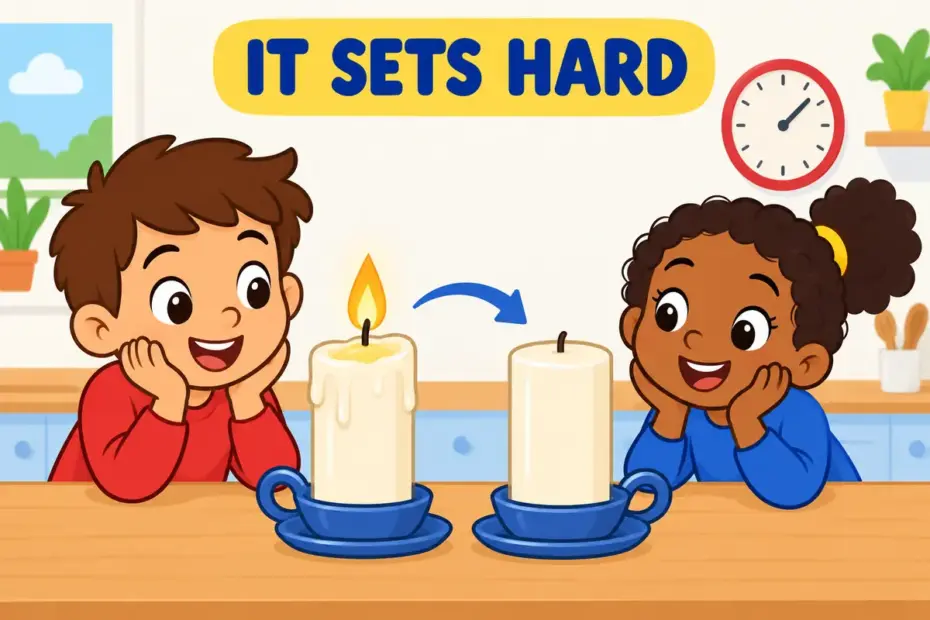
Harden means to become or make something hard, firm or less easily changed, and it works for wax, opinions and defences alike. To use harden in a sentence, give it the thing that changes: “The wax hardened in the cold.” The verb is usually intransitive, though it also takes a direct object.
- Harden is a verb; its forms are hardens, hardened and hardening.
- The literal sense covers wax, clay, cement and steel; the figurative sense covers attitudes.
- The dominant pattern is intransitive: the subject itself becomes hard.
- Common partners are into, against, to and by.
- The commonest error is using harden where the adjective hardened is needed.
What does harden mean?
Harden is a verb meaning to become hard or firm, or to make something hard or firm. The Cambridge entry for harden gives both the physical sense and the emotional one, and the subject tells them apart: cement hardens, and so does a person’s attitude. Where a soft substance simply turns solid with no figurative meaning, solidify the mixture is the plainer verb.
| Sense | Plain meaning | Example sentence |
|---|---|---|
| Physical setting | Become or make hard and firm | The clay hardened overnight. |
| Emotional firming | Become less sympathetic or more resolute | His voice hardened when the subject came up. |
| Defensive strengthening | Make something harder to attack or damage | Engineers hardened the bridge against floods. |
One limitation is worth stating plainly. Harden does not mean break or destroy, and it does not mean become stronger in a general sense. A hard person is not necessarily a strong one, which is why toughen or strengthen fits better when the point is resilience rather than firmness.
How do you use harden in a sentence?
Harden works either alone or with a direct object, and the preposition after it names what the thing becomes or resists. The table sets out the five patterns that cover most real sentences.
| Pattern | Example | What it signals |
|---|---|---|
| harden | The cement hardened in twenty minutes. | No object; the subject does the changing. |
| harden + object | The cold hardened the butter. | Transitive, causative use. |
| harden into | The clay hardened into a bowl. | Names the result the substance becomes. |
| harden against | He hardened against offers of help. | Emotional or defensive resistance. |
| become hardened to | Rescue workers become hardened to the sights. | Accustomed to something, often hard to feel. |
The intransitive pattern is the one that sounds native in everyday writing, which is why set firmly and harden are such close partners for cement and glue.
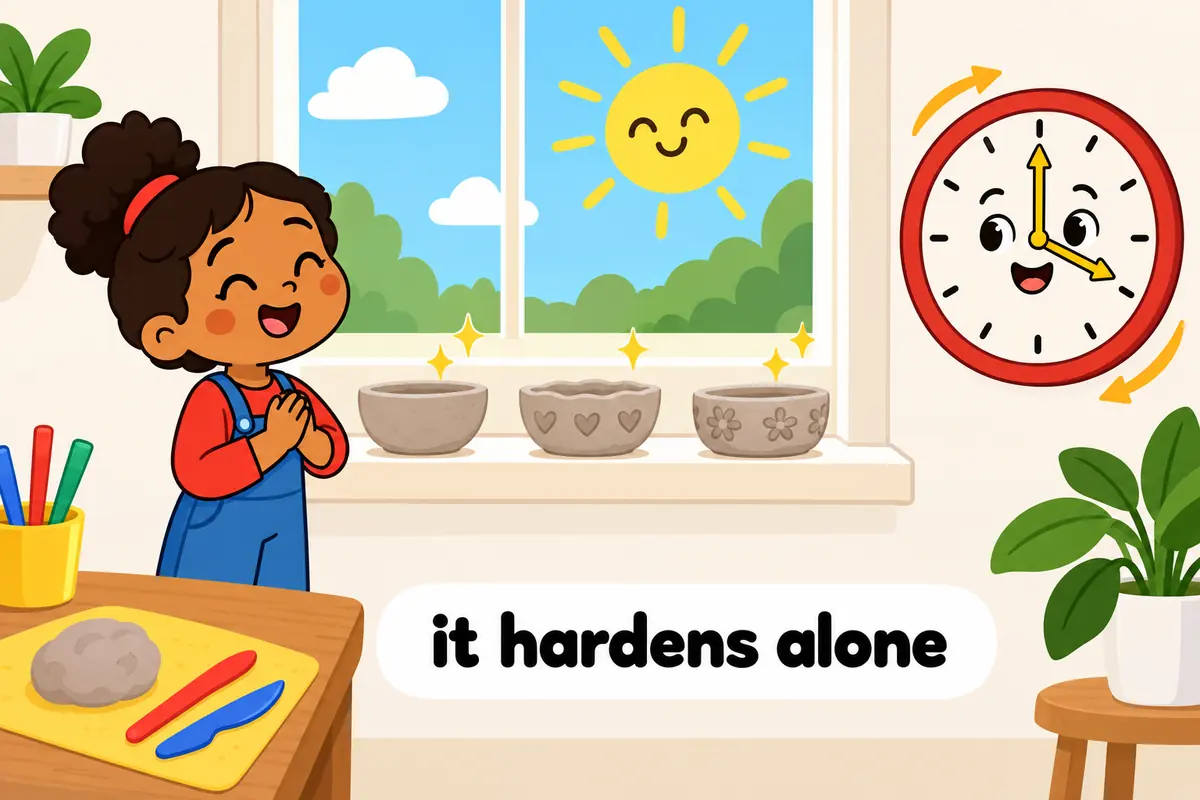
Harden in a sentence: examples across contexts
Harden shifts from kitchen to courtroom without changing shape. The nine sentences below move from a classroom to a policy report, and each one shows what is becoming hard.
| Context | Example sentence | Why this works |
|---|---|---|
| Classroom | The salt dough hardened on the shelf over the weekend. | Uses the intransitive physical sense with a concrete subject. |
| Baking | Chill the tray until the icing hardens. | An instruction where the verb needs no object. |
| Workplace email | The board’s position hardened after the second complaint. | Applies the figurative sense to an institution. |
| News report | Roads hardened as the overnight frost took hold. | Describes a physical change in a weather story. |
| Technical writing | The alloy hardens when it is quenched in oil. | Names the process and keeps the verb passive-free. |
| Conversation | She has hardened towards her old team since the split. | Shows the emotional sense with a preposition. |
| Academic writing | Preferences harden into habits if they go unchallenged. | Uses harden into for an abstract outcome. |
| Sports commentary | The defence hardened in the final ten minutes. | Figurative use that reads naturally in commentary. |
| Policy report | Officials hardened the building against future storms. | Transitive use aimed at protection. |
Only the second and fifth sentences are instructions, and both avoid an object, which is what keeps them sounding like a recipe or a manual rather than a description.
Harden vs stiffen
Harden and stiffen both describe something becoming less yielding, and they rarely swap. Stiffen a joint restores rigidity, while harden changes a material into something solid and unyielding.
| Attribute | harden | stiffen |
|---|---|---|
| Core meaning | Become or make hard and firm | Become or make rigid and less flexible |
| Typical subject | Wax, clay, cement, attitudes | Fabric, joints, muscles, refusal |
| Physical result | Solid and unyielding | Firm but often still bendable |
| Figurative use | Common: harden your heart | Rare |
| Register | Neutral, literal and figurative | Neutral to technical |
Verdict: choose harden for substances that set and for attitudes that grow cold, and choose stiffen when something merely stops bending.
Word forms and grammar of harden
Harden inflects regularly and builds a small family of nouns and adjectives. The formal synonym indurate the surface shares the meaning but stays rare and technical, so use it only in scientific writing.
| Form | Part of speech | Example |
|---|---|---|
| harden | verb, base form | Leave the mixture to harden. |
| hardens | verb, third person singular | The glaze hardens as it cools. |
| hardened | verb, past and past participle | The soil hardened after the drought. |
| hardened | adjective | A hardened negotiator seldom shows surprise. |
| hardening | verb, present participle | Opinion is hardening against the plan. |
| hardness | noun | Test the hardness of the metal before use. |
| hardener | noun | Add the hardener to the resin last. |
Common mistakes with harden
- Incorrect:
The jelly is harden.Correct: The jelly has hardened. Rule: harden is a verb; use the adjective hardened or the verb form after be. - Incorrect:
The bread hardened itself in the oven.Correct: The bread hardened in the oven. Rule: the physical sense is intransitive, so no reflexive pronoun is used. - Incorrect:
He hardened his heart on their pleas.Correct: He hardened his heart against their pleas. Rule: the emotional sense pairs with against or to, never on. - Incorrect:
We must harden to the alarm.Correct: We must hearken to the alarm. Rule: hearken to a warning means to listen, which has nothing to do with hardness. - Incorrect:
Please harden the table before guests arrive.Correct: Please clear the table before guests arrive. Rule: harden never means tidy or prepare.
Practice using harden
Work through the six items, then check the reasoning rather than only the answer.
- Fill the gap: The melted chocolate will ______ again in the fridge.
- Fill the gap: Years of bad news had ______ her to strangers’ suffering.
- Choose the better word: After the injury, his knee (hardened / stiffened) every morning.
- Correct the error: The paint is harden now, so do not touch it.
- Build a sentence: use harden into about a friendly debate that became an argument.
- Spot the register: which suits a materials report — The alloy hardens when quenched, or The alloy gets really hard quickly?
Answers
- harden — the subject changes by itself, so the verb takes no object.
- hardened — the participle with had forms the past perfect of an emotional change.
- stiffened — a joint loses flexibility, which is the stiffen sense rather than harden.
- The paint has hardened now — harden is a verb, so it needs have to make a state.
- Model answer: The chat hardened into a full argument within minutes.
- The alloy hardens when quenched — a technical report avoids gets and really.
The bottom line
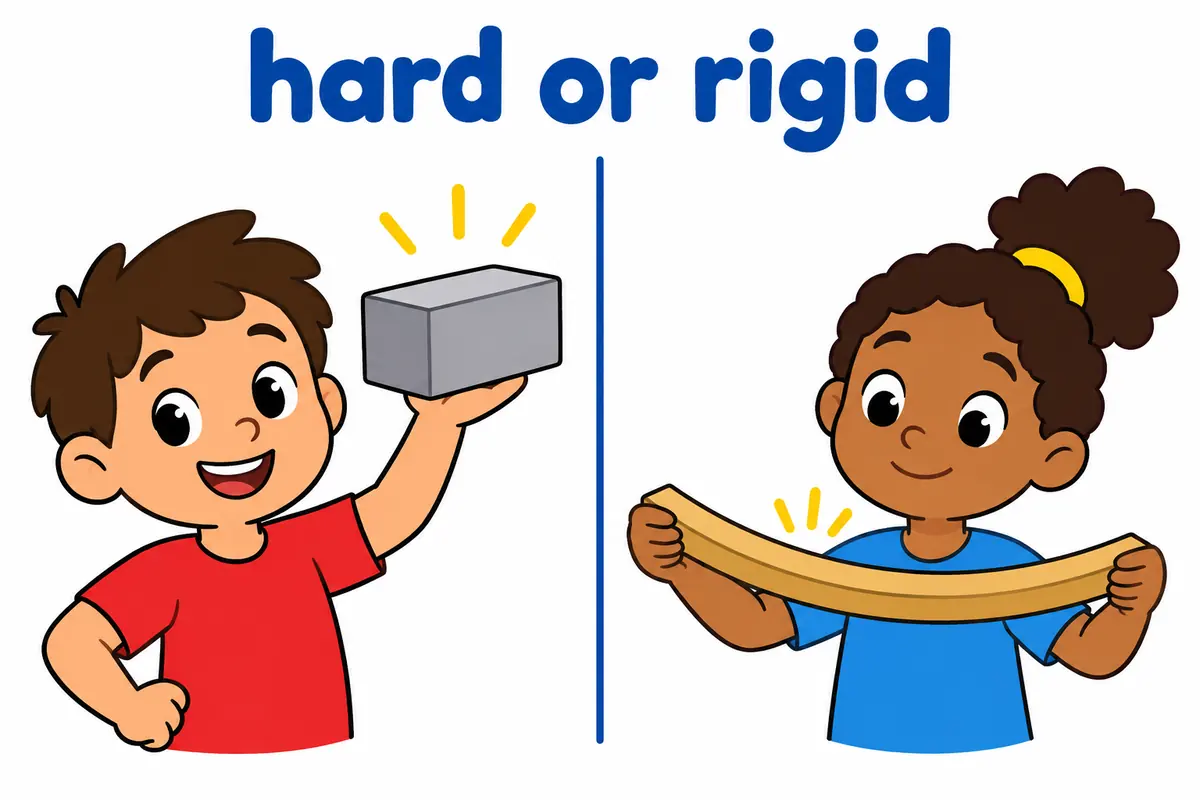
Use harden in a sentence when something becomes hard, firm or less sympathetic, and decide first whether the subject changes alone or acts on an object. The two nuances that decide most sentences are the intransitive default and the against or into preposition that follows the verb. When ice returns to water, the opposite action is to melt the ice, not to harden it.
Frequently asked questions about harden
Does harden always mean become hard?
No. The physical sense is the commonest, as in the concrete hardened, but harden also carries a figurative sense of growing less sympathetic or more resolute, as in his expression hardened. The subject tells you which sense is meant, so a material usually signals the literal reading.
Is harden transitive or intransitive?
Harden is mostly intransitive, meaning the subject hardens on its own, as in the glue hardened. It also works transitively with a direct object, as in the cold hardened the butter. Both patterns are standard, and the intransitive one is more common in everyday writing.
What is the noun form of harden?
The noun is hardness, as in the hardness of the steel, not harden or hardening used as a countable noun. Hardener is a separate noun for a substance that sets a material, such as a resin hardener. Hardening can also work as a verbal noun in phrases like the hardening of attitudes.
What does harden your heart mean?
To harden your heart is to become deliberately unsympathetic or unresponsive, usually against somebody who wants your help. The phrase takes against, as in she hardened her heart against his excuses. It is figurative, so nothing physical becomes hard, only the person’s willingness to feel.
Have you ever wanted to make your writing more impactful? Using vivid and descriptive language can help paint a clearer picture for your readers. One way to achieve this is by incorporating the literary device of imagery.
Imagery is a powerful tool that authors use to create sensory experiences for their readers. By incorporating vivid descriptions that appeal to the five senses, writers can bring their words to life and evoke strong emotions in their audience.
7 Examples Of Harden Used In a Sentence For Kids
- Harden means to make something strong.
- When clay is left out, it can harden in the sun.
- Cement mixtures harden into strong structures.
- Ice cubes will harden if you put them in the freezer.
- Plants need water to grow, but too much water can make the soil harden.
- When chocolate is left out, it will eventually harden.
- You can help paper harden by letting the glue dry.
14 Sentences with Harden Examples
- Harden your resolve to stay focused during exam season.
- Don’t let setbacks harden your determination to succeed in your studies.
- It’s important to harden your study habits for better academic performance.
- Harden your time management skills to balance assignments and extracurricular activities.
- Procrastination can harden your chances of achieving your academic goals.
- Develop a strong work ethic to harden your chances of landing a desired job after graduation.
- Harden your critical thinking skills by engaging in debates and discussions.
- It’s necessary to harden your understanding of complex concepts through regular revision.
- Participating in group study sessions can harden your knowledge retention.
- Facing academic challenges can harden your problem-solving skills.
- It’s important to harden your communication skills for better professional interactions.
- Engaging in internships can harden your practical knowledge and skills.
- Seek feedback from professors to harden your performance in assignments and exams.
- Collaborating with classmates on projects can harden your teamwork abilities.
How To Use Harden in Sentences?
Harden is used as a verb, meaning to make or become hard or harder. To use Harden in a sentence, follow these steps:
-
Identify the subject of the sentence. This is the person or thing that is performing the action of Harden. For example, “The sun”.
-
Choose a suitable object for the action of Harden. This is the person or thing that is being made hard or harder. For example, “the clay”.
-
Form a sentence following the structure: [Subject] Harden [Object]. For example, “The sun hardened the clay”.
-
Use the correct tense of the verb based on the context of the sentence. For present tense, you can say: “The sun hardens the clay”. For past tense: “The sun hardened the clay”.
-
Add any additional information to the sentence to make it more descriptive or detailed. For example: “Under the intense heat, the sun hardened the clay quickly”.
Practicing using Harden in sentences will help you become more familiar with its usage and enhance your writing skills. Remember to check the grammar and structure of your sentences to ensure they convey the intended meaning clearly.
Conclusion
In conclusion, the process of forging sentences with the keyword “harden” has been demonstrated through various examples in this article. From describing how ice can harden in the cold weather, to explaining how emotions can harden a person’s heart, the versatility of this word is evident. By using “harden” in sentences, we can vividly portray the concept of something becoming firmer, tougher, or less flexible.
Overall, incorporating the word “harden” in sentences can help to enhance the clarity and impact of communication. Whether discussing physical changes, emotional states, or metaphorical transformations, the word “harden” provides a powerful way to convey the idea of something becoming harder or more solid.


