Head back means to return to a place you came from, and it describes a journey rather than a change of mind. To use head back in a sentence, name the person who travels and the place they return to: “We should head back before dark.” The verb is intransitive, so it never takes a direct object.
Head back at a glance
- Head back is an intransitive phrasal verb; its forms are head back, heads back, headed back and heading back.
- The dominant pattern is head back + to/from + a place, as in head back to the office.
- It belongs to neutral spoken and written English, not to formal reports or legal documents.
- Common collocations include head back home, head back inside, head back to work and head back the way we came.
- The commonest learner error is adding a direct object after it, as in head back the car.
What does head back mean?
Head back is a phrasal verb meaning to turn around and travel to the place you started from or were at earlier. The Cambridge entry for head back records this return sense only, which is why the phrase so often answers the question “Where are you going now?” One limitation is worth stating plainly: head back is about movement, never about opinion. A committee that changes its position reverts or backtracks, but a committee that returns to its meeting room heads back.
| Sense | Plain meaning | Example sentence |
|---|---|---|
| Return to a place | Travel back to where you started | The hikers headed back to the car park before the storm. |
| Return home | Go back to your own house or room | I usually head back home straight after the last class. |
| Return to a task | Go back to something you were doing | After lunch we headed back to work on the report. |
The useful insight here is that head back always implies a point of departure, even when that point is unspoken. A speaker who says “let us head back” has already been somewhere else; the word back carries the memory of that place. That is why head back cannot begin a journey in the way set off or depart can: it only makes sense once you are away from the place you are returning to.
How do you use head back in a sentence?
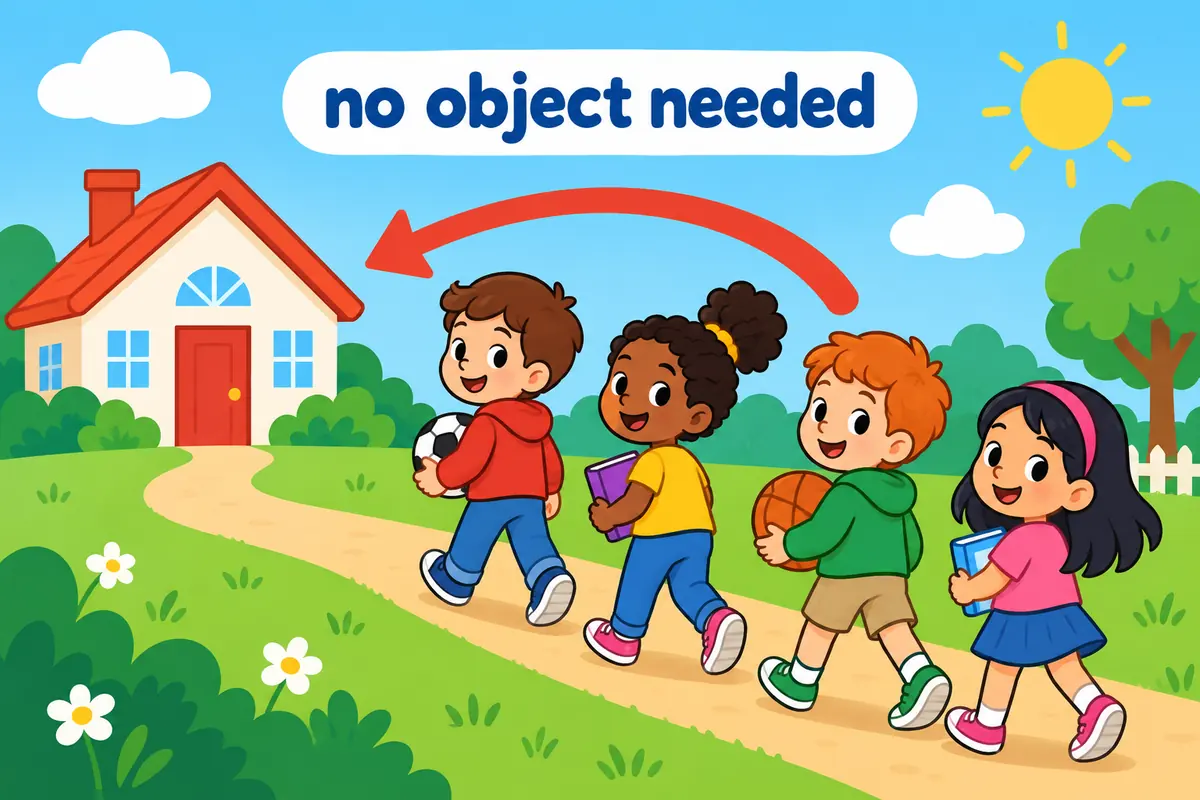
Head back takes no object, so the person who travels must be the subject. The particle stays after the verb and cannot be separated by a noun. In speech, the place is often dropped altogether, and the hearer fills it in from context.
| Pattern | Example | What it signals |
|---|---|---|
| subject + head back | We headed back at noon. | A plain return, with direction understood from context. |
| subject + head back to + place | She heads back to the lab after every break. | The destination is named and specific. |
| subject + head back from + place | They were heading back from the coast. | The origin of the return journey is the focus. |
| subject + head back + adverb | He headed back slowly. | Manner or speed of the return is added. |
| let us / we should + head back | We should head back before it rains. | A suggestion or shared decision to leave. |
Because head back is intransitive, “head back the children” is ungrammatical; write take the children back instead. The related verb head for behaves the same way but points forward, toward a destination you have not reached yet.
Head back in a sentence: examples across contexts
| Context | Example sentence | Why this works |
|---|---|---|
| Conversation | It is getting late, so let us head back. | The destination is obvious, so no place phrase is needed. |
| Workplace email | We will head back to the office once the client call ends. | Names the return point so colleagues can plan. |
| Travel writing | Travellers head back along the same ridge at sunset. | The route replaces a named destination. |
| Classroom instruction | Everyone, head back to your seats quietly. | A direct imperative to a group, softened by the adverb. |
| News report | Rescue teams headed back to base as the wind rose. | The reason for returning is implied by the weather clause. |
| Sports commentary | The players head back to the changing room at half time. | An established routine makes the verb almost a fixed phrase. |
| Diary or blog | After the market we headed back through the old town. | The journey, not just the endpoint, carries the interest. |
| Narrative fiction | She headed back the way she had come, retracing every step. | The route echoes an earlier scene. |
| Formal note | The delegation headed back to the capital on Friday. | Neutral enough for minutes, though return would be tighter. |
A runner who recovers from a setback bounces back, but a team that simply returns to its training ground heads back. In reported speech the verb usually shifts to the past, so a witness might say that the crowd headed back toward the gates once the rain started, keeping the return and its stopping points in one clause.
Head back vs go back and return
Head back, go back and return all describe going to a previous place, but they differ in register and emphasis.
| Feature | Head back | Go back | Return |
|---|---|---|---|
| Core meaning | Travel back to a starting point | Move to a previous place | Come or go to a place again |
| Register | Neutral, slightly informal | Neutral, very common in speech | Formal and written |
| Typical subject | A person or group on the move | A person, animal or object | A person, group or vehicle |
| Focus | The act of setting off back | The destination you left | Arriving at the place again |
| Object | None | None | None |
| Formality example | We headed back after lunch. | She went back for her coat. | The team returned on Sunday. |
Choose head back when the motion and its timing matter, and return when the page must read as formal; go back sits between them and is the safest everyday choice. The three are never interchangeable in a fixed phrase: return to work sounds like a policy document, go back to work sounds like a colleague, and head back to work sounds like someone already on their way.
Word forms and grammar of head back
| Form | Part of speech | Example |
|---|---|---|
| head back | base phrasal verb | We head back every Friday. |
| heads back | third person singular | The last bus heads back at eleven. |
| headed back | past tense and participle | They had already headed back. |
| heading back | present participle | She was heading back when I called. |
| head back up | verb plus two particles | The crew headed back up the tower. |
| head it back | non-standard | Wrong: the particle cannot be split like this. |
Unlike head up, which can take an object when it means to lead, head back stays intransitive in every form. Note also that the two-particle version, head back up, keeps the same meaning and simply adds a sense of climbing or ascending, as in the climbers headed back up the ridge.
Common mistakes with head back
- Incorrect: We headed back the hotel. Correct: We headed back to the hotel. Rule: An intransitive phrasal verb needs a preposition before a noun.
- Incorrect: Please head back the children. Correct: Please take the children back. Rule: Head back cannot take a direct object.
- Incorrect: We headed back to home. Correct: We headed back home. Rule: Home works as an adverb after verbs of movement.
- Incorrect: They returned back to the camp. Correct: They headed back to the camp. Rule: Return already contains the idea of back, so return back repeats it.
- Incorrect: He is heading back from work later. Correct: He is heading back to work later. Rule: From marks where a return begins, to marks where it ends.
The verb turn back describes reversing direction on a route, while head back includes the journey home. A learner who keeps turn back and head back apart will avoid the most common confusion in this family, since turn back can be followed by an object in the sense of turning someone away.
Practice using head back
- Fill in the blank: The group will __________ as soon as the guide calls.
- Fill in the blank: We __________ to the studio after the shoot.
- Choose the better word: The children (headed back / headed back the) to the classroom.
- Correct the error: They headed back at the office around six.
- Build a sentence: a family leaving a beach because of rain, using head back.
- Spot the register: Which sentence belongs in formal meeting minutes? (a) We will head back at three. (b) The panel returned to the chamber at three.
- Correct the error: She returned back home before dark.
Answers
- head back — the base form follows the modal will.
- headed back — past tense matches the completed shoot.
- headed back — no object follows this intransitive verb.
- They headed back to the office around six — a destination noun needs to.
- The family headed back from the beach when the rain started — from marks the point of departure.
- Sentence (b) — returned is the formal choice for written minutes.
- She headed back home before dark — return already means go back.
The bottom line
Head back is the natural, intransitive way to say that someone returns to where they started, and it fits speech, emails and travel writing better than formal reports. Name the destination with to or the starting point with from, and never add a direct object. When the sentence must sound official, swap in return; when it merely needs to sound plain, go back will do.
Frequently asked questions about head back
Is head back one word or two?
Head back is always written as two words when it acts as a verb, because back is a particle rather than part of the word head. A hyphen would be wrong in a sentence such as we head back at noon. The only related one-word form is the noun headback, which is rare and unrelated to travel.
Can head back be split by an object?
No. Head back is intransitive, so there is no object to insert between the verb and the particle. You cannot write head it back or head the team back. If you need an object, change the verb: take the team back or bring the visitors back.
Does head back need a destination?
Not always. When the listener already knows the destination, the phrase stands alone, as in it is late, so let us head back. Add to plus a place only when the return point is new information, and add from plus a place when you want to stress where the journey began.
Is head back used in American English?
Yes. Head back is common in both American and British English and carries no strong regional flavour. Speakers in both places use it in the same intransitive way, which is why it appears so often in casual plans and travel accounts rather than in formal documents.