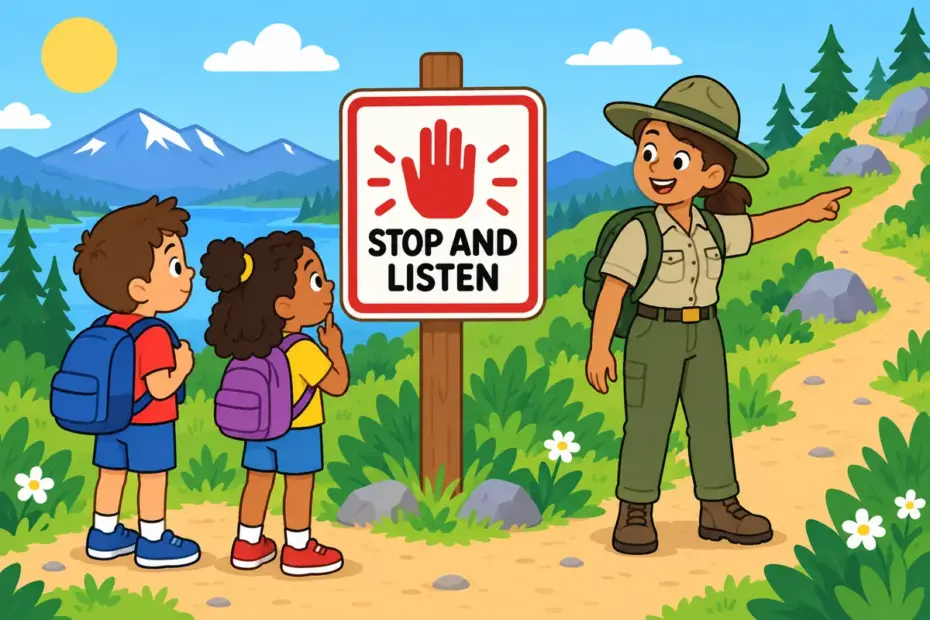
Heed is a verb meaning to pay careful attention to something, usually a warning, advice or a rule. To use heed in a sentence, give the verb a direct object: Drivers should heed the new speed limit. As a noun it appears in fixed phrases such as take heed and pay heed to.
Heed at a glance
- Heed is both a verb and an uncountable noun; its verb forms are heeds, heeded and heeding.
- As a verb it is transitive, so it takes a direct object and never a to after it.
- As a noun it survives mainly in the fixed phrases take heed and pay heed to.
- The word carries a formal, slightly literary tone rather than a casual one.
- The commonest learner error is adding to, as in heed to the warning.
What does heed mean?
Heed is a verb meaning to pay careful attention to a warning, a piece of advice or a rule. The Cambridge Dictionary entry for heed records that verb sense and the noun sense of notice or attention. Heed is close to attention, but it names the act of noticing and weighing something, not the act of carrying out an order.
| Sense | Plain meaning | Example sentence |
|---|---|---|
| Verb | Pay careful attention to something | Please heed the warning on the gate. |
| Noun | Notice or attention given to advice | Take heed of the closing date. |
How do you use heed in a sentence?
| Pattern | Example | What it signals |
|---|---|---|
| heed + noun | Motorists should heed the warning signs. | The core transitive pattern, with no preposition. |
| heed + what-clause | Heed what the ranger tells you. | A clause can replace the noun object. |
| take heed (of) | Take heed of the icy steps. | The noun phrase meaning pay attention. |
| pay heed to | The board paid heed to the parents’ concerns. | A formal noun phrase that keeps the preposition to. |
| be heeded | Her advice was not heeded. | The passive, common in reports and reviews. |
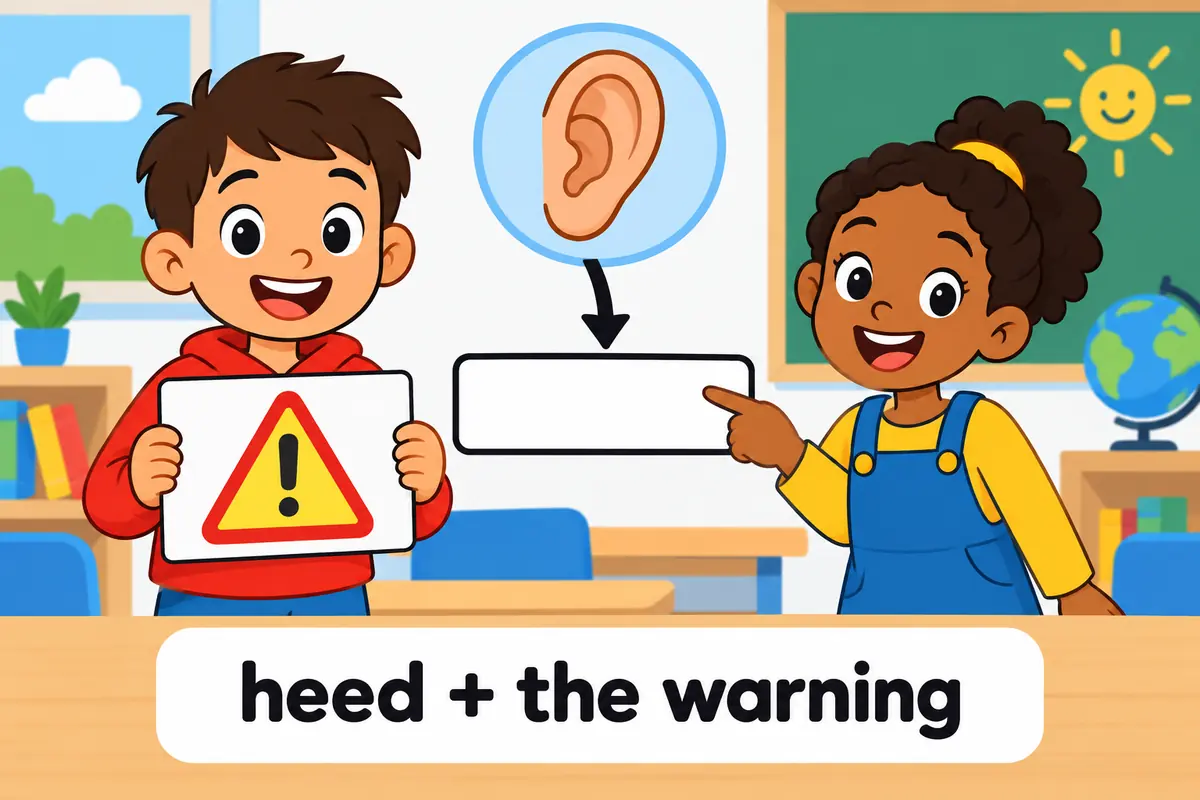
Heed in a sentence: examples across contexts
| Context | Example sentence | Why this works |
|---|---|---|
| Classroom | The teacher asked the class to heed the safety rules before the experiment. | Uses heed with a plural object inside an instruction. |
| Workplace email | Please heed the updated deadline and submit your report by Friday. | A direct, polite imperative with a concrete object. |
| News report | Residents were urged to heed evacuation warnings as the river rose. | The standard journalistic use with an official warning. |
| Legal writing | The tribunal heeded the witness’s account and reopened the case. | Places heed in a formal register with a person’s testimony. |
| Conversation | I should have heeded my mother’s advice about the traffic. | A natural, reflective use in speech. |
| Academic writing | Few studies heed the distinction between attention and compliance. | Shows the verb carrying an abstract object in analysis. |
| Safety notice | Visitors who heed the tide tables avoid a soaking. | Ties the verb to a practical, checkable object. |
| Sports report | The coach heeded the data and changed the starting line-up. | Shows a decision shaped by evidence. |
Heed vs obey
Heed and obey are close but not interchangeable, because one is about noticing and the other about doing. The table separates the two verbs.
| Attribute | Heed | Obey |
|---|---|---|
| Meaning | Pay careful attention to | Carry out an order or rule |
| What it requires | Awareness and consideration | Action and compliance |
| Typical object | a warning, advice, a sign | an order, a command, a rule |
| Register | Formal, slightly literary | Neutral, everyday |
| What it implies | You noticed and weighed it | You did what you were told |
| Opposite | ignore, disregard | disobey, defy |
Heed a warning to show you have weighed it; obey an order to show you have carried it out, because the two verbs describe different acts. When you simply weigh a point without any warning attached, consider is the plainer verb.
An honest limit: heed is formal and slightly old-fashioned in speech. If you only mean that someone saw or heard something, notice is enough, and listen to is the natural choice in conversation. Heed never means obey, and nothing is heeded until it has been noticed.
Word forms and grammar of heed
| Form | Part of speech | Example |
|---|---|---|
| heed | verb | Drivers should heed the warning. |
| heed | noun (uncountable) | Take heed of the icy steps. |
| heeds | verb, third person singular | She heeds every safety notice. |
| heeded | verb, past tense and participle | They heeded the advice too late. |
| heeding | verb, gerund and participle | Heeding the forecast saved the crew. |
| heedful | adjective | The keeper was heedful of the tide. |
Common mistakes with heed
He heeded to the warning.→ He heeded the warning. — Rule: heed is transitive and takes a direct object, with no to after it.She took a heed of the sign.→ She took heed of the sign. — Rule: in take heed, heed is uncountable and takes no article.They heeded the order and marched.→ They obeyed the order and marched. — Rule: heed means noticed and weighed; obey implies compliance.Heed the instruction is important.→ Heeding the instruction is important. — Rule: use the gerund heeding as a subject; a bare verb cannot head a clause.Please heed about the rules.→ Please heed the rules. — Rule: heed takes an object directly; about belongs only to the noun phrase pay heed to.
Practice using heed
- Fill in the blank: Cyclists should ___ the new one-way rule on Bridge Street.
- Choose the better word: The recruits ___ the drill sergeant without a word. (heeded / obeyed)
- Correct the error: She paid heed the doctor’s advice and rested.
- Build a sentence: use heed with the object a weather warning.
- Spot the register: which sentence belongs in a formal safety briefing? (a) Please heed the evacuation notices. (b) You should, like, watch out and stuff.
- Fill in the blank: ___ the ranger tells you is the best way to stay safe on the trail.
Answers
- heed — the verb takes the plural noun rule directly, with no preposition.
- obeyed — the sentence stresses compliance with an order, which is obey.
- She paid heed to the doctor’s advice and rested. — The noun phrase pay heed needs the preposition to.
- Sample: Farmers heeded the weather warning and brought the sheep down early. — Heed takes the warning as its direct object.
- (a) — heed belongs to formal writing; the second option is vague and casual.
- Heed what — heed can take a what-clause in place of a noun object.
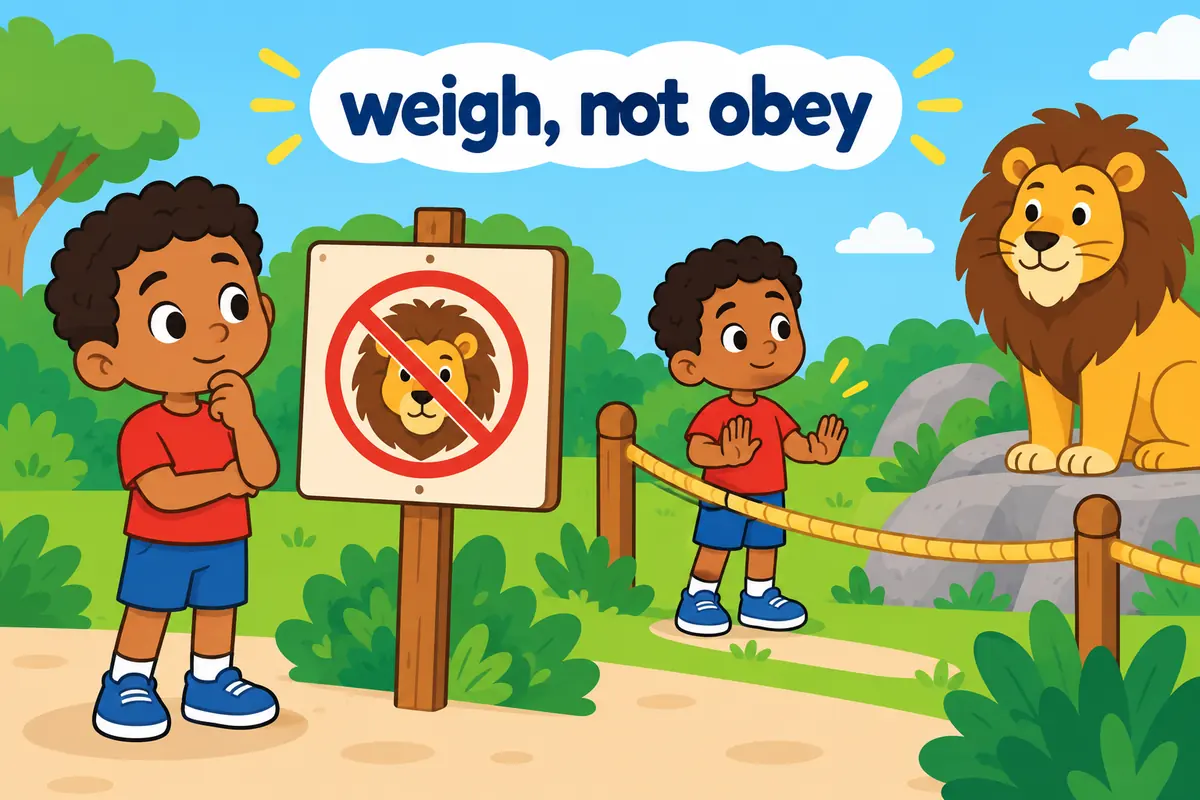
The bottom line
Heed means to pay careful attention to a warning, advice or rule, and using heed in a sentence simply means giving it a direct object with no preposition. As a noun it survives in take heed and pay heed to, where the to belongs to the phrase rather than the verb. It is never a synonym for obey: heeding someone means you weighed their words, not that you did what they asked.
Frequently asked questions about heed
Is heed a verb or a noun?
It is both. As a verb it means to pay careful attention to something, as in heed the warning. As an uncountable noun it means notice or attention, and it appears almost only in the fixed phrases take heed of and pay heed to. The verb form is far more common in modern writing.
What is the past tense of heed?
The past tense and past participle are both heeded, and the present participle is heeding. The third person singular is heeds. Regular endings mean there is no irregular form to memorise: yesterday the crew heeded the forecast, and all week the crew has heeded it.
Can you say heed to something?
No. The verb heed is transitive and takes its object directly, so you heed a warning, not heed to a warning. The preposition to appears only in the noun phrase pay heed to. If you want a preposition after a verb of this kind, use listen to instead.
What is a formal synonym for heed?
Listen to and pay attention to are plainer equivalents. If you want the same formal tone, consider hearken to, though it is rarer and more literary still. Obey is not a synonym, because it means to carry out an order rather than to notice and weigh it.
Heed means pay close attention to advice, warnings, or instructions, as in “The hikers heeded the ranger’s warning.” Use heed in a sentence as a verb with a direct object, or as a noun in take heed of. The context should identify the guidance and the response it calls for.
Heed at a glance
- Heed can be a verb meaning pay attention to or a noun meaning attentive notice.
- Heed is both a verb and a noun; heeded and heeding are regular verb forms.
- Use heed the warning as a verb, rather than heed to the warning.
- Context should make the intended sense clear before adding decorative description.
What does heed mean?
Heed can be a verb meaning pay attention to or a noun meaning attentive notice. The dictionary entry for heed documents the basic vocabulary sense; the examples here show how that sense works in complete sentences.

Heed in a sentence: clear examples
- The hikers heeded the ranger’s warning and turned back.
- Please heed the instructor’s directions before starting.
- They took heed of the weather forecast.
- She paid no heed to the distracting noise.
- The committee should heed the concerns raised by residents.
How does the context change the meaning?
| Use | Meaning or pattern | Example |
|---|---|---|
| Verb | Heed plus direct object | Heed the warning. |
| Noun | Take heed of something | Take heed of the instructions. |
| Negative noun pattern | Pay no heed to something | He paid no heed to the rumor. |
Which grammar patterns are useful?
As a verb, heed takes its object without to: “Heed the advice,” not “heed to the advice.” With the noun, the familiar constructions are “take heed of” and “pay heed to.”
The regular verb forms are heeds, heeded, and heeding. Use a tense that matches the surrounding event: “They heeded the warning yesterday,” or “They are heeding the warning now.”
How can you avoid unclear word choices?
Heed suggests more than merely hearing a sound. A person can hear an instruction and ignore it; heeding it means giving it serious attention, often with an appropriate response.
Do not imply that every piece of advice deserves obedience. The word describes attention to guidance; the reliability of that guidance remains a separate question for the situation.

Frequently asked questions about heed
What is a short sentence with heed?
“The hikers heeded the ranger’s warning and turned back.” is a short example using heed. The sentence supplies a concrete setting so the meaning can be understood without a separate definition. For a classroom exercise, ask learners to identify the key relationship, then change one detail while keeping the same grammatical pattern.
Which related forms should I learn with heed?
Heed is both a verb and a noun; heeded and heeding are regular verb forms. Learn related forms in a complete sentence. A change in grammatical role can require a different form even when the underlying idea remains similar. Read the surrounding subject, verb, and modifiers before deciding which form belongs.
What mistake should I check before using heed?
Use heed the warning as a verb, rather than heed to the warning. Check the intended meaning as well as the spelling. A sentence can be grammatically complete yet suggest the wrong relationship. When revising, name the subject and explain what the surrounding phrase contributes, then remove any word that creates an unintended implication.
Can I replace heed with a simpler word?
Pay attention to is a plain alternative; follow emphasizes action, while listen to may describe hearing alone. Choose a replacement that preserves the intended meaning and level of formality. Test it in the whole sentence: a near synonym may fit one sense while failing in another. Keep the original word when its distinction matters to the reader.
“Have you ever been warned to ‘heed’ someone’s advice? To ‘heed’ means to pay attention to, consider, and act upon. This word signifies a crucial element of wisdom and prudence – a virtue often praised for helping individuals navigate life’s challenges.”
“Whether it’s a parent cautioning a child, a mentor offering guidance, or a sign pointing out a hazard, the act of ‘heeding’ carries the weight of respect and acknowledges the value of experience. In various contexts, giving heed can mean the difference between success and failure, safety and danger, or plain ignorance and enlightenment.”
7 Examples Of Heed Used In a Sentence For Kids
- Heed the teacher’s instructions in the classroom.
- Make sure to heed your parents’ advice at home.
- Heed the traffic rules when crossing the road.
- It is important to heed safety precautions while playing outside.
- Always heed elders and show them respect.
- Remember to heed warnings about dangers in the environment.
- Heed the bell and line up quietly for assembly.
14 Sentences with Heed Examples
- Heed the advice of your professors when preparing for your exams.
- Make sure to heed the deadlines for submitting your assignments.
- It’s important to heed the safety regulations when working in the chemistry lab.
- Heed the career guidance provided by your college’s placement cell.
- Heed the warnings about plagiarism and always cite your sources properly.
- Please heed the instructions given by your project supervisor.
- Heed the importance of time management for balancing your studies and extracurricular activities.
- Heed the guidelines for ethical conduct during your research projects.
- You should heed the requirements for formatting your thesis before submission.
- Students should always heed the advice of counselors when facing academic challenges.
- Heed the rules and guidelines of your college’s library to avoid penalties.
- It is vital to heed the COVID-19 safety protocols on campus for everyone’s well-being.
- Don’t forget to heed the recommendations of your seniors for choosing electives wisely.
- Before participating in any sports events, make sure to heed the fitness recommendations provided by your coach.
How To Use Heed in Sentences?
To use the word “Heed” in a sentence, first, identify a situation where you want to convey the idea of paying attention or giving consideration to something specific. For example, “Heed the warning signs when crossing the street.” Here, “heed” emphasizes the importance of paying attention to warning signs to stay safe while crossing the street.
Next, place the word “Heed” at the beginning of your sentence to give it emphasis. Remember to follow it with a comma to separate it from the rest of the sentence. For instance, “Heed the advice of experienced hikers before embarking on your first mountain trek.” This construction helps draw attention to the act of considering the advice of experienced hikers before starting your mountain trek.
Lastly, ensure that the rest of your sentence provides context and details to support the significance of heeding the advice, warning, or instruction mentioned. By doing so, you can convey a clear message about the importance of paying attention or giving due consideration in a specific situation.
In summary, to effectively use “Heed” in a sentence, remember to place it at the beginning of your sentence, use a comma to separate it, and provide adequate context to clarify why paying attention or giving consideration is crucial in that scenario.
Conclusion
In conclusion, the importance of heeding warnings cannot be overstated. Whether it’s following traffic signs, listening to advice, or paying attention to safety instructions, heeding is crucial for avoiding potential dangers or making informed decisions. Ignoring these cues can lead to undesirable consequences or missed opportunities for growth.
By taking heed of the guidance given to us, we can navigate our way more safely through life’s challenges and uncertainties. It’s a simple yet powerful concept that can greatly impact our well-being and success. So, let’s remember the significance of heeding advice and instructions, and strive to incorporate this valuable practice into our daily lives.


