
A hierarchy is a system that arranges people, groups, or things in ranked or connected levels. In a sentence, use hierarchy as a noun to name that structure, as in “The school’s administrative hierarchy has several levels.” Common patterns include “a hierarchy of roles” and “within the hierarchy.”
Hierarchy at a Glance
- Part of speech: hierarchy is a countable noun; its plural is hierarchies.
- Core meaning: an arrangement of people or things by rank, importance, authority, or level.
- Common patterns: a hierarchy of + plural noun and within/in the hierarchy.
- Context matters: a hierarchy describes an arrangement; it does not prove that the higher-ranked people are more valuable.
- Pronunciation: Cambridge gives UK /ˈhaɪə.rɑː.ki/ and US /ˈhaɪ.rɑːr.ki/.
What Does “Hierarchy” Mean?
Hierarchy means an organized set of levels or ranks. Cambridge Dictionary defines it as a system in which people or things are arranged according to importance, and also uses it for the people at an organization’s upper levels. It is a countable noun: write a hierarchy for one system and hierarchies for more than one.
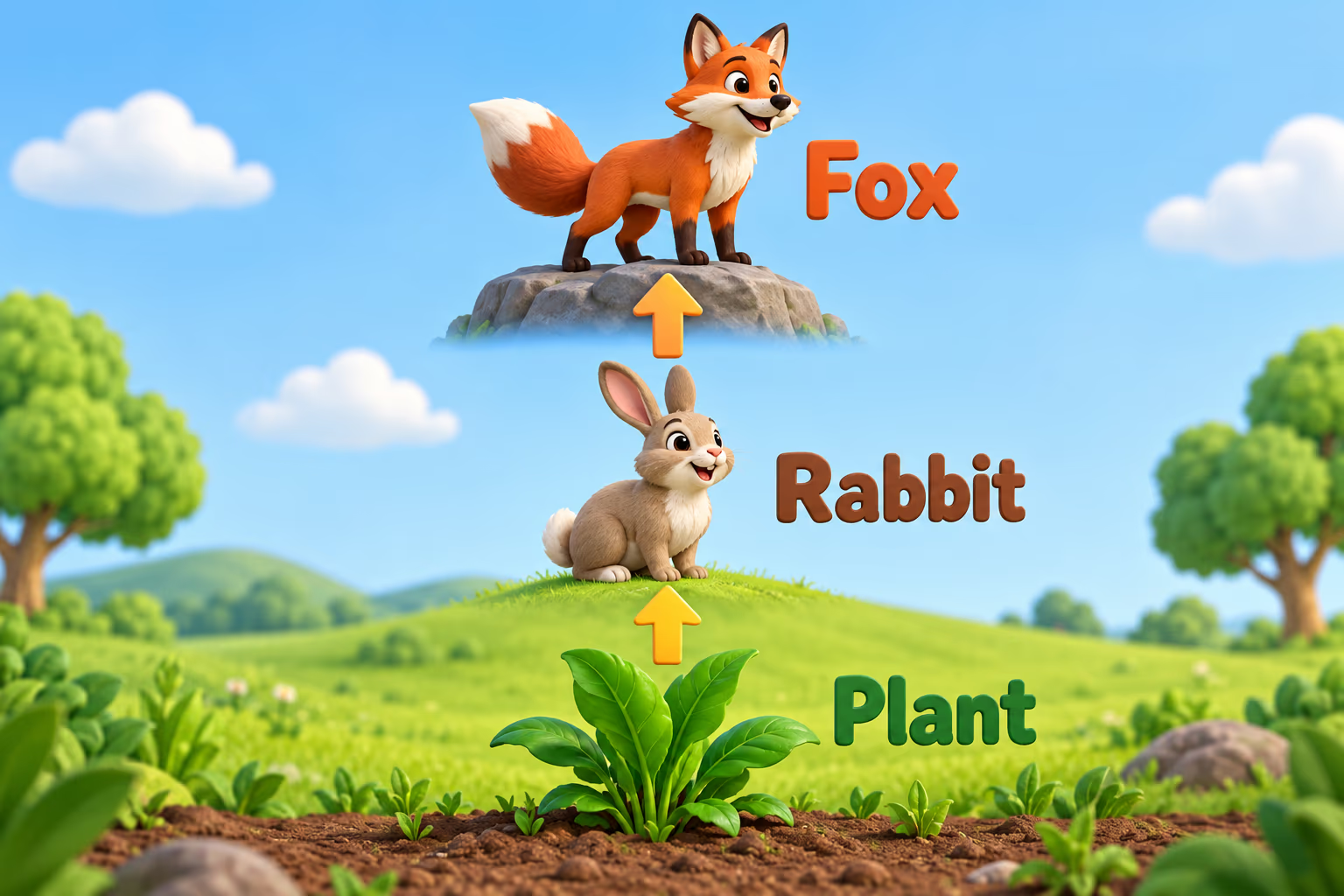
The levels may represent formal authority, relative importance, or the way information is grouped. A company can have a management hierarchy; a document can use a hierarchy of headings; and a science lesson can describe an ecological hierarchy. The surrounding words show which kind you mean.
How Do You Use “Hierarchy” in a Sentence?
Place hierarchy after an article or possessive when it is a singular count noun: “a hierarchy,” “the hierarchy,” or “the team’s hierarchy.” Add of when you name the members or levels, or use a phrase such as within the hierarchy to show a position in the system.
| Pattern | Example sentence | What it shows |
|---|---|---|
| a hierarchy of + group | The museum uses a hierarchy of roles to assign collection duties. | Names the system’s parts |
| within/in the hierarchy | She moved to a senior position within the hierarchy. | Locates someone in the system |
| hierarchy among + group | The study examined the hierarchy among competing goals. | Names what is being ranked |
| hierarchy based on + criterion | The labels follow a hierarchy based on topic and detail. | Explains the ranking rule |
| hierarchy of importance | The team agreed on a hierarchy of importance before setting deadlines. | Identifies relative priority |
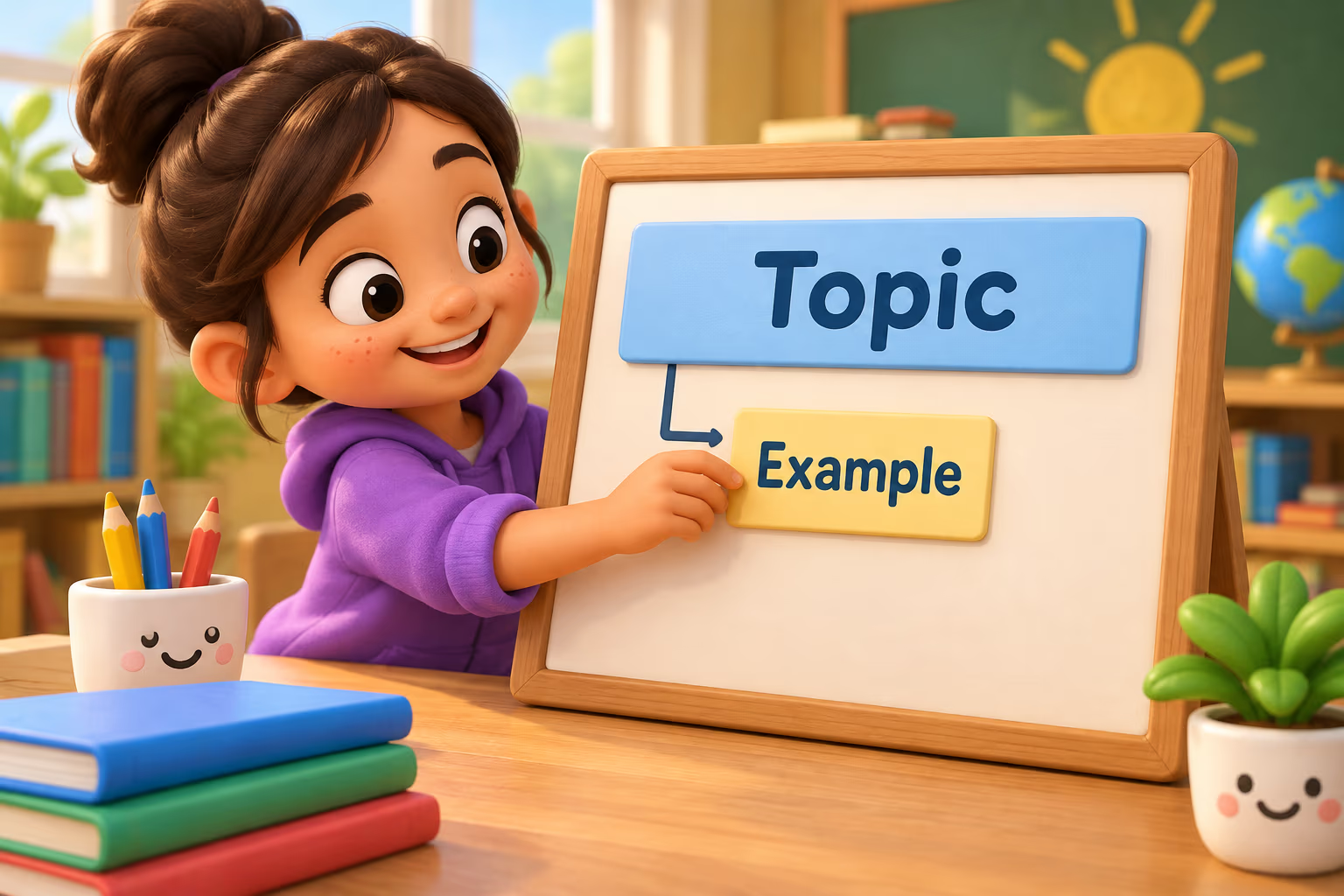
Use hierarchy when the ranked or layered structure matters. If you only mean a sequence with no difference in rank, order or sequence may be more accurate. A hierarchy also does not mean that every decision travels only from top to bottom; describe actual reporting or communication routes separately. In an outline, the Purdue OWL guide recommends grouping related ideas and arranging sections from general to specific, a practical way to show levels without implying authority.
Which Words Commonly Go With “Hierarchy”?
Common modifiers identify the setting or basis of a hierarchy. Cambridge includes combinations such as social hierarchy, political hierarchy, and corporate hierarchy; writers also use organizational, academic, management, and power hierarchy when the context supports them.
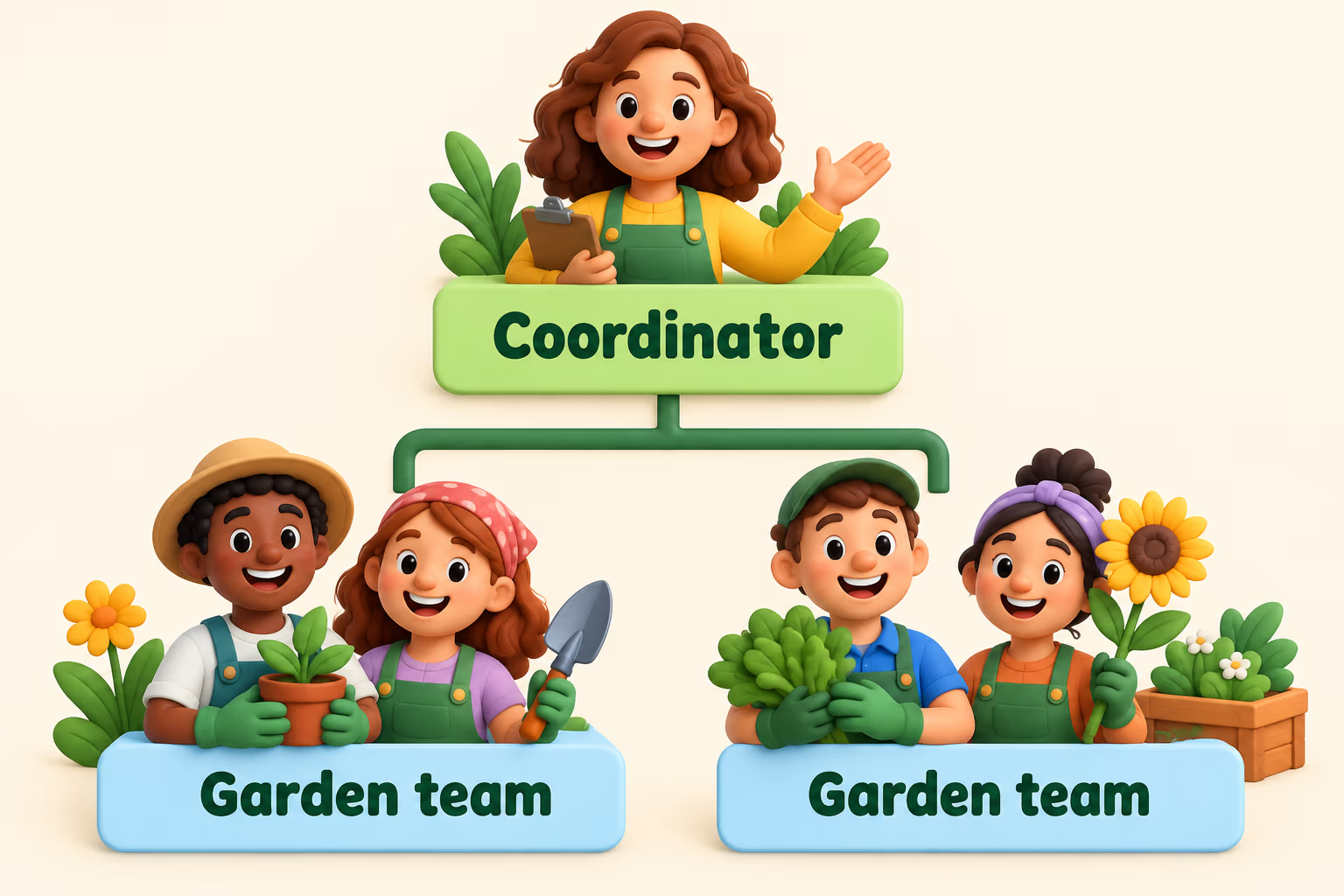
- Organizational hierarchy: levels of responsibility or authority in a group.
- Social hierarchy: ranked positions within a society or social group.
- Hierarchy of needs: a structured ordering of needs in a particular theory.
- Information hierarchy: the order and nesting of headings, topics, and supporting details.
These modifiers do not all describe the same kind of ranking. For example, an information hierarchy can show that one idea is broader than another without claiming that one idea is more valuable.
What Are Common Mistakes With “Hierarchy”?
- Leaving out the article: In a singular count use, write “a hierarchy” or “the hierarchy,” not “hierarchy” by itself: “The group created a hierarchy of tasks.”
- Confusing rank with worth: A hierarchy describes position or ordering under a stated system; it does not establish anyone’s human value.
- Calling every list a hierarchy: A flat list gives items without showing levels. Use hierarchy only when rank, nesting, importance, or authority is actually present.
- Forgetting the plural spelling: The plural is hierarchies, changing y to ies.
When a hierarchy might sound like an objective fact but is actually a chosen system, name the criterion: “The report ranks options by cost” is clearer than simply calling one option higher in a hierarchy.
Hierarchy in a Sentence: New Examples
- The handbook explains the hierarchy of headings, from chapter titles to subsection labels.
- New volunteers learned where their roles fit within the event’s hierarchy.
- The committee ranked repairs in a hierarchy based on safety and urgency.
- A flat checklist is easier to scan when tasks do not need to be grouped into a hierarchy.
- The researcher compared social hierarchies across several groups without treating rank as a measure of personal worth.
- The chart shows a hierarchy among broad topics, subtopics, and examples.
Hierarchy in a Sentence: 21 Original Examples
The examples below are preserved exactly as they appeared in the original article. They show hierarchy used in school, family, work, government, and writing contexts.

Have you ever wondered how organizations, societies, or even biological systems maintain order and structure? The concept of hierarchy provides a framework for understanding the levels of authority or importance within a system, with each level positioned above or below others.
In a hierarchy, individuals, groups, or elements are organized in a ranked or layered structure based on factors like power, influence, or function. This system not only establishes clear lines of authority and communication but also helps to distribute responsibilities and resources efficiently.
7 Examples Of Hierarchy Used In a Sentence For Kids
- In school, teachers are at the top of the hierarchy.
- In a family, parents are high in the hierarchy.
- A boss is usually at the top of a work hierarchy.
- In a group of friends, someone might be at the top of the hierarchy.
- A king or queen is at the top of a royal hierarchy.
- Leaders are important in a hierarchy.
- A hierarchy shows who is in charge.
14 Sentences with Hierarchy Examples
- Hierarchy within a college campus can often be seen in the way professors are given authority over students.
- Understanding the academic hierarchy can help students navigate the complex system of departments and programs.
- It’s important for students to respect the hierarchy in research teams to ensure smooth collaboration.
- In student organizations, there is usually a clear hierarchy with leaders and members playing different roles.
- Knowing the hierarchy of exams in a semester can help students prioritize their study schedule effectively.
- The hierarchy of subjects in a degree program may influence a student’s choice of specialization.
- As students move up in the academic hierarchy, they may take on more responsibilities and leadership roles.
- In group projects, it’s essential to establish a clear hierarchy of tasks to ensure efficient completion.
- Understanding the hierarchy of faculty members can help students seek appropriate guidance and mentorship.
- The hierarchy of grades in a class can motivate students to strive for academic excellence.
- By respecting the hierarchy of deadlines, students can avoid last-minute stress and panic.
- The university’s administrative hierarchy can impact how students access resources and support services.
- The social hierarchy within college cliques can sometimes lead to exclusion and discrimination.
- As students transition from junior to senior years, they may experience shifts in the hierarchy of campus involvement and leadership positions.
How To Use Hierarchy in Sentences?
Hierarchy is used to show the order or rank of different elements within a group. When using hierarchy in a sentence, it is important to understand how to properly structure and organize the elements being discussed.
To use hierarchy effectively in a sentence, start by identifying the main subject or topic that you want to emphasize. This subject should be the most important element in the sentence and should be placed at the top of the hierarchy.
Next, identify any subcategories or supporting elements that are related to the main subject. These subcategories should be listed beneath the main subject to indicate their lower rank in the hierarchy.
For example, in a sentence discussing different types of animals, you could say “Birds are a type of animal that can fly.” In this sentence, “Birds” is the main subject at the top of the hierarchy, while “animal” and “fly” are supporting elements that are placed beneath it to show their relationship to the main topic.
By understanding how to use hierarchy in a sentence, you can effectively convey the order or rank of different elements in a clear and organized manner. Practice writing sentences with hierarchy to improve your communication and writing skills.
Conclusion
In written or spoken language, sentences with hierarchy are structured to show levels of importance or organization. Each sentence within a hierarchy plays a distinct role, serving to convey information in a coherent and systematic manner. By using various sentence types such as main ideas, supporting details, or transitions, writers can effectively guide readers through the content, providing clarity and understanding.
The use of sentences with hierarchy is essential in communicating complex ideas or information clearly. Through careful organization and arrangement of sentences, writers can create a logical flow that helps readers navigate and comprehend the content more easily. Ultimately, sentences with hierarchy serve as a valuable tool for effectively conveying information in a structured and impactful way.
Frequently Asked Questions
Is “hierarchy” singular or plural?
Hierarchy is singular; hierarchies is plural. Use “a hierarchy” for one ranked or layered system and “several hierarchies” for multiple systems. The spelling changes final y to ies, as in “The report compares two workplace hierarchies.” Use the plural when comparing the systems themselves.
Is hierarchy always about people in charge?
No. A hierarchy can describe authority, but it can also show levels of importance, categories, or detail. An outline has a hierarchy of headings even though its headings do not supervise one another. In that case, indentation and heading levels show how broad topics relate to specific examples.
What preposition follows “hierarchy”?
Of often introduces the levels or members, as in “a hierarchy of roles.” In or within locates someone or something, as in “within the hierarchy.” The correct preposition depends on the relationship you want to express, so include a short example when context is unclear.
What is the difference between hierarchy and order?
Order can mean any arrangement or sequence, including a flat list. Hierarchy specifically signals rank, levels, relative importance, or nested categories. For example, steps in a recipe have an order; an outline has a hierarchy when main topics contain more specific subtopics.
How do you pronounce “hierarchy”?
Cambridge lists UK /ˈhaɪə.rɑː.ki/ and US /ˈhaɪ.rɑːr.ki/. Both pronunciations begin with a “high” sound; the middle vowel differs between the UK and US forms. Use the audio on a trusted dictionary entry if you want to compare the two pronunciations aloud.
The Bottom Line
Use hierarchy in a sentence to name a ranked, layered, or nested system, as in “The handbook explains the hierarchy of headings.” Pair it with of to name the levels, or in/within to show a position. Choose the word only when the system really has levels or rank.


