What Does Highfalutin Mean?
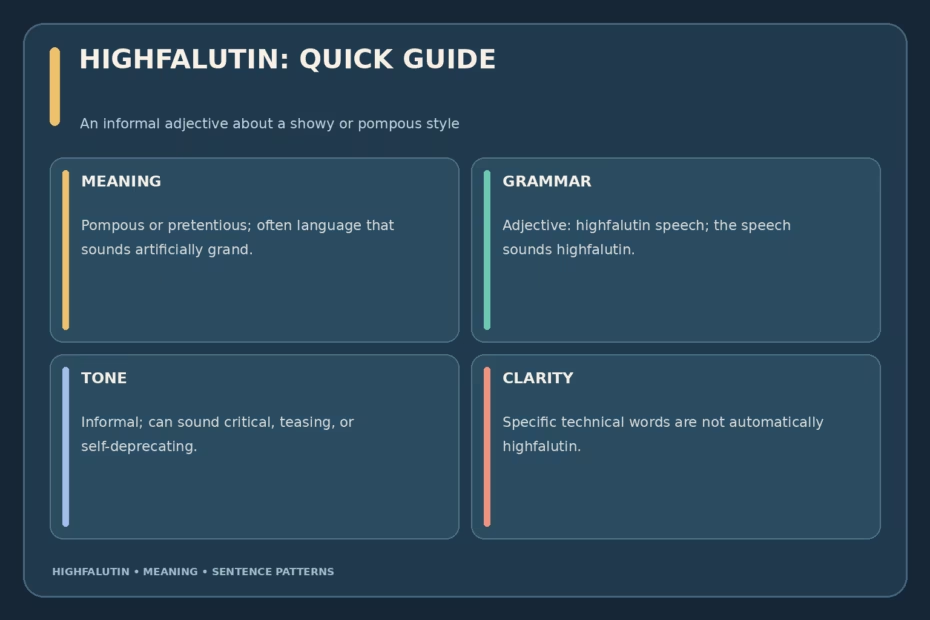
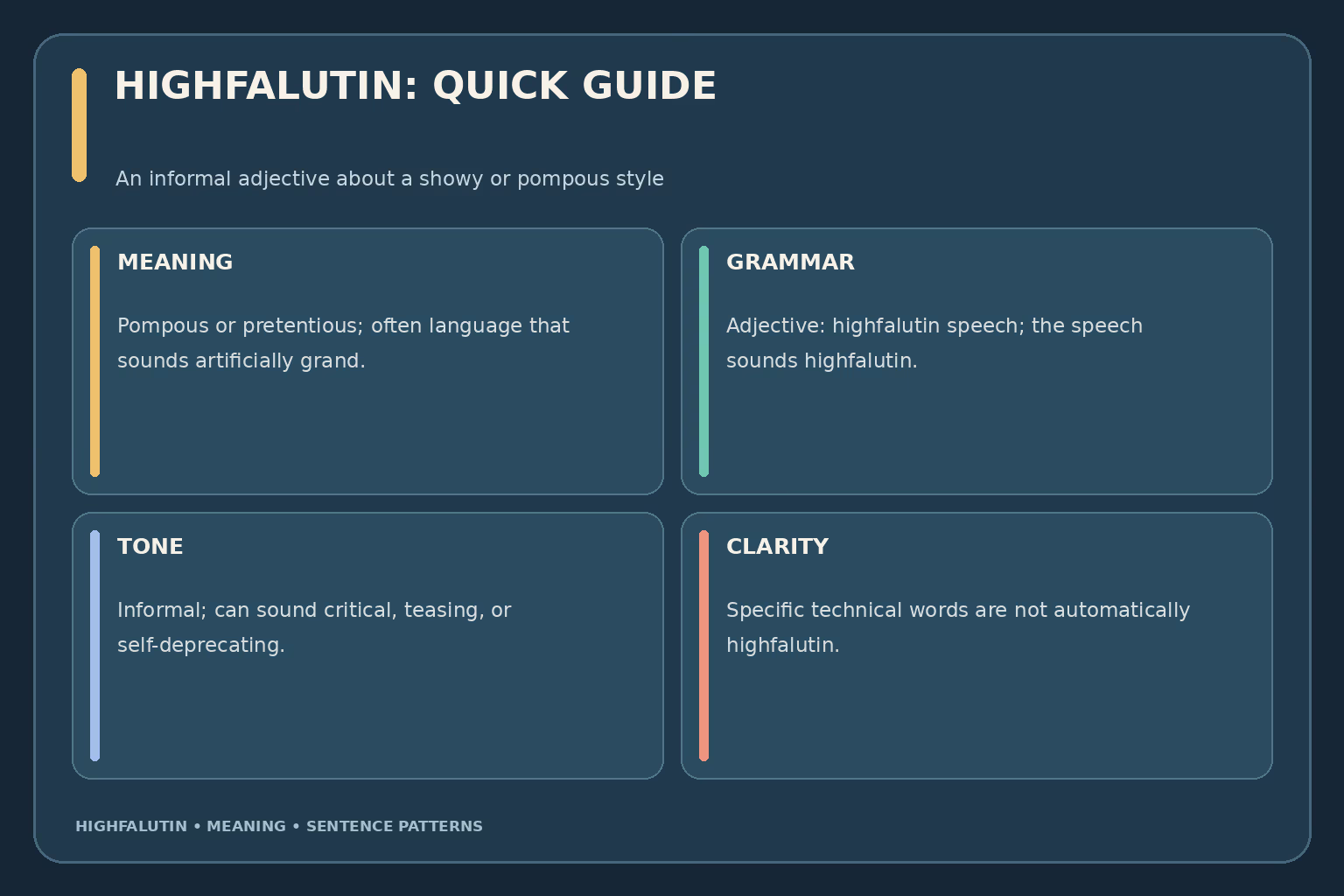
Highfalutin is an informal adjective that means pompous or pretentious. It often describes language, behavior, or a style that seems to claim more importance or sophistication than the situation calls for. The word can sound sharply critical, playfully teasing, or self-deprecating, depending on context. It does not simply mean “using long words”: a technical term can be precise and necessary, while ordinary words can still be delivered in a pompous way.
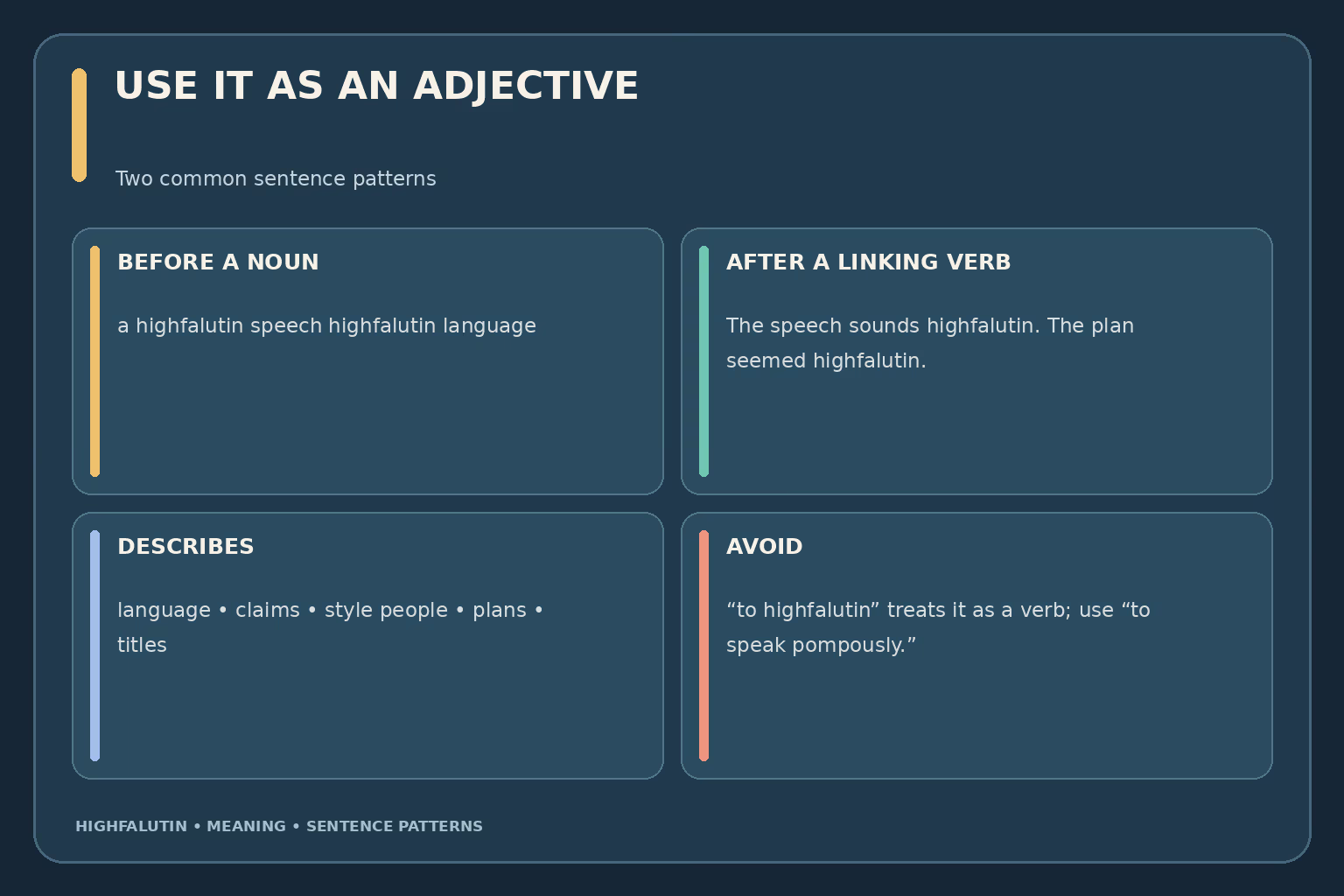
Grammar note: Highfalutin is an adjective, not a verb. Say “a highfalutin speech” or “the speech sounds highfalutin.” The phrase “to highfalutin” is not standard; if you mean someone is speaking pompously, write “to speak pompously” or “to use highfalutin language.”
How to Use Highfalutin in a Sentence
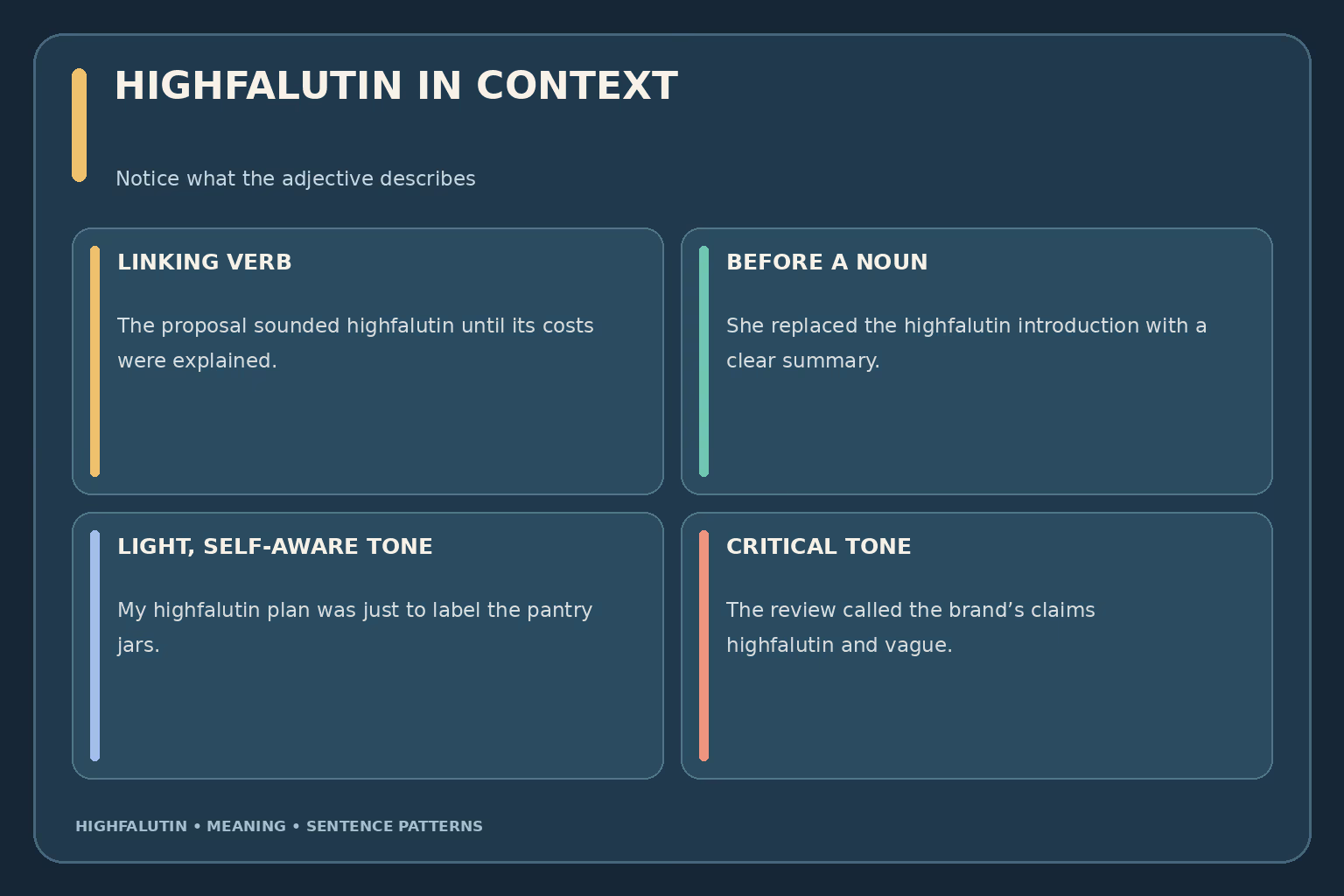
The most common pattern puts the adjective before a noun: highfalutin language, a highfalutin title, or highfalutin claims. It can also follow a linking verb such as sound, seem, or be: “The proposal sounds highfalutin.” As with other evaluative adjectives, make clear what the word describes. Calling a person highfalutin is more personal and potentially insulting than criticizing a particular speech or phrase.
- Before a noun: “The brochure opened with a highfalutin promise about changing the world.”
- After a linking verb: “The new name seemed highfalutin for a neighborhood repair shop.”
- With a specific contrast: “After the highfalutin introduction, the speaker explained the plan in three plain steps.”
Choosing the Right Tone
Highfalutin is usually informal and often disapproving. It may suggest that a speaker sounds affected, self-important, or needlessly grand. In a joke about oneself, however, it can gently poke fun at elaborate plans or language: “I made a highfalutin spreadsheet to organize the snack cupboard.” When directed at another person, it may imply that their manner is pretentious, so use it carefully in professional or sensitive conversations.
It helps to distinguish the word from neutral terms for complexity. A scientific explanation may use specialized vocabulary because it names exact concepts; that does not make it highfalutin. The criticism applies when the language seems inflated or showy rather than useful. If you want to say that writing is difficult without implying vanity, try technical, dense, or specialized. If you mean it is needlessly elaborate, overwrought or pretentious may be more direct.
Highfalutin and related words
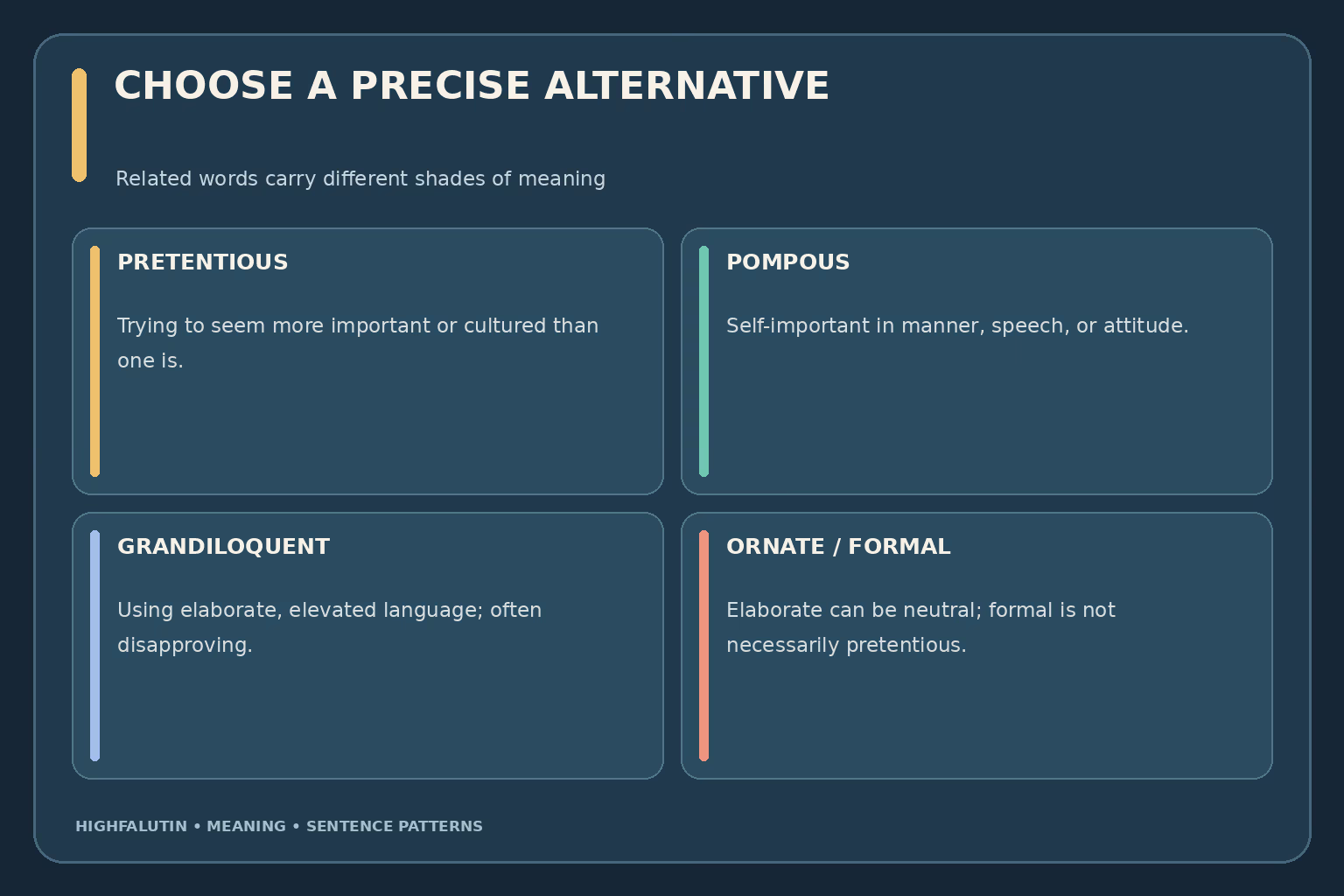
- Pretentious: suggests an attempt to appear more important, cultured, or impressive than one is. It is a broad and clearly negative alternative.
- Pompous: emphasizes an exaggerated sense of dignity or self-importance, often in a person’s manner or speech.
- Grandiloquent: usually describes lofty, elaborate language. It is more formal and itself sounds elevated.
- Ornate: means elaborately decorated or detailed. It can be neutral or positive, so it does not necessarily criticize the writer.
- Formal: describes a style suited to official or serious situations. Formal language can be clear and appropriate, without being highfalutin.
More Highfalutin Sentence Examples
These original examples show different subjects, registers, and sentence positions:
- “The grant application’s highfalutin opening delayed the practical details readers needed.”
- “Her highfalutin job title made the ordinary scheduling task sound mysterious.”
- “The restaurant dropped its highfalutin menu descriptions and explained each dish plainly.”
- “His proposal sounded highfalutin until he demonstrated the simple device.”
- “I had a highfalutin plan for dinner, but we ordered noodles instead.”
- “The speech was not highfalutin; it used familiar words to explain a difficult idea.”
- “The critic found the campaign’s grand promises highfalutin and short on evidence.”
- “Rather than call the report highfalutin, she pointed to the specific jargon that confused readers.”
Spelling, Pronunciation, and Word History
The usual spelling is highfalutin. Dictionaries also record hifalutin as a less common variant, and highfaluting is another form sometimes seen. It is typically pronounced with the stress on the “loo” syllable: high-fuh-LOO-tin. In standard prose, write the established adjective highfalutin rather than adding an apostrophe to suggest a missing final sound.
The word is recorded in American English from the 19th century, but its precise origin is uncertain. Merriam-Webster and Oxford note a possible connection between high and fluting, while American Heritage marks the origin unknown. Because dictionaries present this as a possibility rather than a settled derivation, it is best not to state the theory as fact.
Frequently Asked Questions
Is highfalutin always an insult?
No. It often carries criticism, but friends and writers also use it humorously or about themselves. When aimed at another person, it can sound dismissive.
Does highfalutin mean “using big words”?
Not exactly. It can describe elaborate language, but the key idea is a pompous or pretentious effect. Specialized vocabulary used accurately is not automatically highfalutin.
Can highfalutin describe a person?
Yes. It can describe a person who seems pompous or pretentious, though it commonly modifies speech, language, style, plans, or claims. Describing the behavior rather than labeling the person can sound more specific and less personal.
Sources
- Merriam-Webster Dictionary: highfalutin (definition, pronunciation, spelling, and a qualified etymology).
- Oxford Learner’s Dictionaries: highfalutin (informal register, meaning, and word origin).
- American Heritage Dictionary: highfalutin (definition, variants, and origin listed as unknown).

Have you ever come across a word that sounds fancy and sophisticated, but you’re not quite sure what it means? One such word that might catch your attention is “highfalutin.” This term is often used to describe language or behavior that is pompous, pretentious, or excessively fancy.
“Highfalutin” is commonly used to refer to speech or writing that comes across as snobbish or grandiose. It can also describe people who act in an overly pompous or self-important manner. Despite its extravagant sound, “highfalutin” is a simple word that conveys the idea of being pretentious or showy.
7 Examples Of Highfalutin Used In a Sentence For Kids
- Highfalutin means using big words to sound important.
- Don’t worry if someone uses highfalutin words, just ask them to explain.
- Sometimes, people use highfalutin language to show off.
- It’s okay to ask questions if you don’t understand all the highfalutin words.
- Remember, it’s more important to communicate clearly than to use highfalutin words.
- Learning new words is fun, but don’t feel like you have to always use highfalutin language.
- Just be yourself and speak in a way that makes you comfortable, no need for highfalutin speech.
14 Sentences with Highfalutin Examples
- Highfalutin language may impress professors, but it can alienate your classmates.
- Some students are intimidated by the highfalutin vocabulary used in academic journals.
- It’s important to strike a balance between highfalutin language and clear communication in your essays.
- Don’t feel pressured to use highfalutin phrases in your presentations just to sound intelligent.
- Group study sessions should focus on understanding the material, not trying to one-up each other with highfalutin knowledge.
- Debates in college often devolve into highfalutin arguments rather than productive discussions.
- Academic conferences can sometimes feel like highfalutin events where only the most prestigious scholars are welcome.
- Some professors may discourage you from using highfalutin language if it detracts from the clarity of your ideas.
- When writing essays, it’s best to avoid unnecessary highfalutin language that may confuse your readers.
- In college, it’s easy to get caught up in the highfalutin atmosphere and forget the practical applications of what you’re learning.
- It’s common for students to feel overwhelmed by the highfalutin expectations placed on them by their professors.
- Using highfalutin language in your thesis can be a way to impress your committee, but make sure it doesn’t overshadow your research.
- Some students feel pressure to adopt a highfalutin persona in order to fit in with the academic elite on campus.
- Understanding complex theories is more important than using highfalutin language to explain them in class discussions.
How To Use Highfalutin in Sentences?
To Highfalutin is to use lofty or pompous language in a way that seems pretentious or snobbish. When using the word Highfalutin in a sentence, it’s essential to convey a sense of verbosity or exaggeration.
Here’s a helpful guide on how to use Highfalutin in a sentence for beginners:
-
Identify the context: Before using the word Highfalutin, make sure it fits the situation. It is usually used to describe language that is overly sophisticated or grandiose.
-
Choose the right tone: Consider the tone you want to convey when using Highfalutin. It often implies a sense of superiority or pomposity, so make sure it aligns with the message you want to send.
-
Construct your sentence: When constructing a sentence with Highfalutin, think about using complex or elevated language that may come across as showy or ostentatious.
-
Practice makes perfect: The best way to get comfortable using Highfalutin in a sentence is to practice. Try incorporating it into your writing or conversation to become more fluent with its usage.
For example: “The speaker’s Highfalutin speech about the future of technology left the audience feeling bewildered rather than enlightened.”
Remember, using Highfalutin can add flair to your language but be cautious not to overdo it and risk sounding pompous or insincere.
Conclusion
In conclusion, highfalutin sentences are overly pompous or pretentious in language, often containing elaborate or exaggerated words and phrases. These sentences aim to impress or intimidate the audience with their complexity, but may come across as insincere or disconnected from common language usage. An example of a highfalutin sentence could be: “The effervescent verbiage of the orator cascaded in a torrent of grandiloquent phrases, captivating the assembled multitude.”
By focusing on clarity and simplicity in communication, we can effectively convey our ideas without the need for highfalutin language. Clear and straightforward sentences are more accessible and engaging to a wider audience, fostering better understanding and connection with our message. Ultimately, avoiding highfalutin sentences can enhance communication and ensure our messages are received and understood in a more relatable and authentic manner.


