Knowing how to start a conversation turns a silent moment into an easy exchange. A strong opener names the situation you share, asks one light question, and gives the other person room to answer, as in “This queue is slow today, are you waiting for the same counter?”
How to Start a Conversation at a glance
- A conversation opener is a short, low-pressure line that invites a reply.
- The safest openers comment on the shared situation or ask an easy question.
- A statement usually feels less demanding than a question that begins with why.
- Follow-up questions matter more than the opening line.
- Matching the other person’s tone keeps the exchange comfortable.
- The commonest mistake is treating the opener as a performance.
What makes a good conversation opener?
A good opener does three jobs at once: it points at something you both can see, it asks for a small opinion instead of a private fact, and it leaves the other person an easy way out. Warm adjectives for conversation such as friendly and easy-going set the tone before the words land.
| Opener type | Example line | Why it works |
|---|---|---|
| Shared situation | “The train is late again.” | Both people can see it, so no personal topic is forced. |
| Easy opinion | “Is the coffee here any good?” | A small opinion is simple to answer. |
| Observation and question | “It is busy today, have you been before?” | The comment softens the question. |
| Specific compliment | “That talk was clear, did you write it?” | Praise plus a question keeps it two-way. |
| Offer of help | “Need a hand with those boxes?” | Help gives the exchange a shared purpose. |
How do you start a conversation in different situations?
The setting decides how direct the opener can be. In a queue or a lift, a comment on the shared moment is enough, while at a party or a class a question about the group works better. Read the room first, then choose the line.
| Situation | Starter line | What to avoid |
|---|---|---|
| Waiting in a queue | “Slow queue today, do you know what is holding it up?” | Complaints about the staff |
| At a party | “How do you know the host?” | “What do you do?” as a first move |
| New job | “Which part of the team are you in?” | Comparing job titles |
| At a class | “Did you follow that last step?” | Saying the task was easy |
| Gym or club | “Is it always this busy in the evening?” | Comments on a body |
| In a lift | “Busy morning?” | Long questions with no exit |
How to start a conversation across everyday contexts
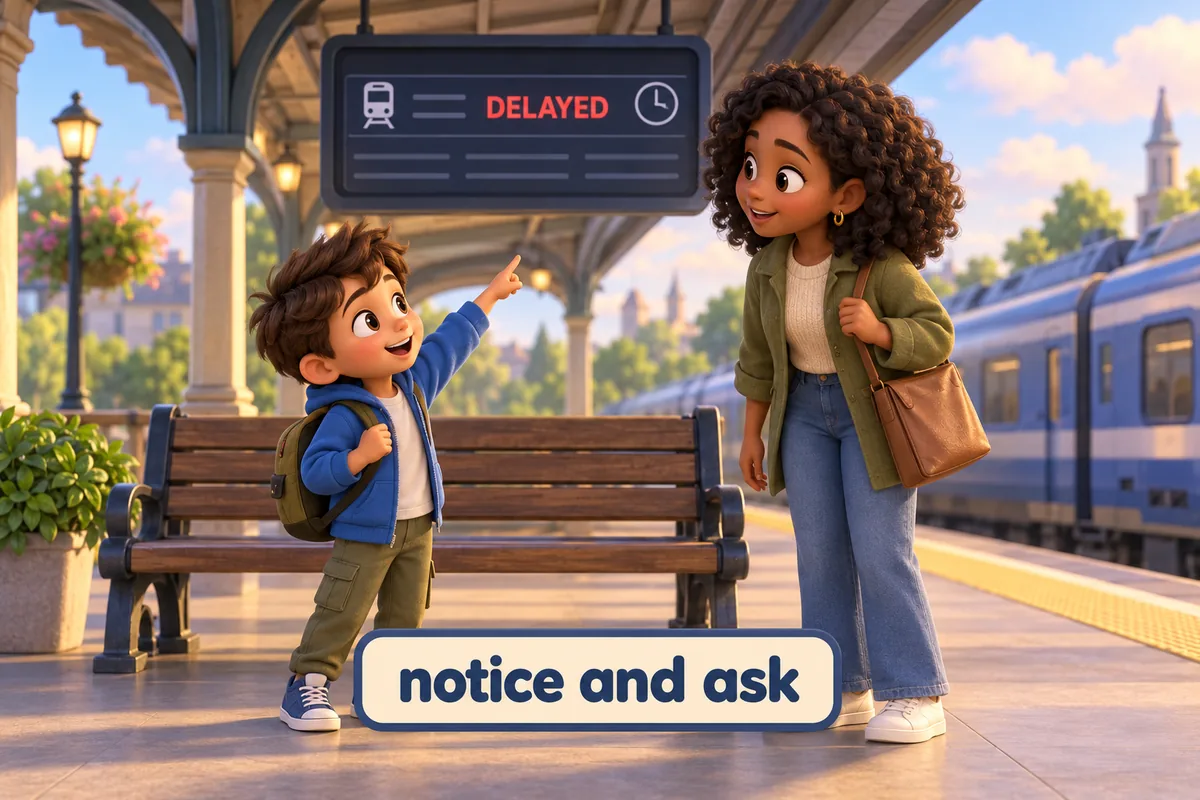
The same principle travels across settings: name the shared moment, then ask something easy. The table shows how one line changes with the context. A wider set of ready-made openers sits in these conversation sentence examples.
| Context | Line | Why this works |
|---|---|---|
| Classroom | “Is this seat free?” | A simple request opens without pressure. |
| Video call | “Can you hear me clearly?” | It names a shared problem first. |
| Coffee shop | “What would you recommend here?” | An opinion is easy to give. |
| Conference | “Which talk did you enjoy most?” | It invites a view, not a fact. |
| Neighbour | “Have the bins been collected yet?” | A local fact is safe and shared. |
| Bus stop | “Does this one go to the market?” | A practical question feels natural. |
| Office kitchen | “Is the kettle free in a minute?” | It fits the shared space. |
| Wedding | “How do you know the couple?” | It connects to the event. |
| Online chat | “Your profile says you climb, where do you go?” | It uses a detail already shared. |
| Book club | “What did you make of the ending?” | It invites an opinion on common ground. |
How does a phone opener differ from an in-person one?
Because a phone call hides the shared room, telephone conversation sentence patterns usually add a name and a reason for calling. The table sets the two side by side.
| Feature | In person | On the phone |
|---|---|---|
| Greeting | A wave and a smile | A spoken hello and your name |
| Signals available | Face, posture and the shared room | Voice and pauses only |
| Opening line | A comment on the shared moment | A short reason for calling |
| Pauses | A shared silence feels calm | A silence feels uncertain, so fill it |
| Ending | A gradual goodbye | A clear closing summary |
Follow-up lines and phrase grammar
The opener only opens the door, and the follow-up keeps the exchange alive. These short moves show the other person that you are listening.
| Move | Example | What it signals |
|---|---|---|
| Echo a word | “Slow queue too, then?” | You have been listening. |
| Name the feeling | “That sounds like a busy week.” | You noticed the mood. |
| Open question | “What happened next?” | You invite a story. |
| Share back | “I had the same problem last year.” | You balance the exchange. |
| Close gently | “I had better let you go.” | You respect the other person’s time. |
Common mistakes when starting a conversation
Most openers fail for a predictable reason. Each pair shows the weak line, a repair, and the rule behind the fix.
- Incorrect:
Why are you so quiet? - Incorrect:
You look tired. - Incorrect:
So, what do you do? - Incorrect:
Hello, hello, can you hear me? - Incorrect:
Nice weather, isn’t it, I love this time of year and the trees and the light.
Practice starting a conversation
Six short tasks put the openers and follow-ups to work.
- Fill the gap: “Excuse me, is this seat ______?” (free / busy)
- Choose the better opener for a lift: “Busy morning?” or “Where do you work?”
- Correct the error: “Why are you so quiet?”
- Build a sentence that comments on a shared slow queue and then asks a question.
- Spot the register: which fits a first message to a new colleague, (a) Hey you, or (b) Hi Priya, are you settling in well?
- Write one follow-up question for someone who just said they moved house.
Answers
- free, because “is this seat free?” is the natural request.
- “Busy morning?” suits a lift, because a short shared comment needs no answer.
- “You look deep in thought, what are you working on?” replaces the accusing why.
- “This queue is slow today, have you been waiting long?” comments, then asks.
- (b), because it uses a name and a friendly question suited to a colleague.
- “How are you finding the new area?” follows the topic the person raised.
The bottom line
Learning how to start a conversation comes down to naming the shared moment and asking something easy. The opening line matters less than the follow-up, so listen and echo. Match the setting and the person’s tone, and treat a short reply as a signal rather than a failure.
Frequently asked questions about starting a conversation
What is a safe first line to use with a stranger?
A comment about the shared situation is safest, such as noting a slow queue or a busy train. It names something you both can see, so it asks nothing personal, and it gives the other person a simple way to reply or simply smile and look away.
How do I keep a conversation going after the opener?
Ask short follow-up questions and echo part of the answer. When the other person mentions a topic, pick one detail and ask about it, then share a small detail of your own so the exchange stays balanced rather than turning into an interview.
Is it rude to start a conversation with a compliment?
A compliment works when it is specific, sincere and about something the person chose, such as a clear question or a well-kept plant. Comments on appearance, especially a stranger’s body, are intrusive and should be avoided in almost every setting.
What should I do if the other person gives short answers?
Treat short answers as a signal rather than a challenge. Ask one more open question, and if the replies stay brief, close politely with a warm line and move on, because not every opener is meant to become a long exchange.