
Husky in a Sentence: Meanings and Examples
Husky can be an adjective describing a low, slightly rough voice or, in North American English, a large, strong build; as a noun, it names a thick-coated sled dog. In “a husky voice,” it describes sound; in “the husky pulled a sled,” it names an animal.
Key facts at a glance
- Husky is an adjective for a low, rough-sounding voice.
- In North American usage, husky can also describe a large, strong build.
- A husky is a thick-coated dog bred for sled pulling.
- Use huskies as the regular plural noun when referring to the dogs.
- Do not use husky for every loud voice, dark hallway, or large serving; choose a more precise adjective.
What does husky mean?
Husky has several parts of speech. As an adjective, it commonly describes a voice that sounds low and slightly rough or hoarse. In North American English, it can also describe a large, strong build. As a noun, a husky is a thick-coated dog associated with pulling sleds.
The construction helps identify the meaning. In “a husky whisper,” the word describes the voice; in “a husky ran across the snow,” it names the dog. Cambridge Dictionary and Oxford Learner’s Dictionaries record the voice and build senses, while Cambridge also lists the dog sense.

How to use husky in a sentence
Use husky before a voice noun: “The singer had a husky voice.” It can also follow a linking verb: “After the cold, his voice sounded husky.” The adjective describes vocal quality, often a low, slightly rough sound; it does not simply mean loud, deep, or powerful.
The word can describe a person’s build in North American English, as in “a husky, broad-shouldered young man.” That use can be sensitive because it labels someone’s body. In neutral writing, describe a specific observable feature or omit the body label unless it is necessary and respectful.
Husky as a dog name
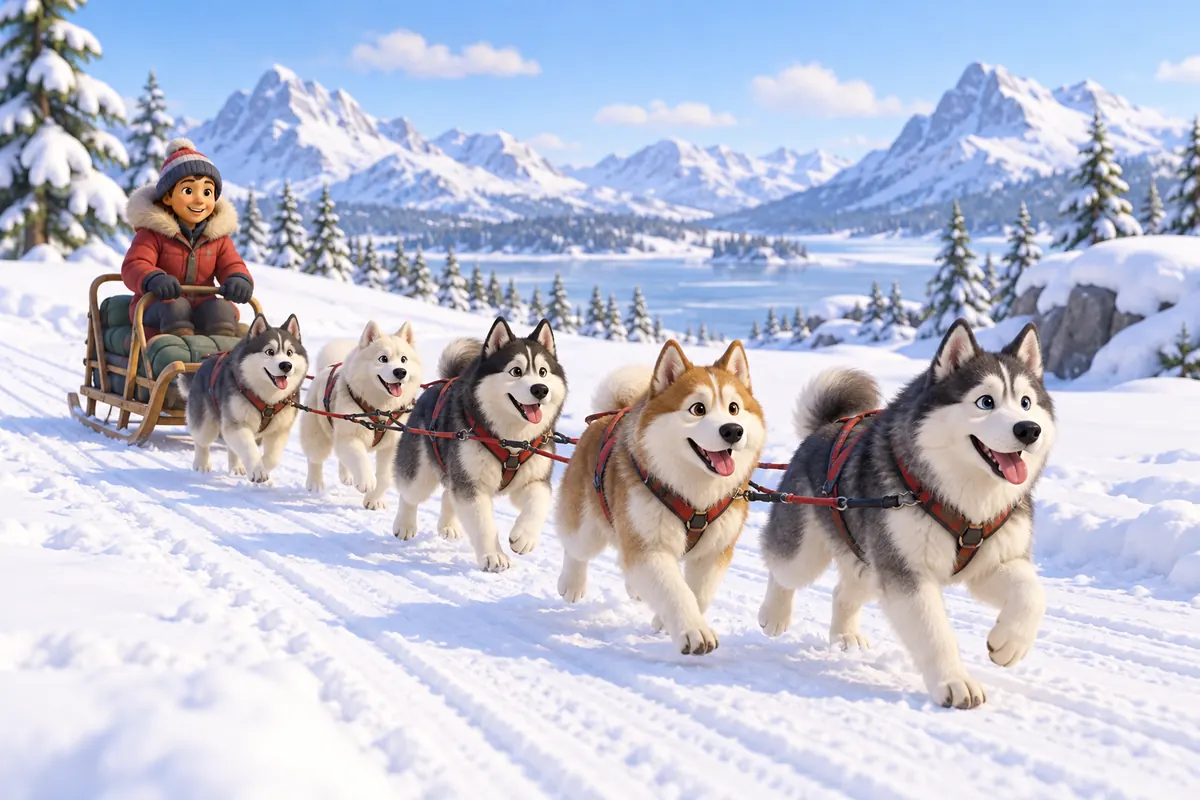
As a noun, husky names a sled-dog type with a thick coat; huskies is the plural. “The husky pulled a light sled across the snow” uses the animal sense. The American Kennel Club describes the Siberian Husky as a medium-sized, thick-coated sled dog developed to pull loads in a team.
Not every northern-looking dog is a Siberian Husky. If the breed matters, capitalize the full breed name: Siberian Husky. If the dog’s breed is unknown, say “sled dog” or “thick-coated dog” rather than guessing from appearance.
Husky versus hoarse, raspy, and deep
Husky often combines low pitch with a slightly rough quality. Hoarse usually suggests a rough or weakened voice, sometimes temporarily; raspy emphasizes a coarse sound; and deep describes lower pitch but not necessarily roughness. Choose the word that matches the sound you hear.
For example, “She spoke in a husky whisper” suggests a low, rough voice at low volume. “The cold left him hoarse” implies a changed or strained voice. “The bass singer had a deep voice” describes pitch. These distinctions make a sentence more precise than using husky as a catch-all adjective.
Common mistakes with husky
Avoid using husky to mean any large or intense thing. A “husky hallway” or “husky serving” is not standard for darkness or size; use dark, large, or generous as appropriate. The adjective’s established meanings concern voice and, in a regional sense, build.
Keep the dog noun distinct from the adjective: “The husky had a husky bark” is grammatically possible but repetitive. A clearer revision is “The sled dog barked in a low, rough voice.” Capitalize Siberian Husky when naming the breed; use lowercase husky for the general noun or adjective.
Frequently asked questions
What is a simple sentence using husky?
“The husky pulled a sled” is a simple sentence using husky as a noun for a sled dog. For the adjective, write “She spoke in a husky voice.” In both cases, the words around husky show whether it names an animal or describes sound.
What does husky voice mean?
A husky voice sounds low and slightly rough or hoarse. The word can describe a natural vocal quality or a temporary sound caused by illness. It does not necessarily mean loud. Use deep for pitch alone and raspy when roughness is the main feature.
Is husky a dog or an adjective?
It can be both. As a noun, a husky is a thick-coated sled dog, and the plural is huskies. As an adjective, husky can describe a low, rough voice or, in North American English, a large, strong build. Sentence context identifies the part of speech.
What is the difference between husky and hoarse?
Husky describes a low, slightly rough vocal sound and can be a lasting quality. Hoarse often suggests a rough, weakened, or temporarily strained voice, such as after illness or extensive speaking. The words overlap, so choose based on the sound and situation you mean.
Conclusion
Use husky in a sentence to express the intended idea accurately and give readers context they can understand on its own.
Usage note: In the older examples below, words such as “husky wind,” “husky hallway,” and “husky portion” do not use the standard meanings of husky. Use precise terms such as strong wind, dark hallway, or large portion instead.
Ever wondered how to use the word “husky” in a sentence?
“Husky” is an adjective often used to describe a strong and slightly hoarse voice or a large and robust build. It can also refer to a breed of dog known for its strength and endurance.
7 Examples Of Husky Used In a Sentence For Kids
- The husky dog howled loudly in the night.
- I like to pat the husky dog’s soft fur.
- The husky puppy loves to play fetch with a ball.
- The husky sled dogs can run very fast.
- I heard a husky voice singing a song.
- The husky bear hibernates in the winter.
- The husky wolf howls at the moon at night.
14 Sentences with Husky Examples
- The college’s husky mascot is always a hit at sports events.
- She adopted a husky puppy as a pet to keep her company during late-night study sessions.
- The professor’s husky voice made it difficult for students in the back to hear the lecture clearly.
- After a long day of classes, the students gathered around a husky bonfire for a relaxing evening.
- During the college hike, the students were surprised by a pack of husky wild dogs.
- The college choir’s performance was enhanced by the addition of a husky baritone voice.
- Despite the noise, the teacher’s husky warnings never went unheard during exams.
- The students were thrilled to attend the husky sleigh ride organized by the college.
- The power went out on campus, so the students relied on flashlights to navigate the husky dark hallways.
- The college organized a husky dog show to raise funds for an animal shelter.
- She remembered to bring her husky earmuffs to the outdoor winter concert.
- The cafeteria served a husky portion of biryani for lunch, which was a hit among the students.
- As the temperature dropped, the college students bundled up in husky jackets and scarves.
- The husky wind howled through the campus, making it a challenge for the students to walk to their next class.
How To Use Husky in Sentences?
To use the word Husky correctly in a sentence, start by identifying the context in which you want to use the word. If you’re referring to the dog breed, you can say, “I have a beautiful Husky named Luna.”. This sentence clearly indicates that Luna is a Husky dog.
If you’re using Husky to describe someone’s voice as deep and rough, you could say, “His Husky voice always gives me chills.”. In this sentence, Husky is used to portray the tone and quality of the person’s voice.
Alternatively, if you want to use Husky to describe something that is sturdy or robust, you can say, “The table was made from Husky oak wood.”. Here, Husky is used to highlight the strength and durability of the material.
Remember, Husky can have different meanings based on the context in which it is used. Pay attention to whether you are referring to the dog breed, a deep voice, or something sturdy, and adjust your sentence accordingly. By practicing using Husky in different contexts, you can become more comfortable and confident in incorporating it into your everyday vocabulary.
Conclusion
In conclusion, sentences containing the keyword “husky” have shown the diverse ways in which this word can be used. Whether describing a deep voice, a fleet of dogs, or the weather, “husky” adds a vivid layer of description to a sentence. From the sight of a husky dog sled team pulling through the snow to the sound of a husky voice in a dimly lit room, the word “husky” conjures up images that resonate with readers and listeners alike.
By exploring different contexts in which the word “husky” is employed, we can appreciate its ability to evoke sensory experiences and paint vivid descriptions. So next time you encounter a sentence featuring “husky,” think about the rich imagery and atmosphere it can bring to a piece of writing or conversation.