The phrase ill get back to you, usually written I’ll get back to you, is a short promise to reply later. To use ill get back to you in a sentence, name the reason for the delay: “I’ll get back to you after the meeting.” It suits email and chat more than formal reports.
Ill get back to you at a glance
- Ill get back to you is a fixed, informal phrase meaning I will reply to you later.
- It is almost always spoken in the first person and shortened to I’ll in writing.
- The usual partners are after, once, tomorrow, shortly, by Friday and on that.
- The phrase belongs to email, chat and service scripts rather than formal documents.
- The commonest error is writing I’ll revert back to you, where revert already means return.
What does ill get back to you mean?
Ill get back to you is a fixed phrase meaning I will reply to you later, once I have the information, the answer or the decision you need. The Cambridge entry for this phrase treats get back to as the base verb, and the meaning is built from there. Where the speaker only promises an update, follow up later is the plainer phrase, because the set expression carries a polite, slightly formulaic tone.
| Sense | Plain meaning | Example sentence |
|---|---|---|
| Genuine promise | I will reply once I know more | I’ll get back to you as soon as the figures arrive. |
| Polite delay | I need time before I can answer | I’ll get back to you on that one. |
| Soft refusal | A reply that quietly defers a no | She said she would get back to him, then let it rest. |
One limitation is worth stating. The phrase is a promise, not an answer, so it can read as empty when no time is attached. In formal writing a bare I’ll get back to you says nothing about when, and repeating it more than once in a thread starts to sound like a way of avoiding a decision rather than a plan to reply.
How do you use ill get back to you in a sentence?
The phrase is fixed, so the grammar lives in the words that follow it and in the verb that can change person. The five rows below cover the patterns that carry almost every real use, and each one shows what the speaker still owes.
| Pattern | Example | What it signals |
|---|---|---|
| I’ll get back to you + time | I’ll get back to you tomorrow. | A promise with a rough deadline. |
| I’ll get back to you on + topic | I’ll get back to you on the pricing. | Names the subject still open. |
| I’ll get back to you after + event | I’ll get back to you after the review. | The delay has a clear cause. |
| get back to you with + noun | We’ll get back to you with a full quote. | Promises a specific deliverable. |
| get back to me | Please get back to me by Friday. | A request rather than a promise. |
The person can shift with the subject, so a polite colleague may write he will get back to you, and a service desk says we will get back to you. A related request is to ask someone to reply promptly, which is firmer than the soft promise of the set phrase.
Ill get back to you in a sentence: examples across contexts
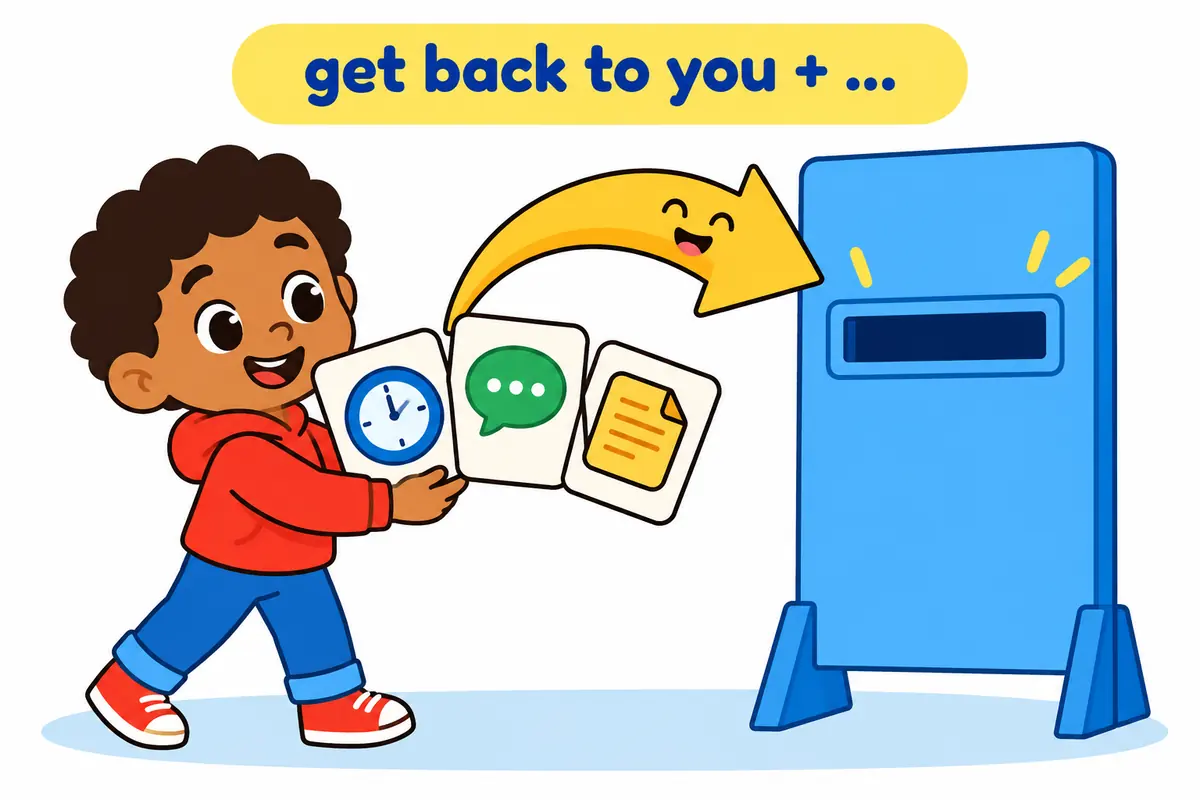
The phrase changes very little in wording but a great deal in tone, from a warm chat to a formal service script. The ten sentences below each show who owes the reply and what has been promised.
| Context | Example sentence | Why this works |
|---|---|---|
| Email to a client | I’ll get back to you with the revised quote by Thursday. | Adds a deliverable and a date. |
| Message to a friend | I’ll get back to you after I check with my sister. | Names the reason for the delay. |
| Customer service | We’ll get back to you within one working day. | The plural subject promises a service standard. |
| Human resources | I’ll get back to you once the interviews finish. | Sets the reply after a known event. |
| Journalism | The press office will get back to you on the figures. | Names the topic and the responsible office. |
| Sales follow-up | I’ll get back to you on Monday with pricing. | Pairs a time with a concrete offer. |
| Academic supervision | I’ll get back to you about the draft next week. | The topic is a piece of work. |
| Group chat | Get back to me when you know, no rush. | The request softens the pressure. |
| Phone message | I’ll get back to you as soon as I land. | Ties the reply to a physical event. |
| Project management | We’ll get back to you with a schedule after the audit. | A team promises a dated document. |
Two patterns separate the strong uses from the weak ones: a date or an event, and a named deliverable. A bare promise with neither reads as a brush-off, while I’ll get back to you with the figures by Friday reads as a commitment.
Ill get back to you vs get back at you
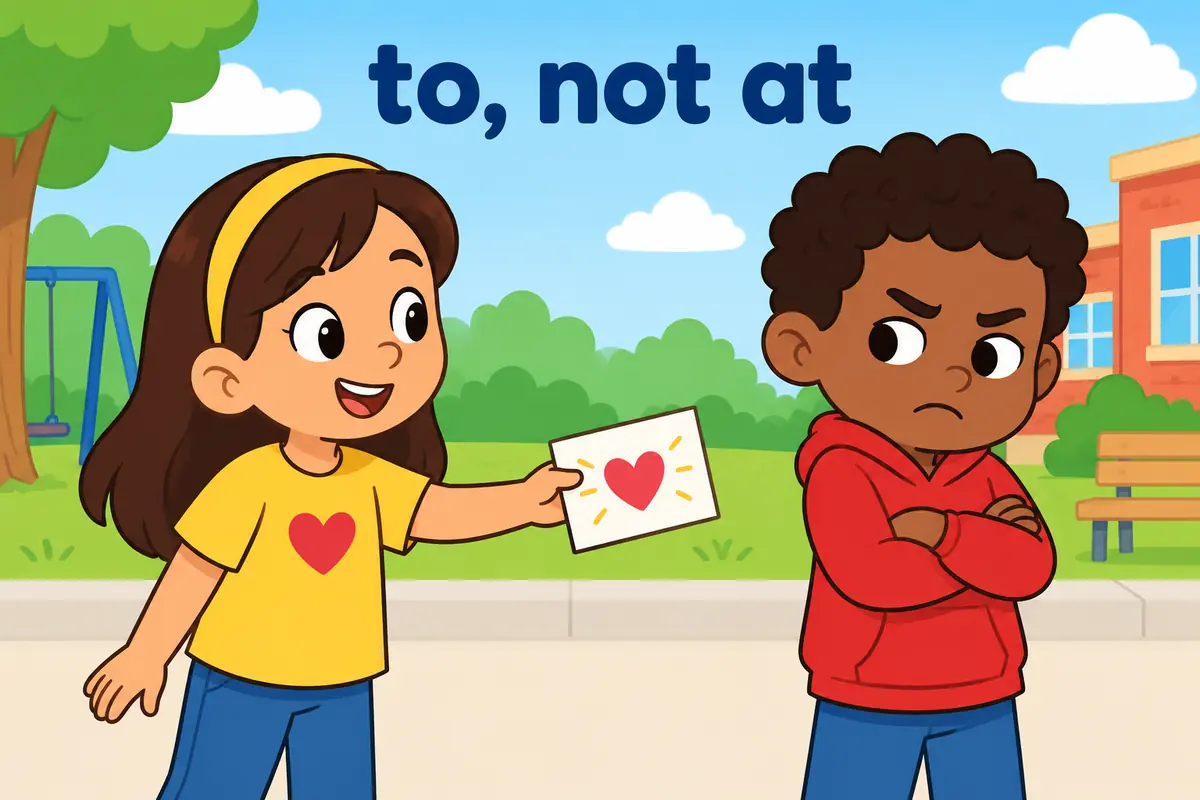
Ill get back to you is confused with get back at you, which sounds almost identical but means something entirely different. To get back to someone is to reply, and to get back at someone is to take revenge, so a single preposition changes a polite promise into a threat.
| Attribute | get back to you | get back at you |
|---|---|---|
| Core meaning | Reply later | Punish or take revenge |
| The particle after back | to | at |
| Feeling it carries | Polite and helpful | Angry and retaliatory |
| Typical subject | A colleague, a service desk or a friend | Someone who feels wronged |
| Register | Neutral and everyday | Informal and often heated |
Verdict: write get back to someone when the point is a reply, and keep get back at someone only for revenge. The get back base phrase is the safe middle, meaning to return or to recover, so check the little word after back before you send the sentence.
Word forms and what may vary in ill get back to you
The expression is fixed, so the words inside it rarely change, but the subject and the words after it can. The table lists the forms that are standard, the ones that are acceptable in a formal register, and the ones that are not.
| Form | Status | Example |
|---|---|---|
| I’ll get back to you | standard, informal | I’ll get back to you soon. |
| I will get back to you | standard, more formal | I will get back to you by noon. |
| He will get back to you | standard, third person | He will get back to you tomorrow. |
| I’ll get back to you with | standard, promises a thing | I’ll get back to you with dates. |
| Please get back to me | standard, a request | Please get back to me by Friday. |
| I’ll revert to you | business jargon, avoid | Avoid; revert means turn back. |
| I’ll get back to you back | non-standard | Avoid; get back already means reply. |
The verb can also become the neutral respond kindly, which drops the informality and works in a formal letter, and the noun send an update names the promised message instead of the act of replying.
Common mistakes with ill get back to you
- Incorrect:
I will revert back to you by Friday.Correct: I will get back to you by Friday. Rule: Revert already means turn back, so revert back repeats the idea and sounds like office jargon. - Incorrect:
I’ll get back to you back after lunch.Correct: I’ll get back to you after lunch. Rule: Get back already contains the return, so back cannot be added twice. - Incorrect:
I’ll get back to you at you later.Correct: I’ll get back to you later. Rule: To and at are the two particles, and only one fits at a time. - Incorrect:
Ill get back to you.Correct: I’ll get back to you. Rule: The contraction needs an apostrophe; without it, ill means unwell. - Incorrect:
I’ll get back to you.(no date, in a formal report) Correct: I will respond by Friday with the figures. Rule: Formal writing needs a time and a deliverable, not a vague promise.
Practice using ill get back to you
Work through the seven items, then read the reason with each answer rather than only the key.
- Fill the gap: I’ll get back ______ you once the results are in.
- Choose the better particle: He will get back (to / at) you about the invoice, not about the argument.
- Correct the error: Please revert back to me by Friday.
- Build a sentence: use get back to you with to promise a document.
- Spot the register: which belongs in a formal report — we will respond by Friday with the figures, or we’ll get back to you?
- Rewrite with a date: I’ll get back to you. Add a realistic deadline.
- Add the apostrophe: Ill get back to you after lunch.
Answers
- to — the phrase is get back to you, never get back you.
- to — get back at means take revenge, so to fits the invoice.
- Please get back to me by Friday — revert back repeats the meaning of revert.
- Model answer: I’ll get back to you with the signed contract by Monday.
- We will respond by Friday with the figures — a report needs a date and a deliverable.
- Model answer: I’ll get back to you by Tuesday afternoon.
- I’ll get back to you after lunch — the contraction takes an apostrophe in place of wi.
The bottom line
Use ill get back to you when you intend to reply later, and strengthen it with a time or a deliverable so it does not read as a brush-off. Two nuances decide most sentences: the phrase is informal, so formal writing prefers I will respond with a date, and the particle after back decides the meaning, since get back to is a reply while revert and get back at point elsewhere. Kept to email, chat and service scripts, the phrase stays useful and honest. Given twice in one thread with no date, it turns into a polite way of saying nothing.
Frequently asked questions about ill get back to you
Is it rude to say I’ll get back to you?
Not by itself, but it can feel dismissive when no time or reason is offered. A bare phrase in reply to a serious question may read as a way of stalling. Adding a deadline, such as by Friday, or naming what you still need turns the same words into a genuine commitment.
When should you give a time?
Give a time whenever the other person is waiting on your answer, because a date turns a promise into a plan. Even a rough slot, such as after the meeting or by Tuesday morning, tells the reader when to expect a reply. Without a time, the phrase asks for patience but gives no measure of it.
Is I’ll revert to you correct?
It appears in some business English, but careful writers avoid it. Revert means to return to a former state, not to reply, so I’ll revert to you confuses readers outside that office habit. Use get back to you in informal settings and respond in formal ones for a wording that travels well.
Can you say get back at you?
Yes, but it means something different. Get back at someone means to take revenge or punish, so it is a threat rather than a promise to reply. The particle matters: get back to you is polite, and get back at you is hostile. One small preposition changes the whole message.