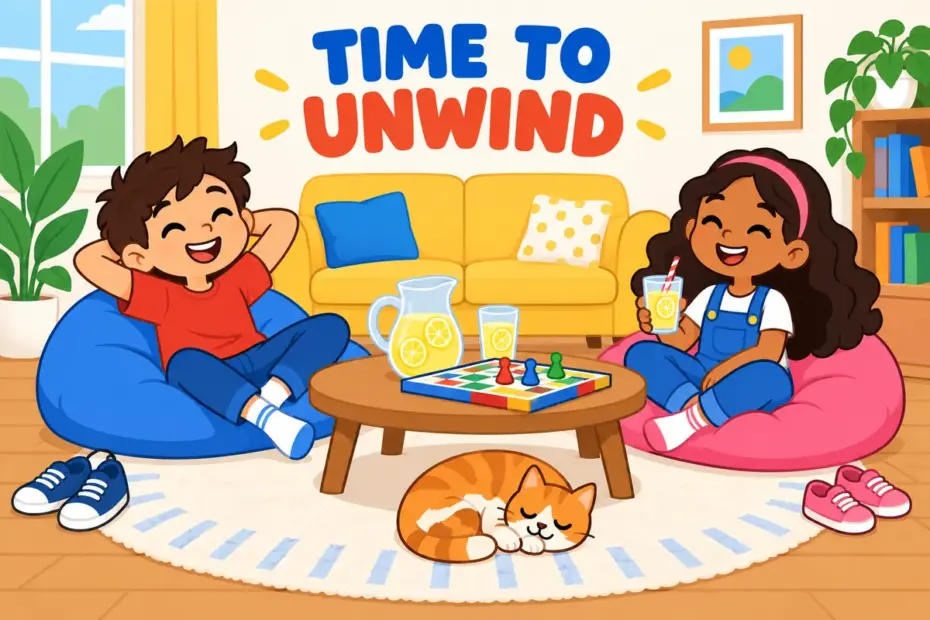
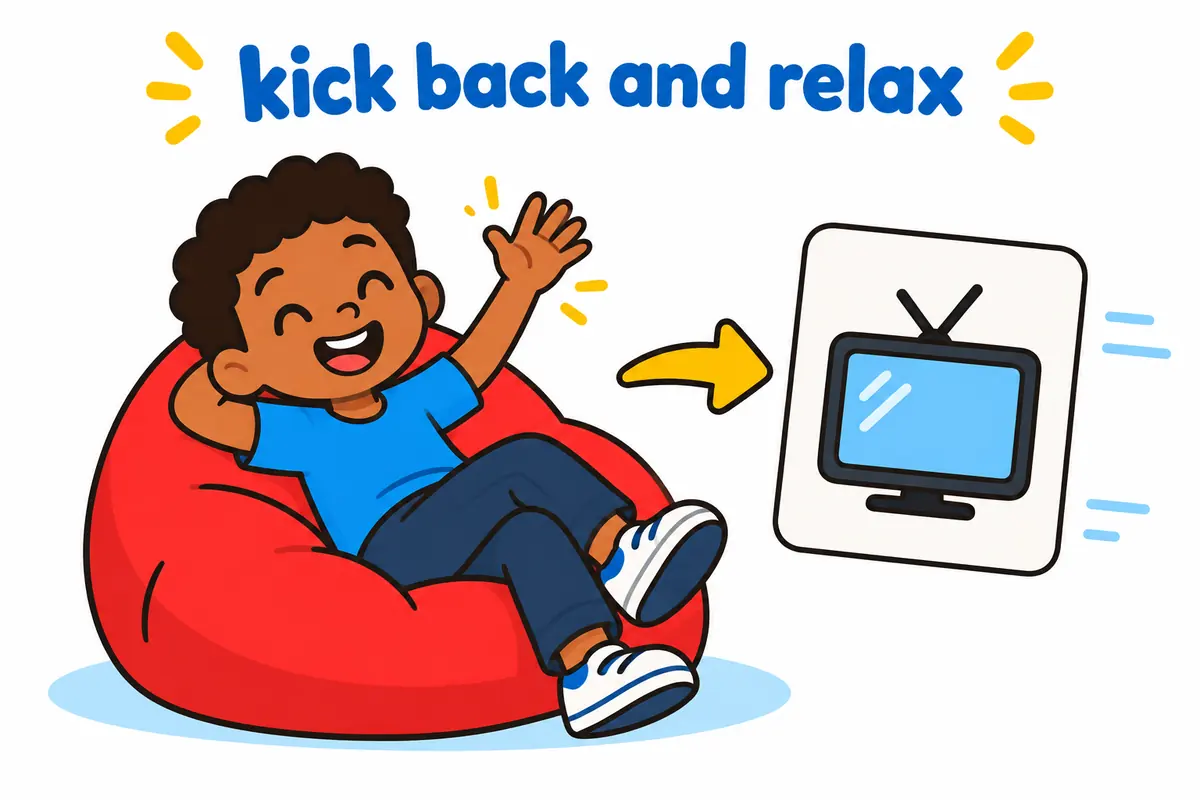
Kick back is an informal phrasal verb meaning to relax and stop working for a while, as in kicking back on a sunny afternoon. To use kick back in a sentence, keep the tone casual and pair it with a place or a time: “We kicked back on the porch after lunch.” Watch the noun.
Kick back at a glance
- Kick back is a phrasal verb; its forms are kick back, kicks back, kicked back and kicking back.
- The verb is intransitive, so it takes no object: you kick back, you do not kick back a chair.
- The relax sense is informal and belongs to conversation rather than reports.
- A second sense describes a tool or gun springing backwards when it fires.
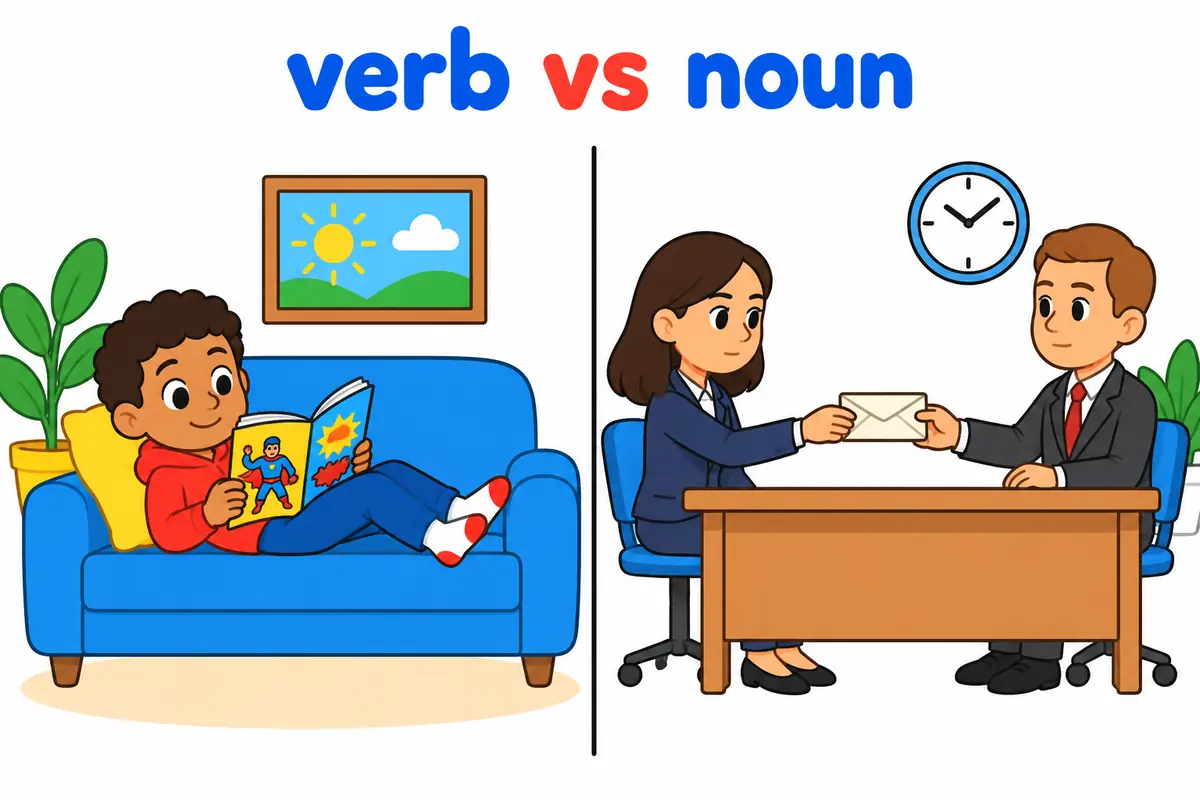
- The one-word noun kickback means an illicit payment, which is a serious accusation.
What does kick back mean?
Kick back is a phrasal verb meaning to relax after effort, and in a second sense it describes a machine recoiling. The Cambridge entry for kick back marks the relax sense as informal, and that label decides most sentences. A third item is not a verb at all: the noun kickback is a secret payment made to win business, so the space between the words carries real meaning.
| Item | Plain meaning | Example sentence |
|---|---|---|
| kick back (verb) | Relax and stop working, informally | We kicked back by the pool all afternoon. |
| kick back (verb) | Of a gun or tool, spring backwards | The rifle kicked back hard into his shoulder. |
| kickback (noun) | An illicit payment to win favour | The contractor paid a kickback to win the tender. |
One limit is worth stating plainly. Kick back is the wrong verb for a formal document, where the same idea belongs to relax or take a break. It is also the wrong word for a person who is idle rather than resting, because kick back implies that effort has been earned. To loaf around suggests idleness, while kick back suggests deserved ease.
How do you use kick back in a sentence?
The verb follows a small set of shapes, and none of them takes a direct object. Chill belongs to the same informal register as kick back, which is why the two often appear in the same paragraph. The noun, by contrast, behaves like any other countable noun and takes an article.
| Pattern | Example | What it signals |
|---|---|---|
| kick back (no object) | Kick back and enjoy the break. | The intransitive core, always informal. |
| kick back + place | They kicked back on the sofa. | A place phrase shows where the relaxing happened. |
| kick back and + verb | We kicked back and watched the game. | The fixed pairing with and names the leisure. |
| kick back (recoil) | The drill kicked back and bruised his wrist. | Physical recoil, used of tools and firearms. |
| a kickback (noun) | The firm was fined for a kickback scheme. | The noun takes an article and names a payment. |
The pairing with and is the most idiomatic of the patterns, so a sentence such as we kicked back and watched the game sounds more natural than a bare we kicked back.
Kick back in a sentence: examples across contexts
The verb barely changes meaning, but the register shifts so far that some of these sentences would raise eyebrows in a report. The ten examples below move from a sofa to a workshop, and each one shows what the person or the machine is doing. Rest for an hour is the plainer choice when fatigue rather than reward is the issue.
| Context | Example sentence | Why this works |
|---|---|---|
| Conversation | Kick back and put your feet up for a bit. | An informal imperative suits the register. |
| Holiday writing | We kicked back on the porch while the sun went down. | A place phrase anchors the scene. |
| Travel blog | After three days of hiking, we kicked back by the lake. | The contrast with effort explains the ease. |
| Casual workplace chat | Grab a coffee and kick back for ten minutes. | Acceptable between colleagues, not in a memo. |
| Sports feature | The players kicked back before the evening match. | Shows rest as part of a routine. |
| Shooting club | The rifle kicked back and the shot went wide. | Uses the recoil sense with a clear result. |
| Workshop safety | The drill can kick back if the bit jams. | Technical use of recoil as a warning. |
| News report | Three officials took a kickback to approve the contract. | The noun signals a criminal allegation. |
| Business writing | Auditors found a kickback scheme hidden in the invoices. | Formal register requires the noun, never the verb. |
| Retirement feature | Now he kicks back on a quiet farm most weekends. | Shows the verb describing an ongoing habit. |
Only the news and business sentences use the noun, and both of them could get somebody arrested, which is why the space between kick and back matters so much.
Kick back vs relax and lounge
Kick back overlaps with two calmer verbs and is interchangeable with neither. To lounge by the pool names a place and a pose, while relax is the neutral verb that fits every register. Kick back adds a note of earned comfort and a strong flavour of casual speech.
| Attribute | kick back | relax | lounge |
|---|---|---|---|
| Core job | Relax informally after effort | Become restful, in any register | Sit or lie at ease |
| Formality | Informal | Neutral | Neutral to relaxed |
| Fixed site | No fixed site | No fixed site | Usually a chair or sofa |
| Implies earned rest | Often yes | No | No |
| Usual pairing | Often with and plus a verb | Plain verb | Often with in or on a place |
Verdict: choose kick back for a warm, casual sentence about winding down, relax for anything neutral or formal, and lounge when the posture and the place are the point. Kick off the meeting shares the verb kick but starts an event instead of resting.
Word forms and grammar of kick back
Kick back inflects on the verb, and its noun is a different word in everything but sound. The table separates the forms, including the hyphenated label that appears in headlines.
| Form | Part of speech | Example |
|---|---|---|
| kick back | base phrasal verb | Let us kick back for half an hour. |
| kicks back | third person singular | He kicks back on Sundays and does nothing. |
| kicked back | past and past participle | They kicked back after the long hike. |
| kicking back | present participle | We spent the evening kicking back by the fire. |
| kickback | noun, one word | The inquiry uncovered a series of kickbacks. |
| kickback | noun as modifier | Reporters described a kickback scandal. |
| kick off | phrasal verb, different meaning | The host will kick off the show at eight. |
The noun is written as one word, never as kick back or kick-back. A hyphen between the halves belongs only to the rare adjective kick-back, and even there it is easy to avoid entirely.
Common mistakes with kick back
- Incorrect:
The employees kicked back after the quarterly meeting.Correct: The employees relaxed after the quarterly meeting. Rule: Kick back is too informal for a business report. - Incorrect:
The company paid him a kick back for the contract.Correct: The company paid him a kickback for the contract. Rule: The noun is one word, unlike the two-word verb. - Incorrect:
We kicked back ourselves on the beach.Correct: We kicked back on the beach. Rule: Kick back is intransitive and takes no reflexive object. - Incorrect:
The gun kicked back the boy.Correct: The gun kicked back into the boy’s shoulder. Rule: The recoil sense has no direct object; use into or against. - Incorrect:
He kicked back off work at four.Correct: He knocked off work at four. Rule: Kick back does not mean finish work at a set time.
Practice using kick back
Work through the seven items, then read the reasons, which explain the choice rather than only the key.
- Fill the gap: After the marathon, the runners ______ in the shade.
- Choose the better word: In a formal report, the staff (kicked back / relaxed) after the launch.
- Correct the error: The councilor accepted a kick back from the builder.
- Build a sentence: use kick back about a family resting on a Sunday.
- Spot the register: which belongs in a job advertisement — you will kick back with the team, or you will enjoy a supportive team environment?
- Rewrite with the noun: The invoice hid an illegal payment. Use kickback instead.
- Fix the meaning: The drill kicked back the board. Make the sentence grammatical.
Answers
- kicked back — the verb is intransitive, so no object is needed.
- relaxed — a report uses the neutral verb, not the informal phrase.
- The councilor accepted a kickback from the builder — the noun is one word.
- Model answer: On Sunday the family kicked back and watched old films together.
- You will enjoy a supportive team environment — an advertisement keeps a neutral register.
- The invoice hid a kickback — the noun names the payment directly.
- The drill kicked back and spun the board — the recoil sense needs no object, so add a result clause.
The bottom line
Use kick back in a sentence for a casual, warm statement that somebody is relaxing after effort, and keep it out of formal writing, where relax is the safer verb. The two points that decide most sentences are the intransitive pattern, which leaves no room for an object, and the gap between the informal verb and the criminal noun, which is the difference a single space makes. When the meaning is a payment, the one-word noun is the only correct form.
Frequently asked questions about kick back
Is kick back formal or informal?
Kick back is firmly informal in its relax sense, so it suits conversation, travel writing and friendly messages. A report, a contract or an academic paper should use relax or take a break instead. The noun kickback is used in formal writing, but only for an illicit payment, which is a different meaning.
What does kickback mean in business?
A kickback is a secret payment made to someone who can influence a decision, usually to win a contract. It is illegal in most settings and carries a strong note of accusation. The verb form is not used for this meaning, so a business writer always reaches for the noun and an article.
Can kick back describe a machine?
Yes. A gun, a drill or a saw can kick back when it springs backwards suddenly, and the recoil can cause injury. In these sentences the machine is the subject and there is still no direct object, so a writer adds a result clause such as bruised his wrist or went wide.
Is kick back the same as kick off?
No. Kick back means relax, while kick off means begin an event or a match. They share the verb kick and nothing else, which is why the particle carries the whole meaning. A party kicks off when it starts, and guests kick back once it is under way.