Lean toward means to favour one option slightly while staying open to others, and the fixed phrase behaves like a single verb. In a sentence it takes a noun or an -ing form: “I lean toward the early train” or “the committee is leaning toward waiting”. The preposition never separates from lean.
Lean toward at a glance
- Lean toward is a phrasal-prepositional verb, so the two words stay together in every sentence.
- Its forms are lean, leans, leaning and leaned, and the past form leant still appears in older British writing.
- The phrase takes a noun or an -ing form: lean toward the plan, lean toward moving house.
- Slightly, strongly, increasingly and still are its commonest companions, because the phrase expresses degree.
- The tone is tentative, which is why it suits forecasts, committees and polite conversation.
- The commonest error is following toward with to and a verb, as in lean toward to wait.
What does lean toward mean?
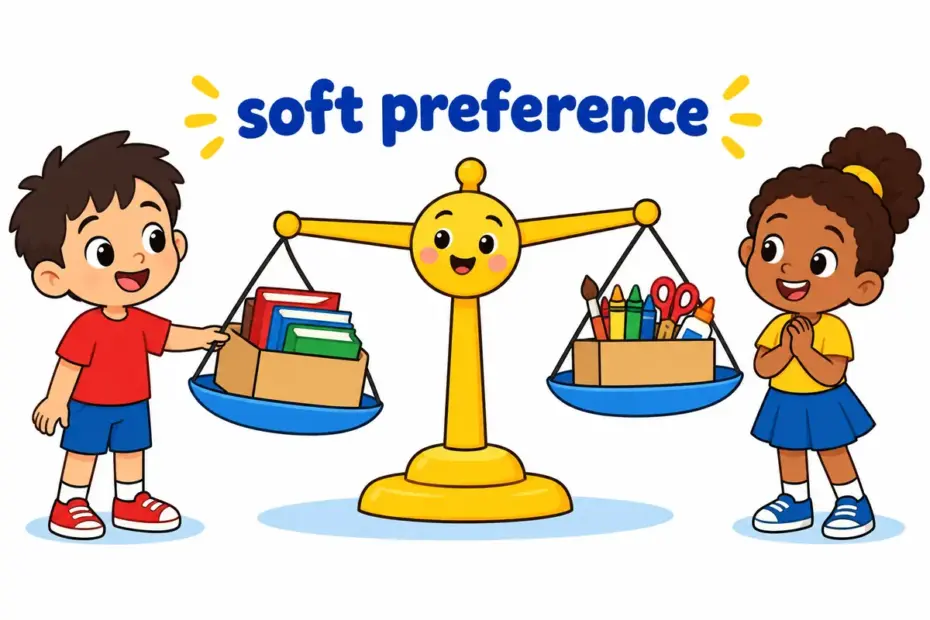
Lean toward is a verb phrase meaning to favour one possibility slightly without committing to it. The Cambridge entry for lean toward records the sense of tending to prefer something, and the verb keeps the image of a body tipping gently in one direction. A sentence such as “rural voters lean toward the incumbent” describes a tilt, not a decision. Where the choice is already settled, prefer is the more precise verb, because lean toward always leaves room to change direction.
| Sense | Plain meaning | Example sentence |
|---|---|---|
| Tentative preference | Favour one option for now | I lean toward the smaller venue. |
| Body tipping | Physically tilt in a direction | She leaned toward the microphone. |
| Group tendency | A body of people mostly favour one side | The market leans toward cautious optimism. |
One honest limitation is worth stating. Lean toward does not mean decide and it does not mean agree. Two people can both lean toward a plan for different reasons, and a group can lean toward an option that it later rejects. When a firm conclusion is what you mean, choose decide, prefer or support instead.
How do you use lean toward in a sentence?
Lean toward takes a noun or an -ing form, and the choice between them depends on whether the option is a thing or an action. Adding an adverb before the verb shows how strong the inclination is. Six patterns cover almost every real sentence, and the continuous form is the one that signals an open decision.
| Pattern | Example | What it signals |
|---|---|---|
| lean toward + noun | She leans toward the second option. | A tentative preference for a thing. |
| lean toward + gerund | They lean toward waiting another week. | A tentative preference for an action. |
| be leaning toward + noun | I am leaning toward the blue one. | A decision still in progress. |
| lean toward + person + on + issue | The mayor leans toward the tenants on rent. | Support on one specific question. |
| adverb + lean toward | Voters increasingly lean toward change. | The degree of the inclination. |
| lean toward + gerund in context | The board is leaning toward delaying the launch. | A soft recommendation inside a meeting. |
Where a speaker wants to sound cautious, this phrase does the work that incline does in formal prose and tend does in measured description. The practitioner rule is simple: if you can replace the phrase with slightly favour, lean toward fits.

Lean toward in a sentence: examples across contexts
Lean toward changes register more than it changes meaning. The twelve sentences below keep the same phrase while moving from a classroom to a finance report, and each one shows how tentative the preference really is.
| Context | Example sentence | Why this works |
|---|---|---|
| Classroom | Mina leans toward biology because she enjoys the field trips. | Shows a tentative subject preference. |
| Home | We are leaning toward the smaller school for our son. | The continuous form signals an undecided choice. |
| Workplace email | The committee leans toward the cheaper supplier but wants one more quote. | Adds a condition that keeps the decision open. |
| News report | Analysts lean toward a modest rise in prices this quarter. | A conditional forecast, not a firm prediction. |
| Academic prose | The evidence leans toward the second explanation. | A hedged conclusion, common in research. |
| Sports commentary | The manager is leaning toward resting his captain. | A future plan that remains changeable. |
| Conversation | I lean toward taking the early train, if you do not mind. | A polite, tentative preference in speech. |
| Political writing | Rural voters lean toward the incumbent in early polls. | A group tendency rather than one person’s choice. |
| Medical or clinical | The team leans toward a watch-and-wait approach. | A careful, reversible recommendation. |
| Restaurant | I lean toward the soup, but the pasta looks good too. | Everyday indecision about a small thing. |
| Finance | The fund leans toward steady dividend stocks. | A habitual investment tilt. |
| Literature essay | The narrator leans toward forgiving her brother. | An emotional inclination, not a decision. |
Every sentence keeps the inclination soft, and the two continuous examples are the ones that most clearly show a choice still being weighed.
Lean toward vs lean towards, incline and prefer
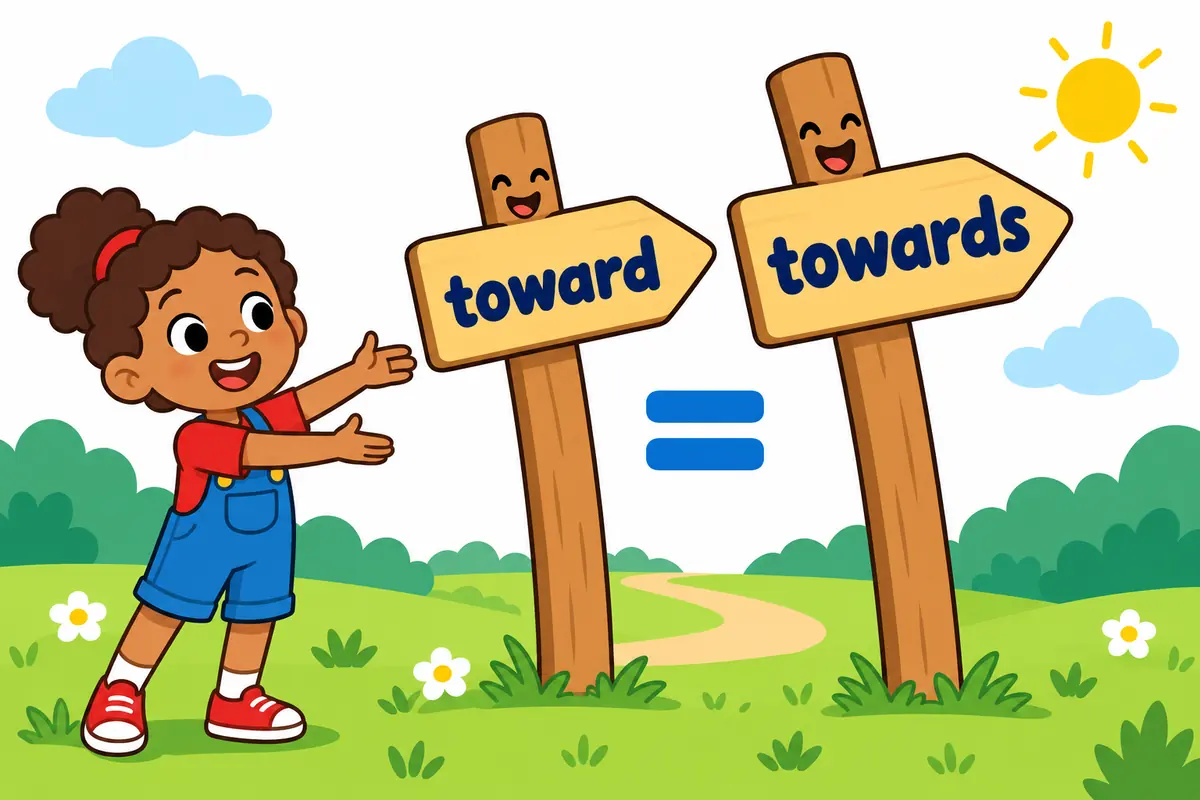
Lean toward is confused with its own spelling variant and with three stronger verbs. Toward and towards are the same preposition, so the meaning of the phrase never changes; the real differences lie in strength and formality.
| Attribute | lean toward | incline toward | prefer |
|---|---|---|---|
| Strength | Weak to moderate | Moderate | Strong and settled |
| Meaning | Tentatively favour one option | Formally be disposed to favour | Like one thing better than another |
| Grammar | + noun or gerund | + noun or gerund | + noun, gerund or to + verb |
| Typical subject | People, voters, committees, markets | Formal analysis and opinion | Any chooser |
| Register | Neutral and conversational | Formal | Neutral |
Verdict: choose lean toward for a soft, still-open inclination, incline toward when the prose is formal, and prefer when the choice is already made. Use toward or towards consistently within one document.
Word forms and grammar of lean toward
The phrase is fixed, so only the verb lean and the spelling of the preposition may change. Nothing goes between lean and toward, and the whole unit must stay together. The table lists the forms that appear in real writing and the ones learners build by mistake.
| Form | Part of speech | Example |
|---|---|---|
| lean toward | base phrase | I lean toward the plan. |
| leans toward | third person singular | She leans toward the smaller class. |
| leaning toward | present participle | We are leaning toward a spring date. |
| leaned toward | past, common form | He leaned toward the offer last week. |
| leant toward | past, older variant | His father leant toward the same choice. |
| towards | preposition variant | Many writers lean towards the same answer. |
The past form leant is not wrong; it is simply less common in modern writing, and mixing leaned and leant in one document looks careless.
Common mistakes with lean toward
- Incorrect:
I lean to choose the cheaper one.Correct: I lean toward choosing the cheaper one. Rule: lean toward takes a noun or gerund; use the to-infinitive only with the adjective form be inclined to. - Incorrect:
She is leaning toward to wait.Correct: She is leaning toward waiting. Rule: after the preposition toward, use an -ing form, never to and a verb. - Incorrect:
The evidence leans toward that the theory is right.Correct: The evidence leans toward the theory. Rule: the phrase takes a noun phrase, not a that-clause. - Incorrect:
I am very lean toward the plan.Correct: I strongly lean toward the plan. Rule: lean is the verb here; the adjective lean means thin. - Incorrect:
The board leans toward approving, so approval is certain.Correct: The board leans toward approving, so approval looks likely. Rule: the phrase signals a soft preference, not a final decision.
Practice using lean toward
Work through the six items, then read the reasoning beside each answer rather than only the key.
- Fill the gap: After the tour, both families ______ the seaside cottage.
- Choose the better phrase: The judge (leans toward / prefers) a short delay, though the final ruling comes tomorrow.
- Correct the error: We are leaning toward to sell the old van.
- Build a sentence: use lean toward with an -ing form about a holiday plan.
- Spot the register: which belongs in a forecast — Analysts lean toward a small rise, or analysts definitely say prices will soar?
- Rewrite with a stronger verb: The committee leans toward the cheaper bid. Replace lean toward with a verb that shows a settled choice.
Answers
- lean toward — the phrase takes a noun phrase, and the choice is still open.
- leans toward — the ruling is still to come, so the preference is not yet settled.
- We are leaning toward selling the old van — use the gerund after toward, not to and a verb.
- Model answer: We are leaning toward camping near the lake in July.
- Analysts lean toward a small rise — a forecast uses the tentative phrase, not a loud certainty.
- The committee prefers the cheaper bid — prefer marks the choice as settled.
The bottom line
Use lean toward in a sentence when you mean a soft, still-open preference, and follow it with a noun or an -ing form. The two nuances worth keeping are these: the phrase is fixed, so nothing separates lean from toward, and toward and towards are the same word, so choose one spelling per document. Where the choice is settled, reach for prefer instead.
Frequently asked questions about lean toward
Is it lean toward or lean towards?
Both are correct and mean exactly the same thing. Towards is the variant many British writers prefer, while toward is common in American English. The choice is a matter of house style, not meaning, so pick one and keep it consistent within a document. Switching between them mid-paragraph can look careless.
What part of speech is lean toward?
Lean toward is a phrasal-prepositional verb: lean is the verb and toward is a preposition, so the two cannot be separated the way a particle can. You can write she leans toward the offer, but not she leans the offer toward. Treat the whole phrase as a single unit when you use it.
Can lean toward take a gerund?
Yes. After lean toward, use a noun or an -ing form: they lean toward waiting, not they lean toward to wait. The gerund names the action the speaker tentatively favours. A that-clause does not fit the pattern, so write the evidence leans toward the second theory rather than the evidence leans toward that the theory is right.
How is lean toward different from prefer?
Lean toward suggests a soft, still-open inclination, while prefer states a settled choice. If you are leaning toward the early train, you might still change your mind; if you prefer the early train, the choice is made. Lean toward also sounds more tentative, which is why forecasts and committees use it.