Liable vs likely both point to something ahead, but they carry different weight. Liable means legally responsible, or exposed to something unwanted such as flooding or errors, while likely means simply probable. The first adds blame or risk, and the second adds only chance.
Liable vs Likely at a glance
- Both words can sit before to and describe what comes next.
- Liable means legally responsible, as in liable for the damage.
- Liable to also means exposed to something unwanted, as in liable to flooding.
- Likely means probable, with no hint of blame or danger.
- The commonest error is using liable when only probability is meant.
What does liable mean and what does likely mean?
Liable is an adjective meaning legally responsible or exposed to something unwelcome, while likely is an adjective meaning probable. The Cambridge entry for liable and the Cambridge entry for likely confirm the split, and one line shows it: a tenant is liable for the rent, while a rise in rent is likely next year.
| Sense | Word | Plain meaning | Example |
|---|---|---|---|
| Legally responsible | liable | Answerable in law | The firm is liable for the repair. |
| Exposed to harm | liable | Open to something unwanted | Low ground is liable to flooding. |
| Prone to act | liable | Inclined to do something, often badly | He is liable to forget names. |
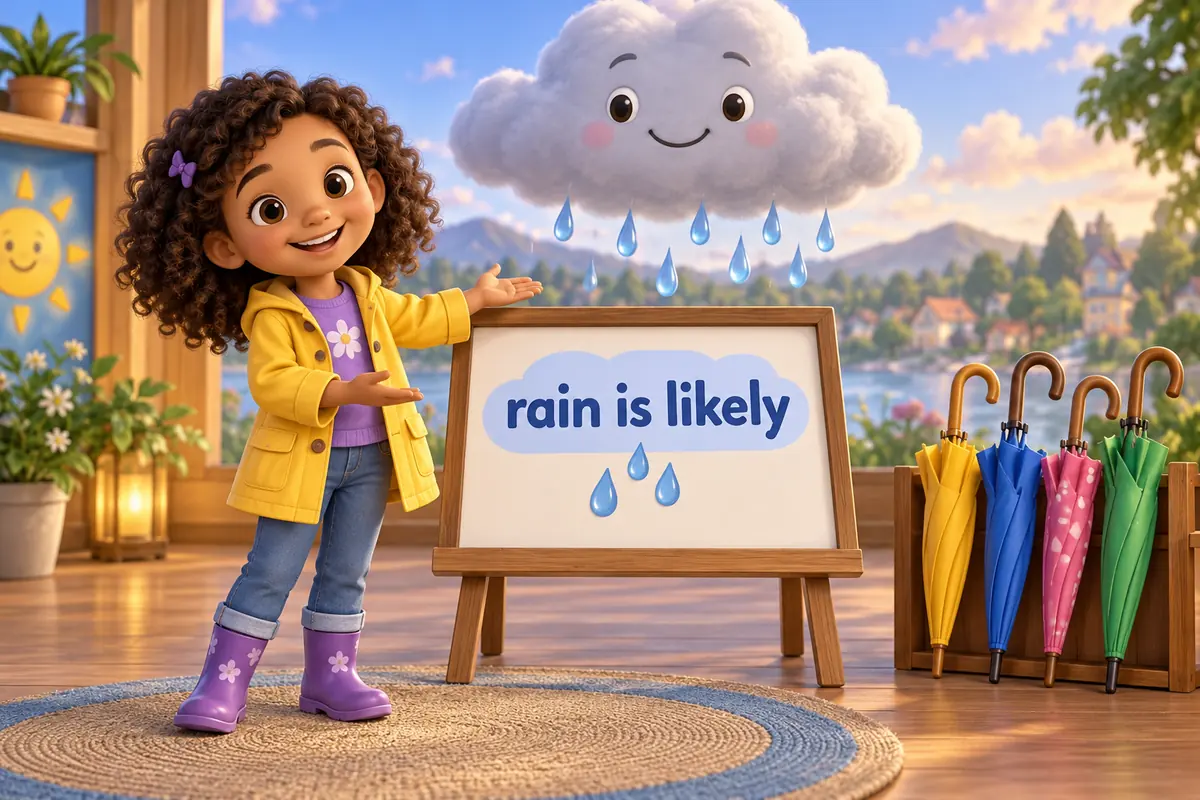
| Probable | likely | Expected to happen | Rain is likely by the evening. |
| Plausible | likely | Believable or suitable | That is the likely explanation. |
In British English, liable to can also mean likely to, but it usually keeps a flavour of something unwelcome. The responsibility sense stays legal and formal, and it is the one that never overlaps with likely at all.
What is the difference between liable and likely?
The difference is what the sentence adds beyond the event itself. Liable adds blame or exposure, so it points at a duty or a hazard, while likely adds only probability. A near-miss pair such as addition vs edition fails for a similar reason, and a one-letter trap such as abel vs able shows the same effect: the wrong word changes the meaning, not just the tone.
| Test | Liable | Likely |
|---|---|---|
| Core meaning | responsible or exposed | probable |
| Blame or risk | carries blame or risk | carries none |
| Common structure | liable for + noun, liable to + verb | likely to + verb, likely + noun |
| Tone of outcome | usually unwanted | neutral |
| Register | legal, insurance, formal risk | general, used everywhere |
| Memory hook | liable links to liability | likely links to like |
Choose liable when someone carries a duty or faces a hazard, and choose likely when something is simply probable.
How do you use liable and likely in a sentence?
Both adjectives follow fixed patterns, and the preposition is a faster test than the meaning. To watch the first adjective behave, read liable in a sentence.
| Pattern | Example | What it signals |
|---|---|---|
| liable for + noun | The driver is liable for the damage. | legal responsibility |
| liable to + verb | Old wires are liable to fail. | a tendency to something unwanted |
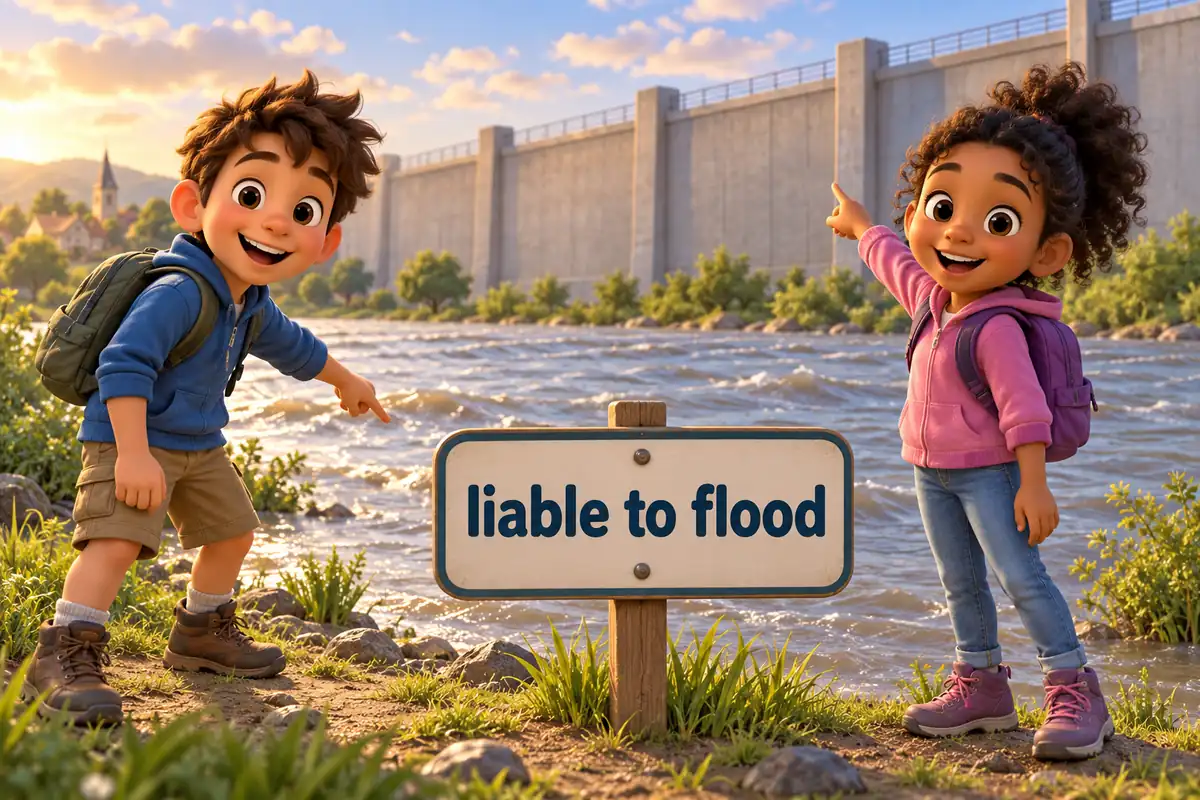
| liable to + hazard | The village is liable to floods. | exposure to a risk |
| likely to + verb | Prices are likely to rise. | plain probability |
| it is likely that + clause | It is likely that they will agree. | a probable outcome |
| most likely + noun | The most likely cause is damp. | ranking a probability |
| likely + noun | She is a likely candidate. | plausible or suitable |
Liable and likely in a sentence: examples across contexts
Reading the pair in different registers makes the choice automatic, and more neutral frames sit in likely in everyday sentences.
| Context | Example sentence | Why this works |
|---|---|---|
| Legal writing | The contractor is liable for any damage to the road. | liability, not probability |
| Insurance | The policy makes the driver liable for the first hundred pounds. | a duty to pay |
| Weather report | Heavy rain is likely along the coast tonight. | plain probability |
| News report | Flooding is likely in low-lying areas. | a neutral forecast |
| Engineering | These bolts are liable to loosen under vibration. | a tendency, unwanted |
| Medical writing | Children are liable to catch the virus in winter. | exposure to a hazard |
| Business email | The supplier is liable for the late delivery. | a contractual duty |
| Academic writing | Results are likely to vary between the two groups. | expected variation |
| Conversation | It is likely we will miss the last bus. | a probable event |
| Everyday risk | New drivers are liable to make small errors. | a tendency, gently critical |
| Planning | The bridge is liable to close in high winds. | exposure to a hazard |
| Forecast of cost | The final bill is likely to be higher than quoted. | a neutral expectation |
Which should you use?
Match the word to what the sentence adds: a duty or a hazard takes liable, and a plain expectation takes likely.
| Situation | Use | Example |
|---|---|---|
| Someone must pay or answer in law | liable | The tenant is liable for the rent. |
| Something may well happen | likely | A delay is likely. |
| Exposure to an unwanted risk | liable | The path is liable to flooding. |
| A probable but neutral outcome | likely | Sales are likely to grow. |
Register is the second test. Liable belongs to contracts, insurance and risk reports, where duty and exposure need a precise word. Likely belongs to everyday speech, forecasts and academic writing, where only probability is at stake. Using liable for a harmless event sounds as if blame were being hinted at, which is why the neutral word is usually safer. A useful habit is to ask who carries the consequence: if a person must answer for an outcome, liable is the word, and if no one is answerable, likely is.
Word forms and grammar of liable and likely
| Form | Part of speech | Example |
|---|---|---|
| liable | adjective | The tenant is liable for repairs. |
| liability | noun | The policy limits liability. |
| liabilities | noun, plural | The firm listed its liabilities. |
| likely | adjective | A rise is likely. |
| likelihood | noun | The likelihood of rain is high. |
| likely | adverb, chiefly informal | He will likely call tonight. |
| unlikely | adjective | An early finish is unlikely. |
Common mistakes with liable and likely
Mistake 1: liable for a neutral event. Incorrect: The meeting is liable to finish early. Correct: The meeting is likely to finish early. Rule: a neutral probability takes likely; liable hints at something unwanted.
Mistake 2: likely for legal duty. Incorrect: The company is likely for the repair costs. Correct: The company is liable for the repair costs. Rule: legal responsibility takes liable for.
Mistake 3: the wrong preposition with liable. Incorrect: He is liable of the debt. Correct: He is liable for the debt. Rule: liable takes for before a responsibility.
Mistake 4: for instead of to for a hazard. Incorrect: The road is liable for flooding. Correct: The road is liable to flooding. Rule: exposure to a risk takes liable to, while a duty takes liable for.
Mistake 5: an adverb where an adjective belongs. Incorrect: A quiet week is probably to happen. Correct: A quiet week is likely to happen. Rule: only the adjective likely can sit before to in this pattern.
Practice using liable and likely
- Fill in the blank: The owner is ___ for any injury on the site.
- Choose the better word: Snow is (liable / likely) to fall tonight.
- Correct the error: The old bridge is liable for closure in storms.
- Build a sentence: use liable for about a damaged parcel.
- Spot the register: which line suits an insurance letter, (a) You will probably have to pay, or (b) The policyholder is liable for the excess?
- Fill in the blank: Cheap batteries are ___ to leak in the cold.
Answers
- liable, because the owner carries a legal duty.
- likely, because snow is a neutral probability, not a hazard to blame.
- The old bridge is liable to closure in storms; exposure to a risk takes liable to.
- The courier is liable for the damaged parcel.
- (b), because liable and its formal phrasing suit an insurance letter.
- liable, because the batteries tend to leak, an unwanted outcome.
The bottom line
The liable vs likely choice turns on what the sentence adds beyond the event. Liable brings a duty or a hazard, so it belongs to law, insurance and risk, while likely brings only probability and fits almost any register. If nothing is at stake but chance, choose likely and leave liable for the moment someone is answerable.
Frequently asked questions about liable and likely
Can liable and likely ever mean the same thing?
In British English, liable to can mean likely to, as in children are liable to catch colds, so the two overlap there. Even then, liable keeps a flavour of something unwelcome, which is why a cheerful forecast takes likely. The legal sense of liable, meaning responsible, never overlaps at all.
What preposition follows liable?
The preposition depends on the sense. Liability for something takes liable for, as in liable for the debt, while exposure to a risk takes liable to, as in liable to flooding or liable to fail. The two patterns never swap, so the preposition itself tells a reader which meaning is meant.
Is likely an adverb as well as an adjective?
Likely works as an adjective in a rise is likely, and it can also act as an adverb meaning probably, chiefly in informal and American use, as in he will likely call. The adverb probably is the safer choice in formal British writing. The noun form is likelihood.
Why does liable sound formal?
Liable carries the weight of liability, a word at home in contracts, insurance and court judgments. That legal colouring is why it sounds official even in an ordinary sentence. When no duty or risk is involved, likely keeps the sentence neutral and the tone light.