Licentious means lacking moral restraint, especially in sexual matters, and it carries strong disapproval. To use licentious in a sentence, place it before the noun it judges: “The play was attacked as licentious by local critics.” As an adjective, it is always a criticism, never a compliment.
Licentious at a glance
- Licentious is an adjective; the noun is licentiousness and the adverb is licentiously.
- It means lacking moral or sexual restraint, and it always signals disapproval.
- It usually sits directly before a noun, as in a licentious novel.
- The word belongs to formal, literary and historical writing.
- The commonest error is treating it as a neutral word for free-spirited.
What does licentious mean?
Licentious is an adjective meaning lacking moral restraint, especially in sexual behaviour. The Cambridge entry for licentious records this strongly disapproving sense, and older writing uses the word for anyone who ignores rules generally. The word is stronger than immoral because it names unrestrained appetite rather than a single bad act.
| Sense | Plain meaning | Example sentence |
|---|---|---|
| Sexually unrestrained | Acting without sexual moral limits | The censor called the novel licentious. |
| Ignoring moral rules | Disregarding accepted conduct | A licentious court scandalised the town. |
| Ignoring any rules, in older use | Acting without restraint of any kind | An older text describes a licentious crowd. |
One limitation matters here. Licentious is not neutral, so it is the wrong choice for a fair description of a lifestyle. Unlike promiscuous, it judges conduct in general rather than the number of partners, and it is too heavy for a lively party or a bold outfit.
How do you use licentious in a sentence?
Licentious is an attributive adjective and nearly always stands before the noun it describes. It can also follow a linking verb, as in the account was licentious, but that pattern is rarer. It never takes an object and never appears with than.
| Pattern | Example | What it signals |
|---|---|---|
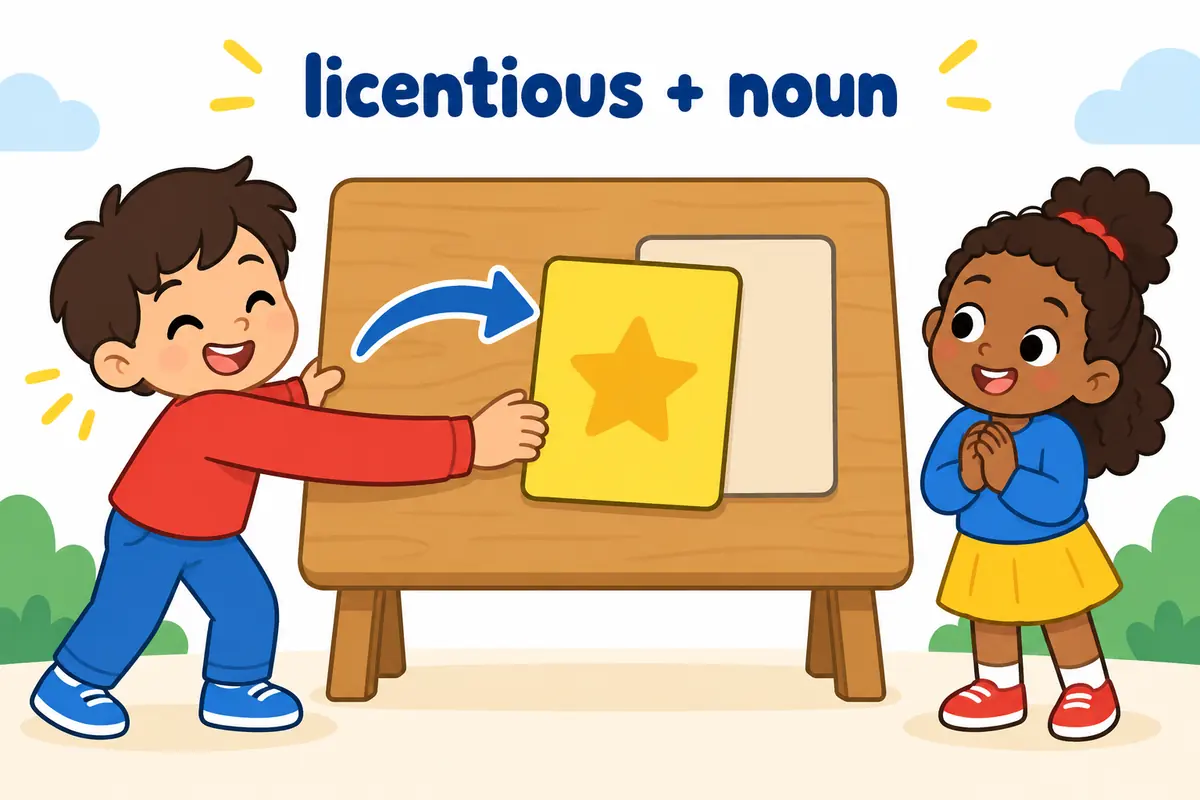
| licentious + noun | A licentious song was banned. | The adjective judges the noun directly. |
| licentious + man or woman | Critics called him a licentious man. | A formal, moral judgement of a person. |
| be + licentious | The pamphlet was licentious. | Predicative use, common in older prose. |
| licentious + reputation | She had a licentious reputation. | The judgement attaches to standing, not to an act. |
| licentious + imagination | The painting revealed a licentious imagination. | Literary criticism rather than a personal attack. |
Because the word is severe, careful writers frame it inside a formal structure such as critics called or the court found, so the judgement is reported rather than asserted.
Licentious in a sentence: examples across contexts
Licentious keeps its disapproval in every setting. These eight sentences move from a review to a classroom debate, and each one shows the word doing the work of a moral judgement.
| Context | Example sentence | Why this works |
|---|---|---|
| Literary criticism | The reviewer dismissed the memoir as licentious and shallow. | Shows the word used to condemn a text. |
| History essay | Pamphlets condemned the licentious court of the period. | A historical description of moral judgement. |
| Religious writing | The sermon warned against a licentious way of life. | The word’s traditional moral register. |
| Formal speech | The senator attacked the film as licentious and unfit for children. | Public condemnation in a formal frame. |
| Older novel | The heroine fled a licentious uncle. | Older literary use for a morally dangerous character. |
| Classroom debate | Students asked whether the label licentious was fair to the artist. | Uses the word while questioning its judgement. |
| News feature | The archive reveals a licentious reputation rather than proven acts. | Separates reputation from evidence. |
| Academic prose | Scholars now read the licentious scenes as social satire. | Critical reading rather than a moral attack. |
The courtroom and the review both use the word because it compresses a whole moral charge into one adjective.
Licentious vs lascivious
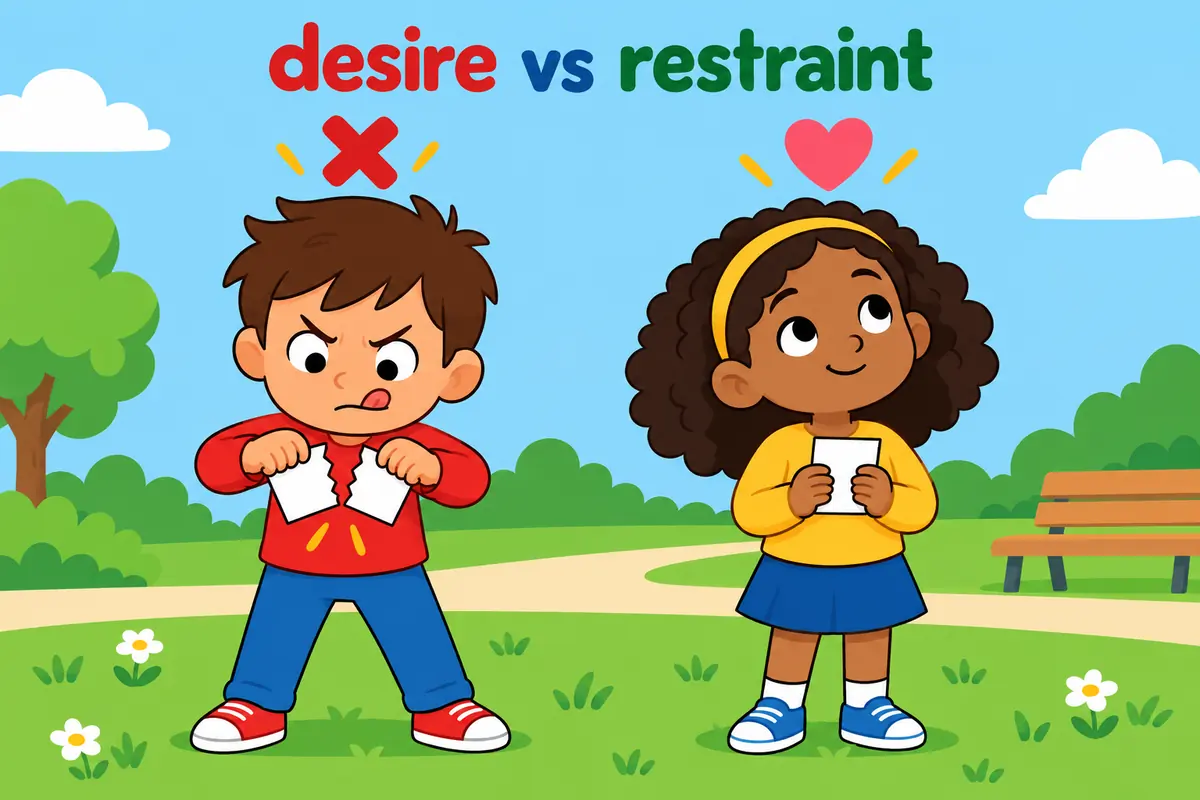
Licentious and lascivious both describe sexual behaviour, but they judge different things. Licentious means without moral restraint and criticises conduct; lascivious means showing or prompting sexual desire and criticises the desire itself. A libertine is the person, while licentious is the quality.
| Attribute | licentious | lascivious |
|---|---|---|
| Core idea | Lacking moral restraint | Full of sexual desire |
| What it criticises | Conduct and rules | Desire and its display |
| Typical noun | A life, a novel or a court | A look, a smile or a thought |
| Tone | Formal and moral | Formal and often disgusted |
| Focus | The absence of limits | The presence of appetite |
Verdict: choose licentious for behaviour that ignores limits and lascivious for desire that shows itself.
Word forms and grammar of licentious
Licentious is an adjective with a small family. The noun licentiousness is abstract, and the adverb licentiously is rare. The lookalike lewd is blunter, and wanton shares the sense of no restraint but often adds cruelty.
| Form | Part of speech | Example |
|---|---|---|
| licentious | adjective | A licentious novel shocked the town. |
| licentiously | adverb | The court was described as living licentiously. |
| licentiousness | noun | Critics complained about the licentiousness of the stage. |
| licit | adjective, different word | A licit sale is lawful, not morally unrestrained. |
| illicit | adjective, different word | An illicit payment is not a licentious one. |
| licentious-looking | compound, informal | The licentious-looking poster drew complaints. |
Common mistakes with licentious
- Incorrect:
His licentious energy made the party fun.Correct: His high spirits made the party fun. Rule: Licentious is a moral condemnation, never praise for liveliness. - Incorrect:
She dressed in a licentious way but broke no rule.Correct: She dressed unconventionally but broke no rule. Rule: The word judges morals, so it is too strong for a style choice. - Incorrect:
The committee was known for its licentious paperwork.Correct: The committee was known for its careless paperwork. Rule: Licentious applies to moral conduct, not to untidy work. - Incorrect:
He gave a licentious answer to the maths problem.Correct: He gave a careless answer to the maths problem. Rule: The adjective is not a general word for loose or free. - Incorrect:
Licentious means illegal.Correct: Licentious means morally unrestrained. Rule: Illegal is illicit; the two words differ in meaning.
Practice using licentious
Work through the six items, then check the reasoning rather than only the answer.
- Fill the gap: The censor banned the play as ______.
- Choose the better word: A story of unrestrained behaviour is (licentious / licit).
- Correct the error: The licentious weather ruined the picnic.
- Build a sentence: use licentious to describe a novel condemned by critics.
- Spot the register: which fits a formal review — the film was licentious, or the film was a bit out there?
- Replace with a neutral word: rewrite the pamphlet was licentious without a moral judgement.
Answers
- licentious — the adjective judges the play’s morals.
- licentious — licit means lawful, not morally unrestrained.
- The wild weather ruined the picnic — licentious describes moral conduct, not weather.
- Model answer: Critics called the novel licentious for its unrestrained scenes.
- The film was licentious — the formal review uses the formal adjective.
- The pamphlet was unconventional — a neutral description avoids the moral judgement.
The bottom line
Use licentious in a sentence only when you mean to judge conduct as lacking moral restraint, and place the adjective before the noun it critiques. Two details decide most sentences: the word is a strong condemnation rather than a neutral label, and its close relative lascivious criticises desire rather than conduct. For fair description, choose a plainer adjective such as unconventional.
Frequently asked questions about licentious
Is licentious offensive?
Licentious is a strong moral judgement, so it can offend when it is aimed at a person or a community. It belongs in historical description, literary criticism or formal condemnation. For neutral writing, use plainer wording such as unconventional or unrestrained, which describe behaviour without passing a moral verdict.
What is the noun form of licentious?
The noun is licentiousness, meaning the state of lacking moral restraint. The adverb is licentiously. A sentence such as critics deplored the licentiousness of the stage uses the noun to name the quality, while the adjective licentious would describe a specific play.
What is the difference between licentious and lascivious?
Licentious criticises conduct that ignores moral limits, while lascivious criticises sexual desire and its display. A licentious life ignores the rules; a lascivious look reveals appetite. Both are formal and disapproving, but only licentious is about the absence of restraint.
Can licentious describe something harmless?
No, not honestly. The word carries a moral charge, so using it for a lively party or an unconventional outfit overstates the case. If no moral judgement is intended, a plainer adjective such as bold or unconventional describes the same scene without the accusation.
Do you enjoy pushing the boundaries of social norms and rules? If so, you may be familiar with the term “licentious.” Licentious refers to behaving in a sexually immoral or promiscuous manner, often disregarding societal conventions and restrictions.
Individuals who are licentious often engage in behavior that is considered taboo or inappropriate by the general population. This term can be used to describe someone who acts with a lack of moral restraint or who is excessively indulgent in their desires.
7 Examples Of Licentious Used In a Sentence For Kids
- Licentious means not following the rules.
- It is not good to be licentious.
- Friends should not be licentious.
- It is important to be kind and not licentious.
- Let’s always remember to behave well and not be licentious.
- We should always do good things and not be licentious.
- Being licentious can hurt others’ feelings.
14 Sentences with Licentious Examples
- Licentious behavior at college parties can lead to conflicts and misunderstandings.
- It is important to avoid engaging in licentious activities in order to maintain a positive reputation on campus.
- Peer pressure can often tempt students to participate in licentious behavior, so it’s important to stand firm in your values.
- Taking a stand against licentious behavior can help create a more respectful and safe environment for everyone at college.
- Joining clubs and organizations that promote healthy and respectful relationships can help students steer clear of licentious behavior.
- The consequences of being involved in licentious behavior can have a negative impact on both your academic and personal life.
- It’s crucial for college students to understand the difference between harmless fun and licentious activities.
- Engaging in licentious behavior can not only harm your reputation but also damage relationships with friends and classmates.
- Setting boundaries and sticking to them can help protect yourself from being pressured into participating in licentious behavior.
- College is a time to learn and grow, and avoiding licentious behavior is an important part of that process.
- Creating a network of friends who share similar values can provide support when faced with situations involving licentious behavior.
- Seeking guidance from mentors or counselors can help students navigate situations where they feel pressured to engage in licentious activities.
- It’s important for students to prioritize their mental and emotional well-being by avoiding environments where licentious behavior is prevalent.
- By promoting a culture of respect and accountability, college campuses can discourage licentious behavior and create a safer community for all.
How To Use Licentious in Sentences?
To use the word Licentious in a sentence, you can follow these easy steps:
-
Understand the meaning: Licentious means lacking moral restraint, especially in sexual matters. It is often used to describe behavior that is considered immoral or inappropriate.
-
Choose the context: Think of a situation where someone is behaving in a sexually unrestrained or immoral way. This will help you to craft a sentence where Licentious fits naturally.
-
Start your sentence: Begin by introducing the subject or situation you want to describe using the word Licentious.
-
Insert Licentious: Place the word Licentious in your sentence where it best describes the behavior you want to convey.
-
Complete your sentence: Add any additional details or context to make your sentence clearer and more impactful.
Example sentence: “The licentious behavior at the wild party shocked the conservative guests.”
Remember, practice makes perfect! Try using the word Licentious in different sentences to become more comfortable incorporating it into your vocabulary.
Conclusion
In summary, licentious behavior is characterized by unrestrained indulgence in sensual pleasures or disregard for moral restraints. The sentences using the keyword “licentious” illustrate instances of excessive freedom or lack of self-control, often leading to immoral or inappropriate behavior. By examining these examples, it becomes evident that licentious actions can result in consequences such as social ostracism, legal ramifications, or personal regret.
Through these sentences, we observe how the word “licentious” is employed to depict behaviors that exceed accepted social norms or ethical boundaries. It serves as a reminder of the importance of temperance and respect for societal norms to avoid the pitfalls associated with unrestrained licentiousness.