How to Use “Lopsided” in a Sentence
Quick answer: Lopsided describes something with one side lower, larger, or heavier than the other. It can also describe an uneven result, division, or presentation in which one side has much more weight, attention, or success. Use it when the imbalance is noticeable.
Physical shape or position
In a literal description, lopsided often refers to an object or expression that tilts to one side or is uneven. The word can sound informal or vivid, making it a natural fit for everyday descriptions.
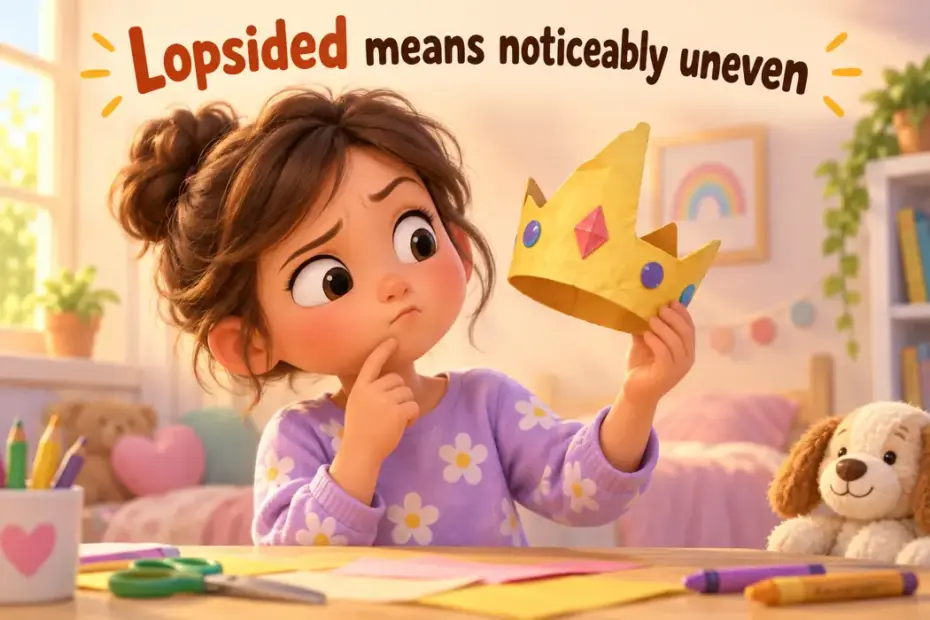
- The child wore a lopsided paper crown after the windy walk.
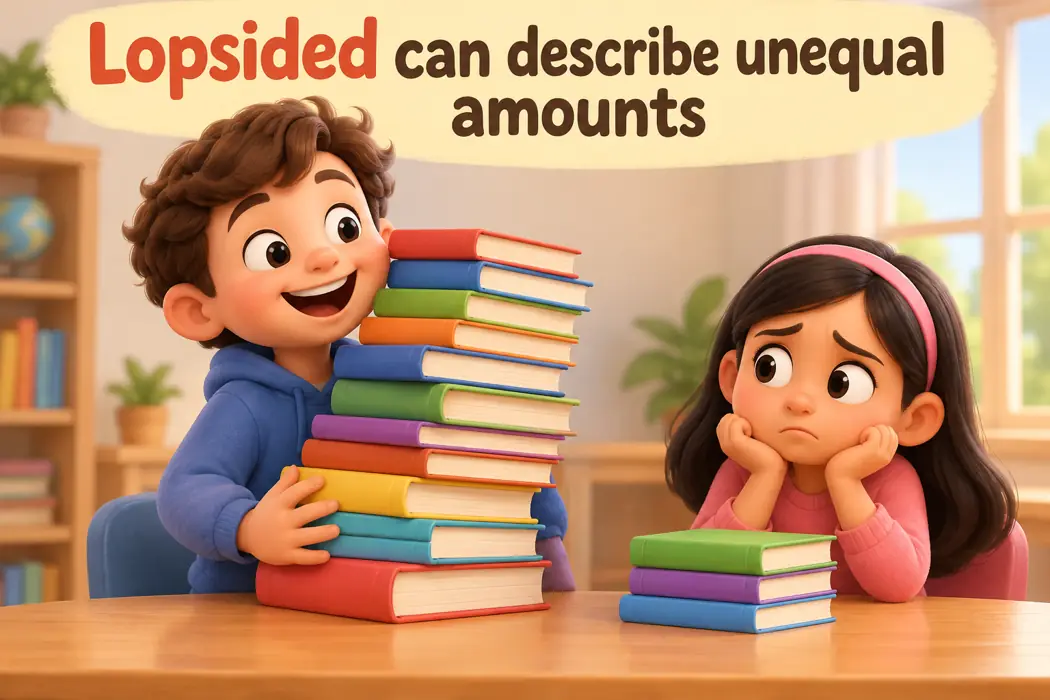
- A stack of books left the small table looking lopsided.
- His lopsided grin appeared whenever he tried to hide a joke.
- One handle was loose, so the old shopping basket hung lopsided.
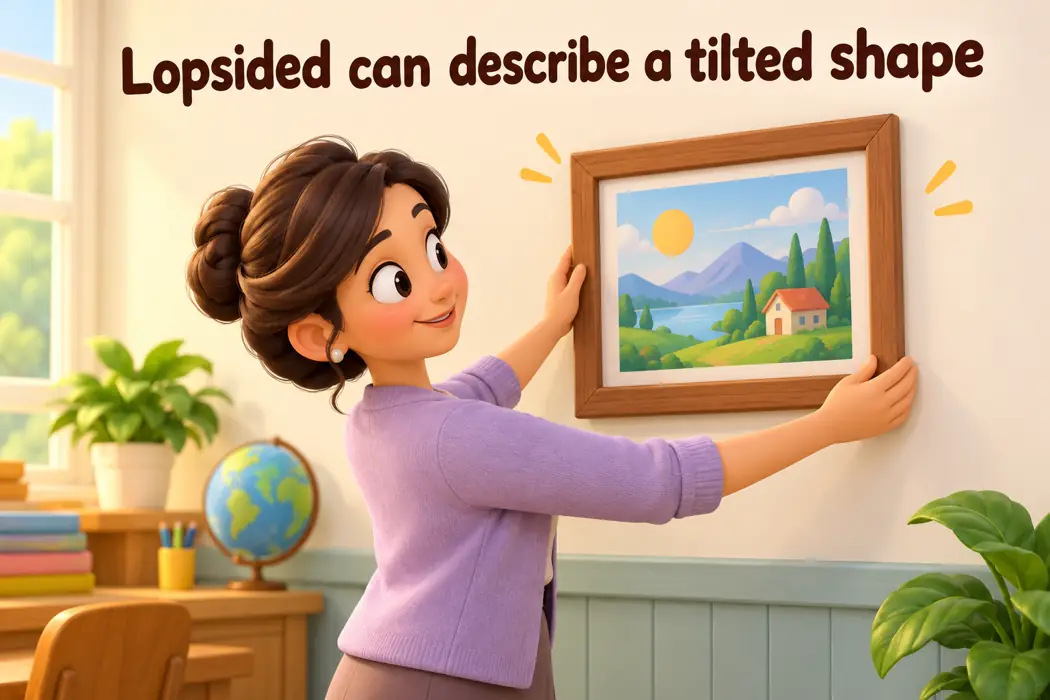
- She straightened the picture frame, which had been sitting lopsided on the wall.
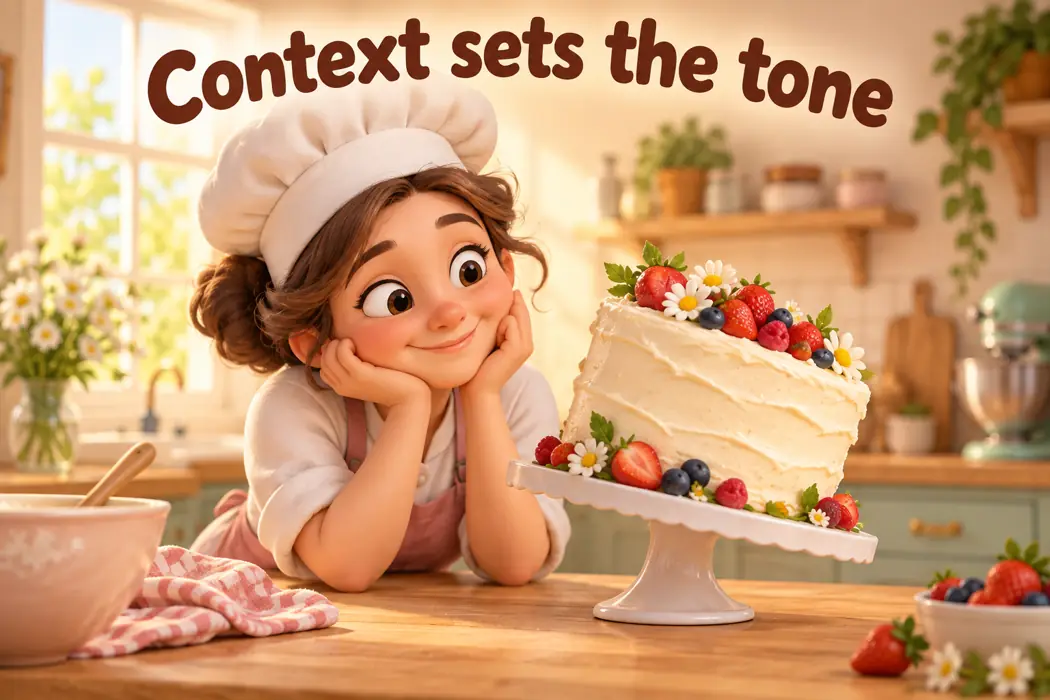
- The baker decorated the cake with a cheerful, slightly lopsided ring of berries.
Unequal amounts, attention, or influence
Lopsided also works figuratively when one side has far more points, votes, resources, influence, or attention than another. It can describe the imbalance itself or something shaped by that imbalance.
- The visitors won by a lopsided score of 8–1.
- The survey received a lopsided response from students in one grade.
- Without more volunteers, the workload became lopsided.
- The article offered a lopsided account by quoting only one side of the dispute.
- Most of the grant went to one department, leaving a lopsided budget.
- The debate felt lopsided because one speaker had twice as much time.
More examples in context
- They replaced the uneven shelf before it became dangerously lopsided.
- The final match was less lopsided than the opening game.
- A lopsided distribution of tasks left two people with most of the work.
- She laughed at the lopsided snowman leaning beside the path.
- The poll looked lopsided, but only a small group had responded.
- Instead of presenting a lopsided summary, the report compared evidence from both teams.
Similar words and how they differ
- uneven is a broad choice for surfaces, amounts, or patterns that are not equal or level.
- crooked usually means bent or not straight; it does not necessarily mean one side outweighs another.
- unbalanced can mean physically unstable or unequal in parts, emphasis, or distribution.
- one-sided emphasizes that only one viewpoint, participant, or side is represented or favored.
- asymmetrical is a more technical or neutral word for parts that do not mirror each other.
Choose lopsided when the imbalance is clear and noticeable. For a neutral description of a design that is intentionally different on each side, asymmetrical may fit better. For a debate or report that favors one position, one-sided may be more precise.
Choose a detail that shows the imbalance
When you call something lopsided, explain which sides or parts differ. A lopsided workload might give one person most of the tasks. A lopsided result might give one team many more points. A lopsided picture frame may visibly tilt. The adjective becomes easier to understand when readers can see the comparison.
Not every unequal arrangement is a problem. An intentionally asymmetrical design may be attractive and stable. Lopsided often suggests a noticeable tilt or unequal emphasis, so use it when that impression is relevant. If you simply mean that two sides are different, asymmetrical or uneven may describe the feature more neutrally.
A short practice task
Write a literal sentence about an object, then a figurative sentence about a distribution. “The paper hat was lopsided” concerns its position. “The task list was lopsided” concerns how work was divided. Add one concrete detail to each sentence so the intended meaning is immediately clear.
Common questions
Is “lopsided” positive or negative? It depends on context. A lopsided grin or homemade cake can sound playful; a lopsided score, workload, or report usually points out an imbalance.
Can “lopsided” describe a contest? Yes. A lopsided win or score means the result strongly favored one side.
What is the opposite of “lopsided”? Depending on the sentence, use even, balanced, level, or fair. They describe different kinds of equality, so choose the one that fits.
Sources and further reading
For meanings and examples of lopsided, uneven, one-sided, and asymmetrical, see the entries at Cambridge Dictionary, uneven, one-sided, and asymmetric, as well as Oxford Learner’s Dictionaries.
Have you ever come across a lopsided situation, where things seem unbalanced or uneven? The term “lopsided” refers to something that is noticeably off-kilter or disproportionately weighted in one direction.
This word is often used to describe asymmetry or imbalance, whether it’s in relationships, sports events, or even physical objects. Keep reading to explore the various contexts in which “lopsided” can be applied and discover how this word can vividly depict scenarios where things are not quite right.
7 Examples Of Lopsided Used In a Sentence For Kids
- My drawing of a smiley face looked lopsided.
- The tower made of blocks was a little lopsided.
- The apples in the basket were lopsided.
- The sun in the picture was drawn lopsided.
- The umbrella was slightly lopsided in the sandcastle.
- The circle I drew was uneven and lopsided.
- The flower petals were a bit lopsided on the stem.
14 Sentences with Lopsided Examples
- Lopsided schedules can lead to burnout, so it’s important to prioritize self-care.
- Balancing a lopsided workload with extracurricular activities can be challenging.
- The group project ended up being lopsided as one team member did most of the work.
- It’s easy to feel overwhelmed when your study habits are lopsided.
- A lopsided diet of pizza and instant noodles can have negative effects on your health.
- Some students struggle with lopsided friendships that feel one-sided.
- It’s important to address any lopsided power dynamics within student organizations.
- Taking breaks from your lopsided study routine can help prevent burnout.
- Avoiding procrastination can prevent a lopsided distribution of workload.
- Seeking help from a counselor can support you in balancing lopsided priorities.
- Being mindful of your time management can prevent a lopsided focus on one subject.
- A lopsided social life can hinder your overall college experience.
- Setting boundaries with friends can prevent lopsided expectations in relationships.
- Learning to say no can help prevent a lopsided distribution of responsibilities.
How To Use Lopsided in Sentences?
To use the word “lopsided” in a sentence, you can describe something that is uneven or asymmetrical. For example, you could say “The cake had a lopsided frosting decoration on one side.”
Another way to use “lopsided” is by describing something that is imbalanced or unequal. You could say, “The game was a bit lopsided with one team far ahead in points.” This showcases the idea of something being skewed or not evenly matched.
Additionally, you can use “lopsided” to describe a situation that is unfairly weighted or biased. For instance, you could say, “The decision seemed lopsided in favor of the wealthy participants.” This conveys a sense of partiality or favoritism that is not fair.
In summary, “lopsided” is a versatile word that can be applied to various scenarios to highlight the concept of something being uneven, imbalanced, or biased. By incorporating this word into your vocabulary, you can effectively communicate these ideas with clarity and precision. So don’t hesitate to use “lopsided” in your writing and speech to express these nuances effectively.
Conclusion
In conclusion, lopsided sentences, where the parts are uneven or unbalanced in structure, can disrupt the flow and clarity of writing. These sentences often lead to confusion or misinterpretation for the reader, hindering effective communication. It is important to strive for balance and symmetry in sentences, ensuring that each part contributes to the overall coherence and impact of the message being conveyed.
By recognizing and correcting lopsided sentences, writers can enhance the readability and impact of their work. Practicing sentence structure and maintaining consistency in composition will help in producing clear, concise, and engaging writing that effectively conveys the intended message to the audience.


