
Magnify in a Sentence: Meaning & Examples
Magnify in a sentence can describe making something appear larger through a lens or making an issue seem greater in importance. For example, “A hand lens can magnify the print,” while “The headline magnified a small disagreement.” The surrounding words show whether the meaning is literal or figurative.
- Magnify is a verb meaning to make an image appear larger or to intensify something.
- A lens can magnify an object’s appearance without changing the object’s physical size.
- Figuratively, people can magnify a problem, risk, difference, or success.
- Common forms include magnifies, magnified, and magnifying.
- Magnify does not necessarily mean to improve detail or image resolution.
Magnify in a sentence: meaning and examples
Magnify has a literal sense—make something appear larger, often by using a lens—and a figurative sense—make something seem more important, serious, or significant. The verb takes an object: a microscope magnifies a specimen; a report can magnify a concern. Cambridge Dictionary records both literal and figurative senses.
| Sense | Example | Meaning |
|---|---|---|
| Optical | The magnifying glass magnified the tiny map symbols. | The symbols appeared larger through the lens. |
| Close inspection | The biologist magnified the image to inspect a cell. | The view was enlarged for examination. |
| Figurative | A missed deadline magnified the team’s scheduling problem. | The issue seemed more serious or prominent. |
| Emphasis | The poem magnifies one quiet moment of grief. | The writing gives the moment greater attention. |
How is “magnify” used with a lens?
A lens magnifies when it makes an object or image appear larger to an observer or viewing system. A hand lens can help someone inspect a small print detail, but magnification alone does not guarantee a sharper image, reveal every feature, or physically enlarge the object.
Use a direct object after the verb: “The microscope magnifies the sample,” “She magnified the map,” or “The camera view magnified the distant sign.” The device or viewing action belongs in context when readers need to know how the image became larger.

What does “magnify” mean figuratively?
Figuratively, magnify means to make an issue or quality seem more important, serious, or noticeable. “Social media magnified the rumor” suggests that attention spread or intensified the rumor, not that a physical object became larger.
The figurative use can be neutral, positive, or critical. “The close-up magnified the painter’s careful brushwork” praises detail; “A small error magnified the delay” describes a worsening effect. If you mean simply “mention,” choose a more precise verb such as highlight or point out.
Which verb forms and patterns are common?
Magnify is a regular verb: magnifies for a third-person singular present subject, magnified for past tense and past participle, and magnifying for the participle or gerund. The related noun magnification names the act or degree of enlargement.
- Present: “The lens magnifies the lettering.”
- Past: “The lens magnified one corner of the page.”
- Progressive: “The display is magnifying the image.”
- Passive: “The specimen was magnified under the microscope.”
- Noun: “The label states the lens’s magnification.”
How is “magnify” different from “enlarge”?
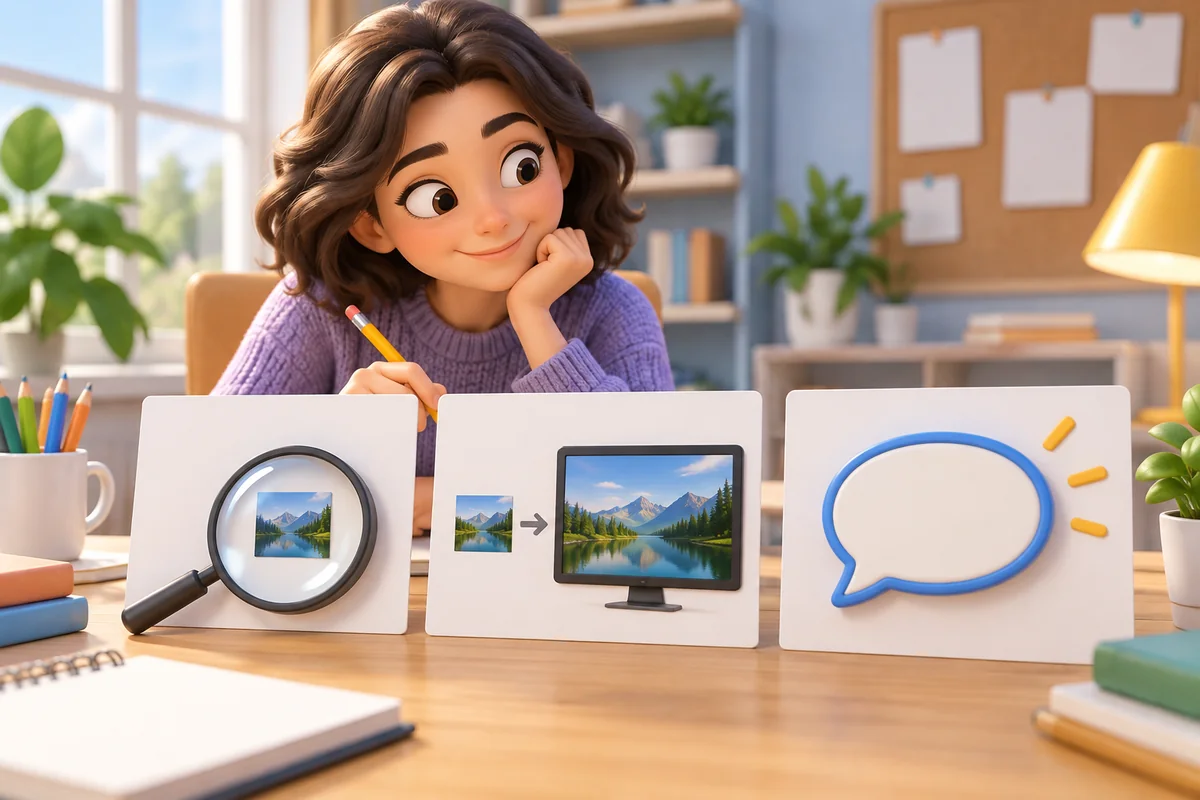
Enlarge is broader: it can mean increase the actual dimensions of an object or make a view bigger. Magnify often emphasizes a larger appearance through a lens or a figurative increase in importance. A printer can enlarge a drawing; a magnifying glass magnifies the drawing as you look through it.
| Verb | Best fit | Example |
|---|---|---|
| magnify | Increase apparent size or perceived importance | The lens magnified the insect. |
| enlarge | Make an object, copy, or view bigger | The editor enlarged the diagram. |
| amplify | Increase sound, force, or an effect | The speaker amplified the signal. |
| exaggerate | Represent something as greater than it is | The story exaggerated the delay. |
Common errors when using “magnify”
Do not use magnify as a vague synonym for “make better.” It means apparent size or perceived significance increases; it does not promise improved resolution, accuracy, or quality. A sentence should reveal whether a lens, an image, or an issue is being magnified.
- Write “The lens magnifies the image,” not “The lens makes the object physically bigger.”
- Do not claim that magnification alone creates more detail; resolution depends on the optical system and image quality.
- Use exaggerate when someone inaccurately overstates a claim.
- Use highlight when you mean to draw attention without implying an increase in size or seriousness.
More examples of magnify in a sentence
Have you ever wanted to make something appear larger or more detailed? That’s essentially what it means to magnify. When you magnify something, you’re increasing its apparent size or enhancing its clarity by using tools or techniques that make it easier to see.
In everyday life, magnifying can come in handy when trying to examine fine print, small objects, or intricate details. By magnifying an object or text, you can bring attention to specific features that might otherwise go unnoticed.
7 Examples Of Magnify Used In a Sentence For Kids
- Magnify means making things appear larger.
- You can magnify tiny objects with a magnifying glass.
- A microscope helps us magnify small things to see them better.
- We can magnify pictures on the computer screen to see them clearly.
- Using a telescope, we can magnify the stars in the sky.
- Magnify helps us make things look bigger and clearer.
- Try to magnify small text on a page to read it better.
14 Sentences with Magnify Examples
- When studying for exams, it’s important to magnify the key points in your notes.
- Using a magnifying glass can help you magnify small text in your textbooks.
- It’s useful to magnify the details in diagrams during science experiments.
- To enhance your understanding of complex topics, try to magnify your focus on specific concepts.
- When building presentations, use visuals to magnify important data points.
- Utilize online tools that allow you to magnify images for better clarity.
- Consider using a projector to magnify your screen during group presentations in college.
- Implementing study groups can help magnify your knowledge by discussing various perspectives.
- When analyzing data for research papers, don’t forget to magnify statistical figures.
- It’s beneficial to magnify your career goals to pave the way for future success.
- Attending workshops and seminars can magnify your knowledge in your field of interest.
- Magnify the impact of your extracurricular activities by reflecting on the skills you’ve gained.
- Engaging in volunteer work can magnify your understanding of social issues in the community.
- Don’t hesitate to magnify your communication skills through public speaking opportunities.
How To Use Magnify in Sentences?
Magnify is a helpful tool that enlarges or highlights a specific detail in a sentence to draw attention to it. To use Magnify in a sentence, follow these simple steps:
-
Identify the word or phrase you want to emphasize in your sentence. This could be a key point, a specific detail, or an important fact.
-
Once you have identified the word, place it within brackets to indicate that you want to magnify it. For example, if you want to highlight the word “important” in a sentence, you would write “[important]” in the sentence.
-
After placing the word within brackets, you can then proceed to write your complete sentence. Make sure that the sentence flows naturally and that the magnified word fits seamlessly within the context.
-
When you share or present your sentence, explain to your audience that the magnified word is the key point or the focal point of your message. This will help your audience understand why you chose to emphasize that particular word.
By following these steps, you can effectively use Magnify in a sentence to highlight important details and make your message stand out. Practice incorporating Magnify into your sentences to enhance your communication skills and emphasize key points effectively.
Conclusion
In conclusion, sentences with the word “magnify” often highlight a sense of enlargement or intensification, drawing attention to deeply examining or amplifying a particular aspect. These sentences illustrate a way to emphasize significance, importance, or detail within a context, portraying a process of enlarging something to better understand or emphasize its meaning.
Through the use of “magnify” in sentences, writers can effectively convey the idea of enlarging or intensifying a subject matter, leading to a clearer understanding or heightened focus on specific details. This word serves as a lens to zoom in on key points or aspects, thereby enriching the depth and impact of the message being conveyed.
Conclusion: Use magnify in a sentence for a lens or display that makes an image appear larger, or for something that increases an issue’s perceived importance. Identify the literal or figurative sense, and do not imply that a larger view automatically has greater resolution.
Frequently Asked Questions About Magnify in a Sentence
What is a simple sentence using “magnify”?
“The hand lens can magnify a tiny insect” is a simple literal example. It shows a device acting on an image so the insect looks larger; the insect itself does not grow. A figurative example is “The delay magnified the problem,” where the issue seems more serious.
Does magnify mean make something physically bigger?
Not always. A lens or display usually magnifies an image or appearance, while the physical object stays the same size. In other contexts, such as editing a diagram, a person may enlarge the actual printed or digital copy. Context tells readers which change occurred.
What is the difference between magnify and exaggerate?
Magnify can mean make an image appear larger or make an issue seem more important. Exaggerate specifically suggests describing something as greater or more extreme than it really is. A magnified image can be accurate; an exaggerated account is overstated.
What are the past-tense forms of “magnify”?
The simple past and past participle are both magnified; the present participle is magnifying, and the third-person singular present is magnifies. For example: “The lens magnified the mark,” and “The screen is magnifying the map.” The spelling changes through a standard y-to-i pattern before the ending.


