
What does “make it” mean?
Make it has several meanings, so the words around it help you work out the sense. It can mean to arrive somewhere, attend an event, succeed, survive a difficult situation, or cause a result. The phrase appears in both literal and idiomatic sentences. Cambridge Dictionary records meanings including arriving or reaching a place, succeeding, and continuing to live or exist through a difficult situation.

Five common meanings of “make it”
1. Arrive or reach a place
Use make it to before a destination when someone manages to get there, often despite a delay, obstacle, or tight schedule. The phrase can emphasize that arrival took effort or was just in time.
- After two train delays, we still made it to the station before the doors closed.
- Will the package make it to Boston by Friday?
- She made it home safely before the snow began.
- We barely made it in time for the opening remarks.
Pattern: subject + make it + (to + place / home / here / there / in time). In questions, “Can you make the meeting?” can mean “Can you attend or arrive for the meeting?” The word to is natural before a destination (“make it to the airport”), but it is usually left out before an event or appointment (“make the meeting”).

2. Attend an event or be available
In informal conversation, make it can mean manage to attend. It often appears in invitations and apologies. Here, the sentence does not say that a person created something; it says whether the person can be present.
- Thanks for inviting me. I can make it on Saturday.
- Jon had a family emergency, so he couldn’t make it to dinner.
- Can you make the 2 p.m. appointment, or should I reschedule?
- We hoped you could make it, but we understand you’re busy.
“I can’t make it tonight” is a common way to decline or explain an absence. Add to when naming the event as a destination-like phrase (“make it to the concert”); it is also idiomatic to say “make the concert” without to.
3. Succeed or become successful
Make it can mean reach a goal or become successful. It is informal and the goal may be clear from context. To name a field or role, writers often use make it as or make it in.
- After years of practice, she finally made it as a concert pianist.
- The small design studio hopes to make it in a competitive market.
- He kept revising his novel and believed he could make it.
- They made it to the finals after a close semifinal match.
“Make it big” is a related informal expression meaning become very successful or famous: “The band dreamed of making it big.” When the sentence names a target point or stage (“make it to the finals”), the focus is reaching that point, not necessarily becoming famous.

4. Survive or get through something difficult
When make it refers to a person, animal, or organization continuing to live or exist, it can mean survive. The longer form make it through names the difficult experience or period that someone gets through. Cambridge Dictionary includes this survival sense for situations that are dangerous or threatening.
- The hikers were cold and tired, but they made it through the night.
- With careful treatment, the injured bird made it.
- The family made it through a difficult year by supporting one another.
- Our old laptop made it through the presentation before its battery died.
Use context to distinguish survival from success. “She made it through the exam” usually means she completed or endured it; “She made it as a scientist” means she achieved success in that career.
5. Cause a result: “make it + adjective or noun”
In patterns such as make it easier or make it a habit, make means cause or ensure, and it points to a task, action, or situation already understood from context. This is a different construction from the idiom meaning arrive or succeed.
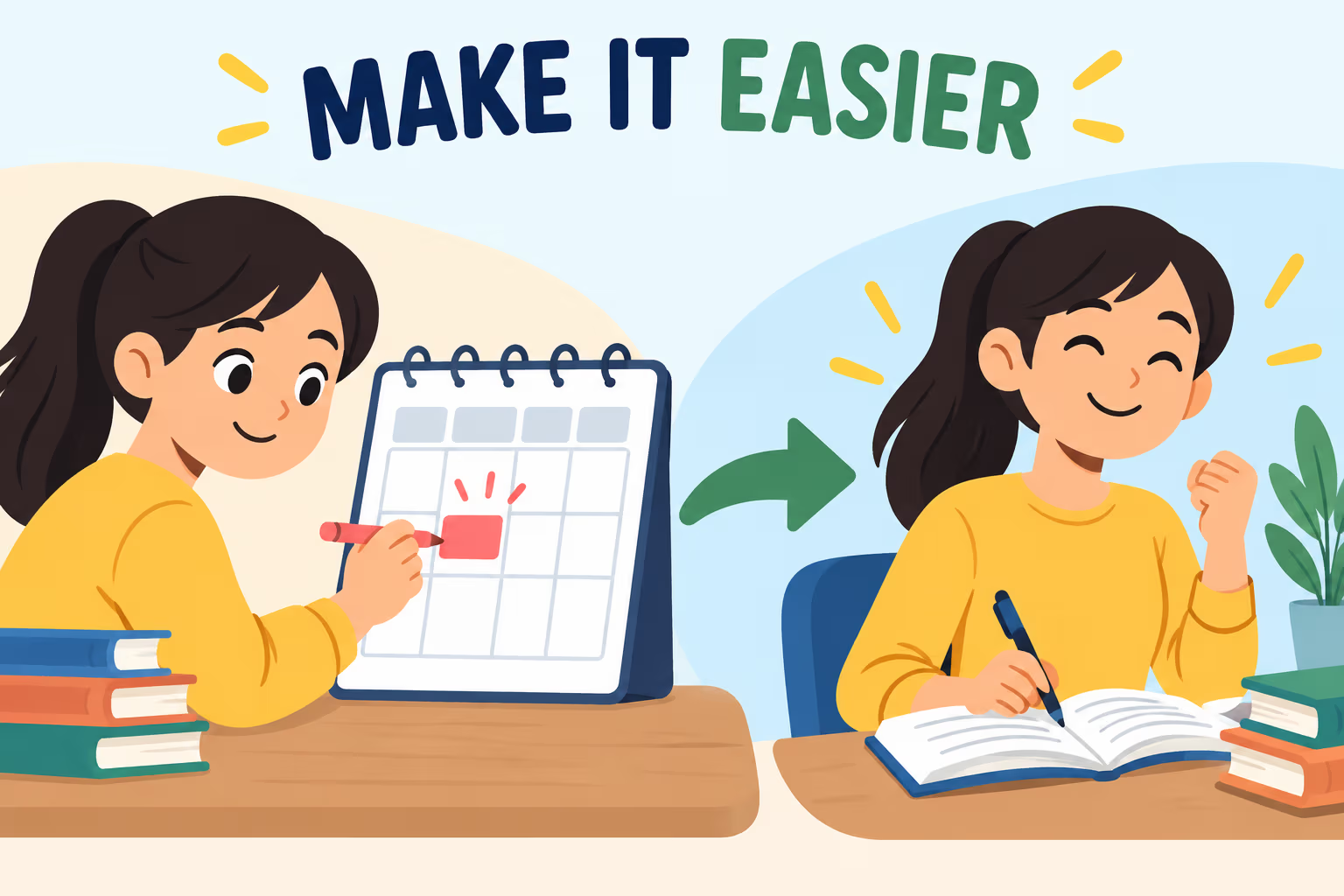
- Breaking the project into small steps can make it easier to finish.
- Please make it clear which version is final.
- She made it a habit to read before bed.
- We made it a point to thank every volunteer.
In make it + adjective, the adjective describes the resulting condition (easy, clear, possible). In make it + a/an + noun, the noun names a chosen practice, goal, or priority. The common expression make it a point to do something means deliberately ensure that you do it: “I make it a point to check the dates.”
How to choose the right meaning
| Clue in the sentence | Likely meaning | Example |
|---|---|---|
| to + place, or “in time” | Arrive or reach | We made it to the gate. |
| An invitation, meeting, or event | Attend | I can’t make it tonight. |
| as + role, or a career or goal | Succeed | He made it as a chef. |
| through + hardship or period | Survive or endure | They made it through the storm. |
| adjective or a/an + noun after “it” | Cause a result or establish a practice | This guide makes it simple. |
These clues are useful, but the full sentence still matters. Compare “They made it to the final round” (reached a stage) with “They made it in the music business” (became successful). The surrounding words tell the reader which meaning is intended.
Verb forms and sentence tips
The verb changes with tense while it stays the same: make it (present or base form), made it (past), and making it (continuous or gerund). Examples: “I hope we make it”; “They made it before dark”; “She is making it as an illustrator.” With a modal or auxiliary, use the base form: “might make it,” “has made it,” or “will make it.”
- Give enough context: “I hope I make it” may mean arrive or succeed; name the destination or goal if readers need it.
- Use the right preposition: “make it to the venue,” “make it through the week,” and “make it as a designer” express different relationships.
- Check whether “it” has a clear job: in “make it easier,” it refers to the task or situation; in “make it to the station,” it is part of the idiomatic phrase.
Common questions
Is “make it” formal?
It is common in everyday speech and informal writing. In a formal report, choose a more precise alternative where helpful: arrive, attend, succeed, or survive.
Does “make it” always mean succeed?
No. It can mean arrive, attend, survive, or cause a result. The words after it and the broader context usually identify the meaning.
What is the difference between “make it to” and “make it through”?
Make it to normally points to a destination, event, or stage reached. Make it through points to a period or difficulty endured: “make it to the hospital” versus “make it through the night.”
Can “make it” mean create something?
Yes, when make has its ordinary meaning of create and it clearly refers to the thing being made: “I found the dough and made it into a loaf.” For a new object, say “I’ll make a cake.” “I’ll make it a cake” usually needs a clear earlier reference for it and is not a natural way to introduce the cake.
Usage note on the original examples
The original examples below remain unchanged. Some are grammatically possible but illustrate the result pattern (“make it a habit” or “make it easier”), not the idiomatic meanings of arriving, attending, succeeding, or surviving. The sentence “make it a objective” needs the article an; “make it a goal” is also a natural revision. In the original cake example, “I will make it a delicious chocolate cake” is unclear without an earlier noun for it. Use “I will make a delicious chocolate cake” to introduce a cake, or “I will make it delicious” when it already refers to a dish.
For the dictionary senses discussed above, see Cambridge Dictionary’s entries for make it and make (including arrival and reaching a meeting). The new sentences on this page are original examples written to show those patterns.
Have you ever struggled with how to use “make it” in a sentence? “Make it” is a versatile phrasal verb that can convey a variety of meanings depending on the context in which it is used.
Typically, “make it” is used to express the act of achieving a goal, completing a task, or reaching a destination. This phrasal verb can also indicate the concept of managing to attend an event or appointment. Let’s explore some common ways to incorporate “make it” into your sentences with clarity and precision.
7 Examples Of Make It Used In a Sentence For Kids
- Make it a colorful drawing with all your favorite crayons.
- Use your building blocks to make it a tall tower.
- Make it a funny dance when you hear your favorite song.
- Make it a yummy sandwich with your favorite ingredients.
- Make it a loud roar like a lion in the jungle.
- Use your play-dough to make it into different shapes and animals.
- Make it a big smile when you see your friends.
14 Sentences with Make It Examples
- Make it to class on time to avoid missing important information.
- Don’t forget to make it to the library to borrow reference books for your assignment.
- Remember to make it to the career fair to explore job opportunities.
- Make it a habit to review your notes regularly for better retention.
- Make it a point to participate in extracurricular activities for a well-rounded college experience.
- Always make it a priority to communicate with your professors for clarifications on assignments.
- Make it a goal to improve your time management skills to juggle academic and personal commitments effectively.
- Take breaks to make it easier to focus during long study sessions.
- Make it a routine to network with your peers for collaborative learning opportunities.
- Make it a objective to attend workshops and presentations to enhance your skills.
- Prioritize self-care and make it a practice to exercise regularly.
- Make it a habit to seek feedback on your work for continuous improvement.
- Stay organized and make it a habit to maintain a tidy study space.
- Make it a mission to expand your knowledge beyond the classroom through online courses or webinars.
How To Use Make It in Sentences?
To use Make It in a sentence, first identify the main subject or idea you want to convey. Once you have that, follow these steps:
- Choose a verb that accurately describes the action you want to highlight. This could be anything from “bake” to “write” to “complete.”
- Add any necessary objects to the sentence to provide context. For example, if you chose the verb “bake,” you would need to include what is being baked.
- Include any additional details or descriptors that help paint a clearer picture. This could be adjectives, adverbs, or prepositional phrases.
- Ensure that your sentence is grammatically correct and flows well. Make sure it is clear and concise.
- Review your sentence to make sure it effectively conveys the message you intended.
For example, if you want to use “Make It” in a sentence with the verb “bake,” you could say, “I will make it a delicious chocolate cake for the party.” In this sentence, “I” is the subject, “will make” is the verb phrase, “it” refers to the cake, and “delicious chocolate” describes the type of cake being made.
By following these steps and practicing constructing sentences with Make It, you can improve your communication skills and effectively convey your thoughts.
Conclusion
In conclusion, using sentences with the phrase “make it” can help convey the idea of achieving or completing a task. Whether it’s making it to a meeting on time, making it through a difficult situation, or making it work despite obstacles, these sentences emphasize perseverance and success. They are versatile and can be used in various contexts to illustrate determination and accomplishment.
Overall, incorporating “make it” sentences in communication adds clarity and motivation to express overcoming challenges and reaching goals. By utilizing this phrase, individuals can effectively convey their determination and resolve to overcome obstacles and succeed in their endeavors.



