Maudlin means tearfully or weakly sentimental, and the adjective almost always criticises the feeling rather than praising it. To use maudlin in a sentence, attach it to a noun or to a mood: “a maudlin farewell speech,” or “he grew maudlin after the third toast.” The word marks emotion that has slipped into self-indulgence.
Maudlin at a glance
- Maudlin is an adjective; it describes a person or a piece of writing, never an action.
- The dominant pattern is maudlin before a noun, as in a maudlin song or maudlin sentiment.
- The word is critical: it says the emotion is excessive, weak or self-indulgent.
- Common partners are sentiment, speech, song, goodbye and drunk, as in maudlin drunk.
- The commonest learner error is treating maudlin as a compliment, which it is not.
What does maudlin mean?
Maudlin is an adjective meaning tearfully or weakly sentimental, especially in a way that invites embarrassment. The Cambridge Dictionary entry for maudlin records the sense of showing too much emotion in a silly or weak way, and that judgement is the heart of the word. Where you simply want to describe warm feeling, sentimental is fairer and safer, because sentimental can be neutral or even fond, and maudlin cannot. Maudlin is also narrower than emotional, which carries no hint of excess.
A second, narrower sense describes someone made foolishly emotional by drink. In that use maudlin usually pairs with drunk: “By midnight he was maudlin drunk and toasting strangers.” The word keeps the same core of weak, exposed feeling; only the cause changes. Where the feeling is simply dark rather than weepy, writers turn to morose instead.
One limitation matters from the first line: maudlin is not a synonym for sad. A person who is grieving, or a film that is genuinely moving, is not maudlin. Reserve the word for emotion that has become more than the moment deserves.
| Sense | Plain meaning | Example sentence |
|---|---|---|
| Weakly sentimental | Emotionally overdone in a way that looks silly | The closing montage is maudlin rather than touching. |
| Tearfully nostalgic | Openly weepy about the past | He turned maudlin about his school days. |
| Sentimental from drink | Foolishly emotional because of alcohol | She was maudlin drunk and kept hugging everyone. |
How do you use maudlin in a sentence?
Maudlin is nearly always either placed before a noun or used after verbs such as be, get, grow and turn. The table below shows the patterns that sound native and what each one signals.
| Pattern | Example | What it signals |
|---|---|---|
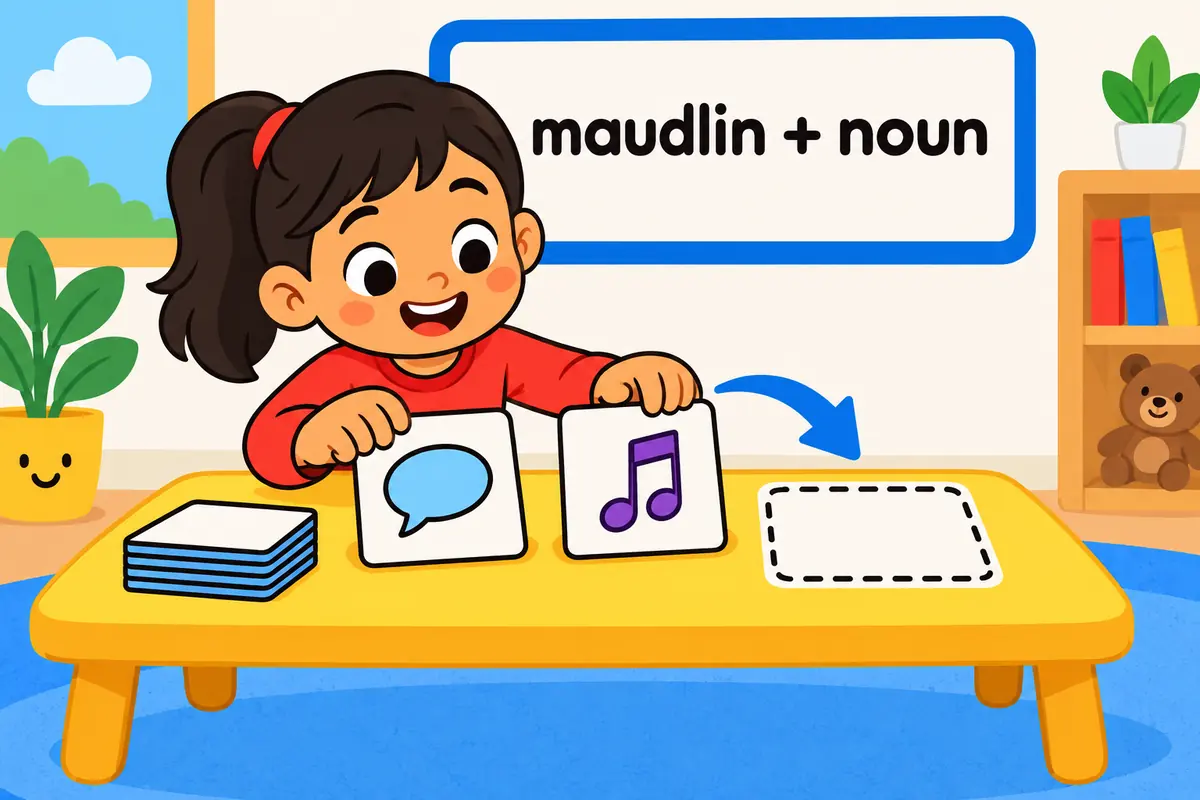
| maudlin + noun | a maudlin farewell speech | The excess belongs to the thing itself. |
| be / get / grow / turn + maudlin | He grows maudlin at every reunion. | A mood or state that comes and goes. |
| maudlin about + noun | She was maudlin about her first flat. | Names what the feeling is aimed at. |
| maudlin drunk | He was maudlin drunk by ten. | A fixed phrase tying the mood to drink. |
| find + object + maudlin | Reviewers found the finale maudlin. | Frames the word as a judgement. |
Maudlin in a sentence: examples across contexts
| Context | Example sentence | Why this works |
|---|---|---|
| Film review | The final scene is maudlin rather than moving. | The contrast marks exactly where praise stops. |
| Memoir | Her memoir avoids the maudlin tone that sinks many childhood recollections. | Attributive use judges a whole style. |
| Conversation | Don’t get maudlin on me; it was only a school play. | The mild teasing matches the word’s criticism. |
| Obituary | The tribute stayed warm without turning maudlin. | Shows maudlin as the line a careful writer avoids. |
| Academic writing | The study treats nostalgia as a social mood, not a maudlin indulgence. | Sets the word against a neutral term. |
| Farewell note | I promised myself this goodbye note would not turn maudlin. | Uses the reflexive pattern naturally. |
| Creative writing | By the third toast he was maudlin, praising friends he had not seen in years. | Shows the drunk sense without naming drink. |
| Music review | The ballad risks maudlin sentiment, but the plain arrangement rescues it. | Pairs the word with its strongest collocate. |
| Teaching | Write the ending plainly; the maudlin lines weaken your argument. | Gives a concrete editing instruction. |
Maudlin vs sentimental
Sentimental is the word readers reach for when they mean maudlin, and the difference is a matter of judgement. Sentimental can describe honest tenderness; maudlin says the tenderness has gone soft and showy.
| Attribute | Maudlin | Sentimental |
|---|---|---|
| Meaning | Weakly, tearfully emotional | Guided by feelings or memories |
| Strength | Strong and pointed | Mild and general |
| Register | Literary and critical | Everyday and neutral |
| Typical subject | A speech, a song or a drunk | A person, an object or a memory |
| What it implies | The emotion is excessive | The emotion may be genuine |
| Best used when | Criticising the excess | Describing the feeling |
Verdict: choose sentimental to describe tender feeling, and maudlin only when you mean the feeling has become embarrassing. If you want a sharper critical synonym, mawkish sits close to maudlin, while cloying adds the idea of sickly sweetness, and sappy is the informal American cousin.
Word forms and grammar of maudlin
| Form | Part of speech | Example |
|---|---|---|
| maudlin | Adjective | a maudlin letter |
| more / most maudlin | Comparative and superlative | the most maudlin speech of the night |
| maudlinly | Adverb (rare) | He spoke maudlinly of the old house. |
| maudlin sentiment | Noun phrase | a wave of maudlin sentiment |
| maudlin | Used as a verb (non-standard) | Incorrect: They maudlined all evening. |
Only the adjective is in everyday use. The adverb maudlinly appears in older writing but sounds strained today, and there is no standard noun or verb form, so learners should build phrases such as maudlin sentiment instead.
Common mistakes with maudlin
- Incorrect: Her maudlin speech moved everyone. Correct: Her
maudlinsentimental speech moved everyone. The rule: maudlin is a criticism, so it cannot sit in a sentence of praise. - Incorrect: He was maudlin of his childhood. Correct: He was maudlin about his childhood. The rule: the adjective takes about, not of, when it names the object of the feeling.
- Incorrect: Grief left her maudlin for weeks. Correct: Grief left her tearful for weeks. The rule: maudlin implies excess, so it is wrong for genuine sorrow.
- Incorrect: They maudlined over old photos. Correct: They grew maudlin over old photos. The rule: maudlin is an adjective; there is no verb maudlin.
- Incorrect: a maudlin of nostalgia. Correct: a wave of maudlin nostalgia. The rule: place the adjective before the noun it describes; it is never a noun itself.
Practice using maudlin
- Fill in the blank: The final song was sweet but never ______.
- Choose the better word: The charity appeal was moving / maudlin, and it raised a record sum.
- Correct the error: The letter was so maudlin that it made us all smile warmly.
- Build a sentence: use get maudlin about at a school reunion.
- Spot the register: which line fits a film review, (a) The ending is maudlin, or (b) The ending is a bit sad, innit?
- Fill in the blank: By the last toast he was ______ drunk.
Answers
- maudlin — the contrast with sweet signals the critical sense.
- moving — a successful appeal is praised, not criticised.
- The letter was so sentimental that it made us all smile warmly — maudlin cannot describe a genuinely warm effect.
- At the reunion we all got maudlin about our school days — get maudlin about is the fixed pattern.
- (a) The ending is maudlin — it matches the formal, evaluative register of a review.
- maudlin — maudlin drunk is the fixed phrase for tipsy sentimentality.
The bottom line
Maudlin describes emotion that has become weak, tearful and slightly embarrassing, and holding on to that criticism is the key to using maudlin in a sentence well. Place it before a noun or after get, grow or turn, and pair it with speech, song, sentiment or drunk. Keep sentimental for feeling you are not judging, and save maudlin for feeling you are.
Frequently asked questions about maudlin
Is maudlin always an insult?
Maudlin is almost always critical. It says the emotion on show is excessive, weak or self-pitying, so a writer who calls a speech maudlin is finding fault. The only time it loses that edge is the fixed phrase maudlin drunk, which can sound almost affectionate because it describes a harmless, familiar tipsiness rather than a fault in character.
What is the difference between maudlin and melancholy?
Melancholy is a dignified, thoughtful sadness with no suggestion of silliness. Maudlin carries a judgement that the feeling is overdone and invites embarrassment. A melancholy song can be beautiful, while a maudlin song makes listeners wince. Use melancholy for genuine quiet sorrow and maudlin for emotion that has slipped into self-indulgence.
Can you use maudlin to describe a person?
Yes. Maudlin is most often a predicate adjective, as in he grew maudlin at the reunion, and it can also sit before a noun, as in a maudlin letter. It describes a person’s mood or the quality of what they produce, never a physical trait, and it usually suggests the mood is temporary.
Where does the word maudlin come from?
The adjective descends from the name Magdalene, and from the traditional image of Mary Magdalene as a weeping figure. Over centuries the name’s form softened into maudlin in English, and the meaning narrowed from simply tearful to weakly sentimental. Treat the link to Magdalene as the accepted origin rather than a story with a fixed date.
Do you ever find yourself feeling overly sentimental or emotional after watching a touching movie or reading a heartfelt poem? This kind of melodramatic sentimentality can be described as “maudlin.”
The term “maudlin” refers to a excessively self-pitying or tearfully sentimental emotion that is often considered exaggerated or insincere. It is characterized by an exaggerated display of emotions, often in a way that may seem overly dramatic or cloying.
7 Examples Of Maudlin Used In a Sentence For Kids
- Maudlin means feeling very sad and crying a lot.
- Sometimes people feel maudlin when they miss someone they love.
- It’s okay to feel maudlin and talk to someone about your feelings.
- When you feel maudlin, it’s nice to have a hug or cuddle from a friend.
- Drawing or singing can help you feel better if you’re feeling maudlin.
- Remember, it’s okay to be maudlin sometimes, but things will get better.
- Talking about why you feel maudlin can help you understand your emotions.
14 Sentences with Maudlin Examples
- Maudlin students may find solace in poetry during stressful exam periods.
- Excessive drinking at college parties can sometimes lead to maudlin displays of emotion.
- Some students turn to music when feeling maudlin after a breakup.
- It’s important to have a support system in place for maudlin moments during the challenges of college life.
- Late-night conversations with roommates often become maudlin as deep thoughts and emotions are shared.
- Maudlin thoughts may arise when students feel overwhelmed by academic pressures.
- Watching a sentimental movie may trigger feelings of maudlin nostalgia for some college students.
- Writing in a journal can help students process and cope with maudlin emotions.
- Sharing personal stories with friends can lead to maudlin reflections on past experiences.
- The quiet moments of reflection during a meditation session can sometimes bring about a maudlin state of mind.
- A heartfelt letter from a loved one can evoke maudlin tears of gratitude and love.
- Taking a walk in nature can sometimes help clear maudlin thoughts and provide a sense of calm.
- Students may feel maudlin when looking at old photographs from their childhood.
- The end of the semester can bring about a sense of maudlin nostalgia as students reflect on their time in college.
How To Use Maudlin in Sentences?
To use the word Maudlin correctly in a sentence, it is important to understand its meaning and proper context. Maudlin is an adjective that describes someone who is overly sentimental or emotional, often to the point of being tearfully sentimental. When using Maudlin in a sentence, you should aim to convey a sense of excessive or unwarranted emotion.
For example, you could say:
- She became maudlin at the sight of the old love letters, tears streaming down her face.
- The movie’s maudlin ending left many audience members in tears.
- His maudlin speech about the importance of family made everyone feel emotional.
It’s important to note that Maudlin is typically used in a negative connotation to describe sentimentality that is excessive or exaggerated. When constructing a sentence with the word Maudlin, ensure that the context reflects this meaning.
By following these guidelines and incorporating Maudlin into your sentences appropriately, you can effectively convey a sense of overly sentimental or emotional behavior. Keep practicing using the word Maudlin in different contexts to become more comfortable with its usage in your writing and conversation.
Conclusion
In conclusion, the use of maudlin sentences evokes sentimental or overly emotional reactions in readers. This type of writing is characterized by its excessive sadness or nostalgia, often delivering a heavy-handed emotional punch. While maudlin sentences can effectively convey a poignant message or elicit empathy, they may also be seen as melodramatic or insincere if overused.
Authors should approach maudlin sentences with caution, using them sparingly to enhance the emotional depth of their writing without crossing into overly sentimental territory. When used thoughtfully and in moderation, maudlin sentences can create a powerful impact on readers, tugging at their heartstrings and leaving a lasting impression.


