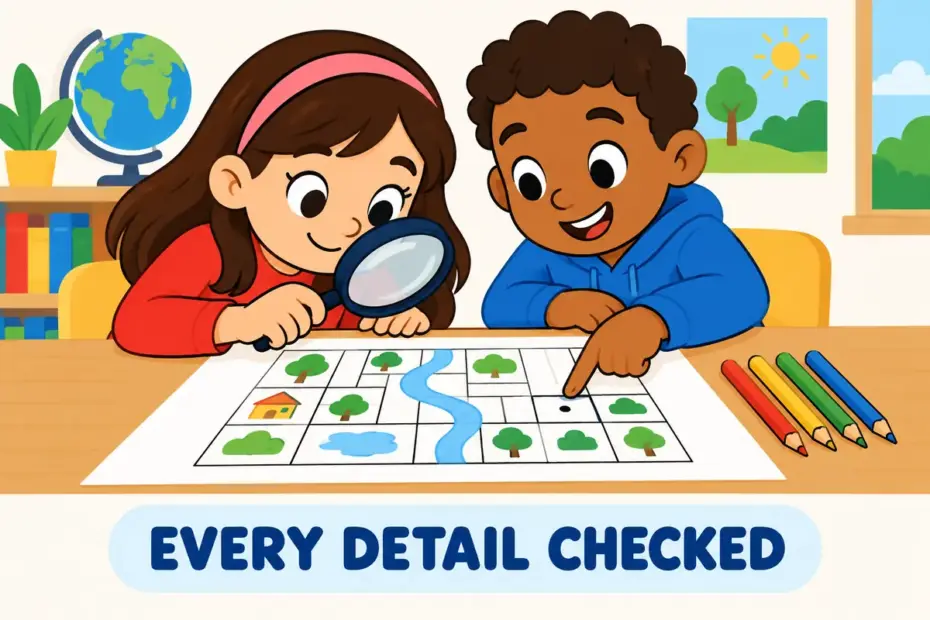
Meticulous describes someone or something that shows extreme care about small details, so using meticulous in a sentence usually praises accuracy and thoroughness. It can also warn of fussiness, because the same care turns irritating when it slows other people down: “The meticulous editor caught every misplaced comma.”
Meticulous at a glance
- Meticulous is an adjective meaning extremely careful about small details.
- It stands before a noun (meticulous records) or after a linking verb (her notes were meticulous).
- It often carries the modifiers so, extremely, famously and characteristically.
- Its adverb is meticulously and its noun is meticulousness.
- The commonest error is treating meticulous and methodical as interchangeable.
What does meticulous mean?
Meticulous is an adjective meaning extremely careful about small details, especially when accuracy matters. The Cambridge entry for meticulous links the word to precise and painstaking care. When accuracy is the only issue and effort is not, careful and exact are the plainer choices.
| Facet | Plain meaning | Example sentence |
|---|---|---|
| Precise | Every figure and word is accurate | She kept meticulous records of every payment. |
| Thorough | No small step is skipped | His meticulous checks caught the faulty wire. |
| Fussily exact | So detailed that it can seem excessive | The meticulous corrections slowed the whole team. |
One limitation matters. Meticulous is not the same as methodical and it is not always praise. Methodical describes following a system, which can be careless about fine detail, while meticulous can tip into fussiness when the small points stop mattering.
How do you use meticulous in a sentence?
Meticulous is a plain adjective, so the sentence turns on what it describes and on the preposition that follows. Four patterns cover almost every real use, and the choice of about or in is the one learners most often get wrong.
| Pattern | Example | What it signals |
|---|---|---|
| meticulous + noun | meticulous notes | Labels the work as fine-grained before evidence arrives. |
| be / seem + meticulous | Her accounts were meticulous. | Praises the finished result rather than the effort. |
| meticulous about + noun | meticulous about spelling | Names the exact area of care as a thing. |
| meticulous in + gerund | meticulous in checking receipts | Names the activity where the care shows itself. |
Meticulous in a sentence: examples across contexts
Meticulous holds its meaning while the setting changes around it. The nine sentences below move from a bedroom to a laboratory, and each one names the fine detail being cared about.
| Context | Example sentence | Why this works |
|---|---|---|
| Conversation | She is meticulous, so nothing in her planner is ever smudged. | Ties the trait to a visible, small detail. |
| Classroom | The meticulous pupil labelled every diagram in three colours. | Shows care through a precise classroom habit. |
| Workplace email | Thanks for the meticulous handover notes. | Praising the detail in a routine message. |
| Reference letter | He is meticulous with figures and never rounds without saying so. | Names the exact behaviour behind the praise. |
| News report | The inquiry praised the meticulous reconstruction of the route. | The formal register suits a public finding. |
| Legal writing | The contract reflects meticulous attention to defined terms. | Links the trait to the document’s precision. |
| Science writing | Meticulous calibration kept the instruments within tolerance. | The detail is technical and measurable. |
| Craft review | The woodwork is meticulous, with every joint flush. | A physical detail proves the claim. |
| Travel writing | He planned the trip with meticulous care for the shortest walks. | Applies the trait to small practical choices. |
Most of those sentences name a specific detail, because meticulous without a detail is only an assertion. The word becomes convincing the moment the sentence points at a joint, a figure or a comma.
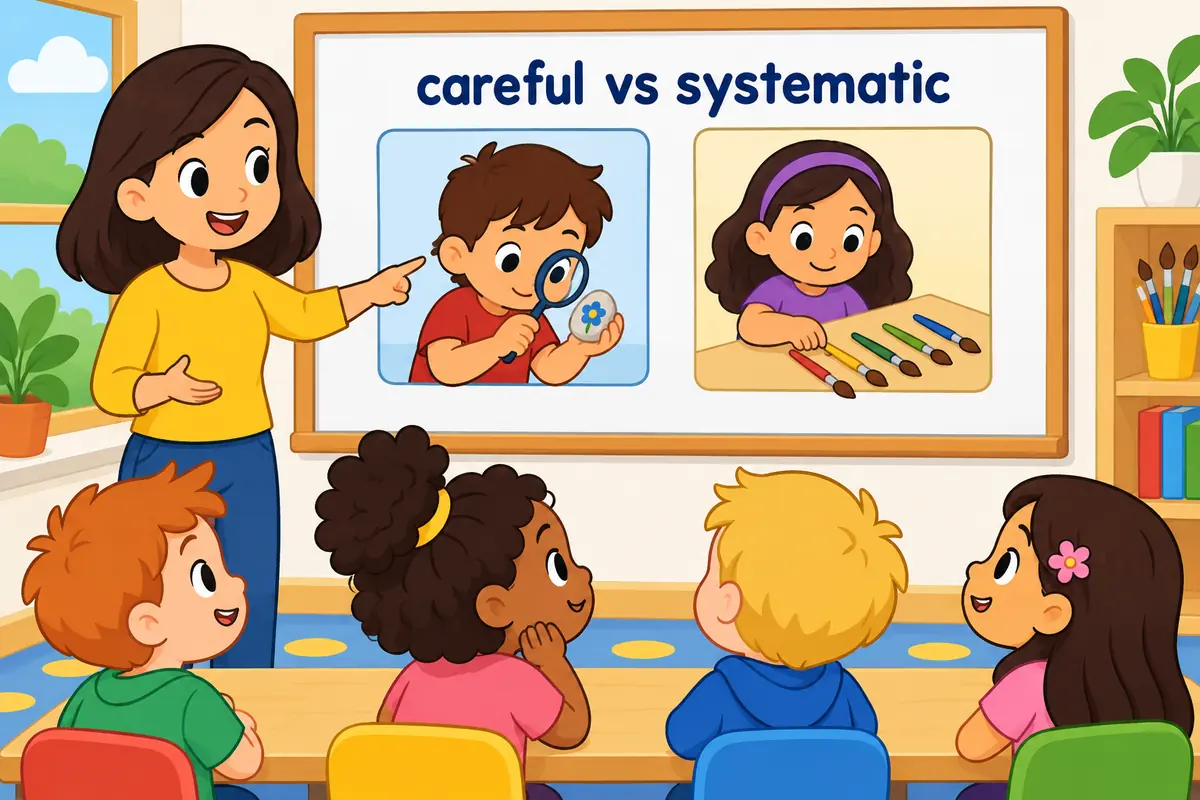
Meticulous vs methodical
Meticulous is regularly swapped with methodical, painstaking and thorough, and only one of them is close. methodical means following an orderly system, while painstaking stresses the effort rather than the fine detail.
| Attribute | meticulous | methodical | painstaking |
|---|---|---|---|
| Core job | Care about tiny details | Follow an orderly system | Work with great effort |
| What it praises | Accuracy and precision | Consistency and order | Patience and effort |
| Usual subject | People, records, checks, work | People, processes, approaches | People, work, research |
| Implies | Nothing small is missed | Steps are done in order | Long, careful labour |
| Risk | Can tip into fussiness | Can miss small details | Can be slow and costly |
Verdict: choose methodical for an orderly process, painstaking for effort over time, and meticulous when the smallest detail is the thing being praised.
Word forms and grammar of meticulous
Meticulous forms its family regularly, and the adverb is the form worth practising because it often replaces the whole phrase with care. The table lists the standard forms and the verb that does not exist.
| Form | Part of speech | Example |
|---|---|---|
| meticulous | adjective, base form | a meticulous record |
| more / most meticulous | comparative and superlative | the most meticulous of the auditors |
| meticulously | adverb | She checked the figures meticulously. |
| meticulousness | noun | His meticulousness survived every deadline. |
| meticulate | not a word | Incorrect: She likes to meticulate the accounts. |
There is no verb meticulate, so the action must be carried by the adverb or by a verb such as check, plan or record. Meticulously comes first in that duty, which is why it appears so often in process writing.
Common mistakes with meticulous
- Incorrect:
She is meticulous in her spelling.Correct: She is meticulous about her spelling. Rule: Use about before a noun topic and in before a gerund, as in meticulous in checking. - Incorrect:
He has meticulous to detail.Correct: He has meticulous attention to detail. Rule: Meticulous is an adjective, so it cannot take to directly; the noun attention carries the phrase. - Incorrect:
The team meticulated the schedule.Correct: The team checked the schedule meticulously. Rule: There is no verb meticulate, so use the adverb with an ordinary verb. - Incorrect:
The manager was methodical about every comma, unlike her colleagues.Correct: The manager was meticulous about every comma. Rule: Methodical is about order; tiny details in text call for meticulous. - Incorrect:
Her meticulous made the report trustworthy.Correct: Her meticulousness made the report trustworthy. Rule: The adjective cannot act as a noun; add -ness for the quality.
Practice using meticulous
Work through the six items, then read the reasoning beside each answer rather than only the key.
- Fill the gap: The laboratory assistant was ______ about cleaning the glassware.
- Choose the better word: The recipe was (meticulous / methodical), listing each step in strict order.
- Correct the error: He is meticulous in his footnotes.
- Build a sentence: use meticulous attention to detail about a proofreader.
- Spot the register: which belongs in an audit report — the accounts were checked meticulously, or we went over the numbers really closely?
- Rewrite with the adverb: Her careful planning avoided every overlap. Use meticulously.
Answers
- meticulous — the assistant is careful about a fine detail, which is the core sense.
- methodical — the steps are in order, and methodical is about system rather than tiny detail.
- He is meticulous about his footnotes — use about before a noun topic, not in.
- Model answer: The proofreader showed meticulous attention to detail on every galley.
- The accounts were checked meticulously — an audit report keeps the adverb and avoids really closely.
- She planned the schedule meticulously — the adverb replaces careful and names the care.
The bottom line
Use meticulous in a sentence when fine details are handled with unusual care, and name the detail so the claim can be checked. Two nuances decide the choice: methodical is about order rather than small details, and meticulous with enough pressure can shade into fussiness. For care that is strict about what is right, scrupulous is the closer word.
Frequently asked questions about meticulous
Is meticulous a positive word?
It is usually positive, praising accuracy and care that others rely on. In the wrong tone it can hint at fussiness, as when a meticulous review delays everything over points that no longer matter. The context decides whether the detail is valuable or merely obsessive, so the sentence should show which.
What is the difference between meticulous and methodical?
Meticulous is about tiny details, while methodical is about following an orderly system. A methodical worker can still overlook a stray comma, and a meticulous worker can work without any obvious order. The first word praises precision, the second praises sequence, which is why they rarely substitute for each other.
Do you say meticulous about or meticulous in?
Both appear, but they do different work. Use meticulous about before a noun topic, as in meticulous about spelling, and meticulous in before a gerund, as in meticulous in checking receipts. The choice is grammatical rather than stylistic, so follow the word that comes after the adjective.
What is the noun for meticulous?
The noun is meticulousness, meaning the quality of being extremely careful about detail. It is long and a little clumsy, so writers often reach for attention to detail instead. The adverb meticulously is far more common, because it can replace a whole phrase such as with great care.
Have you ever heard the term “meticulous” and wondered what it really means? In simple terms, being meticulous refers to paying close attention to detail and taking great care to ensure accuracy and precision in your work or actions.
Individuals who are meticulous exhibit a sense of thoroughness and diligence in all that they do, whether it’s completing a task, organizing a space, or even planning an event. Their commitment to excellence sets them apart as they aim for perfection in every endeavor they undertake.
7 Examples Of Meticulous Used In a Sentence For Kids
- Always be meticulous when coloring inside the lines.
- Use a meticulous hand when cutting out shapes for your craft.
- Remember to be meticulous in arranging your toys neatly.
- Practice writing your letters with meticulous care.
- Be meticulous when counting your toys in your toy box.
- Make sure to be meticulous when cleaning up after playtime.
- Use meticulous attention to detail when drawing a picture.
14 Sentences with Meticulous Examples
- Meticulous planning is essential for managing your time effectively in college.
- As a college student, it is important to be meticulous about citing sources in your research papers.
- Developing strong note-taking skills requires a meticulous approach to organizing information.
- When conducting experiments in the lab, it is crucial to be meticulous in recording data accurately.
- Maintaining a meticulous study schedule can help you stay on track with your coursework.
- A meticulous proofreading of your essays can improve the clarity and coherence of your writing.
- To excel in your exams, it is necessary to be meticulous in reviewing and understanding the material.
- Creating a meticulous budget can help you manage your finances effectively as a college student.
- Paying meticulous attention to detail can lead to higher grades on assignments and exams.
- Collaboration on group projects requires meticulous planning and coordination among team members.
- Keeping your study environment organized and clutter-free can promote a meticulous approach to learning.
- Developing a meticulous approach to time management can help you balance academic demands and extracurricular activities.
- The process of selecting a research topic requires a meticulous evaluation of different possibilities.
- By being meticulous in your job search, you can increase your chances of securing internships or placements during college.
How To Use Meticulous in Sentences?
To use the word Meticulous in a sentence, start by identifying a situation that requires careful attention to detail. For example, “She was meticulous in following the recipe, measuring each ingredient precisely.”
When crafting your sentence, remember that Meticulous is an adjective used to describe someone who is very careful and precise in their work or behavior. You can apply it to various scenarios, such as describing a person’s work ethic, organizational skills, or attention to detail.
Here are a few more examples:
– “The architect was meticulous in creating detailed blueprints for the new building.”
– “The teacher praised the student for their meticulous research and thorough analysis in the essay.”
To make your sentence more impactful, you can pair meticulous with specific details or actions that emphasize the level of precision involved. This will help convey to your audience just how thorough and exacting the person’s approach is in the given situation.
As you become more comfortable with incorporating meticulous into your vocabulary, you’ll find that it adds depth and nuance to your descriptions, painting a vivid picture of someone who pays great attention to even the smallest of details.
Conclusion
In conclusion, the meticulous attention to detail displayed in crafting sentences with a focus on precision and accuracy can greatly enhance the clarity and impact of written communication. By meticulously selecting each word and structuring sentences carefully, writers can effectively convey their message and evoke specific emotions or responses from readers. This level of precision ensures that the intended meaning is accurately transmitted, leading to a more engaging and effective piece of writing.
Overall, the art of constructing sentences with meticulous detail is essential for achieving coherence, coherence, and effectiveness in written communication. By carefully considering each word, sentence structure, and overall composition, writers can create compelling and persuasive content that effectively conveys their ideas to the audience. Whether in academic papers, professional reports, or creative writing, the power of meticulous sentences cannot be overstated in improving the overall quality and impact of the written work.


