Modest means not large in size or amount, and also not boastful about your own achievements. To use modest in a sentence, place it before the noun it describes or after a linking verb: “She lives in a modest flat.” The adjective also covers clothing that does not reveal much, so context decides which sense is meant.
Modest at a glance
- Modest is an adjective; its forms are modester or more modest, the adverb modestly and the noun modesty.
- The attributive pattern modest + noun is the most common: a modest house, a modest gain.
- The three main senses are small in size or amount, unassuming about oneself, and not revealing in dress.
- The usual linking verbs are be, seem, look and remain: The improvement looked modest.
- The commonest error is using modest where moderate belongs, especially with temperature, speed or price.
What does modest mean?
Modest is an adjective meaning limited in size, amount or importance, or unwilling to praise yourself. The Cambridge entry for modest records the size sense and the personal sense side by side, which is why one short form does so much work. The sense you intend is usually fixed by the noun that follows. A weather report needs moderate, because modest never measures heat.
| Sense | Plain meaning | Example sentence |
|---|---|---|
| Small in size | Not large, costly or impressive | They moved from a large house into a modest flat. |
| Unassuming | Not boasting about your own ability | He stayed modest about the prize he had won. |
| Not revealing | Clothing that covers the body | She chose a modest dress for the school ceremony. |
The size sense is neutral, not critical: calling a salary modest simply reports that it is not large. Read the same word as a judgement about a person only when the subject is a person or that person’s behaviour.
How do you use modest in a sentence?
Modest follows two patterns, and the preposition pattern is the one learners miss. Use it before a noun as a description, or after a linking verb as a comment; add about or in only when a person is being described.
| Pattern | Example | What it signals |
|---|---|---|
| modest + noun | a modest salary | a plain, factual size or amount |
| be / seem / look + modest | The gain looks modest. | a judgement about size or effect |
| modest about + noun | modest about her success | the unassuming sense, always about a person |
| modest in + noun | modest in scope | a stated limit on range or ambition |
| remain modest | Costs remained modest. | a continuing state in reports and forecasts |
Modest in a sentence: examples across contexts
| Context | Example sentence | Why this works |
|---|---|---|
| Classroom | The teacher praised Mia for her modest answer. | Describes a reply that was short and not boastful. |
| Workplace email | We expect a modest rise in orders next quarter. | A hedged forecast, common in planning messages. |
| News report | Farmers welcomed a modest fall in fuel prices. | Reports a limited change without exaggeration. |
| Property listing | A modest two-bedroom cottage sits by the canal. | Signals compact size without sounding negative. |
| Product review | The update brings a modest improvement to battery life. | Weighs an upgrade that is real but small. |
| Conversation | He is very modest about his cooking. | The about pattern marks the personal sense. |
| Academic writing | The study found a modest correlation between the two factors. | Names a small statistical effect precisely. |
| Charity appeal | Your modest donation funds a week of hot meals. | Asks for a limited sum without pressure. |
Modest vs humble
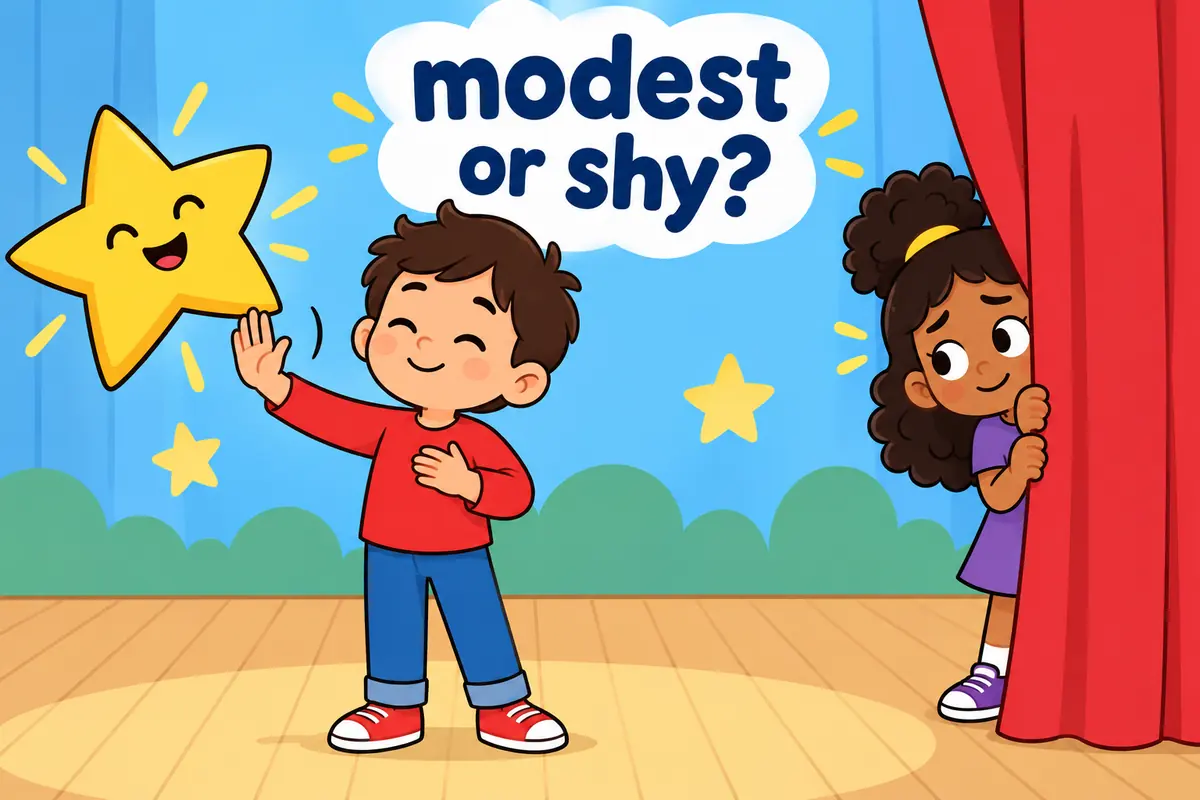
Modest and humble overlap when they describe a person, but they start from different ideas and settle into different sentences. The table separates the two on the features that decide most choices. Where the praise is for quiet character rather than small size, humble is the warmer choice, and a colleague who downplays a compliment is better described as self-effacing. A child who avoids the stage is shy, because fear rather than restraint drives the behaviour.
| Feature | Modest | Humble |
|---|---|---|
| Core sense | Small in size or amount; restrained about oneself | Low in rank, or free from pride |
| Typical subject | Things and people: income, flat, winner | People and origins, rarely objects |
| Register | Neutral to formal, at home in reports | Warmer, common in personal writing |
| What it implies | A limit that can be measured or stated | A character worth admiring |
| Common collocation | a modest increase | humble beginnings |
| Opposite | Immodest, or grand | Arrogant, or proud |
Choose modest for anything you could measure and humble for a person’s manner or background.
Word forms and grammar of modest
Modest is a plain adjective, and its family is small. The table lists the forms that are standard and flags the ones that only appear in older writing.
| Form | Part of speech | Example |
|---|---|---|
| modest | adjective | a modest fee |
| more modest | comparative | This offer is more modest than the last. |
| most modest | superlative | It was the most modest of the five bids. |
| modestly | adverb | They live modestly but comfortably. |
| modesty | noun | Her modesty impressed the panel. |
| modester | comparative, rare | Non-standard in modern prose; use more modest. |
The adverb modestly is common in writing about money and lifestyle, while modesty appears in descriptions of character. The comparative modester survives in older texts and sounds dated in new writing.
Common mistakes with modest
- Incorrect: She is very modestly.Correct: She is very modest.Rule: modestly is an adverb, so it cannot follow the linking verb is.
- Incorrect: He was modest of his success.Correct: He was modest about his success.Rule: the unassuming sense always takes about, not of.
- Incorrect: The weather was modest yesterday.Correct: The weather was mild yesterday.Rule: modest reports size or restraint, never temperature.
- Incorrect: a modestly salaryCorrect: a modest salaryRule: an attributive slot needs the adjective, not the adverb.
- Incorrect: more modesterCorrect: more modestRule: never place more in front of an inflected comparative.
Practice using modest
- Fill in the blank: They bought a ______ house near the station.
- Choose the better word: Her reply was (modest / moderate) and short.
- Correct the error: The team reported a modestly improvement.
- Build a sentence: use modest before a noun about a weekly wage.
- Spot the register: which sentence suits a news report? (a) We got a tiny bit more money. (b) Sales showed a modest rise.
- Fill in the blank: He is quiet and modest ______ his many awards.
Answers
- a modest house — the adjective describes the noun directly.
- modest — it describes a reserved manner, not a measured amount.
- a modest improvement — the attributive slot takes the adjective.
- A modest weekly wage covered her transport and food. — modest sits before the noun.
- (b) — a modest rise is the neutral, report-ready phrasing.
- modest about his many awards — the personal sense takes about.
The bottom line
Modest in a sentence usually means small in size or amount, and the same word becomes a comment on character when about follows it. Push it to the front of a noun to describe something plainly, and keep moderate for heat, speed and prices. The one preposition to remember is about, because modest of a success is the error that marks a learner.
Frequently asked questions about modest
Is modest used for people or things?
Modest works for both, which is why context matters. Before a noun it usually describes a thing or a figure, as in a modest flat or a modest gain. After a person’s name or pronoun, with about, it praises restraint. The surrounding noun or preposition tells you which sense is intended.
What is the opposite of modest?
The opposite depends on the sense. For size or amount, the opposite is large, grand or generous. For a person’s manner, the opposite is boastful, arrogant or immodest. Because one word covers both ideas, English has no single neat antonym for modest; pick the one that matches the sense you used.
Can modest describe money or prices?
Yes, and this is one of its most common uses in business writing. A modest fee, a modest increase and a modest budget all report an amount that is limited but real. The tone is neutral, so the reader is not told whether the sum is good or bad, only that it is not large.
Does modest mean shy?
No. Modest means restrained or unwilling to boast, while shy means nervous around other people. A modest speaker can be confident and still avoid self-praise; a shy speaker may say nothing at all. If the reason for the behaviour is fear rather than restraint, shy or timid is the better word.
Do you ever struggle with finding the right balance between humility and self-assurance in your communication? This is where the concept of “modest” language comes into play. Modest language involves expressing oneself in a humble and unassuming manner without appearing overly boastful or arrogant.
In writing and speech, using modest language can help you convey your thoughts and ideas effectively while maintaining a sense of modesty and respect for others. It is a subtle way to showcase your abilities or achievements without coming across as overly confident or braggadocious.
7 Examples Of Modest Used In a Sentence For Kids
- My modest house has a small garden.
- I wear modest clothes to school every day.
- We had a modest lunch with rice and vegetables.
- His toy collection is modest but cute.
- She has a modest smile on her face.
- The puppy has a modest little tail.
- Our school library has a modest collection of books.
14 Sentences with Modest Examples
- Modest fashion is gaining popularity among college students in India.
- As a college student, it’s important to dress in a modest manner.
- She chose a modest outfit for the college cultural event.
- Modest study groups are effective for exam preparation.
- It’s always good to maintain a modest attitude towards success in college.
- The college library provides a modest yet comfortable study environment.
- A modest budget can still allow for fun outings with friends.
- Modest goals are more achievable and sustainable in college life.
- In classroom discussions, it’s best to express your opinions in a modest manner.
- Participating in charity events shows a modest and caring nature among college students.
- He received praise for his modest and humble speech during the debate competition.
- The college canteen offers modest yet delicious meals at affordable prices.
- Maintaining a modest lifestyle can help in saving money for future endeavors.
- The college encourages modest behavior during cultural celebrations and events.
How To Use Modest in Sentences?
To use the word Modest in a sentence, start by identifying a person or situation that exemplifies humility or simplicity. For example, you can say, “She is a modest artist who prefers to let her work speak for itself.” This sentence conveys that the artist is humble and does not boast about her talents.
Another way to incorporate Modest into a sentence is by describing something that is not extravagant or showy. For instance, you could say, “He lives a modest lifestyle, preferring practicality over luxury.” This sentence emphasizes the person’s choice to lead a simple and unpretentious life.
In addition, you can use Modest to express a small or moderate amount. For example, you might say, “She received a modest salary increase at work this year.” This sentence indicates that the raise was not substantial but still appreciated.
When including Modest in a sentence, be sure to consider the context and tone of your statement. It is essential to use the word accurately to convey the intended meaning effectively. With practice, you will become more comfortable incorporating Modest into your daily vocabulary, whether in writing or conversation.
Conclusion
In conclusion, sentences with the word “modest” often highlight humility and simplicity in their descriptions. The use of this keyword can be observed in showcasing restrained accomplishments, unassuming attitudes, or understated qualities. These sentences convey a sense of modesty, emphasizing an absence of excessive pride or showiness. By using “modest” in a sentence, the speaker or writer recognizes the value of being unpretentious and moderate in their expressions.
Overall, sentences incorporating the word “modest” offer a clear and straightforward way to convey the idea of being humble and reserved. Whether referring to personal achievements, attitudes, or appearances, the term “modest” helps to paint a picture of simplicity and a lack of extravagance. It serves as a reminder of the beauty found in modesty and the appreciation for a more understated and sincere approach in communication.


