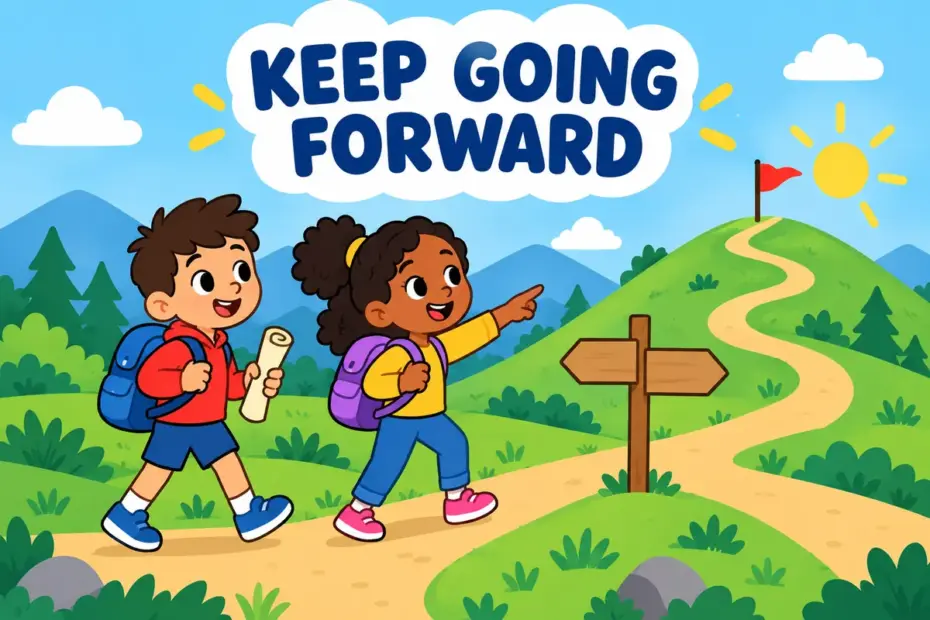
Moving forward is a fixed phrase that marks the next stage of a plan, a decision taken from now on, or steady progress toward a goal. As a sentence opener it usually means from this point onward, so a natural example reads, “Moving forward, all invoices go through the new portal.”
Moving forward at a glance
- Moving forward is a fixed adverbial phrase, not a verb form; the underlying verb phrase is move forward.
- Its two common jobs are a sentence opener meaning from now on and a verb phrase meaning continuing progress.
- The business register favours it, while plain speech often prefers from now on.
- The usual patterns are “Moving forward, …” and “be moving forward with …”.
- The commonest error is treating it as a synonym for physically walking ahead.
What does moving forward mean?
Moving forward is a fixed phrase with two core meanings: from this time onward, and steady progress toward a goal. The Cambridge entry for moving forward keeps the literal motion sense, while business writing has pushed the temporal sense to the front. A sentence such as “Moving forward, we will publish on Mondays” uses the time sense, and “The boat kept moving forward” uses the motion sense.
| Sense | Plain meaning | Example sentence |
|---|---|---|
| Temporal or procedural | From this point on, as a rule for the future | Moving forward, all invoices go through the portal. |
| Progressive | Continuing to advance a plan | The review is over, and the project is moving forward. |
| Literal motion | Physically travelling toward the front | The line of climbers kept moving forward. |
One limitation belongs here. When the only meaning is from now on, moving forward can sound like corporate padding, and the shorter from today reads cleaner. Its formal cousin henceforth does the same job in contracts and rules. The phrase never adds speed, so it cannot suggest hurrying.
How do you use moving forward in a sentence?
Put the phrase either at the front followed by a comma or after a form of be when it means progress. The patterns below cover almost every real sentence, and the first is the one that dominates meeting notes and email.
| Pattern | Example | What it signals |
|---|---|---|
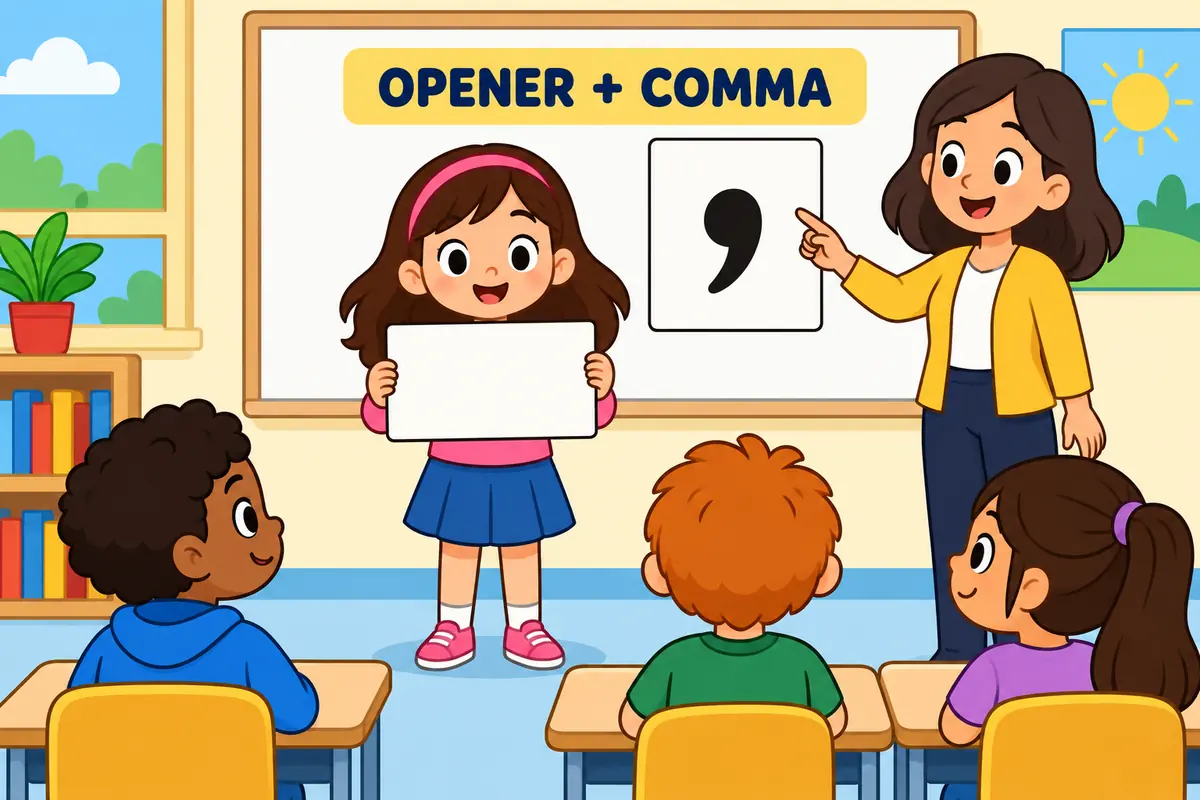
| Opening phrase + comma | Moving forward, the team will meet on Tuesdays. | A new rule that starts now. |
| be moving forward with + noun | The council is moving forward with the repair plan. | Active progress on a plan. |
| keep + moving forward | We must keep moving forward after the setback. | Renewed effort despite difficulty. |
| moving forward from + event | Moving forward from the audit, staff will log every visit. | The point where a new practice begins. |
| Literal verb phrase | The convoy was moving forward at dusk. | Real physical movement toward the front. |
For the plain time sense in speech, from now on is the lighter choice, and it never sounds like a meeting.
Moving forward in a sentence: examples across contexts
Moving forward keeps its meaning while the setting changes. The nine sentences below move from a classroom to a travel diary, and each names the subject doing the advancing.
| Context | Example sentence | Why this works |
|---|---|---|
| Classroom | Moving forward, please bring your reading log every Friday. | A teacher states a new routine for the term. |
| Workplace email | Moving forward, all expenses must be approved in the portal. | A procedure changes from this message onward. |
| News report | The council is moving forward with the bridge repairs despite the cost. | Names a body and the action it will take. |
| Project update | With the design signed off, we are moving forward to testing. | Marks a stage that has just been reached. |
| Sports report | The captain urged the side to keep moving forward after the equaliser. | Uses the progress sense under pressure. |
| Conversation | Let’s keep moving forward and talk about this tomorrow. | Natural in speech only with keep or the literal sense. |
| Procedural writing | Moving forward, each request needs a reference number. | Typical formal rule sentence. |
| Travel writing | The trail kept moving forward along the ridge. | Uses the literal motion sense. |
| Academic writing | The model is moving forward from a narrow test to a field trial. | Shows progression of a method. |
| Client email | Moving forward, we will send one summary each month. | Sets a service expectation for the future. |
Across all nine, the phrase points to the future rather than describing the past, which is why it rarely follows a past-tense main verb.
A quick test keeps the phrase honest. If from now on or turned out to be right can replace moving forward without any loss of sense, the phrase is carrying its weight; if neither fits, it is decoration and the sentence is stronger without it.
Moving forward vs onward
Moving forward and onward are close, but they belong to different kinds of sentence. Onward sounds literary or nautical, while moving forward sounds like a planning meeting.
| Attribute | moving forward | onward |
|---|---|---|
| Core sense | Next steps, or from now on | Continuing without stopping |
| Register | Business, meetings, email | Literary, formal, travel |
| Typical subject | A plan, team or decision | A journey, march or process |
| Position | Often first, before a comma | Usually after a verb |
| What it implies | A deliberate new stage | Continuous forward advance |
Verdict: choose onward for journeys and formal narration, and moving forward for plans; when a single verb is needed, advance covers the progress sense.
Word forms and grammar of moving forward
Moving forward is fixed, so nothing is inserted inside it, but the underlying verb leaves most of the work to move forward. The same root appears in come forward, where forward still points ahead but the verb means volunteering.
| Form | Part of speech | Example |
|---|---|---|
| move forward | verb + adverb | We will move forward with the vote tonight. |
| moves forward | verb, third person | The schedule moves forward by one week. |
| moved forward | verb, past | The committee moved forward after the apology. |
| moving forward | participial phrase, as used here | Moving forward, minutes will be public. |
| forward | adverb or adjective | She stepped forward. The forward cabin is full. |
| forward-looking | adjective | A forward-looking budget funds repairs first. |
Common mistakes with moving forward
- Incorrect:
Moving forward will change the schedule.Correct: Moving forward, the schedule will change. Rule: As a sentence opener the phrase needs a comma and a full clause after it. - Incorrect:
We are moving forward the deadline.Correct: We are moving the deadline forward. Rule: The adverb follows the object; moving forward is not a separable verb. - Incorrect:
Moving forward, we walked to the gate.Correct: We walked forward to the gate. Rule: Reserve the phrase for plans and rules; use walked forward for literal motion. - Incorrect:
Moving forward from now on, we will log every call.Correct: Moving forward, we will log every call. Rule: The phrase already means from now on, so pairing the two repeats the idea.
Common collocations with moving forward
Moving forward keeps close company with a small set of verbs and nouns, and using the usual partners is what makes a sentence sound natural rather than translated. The collocations below are the ones that appear most often in minutes, project notes and reviews.
| Collocation | Example | Why it is natural |
|---|---|---|
| move forward with + plan | The board will move forward with the merger in June. | Signals a decision to start or continue a plan. |
| keep moving forward | Even after the delay, the team kept moving forward. | Ties the phrase to persistence under difficulty. |
| look forward to + noun | We look forward to your reply. | A different phrase entirely, meaning await with pleasure. |
| move forward the date | They moved forward the launch by a week. | The adverb follows the object, never splits the phrase. |
| moving forward from + event | Moving forward from the review, every file will be logged. | Marks the event where a new practice starts. |
| a step forward | The ruling is a real step forward for tenants. | The noun step carries the progress sense without moving. |
The difference between moving forward and look forward to catches many learners. Look forward to expresses pleasant anticipation and never means progress, so a sentence such as we look forward to finishing the project claims eagerness, not momentum. Reach for moving forward when the point is the next stage of work, and keep the fixed look forward to for anticipation alone.
Practice using moving forward
Work through the six items, then read the reasoning rather than only the key.
- Fill the gap: ______, the club will meet on Wednesdays instead of Fridays.
- Choose the better word: The rescue team kept (moving forward / moving forwardly) through the storm.
- Correct the error: We are moving forward the meeting to Monday.
- Build a sentence: use be moving forward with about a school garden project.
- Spot the register: which belongs in a memo — Moving forward, requests need a reference number, or From now on, ask me first?
- Rewrite with a single verb: The firm is moving forward with the merger. Use advance instead.
Answers
- Moving forward — the missing opener introduces a new routine for the future.
- moving forward — there is no adverb moving forwardly.
- We are moving the meeting forward to Monday — the adverb follows the object.
- Model answer: The committee is moving forward with the garden project after the grant.
- Moving forward, requests need a reference number — a memo stays formal and avoids the casual ask me first.
- The firm is advancing the merger — advance takes the plan as its direct object.
The bottom line
Use moving forward in a sentence when you mean from now on or the next stage of a plan, and place it first, followed by a comma. Two points decide most sentences: register, because from now on is plainer in speech, and sense, because literal walking belongs to walked forward. Where one verb is enough, advance or progress replaces the phrase.
Frequently asked questions about moving forward
Is moving forward grammatically correct?
Yes. Moving forward is a standard participial phrase that works as a sentence opener or after a form of be. It is not an error, although some editors dislike it as padding when from now on would be shorter. In formal writing it stays acceptable as long as it says clearly what happens next.
What does moving forward mean in an email?
In an email, moving forward usually means from now on or for future messages. A line such as moving forward, send receipts to accounts announces a change of procedure. The phrase softens a rule by framing it as a shared next step, which is why managers rely on it in announcements and project updates.
Is moving forward the same as onward?
They are close but not identical. Onward means continuing in space or time without stopping and suits journeys and literary narration. Moving forward means the next step or a rule from now on and suits plans and meetings. Only moving forward can open a sentence in everyday business writing.
Should I write moving forward or from now on?
Choose from now on for speech, personal messages and plain prose, where it is shorter and warmer. Choose moving forward in formal announcements, minutes and project updates, where it signals a new phase rather than a simple date. Both mean the same thing, so register alone decides between them.