Neolithic Age in a Sentence: Meaning and Examples
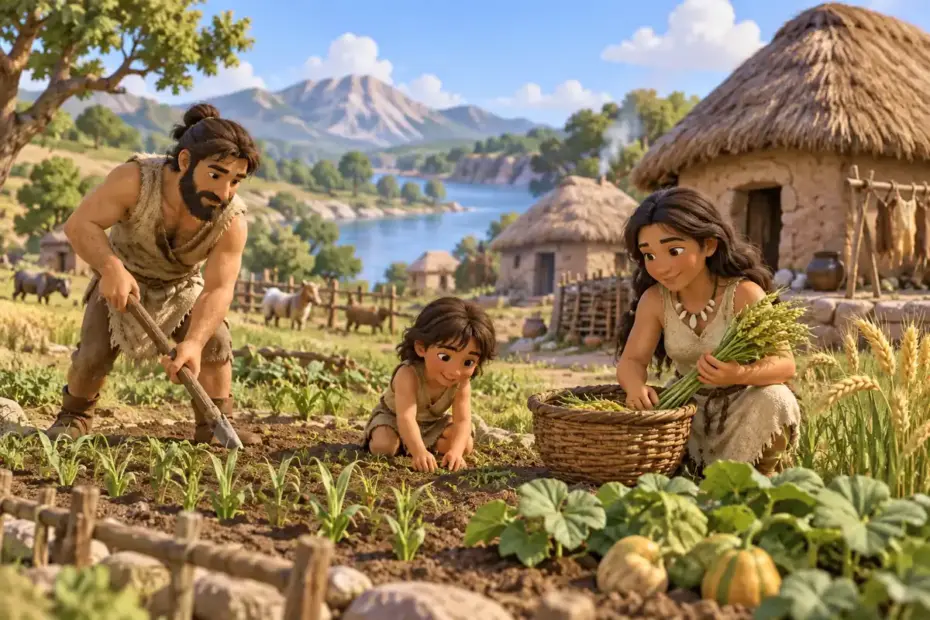
Neolithic Age in a sentence: The Neolithic Age was the New Stone Age, when many communities adopted farming, animal domestication, and more settled village life. It did not begin everywhere at once, so a sentence about the period should name a region when dates matter and use “Neolithic” for the archaeological period rather than a single global year range.
Neolithic Age at a glance
- Neolithic means New Stone Age and names an archaeological period, not one worldwide calendar date.
- In many regions, the period is associated with cultivating plants, keeping domesticated animals, and increasingly settled communities.
- Polished stone tools and pottery are common archaeological clues, though their timing and use differed by place.
- The transition from foraging to food production unfolded at different times and in different ways around the world.
- Use a named region when a sentence gives a date; avoid treating a regional chronology as universal.
What does the Neolithic Age mean?
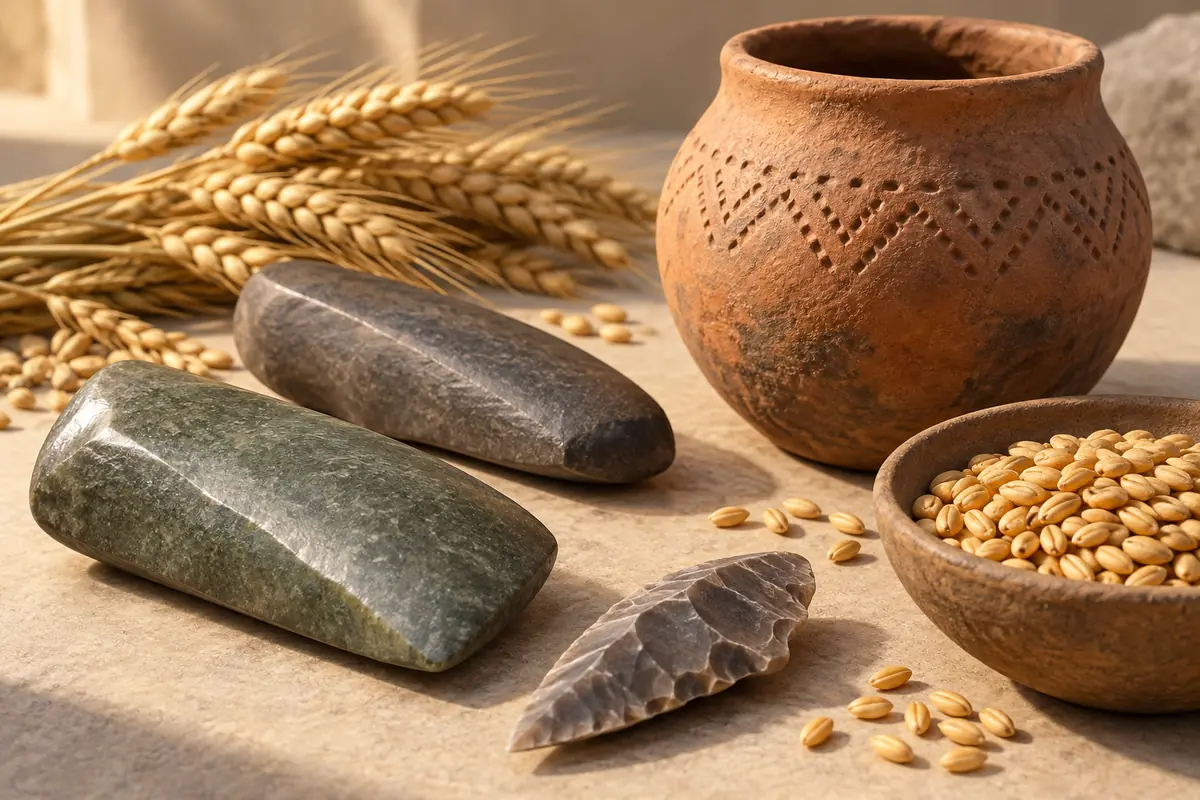
The Neolithic Age, also called the New Stone Age, is an archaeological period associated in many places with farming, animal domestication, and a shift toward more settled living. It is also linked with new stone-working techniques and, in many societies, pottery. Archaeologists use evidence such as tools, plant remains, animal bones, and buildings to describe how these changes happened.
The period is not simply a point when every hunter-gatherer became a farmer. Some communities continued to forage, and people combined food-gathering strategies in different ways. The Smithsonian National Museum of Asian Art’s overview of China’s Neolithic period describes plant cultivation, animal domestication, settled life, more developed stone tools, and pottery in that regional context.
Did the Neolithic Age begin everywhere at the same time?
No. The Neolithic transition happened at different times in different regions, so historians do not use one start date for the whole world. World History Encyclopedia’s overview notes that agriculture developed at different times by region; the Smithsonian dates the Chinese Neolithic period to roughly 7000–1700 BCE, a regional chronology rather than a global range.
For a sentence that mentions a date, name the place or archaeological tradition: “In China, the Neolithic period is often dated to about 7000–1700 BCE.” For a general school sentence, avoid exact dates: “Neolithic communities in many regions farmed crops and raised animals.” Those versions are more accurate than assigning every society the same timeline.
What changed during Neolithic life?
In many communities, people cultivated crops and managed domesticated animals, which supported more permanent or seasonal settlements. These changes affected food storage, work, tools, and daily routines, but they did not happen as one sudden worldwide revolution. The British Museum’s prehistoric Britain learning guide, for example, describes farming spreading into Britain alongside changes in settlement, pottery, and polished stone tools.
| Evidence or change | What it can show | Sentence example |
|---|---|---|
| Plant remains and farming tools | Cultivation or processing of crops | “The Neolithic site contained evidence of people growing food.” |
| Animal bones | How people used or managed animals | “Researchers studied animal bones from a Neolithic settlement.” |
| Pottery and stone tools | Craft, storage, and everyday technology | “A polished stone tool was found near Neolithic pottery.” |
| Houses and settlement remains | Patterns of dwelling and community life | “The Neolithic village had homes close to cultivated fields.” |
How do you use “Neolithic Age” in a sentence?
Use Neolithic Age as a noun phrase for the historical period, usually after a preposition such as during or in. A useful sentence connects the period to a specific place, object, or practice instead of claiming that every Neolithic community shared the same customs.
- “During the Neolithic Age, some communities began cultivating crops near their homes.”
- “The museum displayed a Neolithic stone tool beside pottery from the same region.”
- “Archaeologists compare Neolithic settlements to learn how food production changed daily life.”
Capitalize Neolithic when naming the period; use Neolithic Age or Neolithic period consistently within a piece. If a sentence gives a date, add the region or culture so the reader knows which chronology you mean.

Have you ever wondered what life was like in the Neolithic Age? This fascinating period in human history marked the transition from hunting and gathering to farming and settling in communities.
The Neolithic Age, also known as the New Stone Age, lasted from around 10,000 to 4,500 years ago. During this time, early humans began cultivating crops, domesticating animals, and creating more sophisticated tools and pottery. Join me as we explore the innovations and advancements that defined this pivotal era in our past.
7 Examples Of Neolithic Age Used In a Sentence For Kids
- People in the Neolithic Age used stone tools for daily activities.
- In the Neolithic Age, people started farming and growing their own food.
- The Neolithic Age is known for the development of pottery and weaving.
- Neolithic Age people lived in small villages and settlements.
- Animals like cows and sheep were domesticated in the Neolithic Age.
- The wheel was not invented yet in the Neolithic Age.
- Neolithic Age people painted on cave walls as a form of art.
14 Sentences with Neolithic Age Examples
- Neolithic Age marked the transition from hunting-gathering societies to agricultural communities.
- Many archaeological sites in India provide evidence of human settlements during the Neolithic Age.
- The people of the Neolithic Age were skilled in pottery-making and tool manufacturing.
- Studying the tools used in the Neolithic Age is crucial for understanding human evolution.
- Agriculture played a significant role in the economy of the communities during the Neolithic Age.
- The advancements in agriculture during the Neolithic Age led to a more settled way of life.
- Neolithic Age communities developed religious beliefs and practices, evident from their burial sites.
- Understanding the social structure of Neolithic Age societies helps us comprehend early human civilization.
- The practice of domesticating animals began during the Neolithic Age.
- Trade networks started to emerge during the Neolithic Age as communities interacted with each other.
- Climate change had a significant impact on the lifestyle of people during the Neolithic Age.
- The development of writing systems was not common during the Neolithic Age.
- Indian rock art provides insights into the artistic expressions of people during the Neolithic Age.
- The Neolithic Age laid the foundation for technological advancements that shaped future civilizations.
How To Use Neolithic Age in Sentences?
To Neolithic Age in a sentence means to refer to the period in human history characterized by the development of agriculture, the use of polished stone tools, and the beginning of settled communities.
To use Neolithic Age in a sentence, simply incorporate it into a statement or description that is related to this specific historical period. For example: “The discovery of agriculture marked a significant turning point in human history, leading to the transition from the Paleolithic to the Neolithic Age.”
When using the term Neolithic Age, it’s important to provide context or additional information to help the reader understand the specific timeframe and characteristics associated with this period. This can include mentioning key developments such as the domestication of plants and animals, the establishment of permanent settlements, and the technological advancements in tool-making.
By incorporating Neolithic Age into your writing or conversation, you can effectively communicate about the historical period and its impact on human societies. Remember to be clear and concise in your usage of the term to ensure that your message is easily understood by others.
Conclusion
In conclusion, the Neolithic Age was a crucial period in human history marked by the transition from hunter-gatherer societies to settled agricultural communities. During this time, advancements in agriculture, pottery-making, and the domestication of animals revolutionized how people lived and interacted with their environment. The development of tools and the establishment of permanent settlements allowed for the growth of complex societies and the beginning of civilizations.
Through the creation of sentences with Neolithic Age, we can explore the cultural, technological, and social changes that occurred during this pivotal era. By studying the artifacts and structures left behind by Neolithic peoples, archaeologists and historians gain valuable insights into the origins of agriculture, the rise of urban centers, and the early foundations of human civilization.
Frequently asked questions
What does Neolithic Age mean?
The Neolithic Age means New Stone Age, an archaeological period associated in many regions with farming, animal husbandry, settled communities, and changing stone technologies. It is a broad label rather than a single worldwide date, and archaeologists define its boundaries using local evidence such as tools, buildings, crops, and animal remains.
When did the Neolithic Age begin?
There is no single start date for the whole world. Farming and settled communities developed at different times by region; for one example, the Smithsonian’s overview dates China’s Neolithic period to about 7000–1700 BCE. Name a place or culture whenever a sentence gives dates, because regional timelines vary.
What is a simple sentence with Neolithic Age?
“The Neolithic Age brought farming and village life to many communities” is a simple sentence. For more historical precision, add a region or evidence: “Neolithic farmers in this region grew crops near their homes.” That wording avoids implying that every society changed in the same way or at the same time.
Is the Neolithic Age the same as the Stone Age?
The Neolithic Age is one part of the broader Stone Age, often called the New Stone Age. The Stone Age also includes earlier periods, and archaeologists use regional terms and evidence to divide them. A sentence can say “the Neolithic period” when it specifically means this later archaeological phase.


