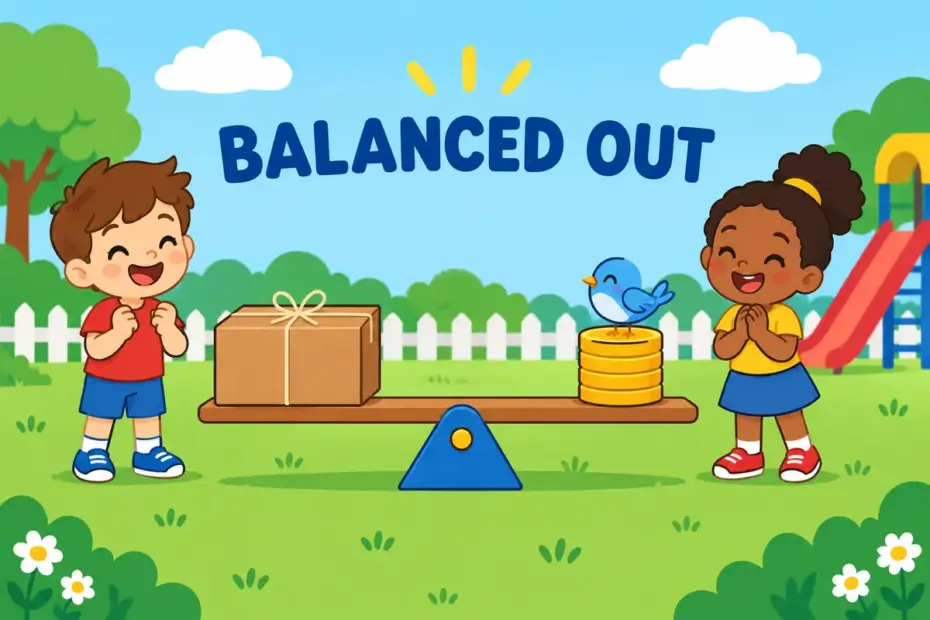
Offset means to balance or cancel the effect of something by setting a second amount against it. To use offset in a sentence, name the thing being corrected first and the correcting force second: falling fuel costs offset the higher rent. The verb keeps the same form in the past tense.
Offset at a glance
- Offset works as both a verb and a noun, so the same spelling can correct a cost or name the correction.
- The verb usually means to balance or cancel the effect of something else.
- The noun names the counterweight itself, as in a rebate that acts as an offset to a fee.
- The usual subjects are savings, gains, costs, emissions, losses or delays.
- The commonest error is offsetted, a past form that does not exist in standard English.
What does offset mean?
Offset is a verb meaning to balance or cancel the effect of something, and a noun meaning the amount that does the balancing. The Cambridge entry for offset records both, and the split decides which pattern fits: the verb needs two amounts, while the noun names one of them.
| Sense | Plain meaning | Example sentence |
|---|---|---|
| Verb: balance a cost | Reduce one amount by another | The grant offset the price of new laptops. |
| Verb: cancel an effect | Neutralise a harmful result | Planting trees offsets the flight emissions. |
| Verb: compensate for | Make up for a disadvantage | Her speed offset the team shortfall. |
| Noun: balancing factor | The amount that cancels another | The rebate was an offset to the higher fee. |
| Noun: technical shift | A small displacement in printing or layout | The second layer printed with a half-millimetre offset. |
| Noun: plant shoot | A young shoot growing from a bulb | Each offset of the daffodil became a new plant. |
One limitation is worth stating plainly. Offset does not mean erase, and it does not mean refund. A cost that is offset is still paid; the verb promises a matching force, not removal, so where reduce or cut is meant, compensate for the loss or reduce is the plainer choice.
How do you use offset in a sentence?
Put the loss or cost first and the correcting force second. Five patterns cover almost every real sentence, and the passive keeps attention on the correction rather than on who provided it.
| Pattern | Example | What it signals |
|---|---|---|
| X offset Y | Higher fares offset the fuel saving. | Two forces set in balance. |
| be offset by + noun | The loss was offset by a tax rebate. | Passive voice, focus on the correction. |
| offset + object + against + noun | The firm offset the purchase against last year profit. | A formal accounting set-off. |
| offset + object + with + noun | She offset the delay with an early start. | Deliberate balancing by a person. |
| an offset to + noun | The council offered an offset to the fee rise. | The noun names the counterweight. |
The passive is the pattern to reach for in reports, because it names the correction rather than the person. Where one gain simply matches one loss, counterbalance a rise is a near neighbour, though it suggests a steadier balance and a physical image.
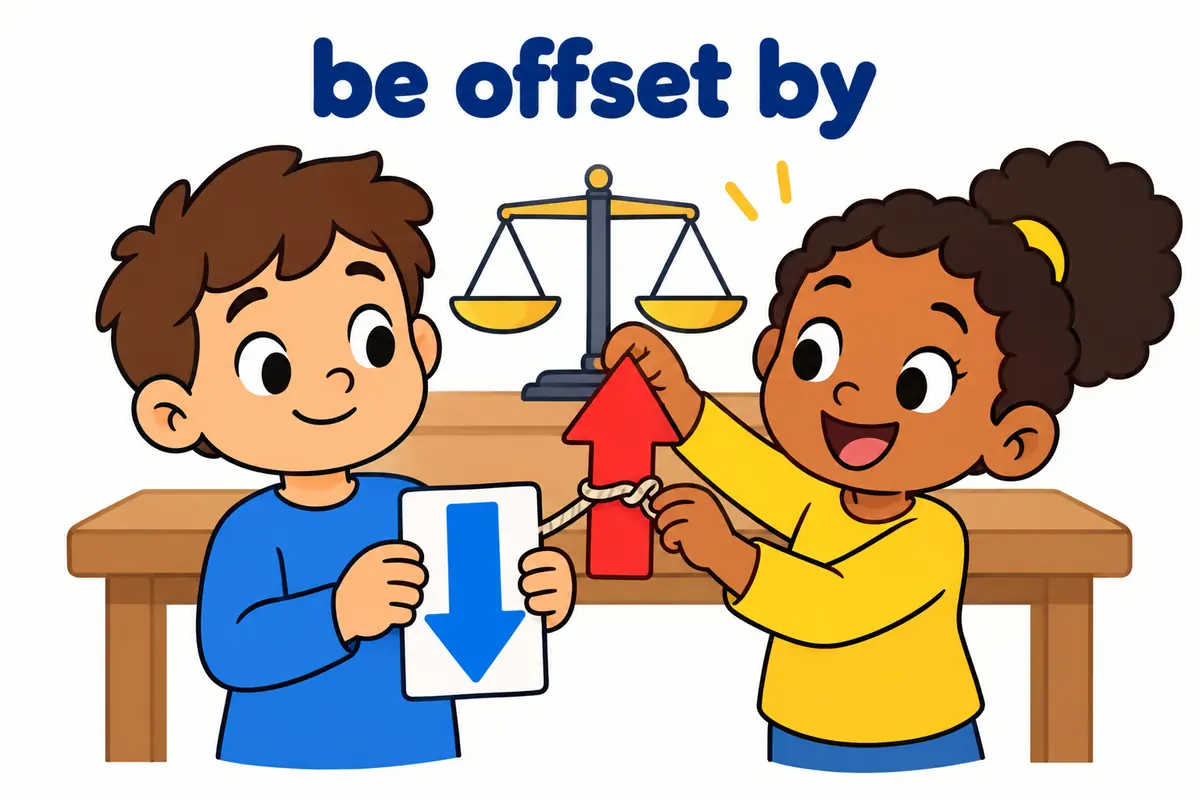
Offset in a sentence: examples across contexts
Offset changes register more than it changes meaning. The nine sentences below keep one verb while moving from a classroom to a finance report, and each names the correcting force.
| Context | Example sentence | Why this works |
|---|---|---|
| Classroom | Extra reading offset the days Mia missed, so she passed the test. | A concrete gain replaces a specific loss. |
| Workplace email | Two earlier deliveries offset this week small delay. | Names the correction before the reader worries. |
| News report | Cheaper imports offset the rise in local wages. | Economic forces act as the subjects. |
| Finance | The insurer offset the claim against the reserve fund. | Uses the accounting set-off pattern. |
| Environment | New cycling lanes offset part of the traffic emissions. | Ties a policy to a measurable effect. |
| Sport | Their stronger defence offset a weak attack on Saturday. | Balances one team strength against another. |
| Academic prose | Longer sample times offset the lower signal strength. | Keeps the claim impersonal and technical. |
| Household | The birthday bonus offset the winter heating bill. | Everyday nouns keep the verb readable. |
| Conversation | The good weather offset the awful traffic on the way home. | The verb survives in informal speech about trade-offs. |
Only the last two sentences relax into everyday speech. In formal writing, the evidence or the correction is almost always the grammatical subject.
Offset vs compensate
Offset overlaps with compensate and is interchangeable with it only sometimes. The two verbs differ in what they promise about the result.
| Attribute | offset | compensate |
|---|---|---|
| Core job | Set one amount against another so the net shrinks | Give something to make up for a loss or wrong |
| Typical subject | Savings, gains, costs, emissions | A payment, effort or benefit |
| Usual object | A cost, effect or amount | A person or a harm |
| Implies a wrong done | No, it is arithmetic | Often, especially for an injury or mistake |
| Register | Finance, science and news reporting | Neutral, everyday to formal |
Verdict: use offset when two amounts cancel in the arithmetic, compensate when someone makes up for a loss or wrong, and counteract the effect when you mean actively working against something. A council can balance the budget only after each cost has been offset.
Word forms and grammar of offset
Offset is irregular in one memorable way: the past tense and past participle look exactly like the base form. The table also lists the invented form learners reach for by mistake.
| Form | Part of speech | Example |
|---|---|---|
| offset | verb, base form | Savings will offset the fee. |
| offset | verb, past and past participle | The grant offset the whole cost. |
| offsetting | verb, present participle | The firm is offsetting its carbon use. |
| offsets | verb, third person singular | One good season offsets a poor one. |
| offset | noun | The offset to the loss arrived in June. |
| offsetted | non-standard, not English | Say the grant offset the cost, never offsetted. |
The identical past form is the single fact most learners miss. Where grammar forces a clear past, the context alone carries the tense, exactly as it does for put and set.
Common mistakes with offset
- Incorrect:
The donation offsetted the repair bill.Correct: The donation offset the repair bill. Rule: The past tense of offset never adds -ed. - Incorrect:
The savings offset.Correct: The savings offset the extra charge. Rule: Offset is transitive, so the thing being corrected cannot be left out. - Incorrect:
We offset against the cost.Correct: We offset the grant against the cost. Rule: The thing set off comes right after the verb. - Incorrect:
The delay was offset from the early start.Correct: The delay was offset by the early start. Rule: The passive takes by, because it names the agent. - Incorrect:
This money will offset for the loss.Correct: This money will make up for a shortfall like this. Rule: Offset takes a direct object and needs no preposition before it.
Practice using offset
Work through the six items and check the reasoning, not only the answer.
- Fill the gap: The scholarship ______ most of the travel costs.
- Choose the better word: The apology did not (offset / counteract) the harm it caused.
- Correct the error: The new roof offsetted last year losses.
- Build a sentence: use be offset by about a long queue balanced by fast service.
- Spot the register: which belongs in a finance report – the reserve offset the claim, or it kind of evened out?
- Rewrite with the noun: The rebate offset the higher fee. Use offset as a noun.
Answers
- offset – the scholarship is the correcting force and costs are the object.
- counteract – work against the harm actively; offset is for matching amounts.
- The new roof offset last year losses – the past tense never becomes offsetted.
- Model answer: The long queue was offset by unusually fast service at the counter.
- The reserve offset the claim – a report avoids kind of and vague speech.
- The rebate acted as an offset to the higher fee – the noun takes an article.
The bottom line
Use offset in a sentence when one amount or force cancels part of another, and name the correcting force clearly. The two facts that decide most sentences are these: the verb is transitive, so something must always be offset, and its past tense never changes. Where a wrong has been done and someone must answer for it, redress the imbalance is the more precise verb.
Frequently asked questions about offset
Is offset a verb or a noun?
Offset is both. As a verb it means to balance or cancel the effect of something, as in the grant offset the cost. As a noun it names the balancing amount itself, as in the rebate was an offset to the fee. The context tells you which, because only the verb takes a direct object.
What is the past tense of offset?
The past tense of offset is offset, identical to the base form. A sentence such as the donation offset the repair bill is already past. The form offsetted does not exist in standard English, so tense is carried by context, exactly as it is for put and set.
How is offset different from compensate?
Offset is arithmetic between two amounts, so a cost is offset by savings. Compensate involves making up for a loss or a wrong, often with a payment. Use offset for figures that cancel and compensate when somebody receives something to repair a harm.
Can offset be used for emissions?
Yes. To offset emissions is to remove an equal amount elsewhere, usually by planting trees or funding clean energy. The verb keeps its balancing sense: the saving is set against the pollution. Critics argue the offset does not erase the original release, which matches the word meaning exactly.
Are you struggling to understand the concept of “offset” in writing? In the realm of grammar and language, an offset is a sentence form that stands out because of its purpose or structure.
These sentences often deviate from the usual pattern of the text, drawing attention to themselves for emphasis or clarity. Let’s delve deeper into how offsets function and enhance the overall readability of your writing.
7 Examples Of Offset Used In a Sentence For Kids
- The picture is offset on the wall.
- The butterfly’s wing is offset from its body.
- The two circles are offset from each other.
- The elephant’s trunk is offset to the side.
- The sun is offset in the sky.
- The two cars are offset in the parking lot.
- The cat’s tail is offset from its body.
14 Sentences with Offset Examples
- Many college students in India use offset printing for their project reports.
- The bookstore offers a 10% discount on notebooks offset by a 5% increase in textbook prices.
- Students often seek to offset the cost of textbooks by selling old ones.
- Some students choose to set up study groups to offset the workload of individual assignments.
- The long hours of studying are often offset by taking short breaks for relaxation.
- The excitement of college events can sometimes offset the stress of exams.
- In order to offset the lack of physical classes, many students rely on online learning resources.
- A balanced diet can help offset the effects of irregular sleep patterns.
- The thrill of winning a sports competition can offset the disappointment of a failed exam.
- Attending motivational talks can offset feelings of self-doubt among college students.
- Working part-time can help students offset their living expenses.
- A supportive network of friends can offset the challenges of being away from family.
- Joining a club or society can offset the academic pressure with extracurricular activities.
- Engaging in hobbies can offset the monotony of daily college routines.
How To Use Offset in Sentences?
Offset can be used in a sentence to indicate a contrast or a shift in direction.
Example:
“The weather forecast predicted rain, but it was offset by the sunny skies in the afternoon.”
To use offset effectively in a sentence, consider the context in which you want to convey a change, contradiction, or counterbalance. It is essential to place offset near the point where the contrast occurs to make it clear for the readers.
Here are a few tips for using offset in a sentence:
- Identify the contrasting elements that you want to offset.
- Choose the appropriate position in the sentence to place offset for maximum impact.
- Ensure that the meaning is clear by providing enough context before and after the word offset.
- Practice using offset in various sentences to become familiar with its application.
Remember that offset is a versatile word that can add depth and complexity to your writing. By following these guidelines and practicing using it in sentences, you will be able to effectively convey contrasts and shifts in direction in your writing.
Conclusion
In conclusion, sentences with offset refer to those where certain elements are shifted or set apart from the rest of the sentence for emphasis or clarity. This technique can help draw attention to specific details, create a more structured layout, or highlight important information within a sentence. For example, offsetting clauses, phrases, or modifiers can enhance the flow and organization of a sentence, making it easier for readers to follow and comprehend the intended message.
By utilizing sentences with offset effectively, writers can enhance the readability and impact of their writing. Whether used to emphasize key points, add variety to sentence structures, or create a more engaging narrative, offsetting elements within sentences can play a crucial role in communicating ideas clearly and effectively to the audience.


