Skip to content
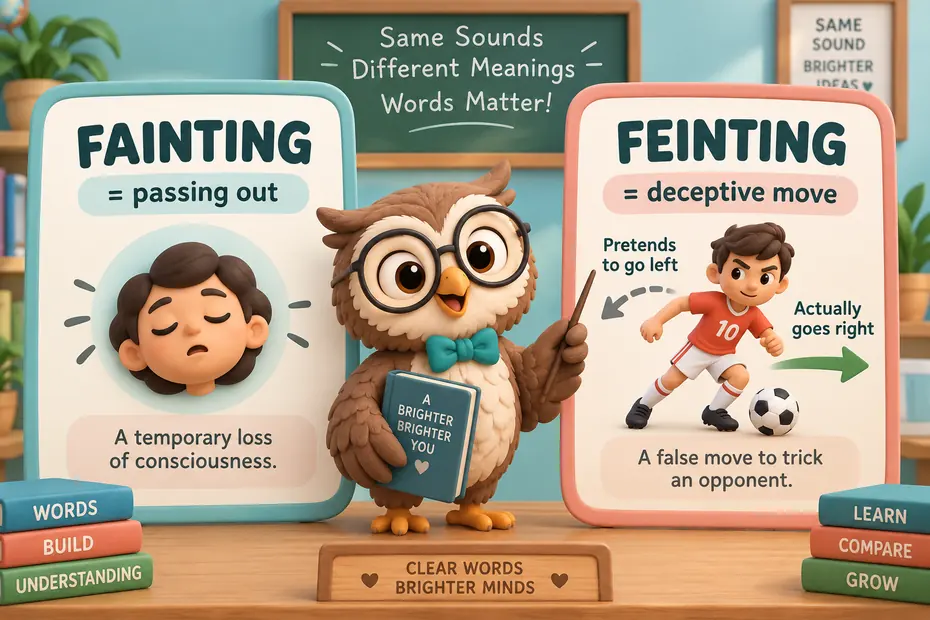
Fainting means passing out; feinting means making a deceptive move.

Fainting vs Feinting: Understanding the Difference and Proper Usage

    Fainting means briefly losing consciousness; feinting means making a deceptive movement to mislead someone, often an opponent. Write “The visitor was fainting” for passing out and “The player was feinting” for a tactical fake. These homophones sound alike but describe different actions. Correction to the older first-aid section below: lowering a person’s head between their… Read More »Fainting vs Feinting: Understanding the Difference and Proper Usage
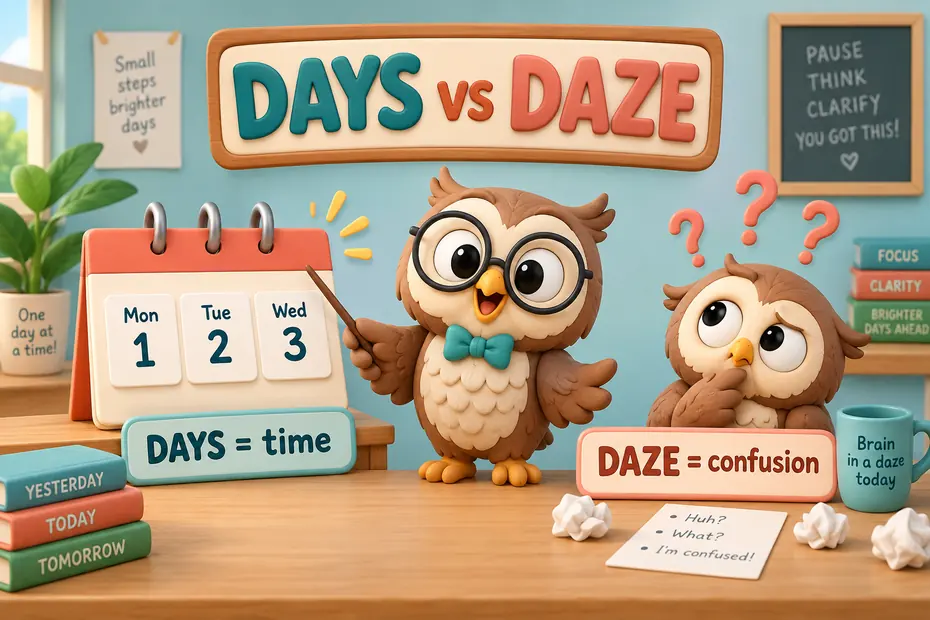
    Days describes time; daze describes confusion or stunning.

    Days vs Daze: Understanding the Difference and Using Appropriately for Effective Communication

      Ever find yourself confused between “days” and “daze”? Don’t worry, you’re not alone. As a language enthusiast, I’ve come across this common dilemma time and time again. In this text, I’ll shed light on the difference between these two words and provide you with the tools to use them appropriately. Understanding the distinction between “days” and “daze” is crucial for effective communication and a

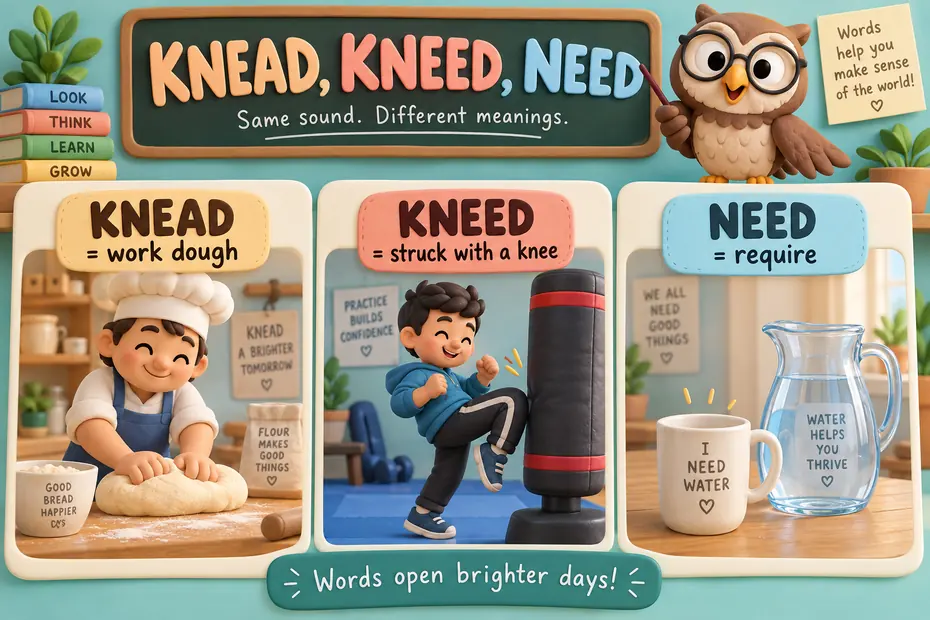
      Knead works dough; kneed is the past of knee; need means require.

      Mastering the Art of Using ‘Knead,’ ‘Kneed,’ and ‘Need’ Appropriately: Clear Communication Guide

        Have you ever found yourself confused between “knead,” “kneed,” and “need”? Don’t worry, you’re not alone. As a language enthusiast and expert, I’ve encountered countless individuals who struggle with these similar-sounding words. In this text, I’ll guide you through the proper usage of “knead,” “kneed,” and “need,” helping you avoid those embarrassing language mishaps. By the end, you’ll be equip

        Rooting for a team means supporting; routing a delivery means directing along a path.

        Understanding the Key Differences: Rooting vs. Routing and Using Appropriately

          Are you confused about the difference between rooting and routing? Well, I’ve got you covered. In this text, I’ll break down the key distinctions between these two terms and explain how to use them appropriately. Rooting and routing are often used interchangeably, but they actually refer to completely different concepts. Understanding the nuances of each is crucial, especially if you want to navig

          Seaman is one sailor; seamen is plural; semen is reproductive fluid.

          Mastering the Proper Usage of Seaman, Seamen, and Semen: A Comprehensive Guide

            Ahoy there! Welcome aboard as we set sail on a linguistic voyage to unravel the mysteries of seaman, seamen, and semen. As an experienced writer, I’ve encountered many a sailor who has struggled with these words, and I’m here to shed some light on their proper usage. In this text, I’ll navigate you through the choppy waters of grammar and semantics, helping you distinguish between these three term

            Suite names a related set; sweet describes sugary taste or kindness.

            Mastering the Art of Using ‘Suite’ and ‘Sweet’ Appropriately: A Comprehensive Guide

              Suite is a noun for a related set, such as rooms, musical pieces or software. Sweet usually describes a sugary taste, a pleasant quality or a kind action. Write “a hotel suite” for accommodation and “a sweet cake” for taste. Both words are normally pronounced exactly alike, ending in a t sound; suite does not… Read More »Mastering the Art of Using ‘Suite’ and ‘Sweet’ Appropriately: A Comprehensive Guide

              Place describes locations or putting; plaice is a flatfish.

              Understanding the Difference: Place vs Plaice and Using Them Appropriately

                Are you confused about the difference between “place” and “plaice”? You’re not alone! As an expert writer, I’ve seen many people struggle with these two words. In this text, I’ll shed some light on the proper usage of “place” and “plaice” to help you avoid common mistakes.
                First, let’s clarify the meaning of each word. “Place” refers to a location, position, or space, while “plaice” is a type of f

                Baize is cloth; bays is a bay form; beys is a title plural.

                Baize vs Bays vs Beys: Mastering Their Appropriate Usage

                  Are you often confused about when to use baize, bays, or beys? Well, I’ll help clear up the confusion for you. In this text, I’ll guide you through the appropriate usage of these three words, ensuring that you never mix them up again. Whether you’re a writer, a student, or simply someone who wants to improve their vocabulary, understanding the distinctions between baize, bays, and beys is essentia

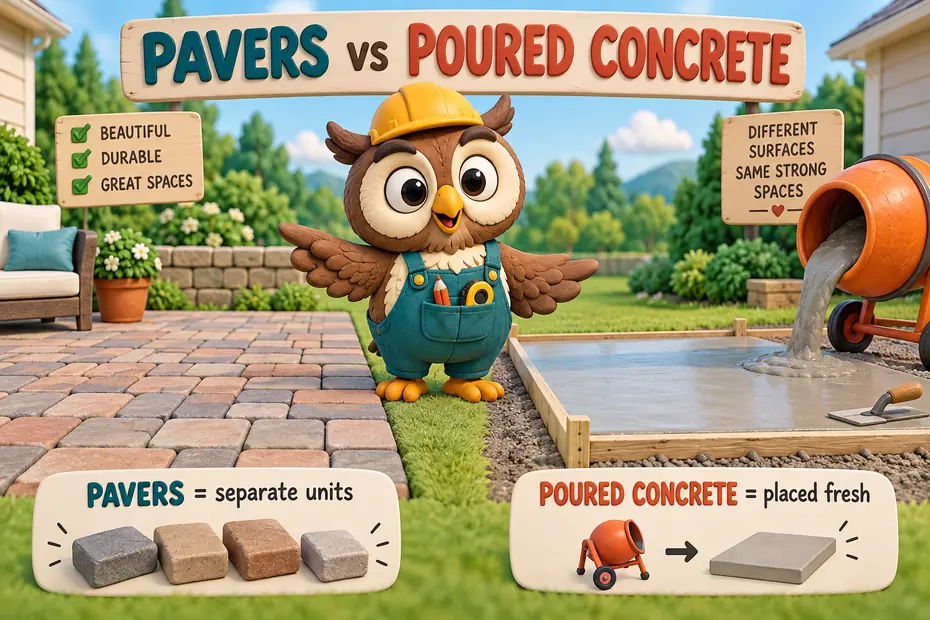
                  Pavers are separate units; poured concrete forms a slab.

                  Choosing Between Pavers and Poured Concrete: Benefits and Considerations for Outdoor Spaces

                    When it comes to choosing between pavers and poured concrete for your outdoor spaces, it’s important to understand the benefits and considerations of each option. As an expert in the field, I’ve seen firsthand the impact that the right choice can have on the overall look and durability of a project. In this text, I’ll guide you through the key factors to consider when deciding between pavers and p

                    Stake means a post or interest; steak means food.

                    Mastering the Difference: How to Use “Stake” and “Steak” Appropriately for Effective Communication

                      Stake can mean a pointed post, an interest or share, or something risked; steak is a food word for a cut or slice, commonly of meat or fish. Write “a garden stake,” “a stake in the business” and “a beef steak.” Stake also works as a verb: “Stake the plant.” A garden stake supports a… Read More »Mastering the Difference: How to Use “Stake” and “Steak” Appropriately for Effective Communication

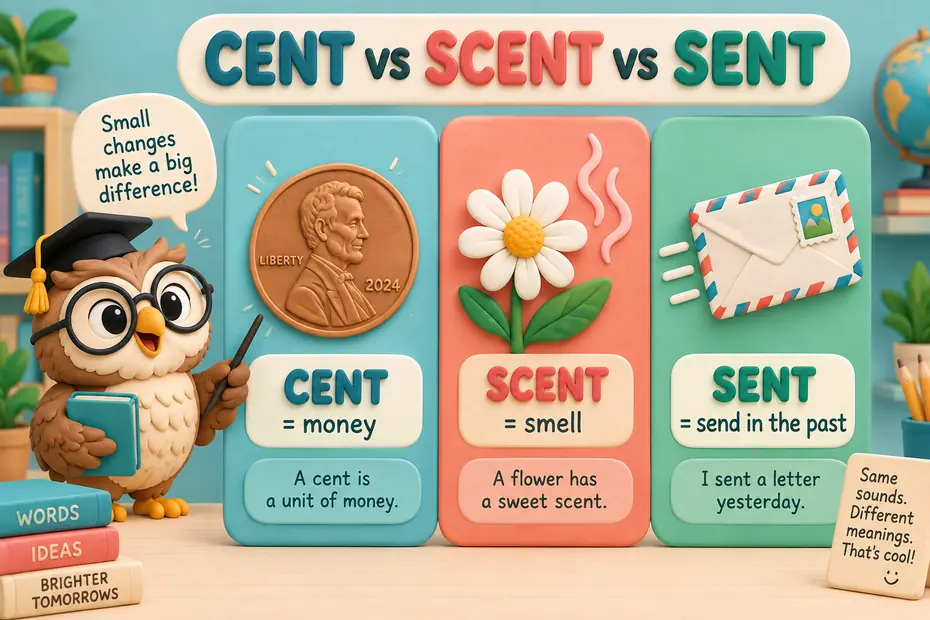
                      Cent is money, scent is smell, and sent is a form of send.

                      Understanding the Proper Usage of “cent vs scent vs sent” for Clear and Effective Communication

                        Have you ever found yourself confused between cent, scent, and sent? These three words may sound similar, but they have completely different meanings. In this text, I’ll guide you through the proper usage of cent, scent, and sent, so you can confidently use them in your everyday writing.
                        Cent, spelled c-e-n-t, refers to a unit of currency equal to one hundredth of a dollar. It’s important to know

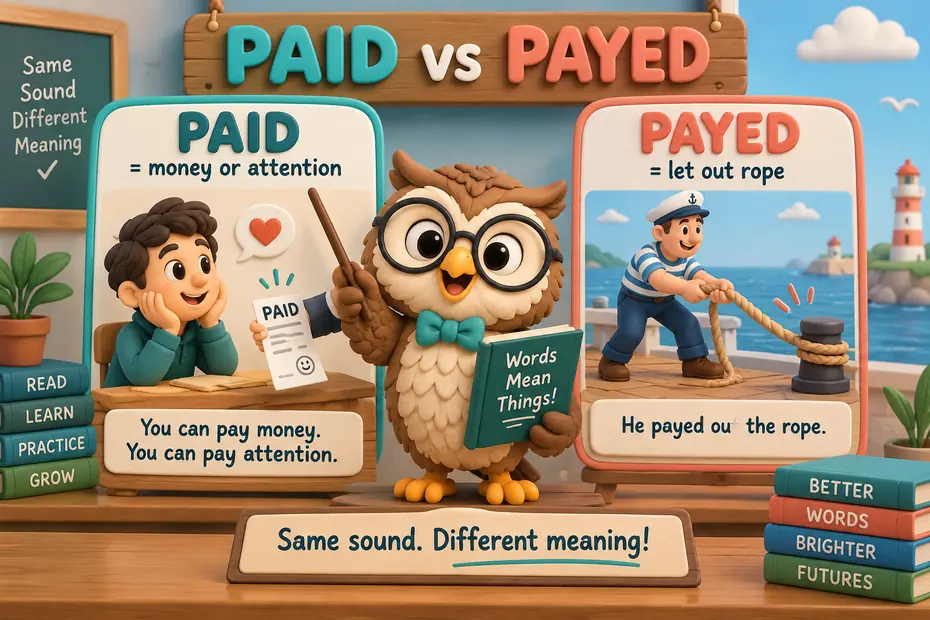
                        Paid belongs to everyday payment and attention uses; payed has technical senses.

                        Understanding the Difference Between ‘Paid’ and ‘Payed’ and How to Use Them Appropriately

                          Use paid for money, attention, compliments and most ordinary past-tense uses of pay. Payed is a real but specialized form used when letting out rope or cable and when coating something with a waterproof material. “I paid the invoice” is correct; “I payed the invoice” is not the standard spelling for a payment. The earlier… Read More »Understanding the Difference Between ‘Paid’ and ‘Payed’ and How to Use Them Appropriately

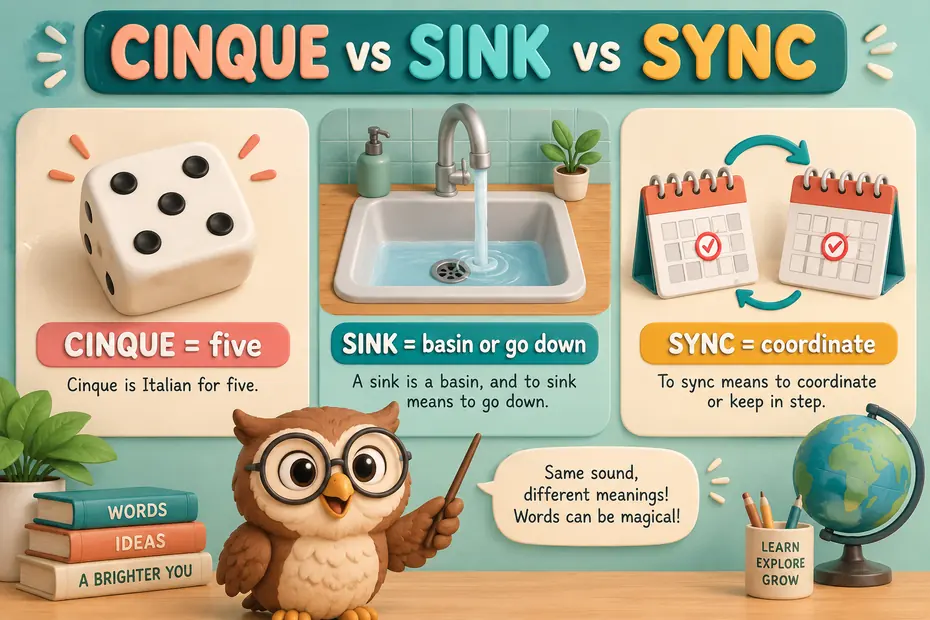
                          Cinque means five; sink names a basin or downward movement; sync means coordinate.

                          Cinque vs Sink vs Sync: Mastering the Art of Using Them Appropriately

                            Have you ever found yourself confused between “cinque,” “sink,” and “sync”? These three words may sound similar, but they have completely different meanings and uses. In this text, I’ll guide you through the proper usage of “cinque,” “sink,” and “sync,” so you never mix them up again. Understanding the distinctions between these words is crucial for clear communication and avoiding embarrassing mi

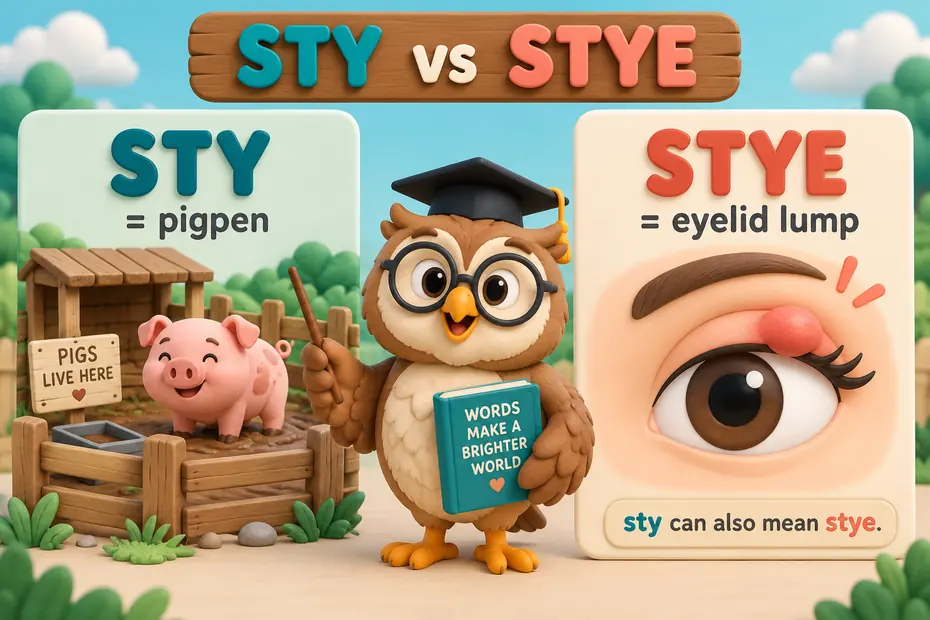
                            Sty names a pig enclosure; stye names an eyelid lump, also spelled sty.

                            Understanding the Difference Between Sty and Stye: How to Use Them Appropriately

                              Have you ever found yourself confused between “sty” and “stye”? Don’t worry, you’re not alone. As a seasoned writer, I’ve come across this common dilemma many times. In this text, I’ll clarify the difference between these two similar-sounding words and provide you with the knowledge you need to use them appropriately.
                              Firstly, let’s address the “sty.” A sty, spelled S-T-Y, refers to a small, painf