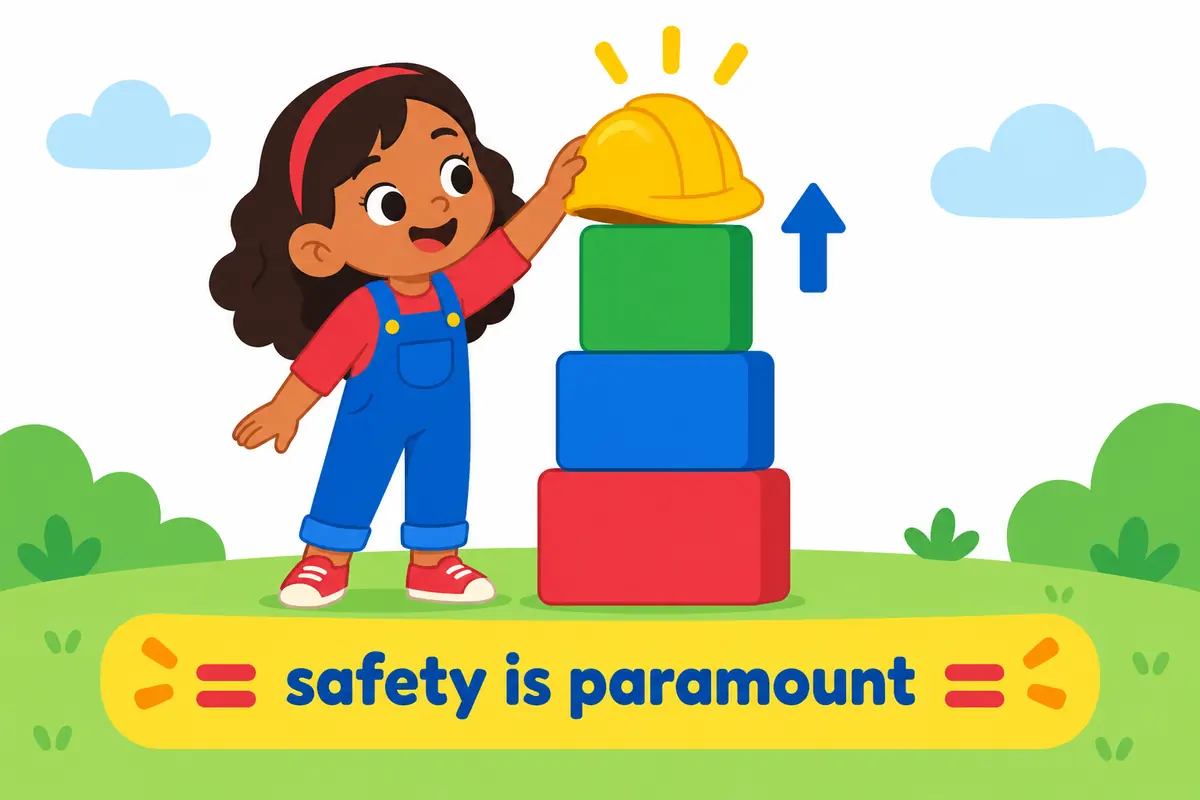
Paramount means more important than anything else; to use paramount in a sentence, place it after the verb be or before a noun such as concern: “Safety is paramount.” The adjective rarely compares, so careful writers avoid more paramount and most paramount in precise prose.
Paramount at a glance
- Paramount is an adjective meaning more important than anything else.
- Its commonest position is predicative, after the verb be: safety is paramount.
- It also works before a noun: the paramount concern, a paramount duty.
- It does not normally take more or most, because it is already absolute.
- It pairs with importance, concern, consideration, duty and interest.
- The commonest error is using paramount where important or urgent fits, which makes the claim sound inflated.
What does paramount mean?
Paramount is an adjective meaning more important than everything else, or supreme in rank and authority. The Cambridge entry for paramount gives both the importance sense and the supreme-authority sense, and the fixed phrase of paramount importance carries the first into formal writing.
| Sense | Plain meaning | Example sentence |
|---|---|---|
| Highest importance | More important than all else | Safety is paramount on the site. |
| Supreme authority | Holding the highest rank | The court is paramount in constitutional matters. |
| Overriding claim | Taking precedence legally | The interest of the child is paramount. |
One limitation is worth stating. Paramount is a strong word, and that is its risk. It suits safety rules, legal duties and stated priorities, but a paragraph that calls every routine task paramount drains the word of force. Where the thing is merely important or time-sensitive, important and urgent are more honest, and more persuasive.
How do you use paramount in a sentence?
The adjective settles into two positions. After the linking verb be it describes a priority, and before a noun it labels the priority itself; in both, the thing it outranks stays unspoken.
| Pattern | Example | What it signals |
|---|---|---|
| be + paramount | Patient comfort is paramount. | A priority stated as the top value. |
| paramount + noun | Our paramount concern is fairness. | The single most important item, named. |
| of paramount importance | Accurate records are of paramount importance. | A fixed formal phrase common in policy. |
| remain + paramount | Safety remained paramount throughout. | Continuity of the priority over time. |
| deem + object + paramount | The board deemed speed paramount. | A considered judgement by a group. |
For a strong but less absolute claim, the supreme authority and paramount overlap, though supreme points to rank while paramount points to priority.
Paramount in a sentence: examples across contexts
Paramount moves between formal and everyday settings without changing shape. The nine sentences below keep the same adjective while changing who is speaking and why.
| Context | Example sentence | Why this works |
|---|---|---|
| Classroom | Finishing the experiment safely was paramount. | A priority in a simple past sentence. |
| Workplace email | Meeting the deadline is paramount this week. | Predicative use in business writing. |
| News report | Rescue workers said speed was paramount. | Reported speech with the adjective after be. |
| Legal writing | The welfare of the child is paramount. | A statutory-style priority. |
| Academic writing | Accuracy remains paramount in replication. | A formal, enduring standard. |
| Conversation | Getting everyone home safe is paramount. | The same word in relaxed speech. |
| Policy document | Public trust is of paramount importance. | The fixed formal phrase at work. |
| Sports | Discipline is paramount in the final minutes. | A coach stating a principle. |
| Design brief | Accessibility is paramount for this interface. | A design value stated plainly. |
Paramount vs vital
Paramount and vital support both signal high importance, but they rank differently.
| Attribute | paramount | vital |
|---|---|---|
| Core meaning | More important than all else | Necessary to life or success |
| Strength | Absolute, top of a ranking | Essential, but one of several |
| Typical frame | be paramount | be vital to or for |
| Common partner | importance, concern, duty | organs, support, information |
| Comparison | Rarely compared | Often qualified, as in absolutely vital |
| Register | Formal and legal | Neutral to formal |
Verdict: use paramount for an overriding priority and vital for something necessary to success without claiming the top rank.
Word forms and grammar of paramount
Paramount itself never changes form; what changes is the phrases built around it. The table also marks the forms learners invent by analogy with other adjectives.
| Form | Part of speech | Example |
|---|---|---|
| paramount | adjective | Honesty is paramount. |
| paramountcy | noun, legal | The paramountcy of the child’s interest is settled. |
| paramountly | adverb, non-standard | Avoid paramountly; write above all. |
| of paramount importance | fixed phrase | Accuracy is of paramount importance. |
| the paramount concern | adjective + noun | The paramount concern is trust. |
| more paramount | non-standard comparison | Say more important instead. |
The root also appears in paramour, but the two words are unrelated in meaning; paramour is a noun for a lover, not a synonym for chief.
Common mistakes with paramount
- Incorrect:
Safety is more paramount than speed.Correct: Safety is paramount, and speed matters less. Rule: Paramount is absolute, so it is not compared with more or most. - Incorrect:
It is paramount that we should to leave.Correct: It is paramount that we leave. Rule: The clause after that takes a plain verb; do not add should to. - Incorrect:
Our paramount is quality.Correct: Quality is our paramount concern. Rule: Paramount is an adjective, not a noun, so give it a noun or the verb be. - Incorrect:
The paramount importance is safety.Correct: Safety is of paramount importance. Rule: The fixed phrase is of paramount importance, not the paramount importance is. - Incorrect:
He paramountly insisted on caution.Correct: He insisted on caution above all. Rule: Paramountly is not standard; use an adverbial phrase.
Practice using paramount
The six exercises mix gap-filling, error repair and register choices. Check the reasoning in the answer list, not only the key.
- Fill the gap: In the safety briefing, the manager said that care was ______.
- Fill the gap: Secrecy is of ______ importance before the announcement.
- Choose the better word: For a broken leg, prompt treatment is (paramount / urgent) tonight.
- Correct the error: Fairness is more paramount than speed.
- Build a sentence: use paramount + noun about trust in a school council.
- Spot the register: which belongs in a policy document — accuracy is of paramount importance, or accuracy is super important?
Answers
- paramount — the adjective follows the linking verb was.
- paramount — the fixed phrase is of paramount importance.
- urgent — the sentence is about timing, while paramount ranks importance.
- Fairness is paramount, and speed matters less — drop the comparison.
- Model answer: Building trust is the paramount concern of the school council.
- Accuracy is of paramount importance — a policy keeps the formal fixed phrase.
The bottom line
Use paramount in a sentence to name the single highest priority, usually after the verb be or before a noun such as concern or duty. Two nuances decide most uses: the adjective is absolute, so it takes no more or most, and it belongs to formal priorities rather than casual approval. Where several things matter greatly, the principal reason is a fairer word than paramount.

Frequently asked questions about paramount
Can paramount be compared as more or most paramount?
No. Paramount already means the highest, so more paramount and most paramount are logically empty and careful editors avoid them. If a sentence truly needs a ranking, use more important or more urgent instead. Writers occasionally intend emphasis, but the safer fix is to state the priority once and drop the comparison.
Does paramount come before or after the noun?
Both positions are standard. After be it states a priority, as in safety is paramount. Before a noun it labels the priority itself, as in the paramount concern or a paramount duty. The predicative pattern is more common in speech and short writing, while the attributive pattern dominates formal and legal prose.
What is of paramount importance?
Of paramount importance is a fixed formal phrase meaning extremely important, and it behaves like an adjective phrase after be. Safety is of paramount importance carries the same priority as safety is paramount but sounds more official. The phrase suits policies and formal statements, while the bare predicate suits everyday writing.
Is paramount stronger than important?
Much stronger. Important means it matters; paramount means it matters more than everything else and ranks first. Using paramount for routine tasks flattens the word, so reserve it for genuine priorities such as safety, fairness or a child’s welfare. When several things matter, name the leader with paramount and the rest with important.
Paramount means more important than anything else in a particular situation. It is a formal adjective for the leading priority, as in Safety is paramount or a paramount concern; choose a more modest word such as important when you do not mean “the most important.”
What does paramount mean in a sentence?
Paramount describes something that ranks above other concerns in importance. Cambridge labels it formal, and Oxford labels it an adjective and gives examples such as “Safety is paramount” and “paramount consideration.” For example, “Protecting customer data is paramount” says that data protection takes precedence over the other priorities being discussed.
The word is strongest when the sentence makes the comparison clear. Important can describe many useful or significant things; paramount points to the one concern that comes first in the relevant set. It does not automatically mean urgent, easy, or successful.

How do you place paramount in a sentence?
Use paramount in two common positions: before a noun it describes, or after a linking verb such as be. The preserved section below says to place the word “before the noun or subject”; that shortcut is inaccurate for the second pattern. In “Safety is paramount,” the adjective follows the linking verb and describes the subject. Cambridge Grammar explains both adjective positions.
| Pattern | Example | What it does |
|---|---|---|
| Subject + linking verb + paramount | “Accuracy is paramount.” | States the top priority. |
| Paramount + noun | “Accuracy is a paramount concern.” | Places the adjective before the noun it modifies. |
| Of paramount importance | “Clear instructions are of paramount importance.” | Uses a common formal phrase. |
| Paramount to + goal or undertaking | “Reliable timing is paramount to a fair launch.” | Connects the priority to a goal or undertaking. |

What words commonly follow paramount?
Paramount can describe a concern, consideration, goal, need, duty, or responsibility. For importance, the usual phrase is of paramount importance. These pairings work when the sentence makes clear what ranks highest in the relevant context.
- Concern: “Keeping the bridge open during repairs was a paramount concern.”
- Consideration: “Passenger safety remains the paramount consideration.”
- Goal: “For the rescue team, locating the missing hiker was paramount.”
- Importance: “It is of paramount importance to label the samples correctly.”
- Responsibility: “The editor considered accuracy her paramount responsibility.”
Use a concrete noun instead of relying on a string of abstract claims. “Privacy is paramount in this survey” tells readers what comes first; a following sentence can name the safeguard, such as collecting only the data needed for the stated purpose.

How is paramount different from important or urgent?
Important signals significance without saying that something outranks every other concern. Urgent signals a need for prompt action. Paramount signals top relative importance, whether or not the matter is time-sensitive.
| Word | Main idea | Example |
|---|---|---|
| Important | Significant or consequential | “The report contains important background.” |
| Urgent | Needs prompt attention | “The urgent repair cannot wait until Monday.” |
| Paramount | Ranks above other concerns | “During the evacuation, public safety was paramount.” |
Because paramount already expresses the highest rank, “very paramount” or “most paramount” can sound redundant in edited prose. This is a style recommendation rather than a categorical grammar rule. If you mean “quite important” without claiming first place, write very important. The word is formal, so the main thing may sound more natural in casual conversation.
How can I keep paramount precise?
Some preserved examples use paramount as a broad intensifier instead of showing a clear comparison. The source’s simple gloss “very important” understates the word’s strongest meaning: more important than anything else in the stated situation. A sentence such as “During a laboratory test, preventing contamination is paramount” makes that context visible.
| Preserved wording to read carefully | More specific alternative | Why |
|---|---|---|
| “The paramount importance of networking can help college students…” | “Networking can help students find internships; for a student focused on that goal, building relevant contacts may be paramount.” | The importance of an action does not itself cause the outcome. |
| “Paramount clarity” | “Clear instructions are paramount when a team must follow the same procedure.” | The adjective sounds more natural after a linking verb here. |
| “The paramount role of time management is crucial…” | “For a student balancing coursework and a job, managing time may be paramount.” | Avoid stacking paramount and crucial as competing emphasis words. |
The preserved sentence “Being respectful to elders is paramount in Indian culture” makes a broad generalization. Customs and priorities vary among people and families; a context-specific example would be “In this family, listening to older relatives is a paramount value.” The original wording remains in the source section for preservation, not as a universal claim.
More paramount sentence examples
- During the storm, keeping the ferry passengers safe was paramount.
- For the museum conservator, protecting the original paint was a paramount concern.
- For this project, obtaining clear consent was of paramount importance before collecting personal information.
- When the deadline moved forward, finishing the required safety checks became paramount.
- In the recipe test, accurate oven temperature was paramount to a fair comparison.
- The coach said teamwork was paramount, even when individual players scored more points.
In each example, the surrounding words identify the situation in which one concern takes precedence. That comparison keeps paramount precise instead of turning it into a general synonym for “good” or “useful.”
Frequently asked questions about paramount
Is paramount an adjective?
Yes. Paramount is an adjective: it can come before a noun (“a paramount duty”) or after a linking verb (“the duty is paramount”).
Is paramount formal?
Yes. Cambridge labels paramount formal, so it suits reports, school writing, professional communication, and serious discussion. In casual speech, most important may feel more conversational.
What is a simple sentence with paramount?
“Safety is paramount.” This short sentence uses paramount after the linking verb is to say safety is the top priority.
For additional definitions and standard examples, see Cambridge Dictionary and Oxford Learner’s Dictionaries.
Note on the preserved examples below
The original examples that follow are retained, but some are broad or overstated. In particular, the source’s “very important” gloss is less precise than “more important than anything else in the situation”; its statement about “Indian culture” should not be generalized to all people or families. The source also says to put paramount before “the noun or subject.” Follow the grammar guidance above: place it before a noun (“a paramount concern”) or after a linking verb (“Safety is paramount”).
Understanding how to use the word “paramount” correctly in a sentence is paramount to effective communication. Paramount, in its essence, means of utmost importance or significance.
When crafting an example sentence with “paramount,” one must ensure that the context showcases the unparalleled significance of the subject matter. A well-constructed sentence utilizing “paramount” will clearly convey the critical nature or highest level of importance of the topic at hand.
7 Examples Of Paramount Used In a Sentence For Kids
- Paramount means very important.
- Kindergarten safety is paramount.
- It is paramount to be kind to others.
- Listening to the teacher is paramount in class.
- Following the rules is paramount during playtime.
- Sharing with friends is paramount in school.
- Being respectful to elders is paramount in Indian culture.
14 Sentences with Paramount Examples
- Understanding the paramount role of time management is crucial for success in college.
- It is paramount for college students to maintain a healthy work-life balance.
- Developing good study habits is paramount for excelling in academics in college.
- The paramount importance of networking can help college students in securing internships and job opportunities.
- Seeking help from professors or tutors when needed is paramount for a student’s academic progress.
- Keeping oneself motivated during challenging times is paramount for college students.
- Balancing academics and extracurricular activities is paramount for an enriching college experience.
- The paramount significance of mental health awareness should not be overlooked by college students.
- Participating in discussions and group projects is paramount for enhancing learning in college.
- Setting realistic goals and working towards achieving them is paramount for personal growth in college.
- The paramount need for effective communication skills cannot be stressed enough for college students.
- Taking care of physical health through regular exercise and proper nutrition is paramount for overall well-being in college.
- Engaging in constructive feedback and self-reflection is paramount for personal development in college.
- Understanding the ethical implications of academic integrity is paramount for college students to maintain their credibility.
How To Use Paramount in Sentences?
Paramount is used as an adjective to emphasize the importance or significance of something. When using Paramount in a sentence, it is crucial to position it correctly to convey your message effectively. For beginners, here are some tips on how to use Paramount in a sentence:
- Identify the main subject or idea that you want to emphasize as Paramount.
- Place Paramount before the noun or subject you want to highlight. For example: “It is Paramount to wear a helmet while riding a bike.”
- Use Paramount to stress the most crucial point in a sentence. For example: “Proper nutrition is Paramount for good health.”
- Remember that Paramount is used to indicate the highest level of importance, so only use it when something truly stands out as crucial or significant.
By following these simple guidelines, you can effectively incorporate Paramount into your sentences to emphasize the importance of specific ideas or concepts. As you become more familiar with using Paramount in sentences, you will be able to enhance your communication skills and convey your thoughts more clearly.
Conclusion
In conclusion, the importance of clear communication cannot be overstated, as it is paramount in effectively conveying information. Whether in professional settings, academic papers, or everyday conversations, using sentences with paramount clarity ensures messages are understood clearly and accurately. Failure to prioritize clarity can lead to misunderstandings, confusion, and misinterpretations.
By structuring sentences with paramount clarity, individuals can enhance the effectiveness of their communication and achieve better outcomes. This holds true in various contexts, emphasizing the significance of prioritizing clear and concise expression in all forms of written and spoken communication. Ultimately, choosing words wisely and constructing sentences with paramount clarity can greatly improve understanding and facilitate successful interactions.