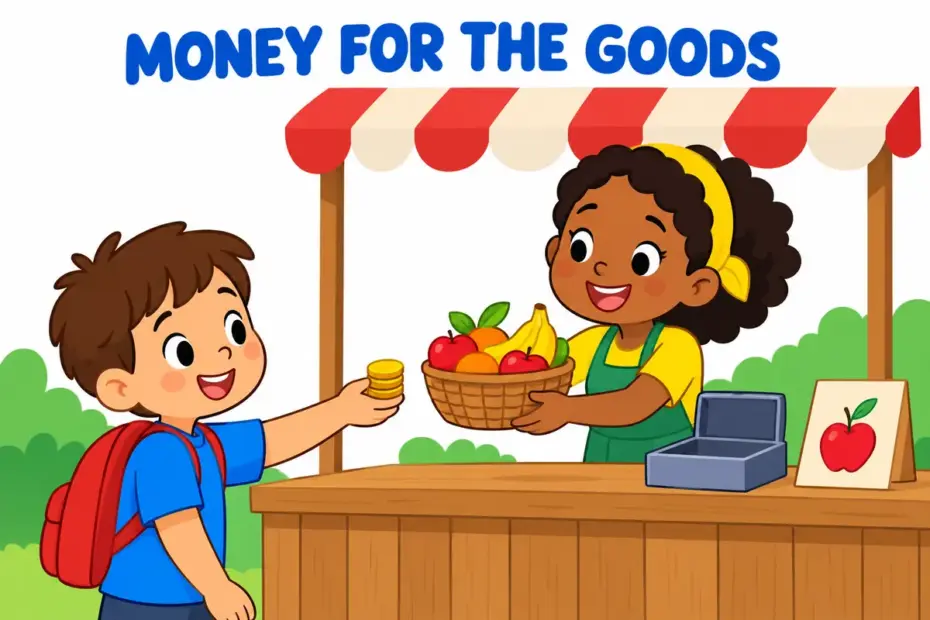
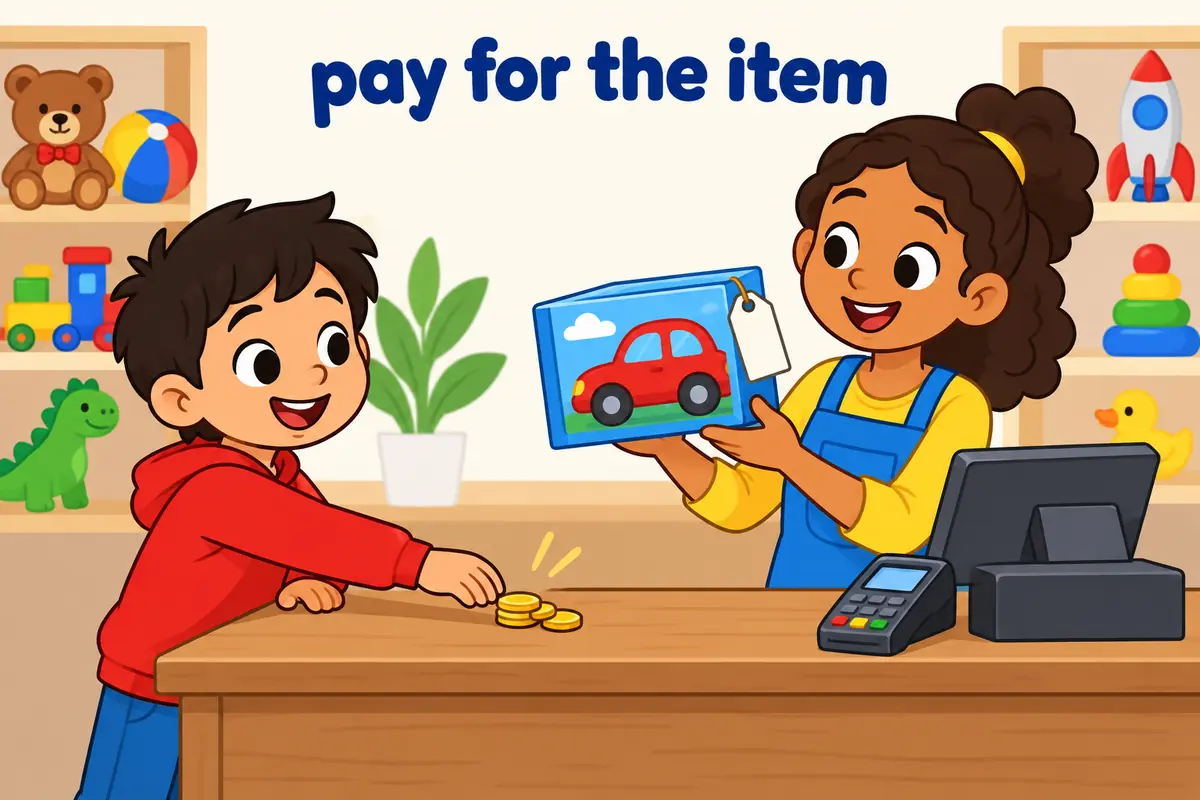
Pay for means to give money in exchange for something, or to bear the results of a choice. To use pay for in a sentence, put the amount after pay and the thing bought after for: “They paid two hundred pounds for the bike.” The word for marks a purchase rather than a person.
Pay for at a glance
- Pay for is a phrasal verb; its forms are pay for, pays for, paid for and paying for.
- It means to give money in exchange for something, or to suffer the results of an action.
- The usual pattern is pay for plus the thing bought, or pay plus an amount plus for plus it.
- The verb belongs to everyday speech as well as business writing about costs and consequences.
- The commonest error is confusing pay for with pay off, which means to finish a debt.
What does pay for mean?
Pay for is a phrasal verb meaning to give money in exchange for goods or a service, or to suffer the results of an action. The Cambridge entry for pay for records both the buying sense and the sense of bearing a penalty, and the context decides which one a sentence carries. A family that can afford a holiday has the money ready before it pays for anything.
| Sense | Plain meaning | Example sentence |
|---|---|---|
| Buy with money | Give money in exchange for goods or a service | She paid for the groceries with a card. |
| Settle a bill | Cover the cost of something for someone | Let me pay for your ticket today. |
| Suffer the results | Bear the consequences of a mistake | He paid for that shortcut after the audit. |
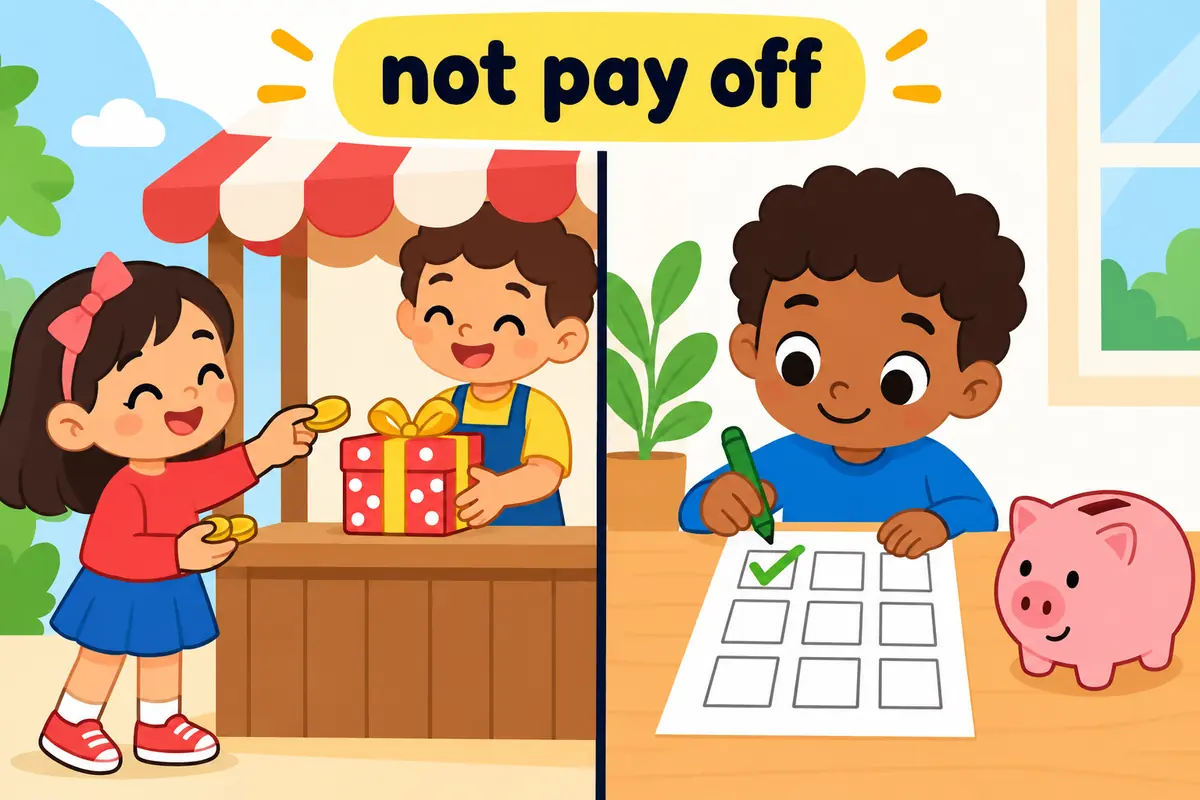
One limitation is worth stating plainly. Pay for is not the verb for clearing a debt; that is pay off. You pay for goods as you buy them, but you pay off a loan when the last instalment settles it. Where no money changes hands and the price is moral, atone for a mistake fits better than paying for it.
How do you use pay for in a sentence?
Five patterns cover almost every real sentence, and the choice between them turns on whether you name an amount, a person or a consequence.
| Pattern | Example | What it signals |
|---|---|---|
| pay for + thing | We paid for the repairs ourselves. | Names what the money covered. |
| pay + amount + for + thing | They paid two hundred pounds for the bike. | Adds the exact sum and the item. |
| pay for + person | She paid for her brother at the till. | Pays on someone else’s behalf. |
| pay for + abstract noun | The company paid for its carelessness. | The consequence sense, about conduct rather than goods. |
| pay for + thing + with + method | He paid for the meal with cash. | Names the means of payment. |
Pay for in a sentence: examples across contexts
The verb keeps its meaning but shifts its company depending on the text. The twelve sentences below move from a shop counter to a finance report, and each one shows which words a writer reaches for alongside it.
| Context | Example sentence | Why this works |
|---|---|---|
| Everyday shopping | I paid for the bread and left the shop. | Keeps the object concrete and the action ordinary. |
| Workplace email | The department will pay for travel to the conference. | States who bears the cost, which is what a budget note needs. |
| Business news | Shareholders paid for the failed expansion with years of flat returns. | Uses the consequence sense in a financial report. |
| Academic writing | Rural families pay for distant schooling out of their own income. | Connects a cost to the group that bears it. |
| Legal writing | The tenant must pay for repairs caused by neglect. | Ties the payment to a defined duty. |
| Classroom discussion | Everyone paid for the class trip in weekly instalments. | Shows a shared cost divided over time. |
| Sports writing | The team paid for its slow start and lost by a point. | The consequence sense applied to a match. |
| Travel writing | Visitors pay for a guide who knows the old lanes. | Pairs a service with the reason it is worth the money. |
| Conversation | Do not worry, I will pay for the coffees. | A warm everyday use that offers to cover a small cost. |
| Opinion column | A city pays for cheap parking with clogged streets. | Balances a short-term gain against a long-term price. |
| Charity appeal | Donors paid for the new roof on the village hall. | Names the funded item so the gift is concrete. |
| Finance report | The firm repaid the loan it had used to pay for machinery. | Links borrowing to the asset it financed. |
Notice how the buying sense keeps a concrete object, while the consequence sense takes an abstract one such as carelessness or a slow start. That shift from goods to outcomes is the clearest signal of which meaning the sentence is using.
Pay for vs pay off
Pay for and pay off look almost identical but point in opposite directions: one buys or bears, the other ends a debt. The table sets out the contrast.
| Attribute | pay for | pay off |
|---|---|---|
| Core meaning | Give money for goods, or bear consequences | Clear a debt in full |
| Typical object | An item, a person or a mistake | A loan, a mortgage or a card |
| Direction | Money goes out for something received | Money closes an amount already owed |
| Register | Everyday to business | Business and personal finance |
| What it implies | A purchase or a price paid | An ending, with nothing left owing |
| Grammar | Separable in meaning, not in form | Frequently separated: pay the loan off |
A shop can compensate a customer who paid for a faulty item, a grant can defray the cost so nobody pays the full price, and an employer may reimburse an employee for money already spent. Each of those verbs handles a different stage of the same transaction.
Verdict: choose pay for when money buys something or when a price is borne, and pay off only when a debt is cleared and nothing is left owing.
Word forms and grammar of pay for
Pay for inflects through the irregular verb pay, and its noun cousin is payment. The table lists the forms and marks the construction that is not standard.
| Form | Part of speech | Example |
|---|---|---|
| pay for | phrasal verb, base form | We will pay for the tickets at the door. |
| pays for | phrasal verb, third person singular | He pays for his own training. |
| paid for | phrasal verb, past and past participle | They paid for the meal together. |
| paying for | phrasal verb, present participle | She is paying for the course monthly. |
| payment | noun | The first payment is due in March. |
| pay for to | non-standard | Avoid this; write pay to do something. |
The irregular past paid is the form learners misbuild most often. The noun settle a bill keeps the same idea of money changing hands, and the phrase call for patience shows how a different particle changes the whole meaning.
Common mistakes with pay for
- Incorrect:
I paid the dinner.Correct: I paid for the dinner. Rule: Use for before the thing bought; pay a person or pay a bill takes no for. - Incorrect:
We paid for the loan last month.Correct: We paid off the loan last month. Rule: Pay off means clear a debt, while pay for means buy something or bear a price. - Incorrect:
He paid for that he was late.Correct: He paid for being late with a written warning. Rule: The consequence sense takes a noun or a gerund, never a that-clause. - Incorrect:
Please pay for the rent on Friday.Correct: Please pay the rent on Friday. Rule: Rent and bills are direct objects, so they drop for. - Incorrect:
She paid for me the coffee.Correct: She paid for the coffee for me. Rule: Keep the thing bought next to for, and place the person after it.
Practice using pay for
Work through the six items, then check the reasoning rather than only the answer.
- Fill the gap: The council will ______ the new footbridge out of its roads budget.
- Choose the better word: After ten years the family finally (paid for / paid off) the mortgage.
- Correct the error: He paid for the electricity bill at the post office.
- Build a sentence: use pay for something with something about a train ticket bought by card.
- Spot the register: which belongs in a business email — the department will pay for the venue, or we will stump up for the venue?
- Rewrite in the past: They pay for the service monthly. Begin with They and use the past tense.
Answers
- pay for — the bridge is the thing the money buys, so the object follows for.
- paid off — a mortgage is a debt being cleared, which is the job of pay off.
- He paid the electricity bill at the post office — a bill is a direct object, so for is dropped.
- Model answer: She paid for the train ticket with a debit card at the machine.
- The department will pay for the venue — a business email keeps the neutral verb rather than the slangy stump up.
- They paid for the service monthly — the past tense is paid, and the object keeps for.
The bottom line
Use pay for in a sentence when money buys something or when somebody bears the price of a choice, and keep for before the thing obtained. The two nuances that decide most sentences are these: bills and rent are direct objects that drop for, and pay off, not pay for, is the verb for clearing a debt.
Frequently asked questions about pay for
When do you use for after pay?
Use for before the thing bought or the price being borne, as in pay for the tickets or pay for the delay. Drop for before a person, a bill or rent, so you pay the electricity bill and pay the landlord. The choice depends on whether the object is a purchase or a direct debt.
What is the difference between pay for and pay off?
Pay for means to buy something or to bear the results of an action, and it points at a purchase or a price. Pay off means to clear a debt completely, and it points at an ending. You pay for a car over time, but you pay off the loan when the last instalment lands.
Can pay for mean suffer the consequences?
Yes. In sentences such as the firm paid for its carelessness, the verb means to bear the results of a mistake, not to buy anything. This figurative sense takes a noun or a gerund, so you pay for being late or pay for the error, and the sentence implies a real cost was incurred.
Is pay for separable?
Pay for does not split the way some phrasal verbs do. The thing bought stays after for, so it is pay for the meal. The related verb pay off does separate, giving pay the loan off, but with pay for the two words stay together because for introduces the object.