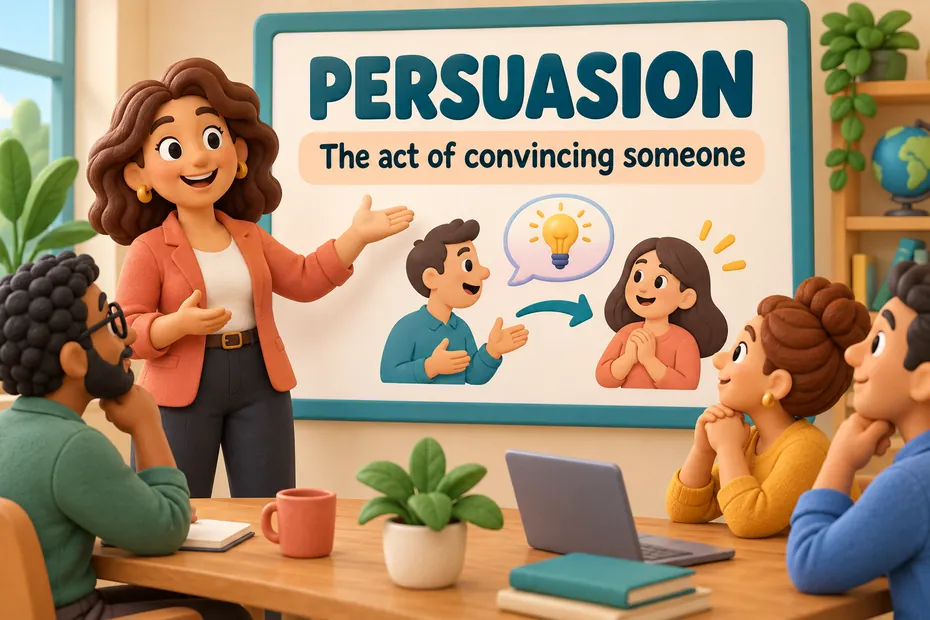
How do you use persuasion in a sentence?
Persuasion is a noun for the act or process of convincing someone, the ability to persuade, or a particular belief. Write “After some persuasion, she agreed to join the club.” Use persuade for the action and persuasive for a convincing quality: “He persuaded us with a persuasive explanation.” The surrounding sentence determines which meaning applies.
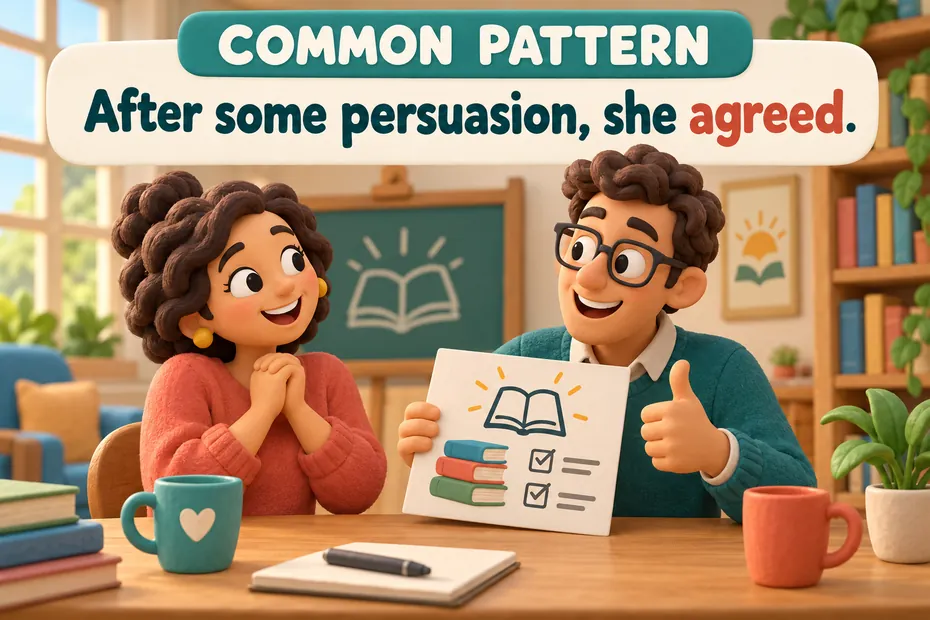
What does persuasion mean?
In its common communication sense, persuasion concerns getting someone to accept an idea or take an action. It can involve reasons, requests, or appeals; it is not restricted to a formal argument. “The invitation required little persuasion” suggests that the person was readily willing to accept. “The proposal required considerable persuasion” suggests more effort was needed.
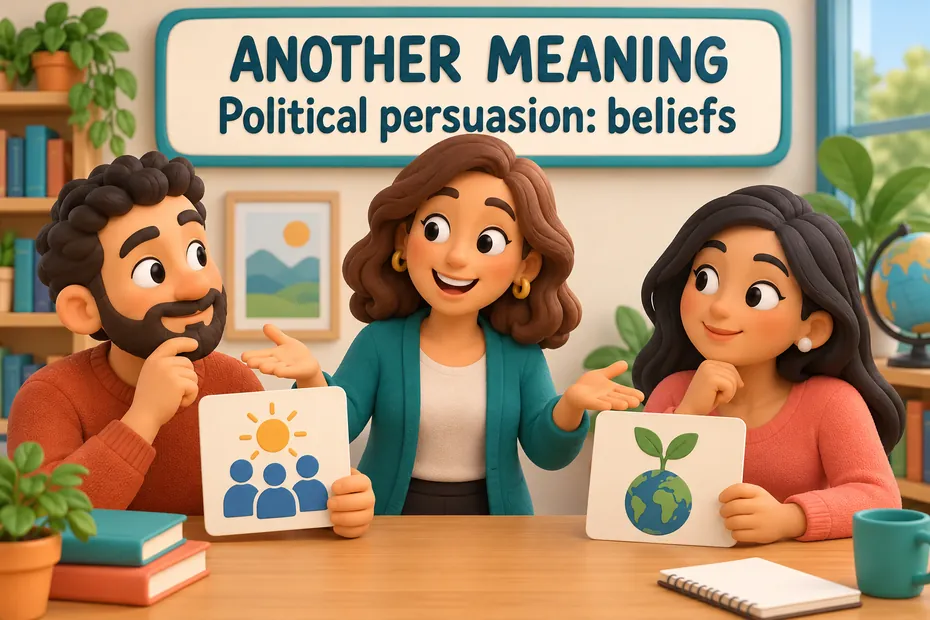
Merriam-Webster also records belief-related meanings. “People of different political persuasions attended the meeting” refers to differing beliefs or outlooks, not several attempts to convince people. This is why a definition limited to influence does not cover every use of the word.
Natural patterns and original examples
| Pattern | Example | Meaning |
|---|---|---|
| After some persuasion | After some persuasion, I agreed to try the new route. | A convincing effort preceded agreement |
| With a little persuasion | With a little persuasion, the committee extended the discussion. | Only a small effort was needed |
| Need no persuasion | She needed no persuasion to visit the bookshop. | She was already willing |
| Powers of persuasion | His powers of persuasion helped the group reach agreement. | His ability to convince people |
| The art of persuasion | The workshop explored the art of persuasion in public speaking. | Persuasion as a skill or practice |
| Political persuasion | Neighbors of different political persuasions worked together. | Beliefs or viewpoints |
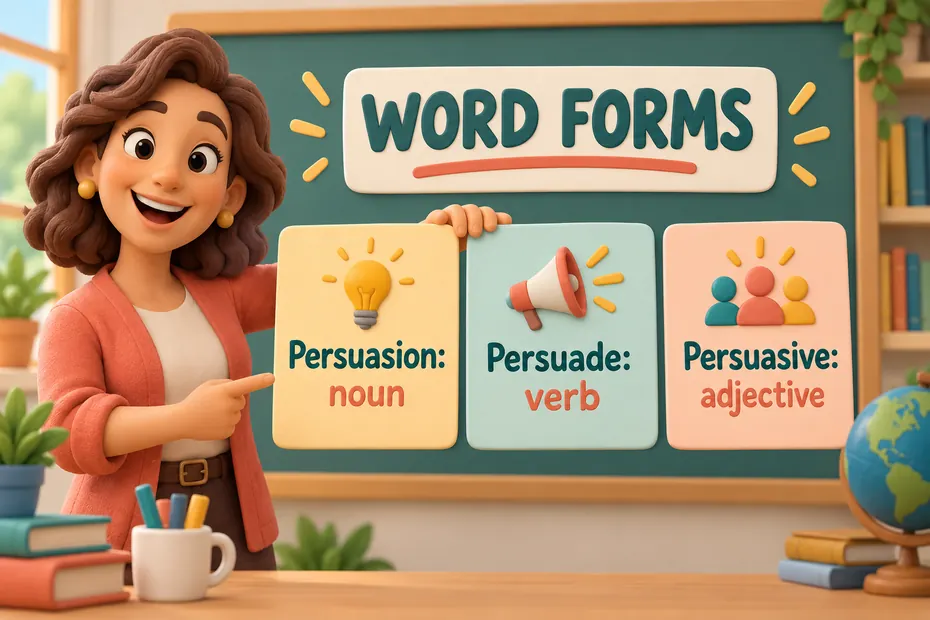
Persuasion, persuade, or persuasive?
Choose the word form that fits the grammatical job. Persuasion names the process, effort, ability, or belief. Persuade is the verb: “We persuaded the organizer to add another session.” Persuasive describes something that convinces or is capable of convincing: “The organizer heard a persuasive argument.”
Compare “Her persuasion changed my decision” with “She persuaded me to change my decision.” Both are grammatical, but the verb version identifies the person and action more directly. “She persuasion me” is incorrect because a noun cannot fill that verb position. “Her explanation was persuade” is also incorrect; write “Her explanation was persuasive.”
The older guide below emphasizes constructing persuasive messages. That is related, but it differs from using the noun persuasion in a sentence. A sentence can be persuasive without containing this word. Conversely, “The lecture examined persuasion” contains the noun without trying to persuade its reader to do anything.
Grammar details that make examples sound natural
When describing the process, persuasion is commonly treated as uncountable: “some persuasion,” “much persuasion,” or “a little persuasion.” Write “It took a lot of persuasion,” rather than “It took many persuasion.” For an individual attempt, “a persuasive argument” or “an attempt at persuasion” is often clearer.
The plural persuasions is natural for different belief systems or outlooks: “people of various religious persuasions.” It can also occur in less common senses, so it is not inherently wrong. For a beginner’s sentence about a convincing effort, however, the uncountable construction is usually the easiest starting point.
Common verb patterns include “persuade someone to do something” and “persuade someone that something is true.” Write “I persuaded him to stay” for an action and “I persuaded him that the plan was workable” for a belief. These patterns help you expand an example instead of leaving the intended outcome vague.
Keep the outcome and tone clear
“We used persuasion” names a method but leaves the result open. “We persuaded the group to support the plan” normally presents the attempt as successful. If success is uncertain or the attempt failed, say so: “We tried to persuade the group, but they declined.” This prevents the reader from inferring an agreement that did not happen.
The word itself does not guarantee kindness, truthfulness, or fairness. The older children’s examples associate persuasion with polite speech, but that is a desirable practice rather than a complete definition. For a respectful example, write “I explained my reasons, listened to her concerns, and accepted her decision.” A sentence about persuasion can make room for disagreement.
To improve a vague example, replace “Persuasion helped the event” with “The organizer’s persuasion encouraged three volunteers to join the event.” The revision identifies who acted and what changed. If you cannot establish that causal connection, “The organizer invited three volunteers” makes a narrower statement without claiming persuasion caused their decision.
Frequently asked questions
Is persuasion a noun?
Yes. It can name convincing activity, the ability to convince, or a belief or outlook. Persuade is the related verb, and persuasive is an adjective.
Is a little persuasion correct?
Yes. “A little persuasion” is a natural phrase when describing a small convincing effort. For example, “It took a little persuasion to get the group to try a different meeting time.”
Can persuasion be plural?
Yes, especially when referring to beliefs or affiliations: “people of different political persuasions.” In the common process sense, use constructions such as “some persuasion” rather than counting individual persuasions.
Does persuasion always succeed?
No. A sentence can describe attempted persuasion without a successful result. “Her persuasion did not change his mind” is grammatical and makes the outcome explicit.
Sources and usage notes
Definitions and verb constructions were checked against Merriam-Webster: persuasion and Merriam-Webster: persuade. Added examples are original; the earlier article remains below.
Do you ever find yourself trying to convince others to see things from your point of view? That’s where the art of persuasion comes in. Persuasion is the process of influencing someone’s beliefs, attitudes, or behaviors through strategic communication and reasoning.
In everyday life, we utilize persuasion techniques to sway opinions, make decisions, and achieve our desired outcomes. Understanding the principles of persuasion can empower you to effectively communicate your ideas and achieve success in various aspects of your personal and professional life.
7 Examples Of Persuasion Used In a Sentence For Kids
- Persuasion is when we try to convince someone to do something.
- With a little persuasion, we can ask our friends to play with us.
- Using persuasion, we can make someone smile or feel happy.
- Persuasion is like using nice words to make others agree with us.
- Let’s use persuasion to share our toys and make new friends.
- When we use persuasion, we speak kindly and politely to make our point.
- With gentle persuasion, we can ask for help when we need it.
14 Sentences with Persuasion Examples
- Persuasion is a powerful tool to convince your classmates to join your study group.
- Use effective persuasion to encourage your friends to attend the college event with you.
- Employ the art of persuasion to negotiate with your professors for a deadline extension.
- A well-crafted speech can be a great example of successful persuasion.
- Practice the skill of persuasion to convince your parents to support your choice of major.
- Persuasion can be key in getting your classmates to vote for you in student council elections.
- Use the technique of persuasion to encourage your peers to participate in a charity event.
- Master the art of persuasion to convince your roommates to share household chores equally.
- Employ persuasion to sway your college administration to make positive changes on campus.
- A well-written essay can showcase your persuasion skills to potential employers.
- Harness the power of persuasion to motivate your friends to join you in a fitness challenge.
- Good communication skills and persuasion tactics can help you excel in college debates.
- Utilize the technique of persuasion to convince your professors to implement new teaching methods.
- Effective persuasion can help you secure sponsorships for college events and competitions.
How To Use Persuasion in Sentences?
To persuade is to convince someone to do or believe something by presenting logical arguments and evidence. When using the word persuasion in a sentence, it is important to consider the context in which it is being used. Here is a guide for beginners on how to use persuasion effectively in a sentence:
-
Identify the goal: Before using the word persuasion, be clear about the message you want to convey and the outcome you are trying to achieve. Are you trying to change someone’s opinion, convince them to take action, or simply inform them?
-
Choose your words wisely: Use language that is clear, concise, and compelling. Avoid using vague or overly complex language that may confuse the reader.
-
Provide evidence: Back up your argument with facts, examples, or data to strengthen your persuasion. This will make your point more convincing and help the reader understand your perspective.
-
Consider your audience: Tailor your persuasion to the person or group you are addressing. What appeals to one person may not necessarily work for another, so consider their beliefs, values, and interests.
-
Be respectful: When using persuasion in a sentence, be mindful of the other person’s opinions and perspectives. Respect their autonomy and be open to having a constructive dialogue.
By following these guidelines, you can effectively use persuasion in a sentence to communicate your message and influence others in a positive and respectful manner.
Conclusion
In conclusion, sentences crafted with persuasion aim to influence or convince the recipient to adopt a particular point of view or take a specific action. By utilizing rhetorical devices, emotional appeals, and logical reasoning, persuasive sentences can effectively sway opinions and guide decisions. Whether used in marketing campaigns, public speaking, or everyday conversations, the power of persuasion lies in its ability to communicate ideas compellingly and motivate others to act in a certain way.
The art of persuasion is an essential skill in various aspects of life, including politics, business, and personal relationships. Understanding how to construct sentences that evoke emotions, address objections, and present compelling arguments can help individuals communicate more effectively and achieve their goals. By mastering the art of persuasion, one can become more influential and successful in shaping opinions, driving change, and achieving desired outcomes.



