Pert is an adjective meaning lively and cheerful, or boldly impudent when it describes a reply. To use pert in a sentence, put it before the noun it describes: “She gave a pert answer and grinned.” A third sense describes a small, upturned nose, which is the one learners meet least often.
Pert at a glance
- Pert is an adjective; its adverb is pertly and its noun is pertness.
- The main sense is attractively lively, trim and cheerful.
- A second sense is impudent or saucy, especially of a reply or a manner.
- A third sense means small and slightly turned up, used mainly of a nose.
- The usual collocations are pert answer, pert nose, pert remark and pert little hat.
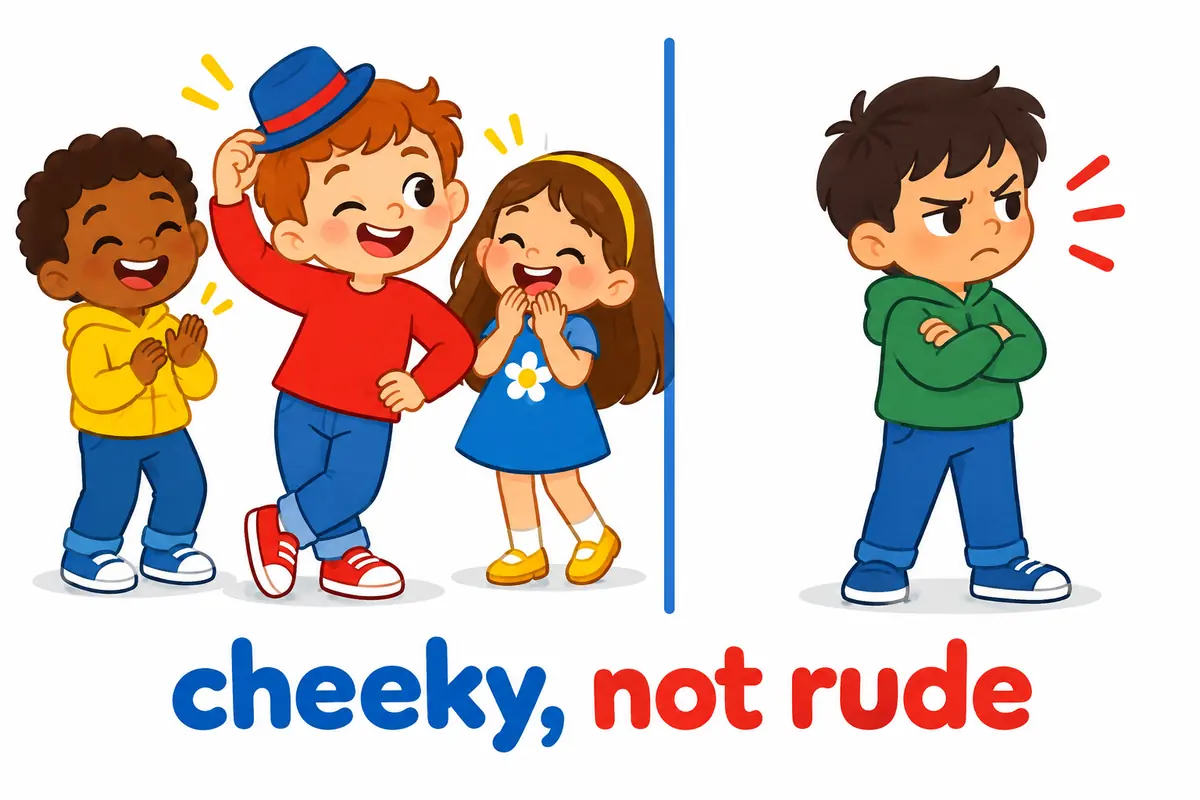
- The commonest error is using pert for plain rudeness, because the word keeps a note of charm.
What does pert mean?
Pert is an adjective meaning lively, cheerful and slightly bold. The Cambridge entry for pert records both the jaunty sense and the sense of a small, turned-up nose, while many dictionaries also list the older, sharper sense of impudent speech. The unifying idea is a bright, forward liveliness that stops short of real offence: a lively child may simply be energetic, but a pert one adds a touch of cheek.
| Sense | Plain meaning | Example sentence |
|---|---|---|
| Lively and trim | Brightly energetic and neat in appearance | She wore a pert little hat to the fair. |
| Impudent or saucy | Bold in a cheeky, often charming way | He gave a pert reply and hurried off. |
| Small and upturned | Used of a nose that turns slightly up | The child had a pert nose and freckles. |
One limitation matters. Pert is not a neutral word for confident speech. A pert remark is cheeky in a way that can still charm, so using it for serious rudeness flatters the speaker. Where the manner is genuinely disrespectful, impudent or rude is the honest choice, and bold simply describes confidence without the same edge.
How do you use pert in a sentence?
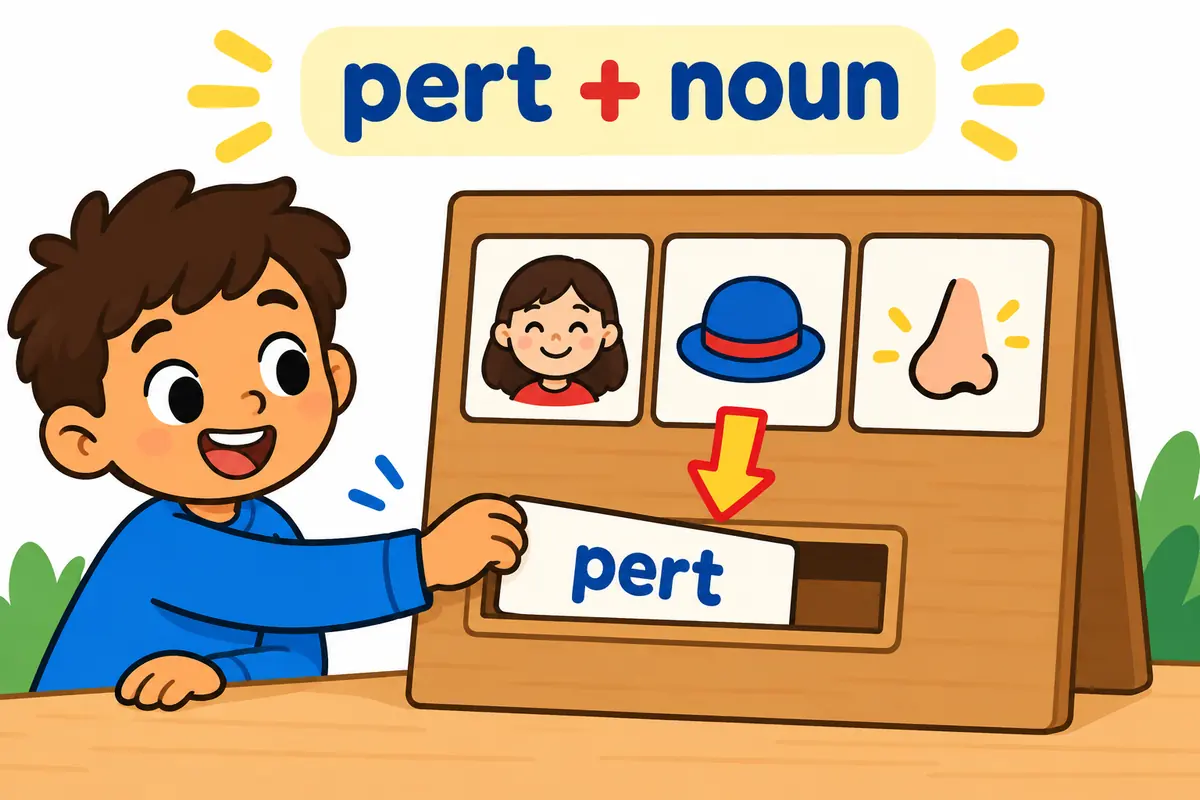
Pert works as an attributive adjective, so it usually sits before the noun: a pert answer. It can also follow linking verbs such as be, seem and sound, and it takes a regular adverb. Writers who mean bubbly energy rather than cheek often choose perky instead, while flippant marks a lighter, more dismissive tone than pert.
| Pattern | Example | What it signals |
|---|---|---|
| pert + noun | She flashed a pert smile. | The commonest pattern; the quality belongs to the noun. |
| be or seem + pert | His tone seemed pert rather than rude. | Predictative use, often to soften the judgement. |
| answer or reply + pertly | She answered pertly and left. | The adverb carries the manner of speaking. |
| a pert + feature | He has a pert nose and bright eyes. | Describes a small, neat physical feature. |
| more or most pert | Her hat was the most pert in the room. | Comparative and superlative; more pert is clearer than perter. |
The sense shifts with the noun. A pert hat, a pert nose and a pert reply all sound natural, because each names something small, neat or quick. A pert landscape sounds odd, since the adjective needs something little and lively to fasten onto.
Pert in a sentence: examples across contexts
Pert changes its company more than its core sense. The fifteen sentences below keep the same adjective while moving from a playground to a fashion page, and each one shows the mix of liveliness and cheek that the word carries. A writer who wants a stronger flavour of cheek may reach for saucy, which is franker than pert.
| Context | Example sentence | Why this works |
|---|---|---|
| Playground | She gave a pert wave and skipped back to her friends. | Pairs the adjective with a quick, cheerful action. |
| Classroom | His pert question made the whole class laugh. | Shows cheek that stays within bounds. |
| Workplace email | Her note was cheerfully pert, even under deadline. | Keeps the tone light without rudeness. |
| Fashion writing | A pert jacket turned the plain outfit into a statement. | Applies the trim, jaunty sense to clothing. |
| Descriptive prose | The girl had a pert nose and a crown of dark curls. | Uses the physical sense for one clear feature. |
| Dialogue tag | “Not likely,” he said in a pert voice. | The adjective colours how a line is spoken. |
| News feature | Her pert answers won the audience over. | Shows the charm the word can imply. |
| Restaurant review | The verdict was pert and warm at once. | Balances liveliness with friendliness. |
| Letter | I hope this pert greeting reaches you well. | Uses the adjective playfully in a personal note. |
| Academic prose | The critic calls the essay pert but never shallow. | Sums up a bold tone in a single word. |
| Advertising | A pert slogan kept the campaign light and memorable. | Applies the jaunty sense to a short, punchy phrase. |
| Sports commentary | Her pert comeback silenced the crowd for a second. | Shows the cheek sense under real pressure. |
| Home decor | A pert cushion and a bright rug lifted the plain room. | Carries the neat, jaunty sense into interiors. |
| Cookery | The chef added a pert garnish of mint to the plate. | Uses the adjective for a small, lively detail. |
| Memoir | I was a pert child who asked too many questions. | Uses the adjective for a remembered personality. |
Pert vs bold and saucy
Pert sits between two neighbours that pull in different directions. bold describes confidence without any hint of cheek, while saucy adds a franker, sometimes flirtatious edge. impudent is the harshest of the three, and it removes the charm that pert keeps.
| Attribute | pert | bold | saucy |
|---|---|---|---|
| Core meaning | Lively and slightly cheeky | Confident and willing to take risks | Cheeky in a franker, bolder way |
| Charm | Keeps a warm, playful note | Neutral, can be admiring | Can be flirtatious or teasing |
| Typical use | Replies, smiles, small features | Decisions, moves, colours | Remarks, jokes, winks |
| Strength | Gentle | Strong but not rude | Bolder than pert |
| Register | Slightly old-fashioned and literary | Neutral and common | Informal and playful |
Verdict: choose bold for plain confidence, saucy when the cheek is front and centre, and pert when the liveliness is small, neat and charming.
Word forms and grammar of pert
Pert is short and old, and its adverb pertly and noun pertness are still current even though the adjective itself now sounds slightly dated. Its opposite in manner is demure, which describes quiet modesty rather than bright cheek.
| Form | Part of speech | Example |
|---|---|---|
| pert | adjective | She gave a pert nod. |
| pertly | adverb | He answered pertly and turned away. |
| pertness | noun | There was a touch of pertness in her voice. |
| perter | non-standard comparative | Use more pert instead of perter. |
| pertest | non-standard superlative | Use most pert instead of pertest. |
Common mistakes with pert
- Incorrect:
He was pert to the teacher, so he was punished.Correct: He was rude to the teacher, so he was punished. Rule: Pert keeps a note of charm, so it is too gentle for real rudeness; use rude or impudent. - Incorrect:
She answered pert.Correct: She answered pertly. Rule: A verb needs the adverb, not the adjective. - Incorrect:
The whole valley looked pert in the sun.Correct: The whole valley looked bright in the sun. Rule: Pert needs something small, neat or lively, not a large landscape. - Incorrect:
That was a molto pert remark.Correct: That was a very pert remark. Rule: Pert is a plain, ungradable-in-form adjective, so use very or more, not borrowed intensifiers. - Incorrect:
His pertness made him popular precisely because he was rude.Correct: His pertness made him popular because it was never actually rude. Rule: Pertness is cheek with charm, so it cannot be defined by genuine rudeness.
Practice using pert
Work through the seven items, then read the reasoning rather than only the answer.
- Fill the gap: She tipped her hat at a ______ angle and smiled.
- Choose the better word: His joke was cheeky but never (pert / cruel).
- Correct the error: The reply came back very pert.
- Build a sentence: use pert with the noun nose in a description of a child.
- Spot the register: which belongs in a friendly feature – her pert answers won the crowd, or her rude answers annoyed the crowd?
- Rewrite with the adverb: Her smile was pert. Use pertly instead.
- Choose the sense: in the sentence a pert little hat, does pert mean cheeky or neat and jaunty?
Answers
- pert – the jaunty, trim sense fits a hat set at an angle.
- pert – the joke keeps its charm; cruel would remove all warmth.
- The reply came back pertly – the verb needs the adverb form.
- Model answer: The child had a pert nose and a wide grin.
- Her pert answers won the crowd – the feature keeps the word that balances cheek and charm.
- She smiled pertly – the adverb describes the manner of smiling.
- Neat and jaunty – of a hat, pert means trim and lively rather than impudent.
The bottom line
Use pert in a sentence for lively, neat charm with just a flicker of cheek, and attach it to something small or quick such as a reply, a smile or a nose. The two details that decide most sentences are that pert keeps an affectionate note, so it is too gentle for real rudeness, and that its older senses still colour the word, which is why it suits hats and noses as readily as remarks.
Frequently asked questions about pert
Is pert a compliment?
Pert is usually a mild compliment, because it describes liveliness and cheek that remain charming. Calling a reply pert suggests it was quick and slightly bold in an appealing way, not offensive. The word can turn negative only when a writer stretches it to cover genuine rudeness, which it does not really fit.
What does a pert nose mean?
A pert nose is small and turns slightly upward at the tip. This sense is the oldest of the physical uses and appears most in descriptive writing, where it suggests a neat, lively face. It carries no sense of rudeness, so a pert nose and a pert reply share the idea of small, bright liveliness.
Is pert a formal word?
Pert is not formal, and it now sounds slightly old-fashioned and literary. It appears in fiction, features and light description rather than in reports or business writing. For a neutral tone, cheerful or lively is safer, and for a stronger flavour of cheek, saucy is the more common choice.
What is the adverb of pert?
The adverb is pertly, as in she answered pertly, and the noun is pertness. Both are standard, though they share the slightly dated flavour of the adjective. The comparative perter and the superlative pertest exist but sound awkward, so most writers use more pert and most pert instead.