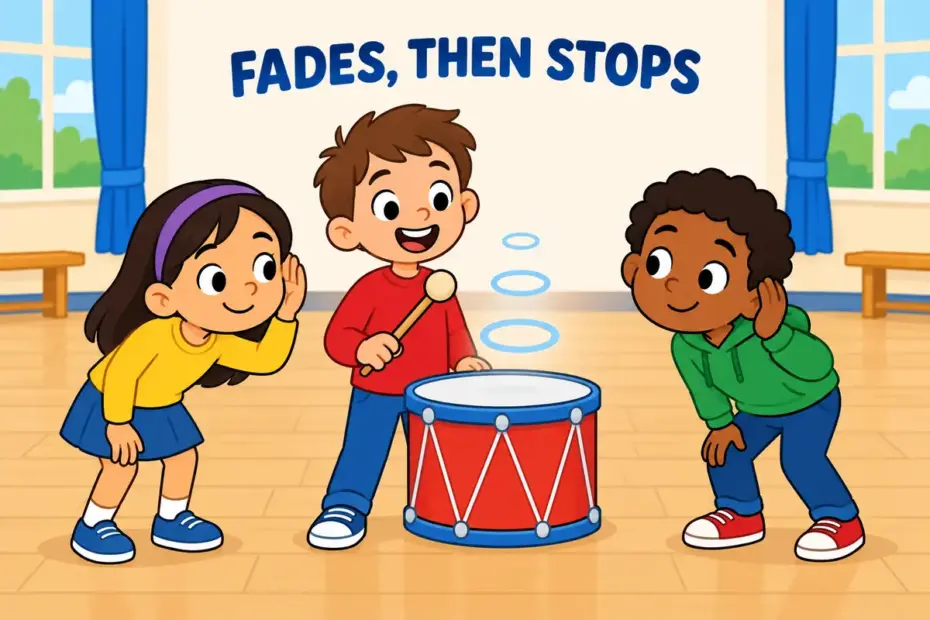
Peter out in a sentence describes something that dwindles gradually until it stops, rather than ending suddenly. The phrasal verb is intransitive, so it never takes an object: “The applause petered out,” not “petered out the applause.” Its usual subject is a sound, a supply, a campaign or an effort that loses force over time.
Peter out at a glance
- Peter out is an intransitive phrasal verb, so it takes no object in any sense.
- It means to diminish gradually and then stop, not to fail at a single stroke.
- A common extended pattern is peter out into plus a noun, as in peter out into silence.
- It belongs to neutral and slightly informal writing, common in reports and fiction.
- The commonest error is trying to give it an object, as in a sentence such as petered out the game.
What does peter out mean?
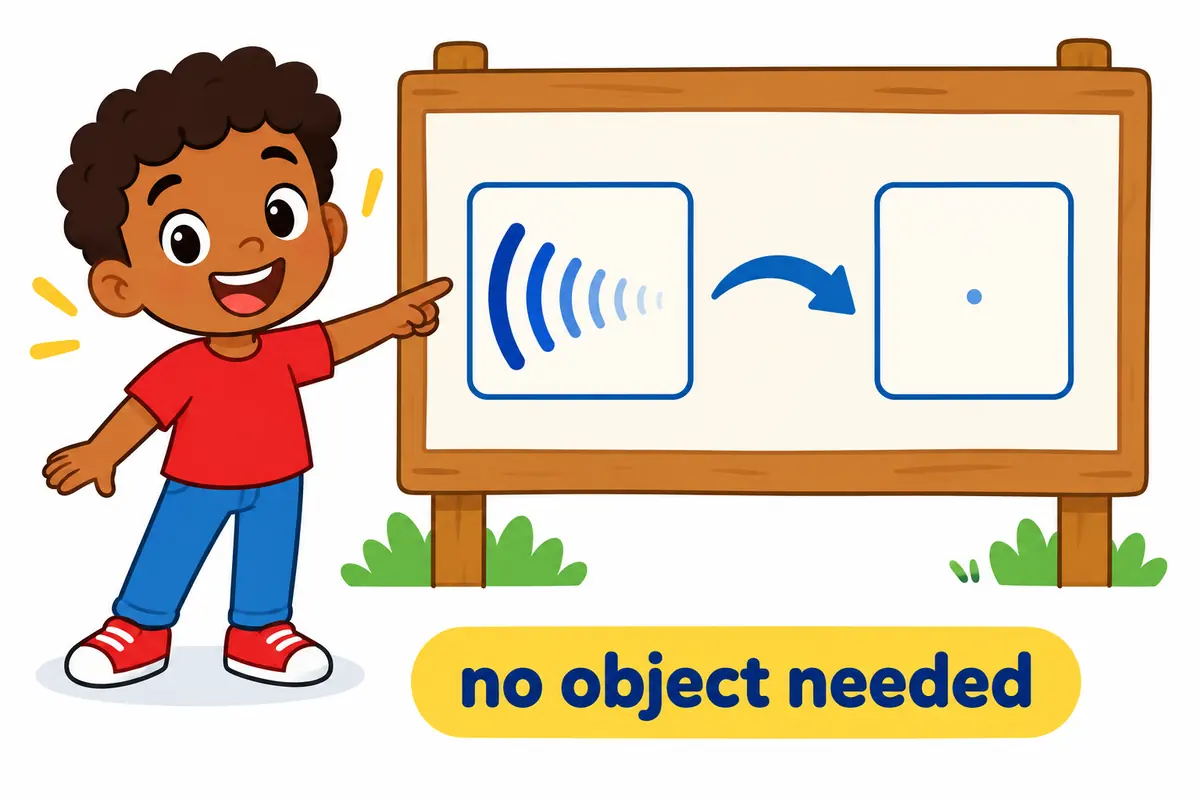
Peter out is a phrasal verb meaning to dwindle away little by little and come to an end. The Cambridge entry for peter out marks it as an intransitive verb, which is the single grammatical fact that governs every sentence: the thing that peters out is always the subject, never the object.
| Sense | Plain meaning | Example sentence |
|---|---|---|
| Dwindle to nothing | Weaken gradually until it stops | The cheering petered out before the last goal. |
| Run out gradually | Be used up little by little | Their savings petered out by the end of spring. |
| Come to an end | Of a path or stream, stop without continuing | The trail petered out at the edge of the marsh. |
One honest limit is worth stating. Peter out does not mean an abrupt end, so a tyre that bursts or a race that is stopped does not peter out. Where a supply is simply gone, run out of supplies is plainer, and where the decline is steady and measurable, dwindling numbers fits better.
How do you use peter out in a sentence?
Peter out keeps one shape: a subject, then the verb, and no object. The phrase often takes a prepositional phrase that names what the thing fades into or the condition it fades under.
| Pattern | Example | What it signals |
|---|---|---|
| subject + peter out | The music petered out. | The bare intransitive frame, with nothing after it. |
| peter out into + noun | The cheers petered out into silence. | Names what the fading thing becomes. |
| peter out as + clause | The campaign petered out as funds ran low. | Gives the reason or setting for the fade. |
| peter out without + noun | The talks petered out without agreement. | States what the ending failed to produce. |
| peter out in + time or place | The trail petered out in the marsh. | Places the point where something stops. |
Because the verb is intransitive, it has no passive form: a meeting cannot be petered out by anyone. Where a gradual fading is steady rather than final, the storm finally subsided describes the same movement toward calm.
Peter out in a sentence: examples across contexts
The verb keeps one meaning, a slow fade to nothing, while the subject changes from noise to money to effort. Each row shows the setting and why the sentence works.
| Context | Example sentence | Why this works |
|---|---|---|
| Classroom | The class discussion petered out as the bell approached. | Uses a natural subject that loses energy over time. |
| Workplace email | The project petered out once the funding ended. | Shows gradual collapse rather than a single failure. |
| News report | The protests petered out after several quiet weeks. | Reports a fading movement without overstatement. |
| Fiction | Her footsteps petered out down the corridor. | Names a sound that fades into distance. |
| Sports report | The home side challenge petered out in the final minutes. | Describes a team losing momentum to the end. |
| Conversation | The party petered out around midnight. | Works in speech for an event losing its energy. |
| Travel writing | The road petered out into a sandy track. | Uses the into pattern for a path ending. |
| Business report | Demand petered out as the season turned. | Keeps the neutral tone of a market summary. |
| Academic writing | The correspondence petered out after the first year. | Describes a record ending by degrees. |
| Diary | Our enthusiasm petered out before the paint dried. | Lets the fade apply to a feeling, with gentle humour. |
To fade into the background keeps the idea of a gentle decline, but peter out adds the extra step of stopping altogether. A waning interest is shrinking without necessarily reaching zero.
Peter out vs taper off
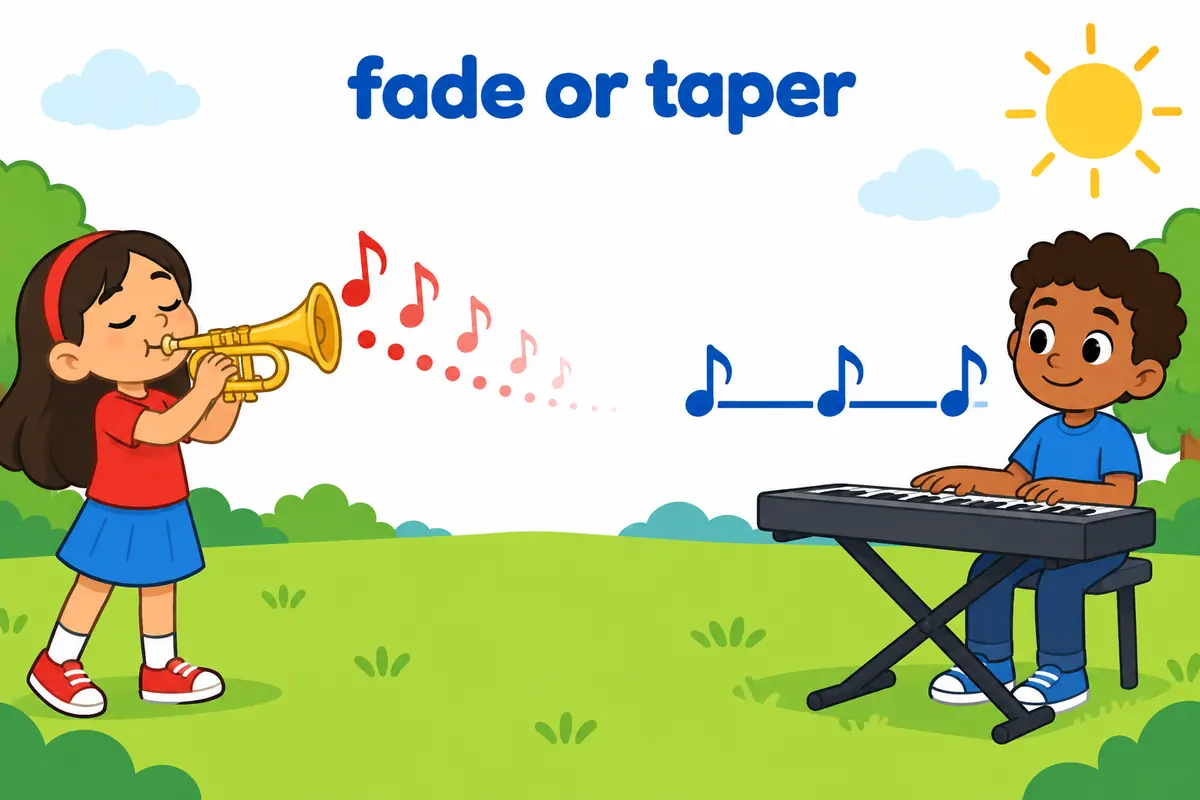
Peter out and taper off both describe a gradual decline, and the difference is where it stops. Taper off means the rate slows, often to a lower level that continues, while peter out means the thing fades until nothing is left.
| Attribute | peter out | taper off |
|---|---|---|
| Core meaning | Dwindle until it stops | Gradually reduce in rate or amount |
| Final state | Nothing remains | May settle at a low level |
| Typical subject | Noise, effort, a campaign, savings | Rain, demand, a dose, spending |
| Register | Neutral to slightly informal | Neutral and technical |
| What it implies | Losing energy to the point of ending | A controlled, measured decrease |
The verdict is straightforward: choose peter out when something dies away to nothing, and taper off the dose when the decline is deliberate or levels out. A scheme that loses support and stops has petered out; a treatment that is steadily reduced has tapered off.
Word forms and grammar of peter out
| Form | Part of speech | Example |
|---|---|---|
| peter out | phrasal verb, base | Do not let the effort peter out. |
| peters out | third person singular | The signal peters out beyond the hills. |
| petered out | past tense and participle | The conversation petered out at dusk. |
| petering out | present participle | The campaign is slowly petering out. |
| petering out (gerund) | noun use | Its petering out surprised nobody. |
There is no separate noun such as a peter-out, so writers use the gerund petering out when they need a noun. The verb never appears in the passive, and it never carries an object, which is the rule that keeps every form correct.
Common mistakes with peter out
- Incorrect:
The team petered out the game.Correct: The team game petered out. Rule: peter out is intransitive, so it takes no direct object. - Incorrect:
The talks were petered out by the chairman.Correct: The talks petered out after long disagreement. Rule: an intransitive verb has no passive form. - Incorrect:
The balloon pettered out with a bang.Correct: The balloon burst with a bang. Rule: peter out means a slow fade, and the spelling has one t before ered. - Incorrect:
We petered out of fuel.Correct: We ran out of fuel. Rule: run out of takes a supply as its object, which peter out cannot do. - Incorrect:
The music petered out it slowly.Correct: The music petered out slowly. Rule: an intransitive verb needs no object or pronoun after it.
Practice using peter out
- Fill in the blank: The applause ______ out as the curtain fell.
- Choose the better word: The doctor will (peter out / taper off) the medicine next month.
- Correct the error: The organisers petered out the festival.
- Build a sentence: use peter out into about a loud party growing quiet.
- Spot the register: which suits a business report – sales petered out, or sales flatlined?
- Fill in the blank: Their funding ______ out before the second year began.
Answers
- petered — the past tense of peter out is petered out.
- taper off — a measured, deliberate reduction is a taper, not a fade to nothing.
- The festival petered out — the phrasal verb is intransitive and takes no object.
- Model answer: The party petered out into a quiet conversation on the doorstep.
- Sales petered out — the neutral phrasal verb suits a gradual decline in a report.
- petered — the supply faded gradually and then stopped.
The bottom line
Use peter out in a sentence for anything that weakens gradually and then stops, from applause to savings to a campaign. The two facts that decide most sentences are that the verb is intransitive, so it never takes an object or a passive, and that it implies a slow fade rather than a sudden end. When the decline is deliberate or levels off, taper off is the sharper choice.
Frequently asked questions about peter out
Can peter out take an object?
No. Peter out is intransitive, so the thing that peters out is always the subject, as in the music petered out. Sentences such as petered out the meeting are wrong. If you need an object, use a verb like cancel, end or run out of, which do take one.
What is a synonym for peter out?
Dwindle, fade away, die down, subside and fizzle out all come close. Taper off is the nearest synonym but stops at a lower level rather than at nothing. Fizzle out is the closest in tone, though it often suggests an anticlimax after a promising start.
Is peter out used in formal writing?
It is neutral and slightly informal, so it fits news reports, business summaries and fiction better than a legal document. Formal writing often prefers dwindle, subside or decline instead. In a report the phrase is perfectly acceptable, but it reads better when the decline is genuinely gradual.
Does peter out always mean something ends completely?
Usually it does, because the thing fades to nothing. A path can peter out at a wall, a conversation can peter out into silence, and savings can peter out to zero. The sense of reaching an end is what separates peter out from taper off, which may leave something running at a lower level.
Have you ever heard of the term “peter out” and wondered what it meant? This phrase is used to describe something that gradually decreases in intensity or comes to an end, often fizzling out slowly.
When something peters out, it loses its momentum or strength over time until it eventually fades away. This expression is commonly used to talk about situations, activities, or even relationships that slowly lose their energy or come to a lackluster conclusion.
7 Examples Of Peter Out Used In a Sentence For Kids
- The rain started to peter out as the sun came out.
- The music began to peter out as the party ended.
- The bubbles in the soda slowly began to peter out.
- The wind started to peter out, finally giving us some peace.
- The sparklers began to peter out as the fireworks show ended.
- The colors in the sunset slowly started to peter out.
- The energy in the classroom began to peter out as the day went on.
14 Sentences with Peter Out Examples
- After the intense study session, our group’s energy began to peter out.
- The excitement of attending the college festival started to peter out as the event was postponed.
- As the semester came to an end, my motivation to study started to peter out.
- The enthusiasm for participating in extracurricular activities began to peter out as the workload increased.
- Our plans to organize a fundraising event slowly began to peter out due to lack of support.
- The discussion on the latest academic policy changes seemed to peter out as students lost interest.
- The anticipation for the upcoming internship opportunities began to peter out as more deadlines approached.
- The momentum for organizing a college quiz competition started to peter out as volunteer numbers decreased.
- The enthusiasm for joining a new study group started to peter out when conflicts arose.
- As the day of the college trip neared, excitement for the outing began to peter out due to poor weather forecasts.
- The interest in starting a new campus club slowly began to peter out as other commitments took priority.
- My dedication to attending morning classes started to peter out as I struggled to balance assignments and sleep.
- The excitement of participating in the annual college sports meet began to peter out as injuries occurred during practice sessions.
- The plan to create a study schedule with friends began to peter out as conflicting timetables emerged.
How To Use Peter Out in Sentences?
To effectively use Peter Out in a sentence, follow these easy steps:
-
Understand the Meaning: “Peter Out” means to gradually decrease in intensity or come to an end. It is commonly used to describe something that fades away slowly or loses momentum over time.
-
Choose the Right Context: Use “Peter Out” when describing a situation where something is becoming less intense or fading away. This could refer to a conversation losing steam, a sound diminishing in volume, or a project losing momentum.
-
Construct Your Sentence: Place “Peter Out” in your sentence where it best fits the context. For example, “The music started to Peter Out as the party came to an end.”
-
Punctuate Appropriately: Make sure to surround Peter Out with proper punctuation marks, depending on the structure of your sentence.
-
Practice Makes Perfect: Experiment with using “Peter Out” in various sentences to become comfortable with its usage. The more you practice, the easier it will be to incorporate it naturally into your conversations or writing.
Remember, whether you’re writing an essay, having a conversation, or sending a text message, using Peter Out effectively can enhance the clarity and impact of your communication.
Conclusion
In conclusion, the phrase “peter out” refers to the gradual decrease or weakening of something over time. Just like a fading flame or a dwindling conversation, things that peter out tend to come to an end slowly and often without a clear conclusion. Whether it’s a project losing momentum, a friendship fading away, or a trend losing popularity, the concept of petering out signifies a gentle and ongoing decline.
Understanding how things can peter out can help us recognize when a situation or relationship is losing steam. By being aware of the signs of something petering out, we can make informed decisions on when to invest more energy or when to gracefully accept the natural conclusion of something reaching its end.


