Plunge into is a phrasal verb meaning to enter water suddenly or to begin something with energy and no delay. To use plunge into in a sentence, name the thing entered: “She plunged into the cold lake,” or “He plunged into a new job.” The preposition into keeps the action tied to whatever follows it.
Plunge into at a glance
- Plunge into is a phrasal verb; its verb forms are plunges into, plunged into and plunging into.
- The core senses are entering water fast, starting an activity eagerly, and causing a sudden change of state.
- The preposition into never separates: plunged into the sea, never plunged the sea into.
- A pronoun goes before into: plunge it into the water, never plunge into it in that order.
- The usual objects are water, work, debt, a task, a conversation or a crisis.
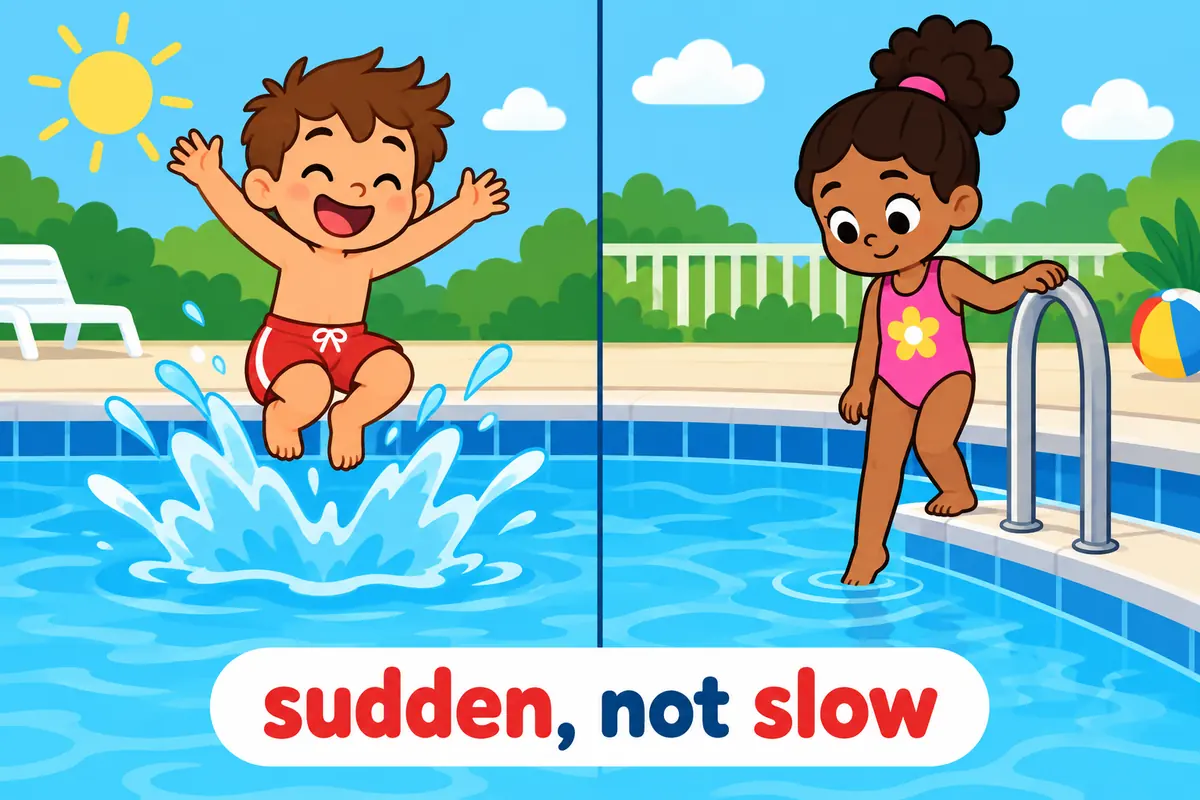
- The commonest error is using plunge into for a slow or careful entry.
What does plunge into mean?
Plunge into is a phrasal verb meaning to dive suddenly into water, to throw yourself into an activity, or to push something into a new and often difficult state. The Cambridge entry for plunge into records the physical and figurative senses, and the related verb sink beneath the surface covers only the downward part of the movement. All the senses share one idea: the entry is quick, complete and without hesitation.
| Sense | Plain meaning | Example sentence |
|---|---|---|
| Enter water | Dive or fall into liquid suddenly | The swimmers plunged into the cold river. |
| Begin eagerly | Start a task with full energy at once | She plunged into the report before breakfast. |
| Cause a sudden state | Push something into trouble or darkness | The outage plunged the town into darkness. |
| Take on a commitment | Enter a course of action without delay | They plunged into a costly legal battle. |
One limitation is worth stating plainly. Plunge into implies speed and wholeheartedness, so it is the wrong phrase for a cautious or gradual start: nobody plunges into a delicate negotiation by careful stages. The physical sense also assumes deep liquid, because a shallow puddle is entered, not plunged into.
How do you use plunge into in a sentence?
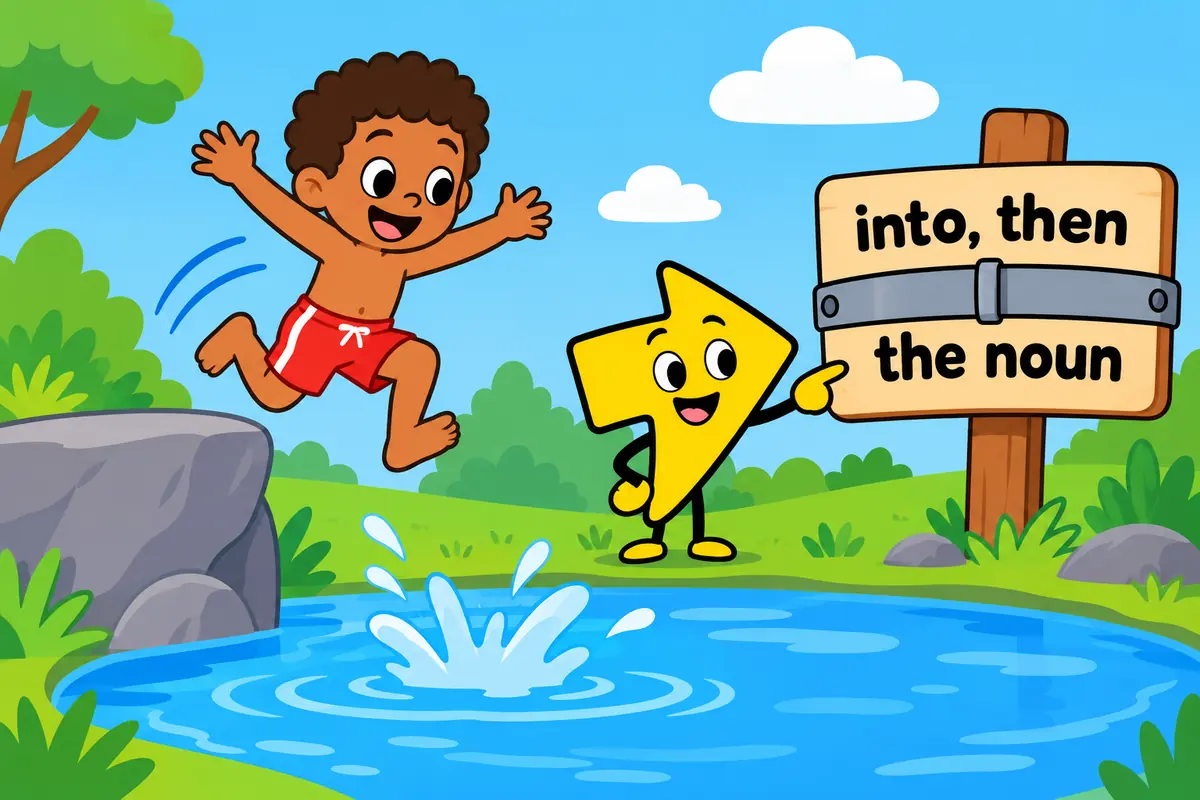
Plunge into comes in an intransitive form, where the subject enters something, and a causative form, where the verb takes an object before the preposition. The preposition into stays fixed to the noun that follows, so the order is always plunge, then into, then the place or state.
| Pattern | Example | What it signals |
|---|---|---|
| plunge into + water or place | He plunged into the freezing pool. | The subject enters a physical medium. |
| plunge into + activity | They plunged into the preparations. | Eager, immediate involvement in a task. |
| plunge + object + into + state | The blackout plunged the city into chaos. | A cause pushes something into a new condition. |
| plunge into + abstract noun | The firm plunged into debt. | Entering a difficult situation fast. |
| be plunged into + state | The room was plunged into silence. | Passive voice keeps the changed place in focus. |
| plunge + pronoun + into + place | She plunged it into the bucket. | A pronoun goes before into, not after it. |
The physical and figurative senses differ mainly in what follows the preposition. When the object is water, the entry is literal; when it is work, debt or a discussion, the sentence treats the activity as if it were water, which is why the phrase feels vivid. To immerse yourself in a subject keeps the same metaphor but slows it down, describing depth of attention rather than a sudden leap.
Plunge into in a sentence: examples across contexts
Plunge into keeps its force while the setting changes from a swimming lesson to a financial report. The twelve sentences below each name what is entered, and the last two show the same structure inside a different verb.
| Context | Example sentence | Why this works |
|---|---|---|
| Swimming lesson | The coach told the children to plunge into the deep end. | A literal entry into water is the base sense. |
| Workplace email | She plunged into the new project on her first morning. | Eager involvement needs no adverb of speed. |
| News report | The outage plunged the district into darkness for six hours. | The causative pattern names the cause first. |
| Finance writing | Rising costs plunged the airline into loss. | An abstract state follows the preposition. |
| Science prose | The probe plunged into the ice to sample the water below. | A precise physical action stays literal. |
| Travel diary | We plunged into the market crowds without a plan. | The figurative entry copies the feeling of water. |
| Sports report | The winger plunged into the tackle and won the ball. | Speed and commitment are the point. |
| Academic writing | The committee plunged into a long review of the evidence. | Formal prose still allows the vivid verb. |
| Conversation | I plunged into the washing-up before anyone else moved. | Everyday speech keeps the sense of no delay. |
| Children’s story | The puppy plunged into the muddy puddle after the ball. | A light, comic scene suits the verb. |
| Shared structure | She waded through the flooded lane to reach the gate. | Same idea of entering water, but slowly and with effort. |
| Shared preposition | The crowd burst into applause as the final whistle blew. | The same into, but burst into marks a sudden sound. |
The final two rows are the useful warning: into appears in many phrasal verbs and prepositions, and each pair carries its own meaning. Plunge into is about a headlong entry, while wade through and burst into describe very different movements.
Plunge into vs dive
Plunge into and dive headfirst both describe an eager entry, yet they are not interchangeable. Dive suggests a trained or graceful movement, while plunge into stresses force and the loss of control.
| Attribute | plunge into | dive |
|---|---|---|
| Core image | A heavy, sudden drop | A controlled, skilled entry |
| Control | Often limited or headlong | Usually deliberate |
| Figurative use | A task or crisis entered at once | A subject or book taken up eagerly |
| Typical object | Water, work, debt, chaos | Water, books, a topic, code |
| Register | Neutral to dramatic | Neutral and energetic |
Verdict: choose dive for a skilful or enthusiastic start that stays under control, and plunge into when the entry is fast, forceful and a little reckless.
Word forms and grammar of plunge into
Plunge into inflects on the verb plunge, and the preposition into never changes. The table also lists the noun and the word order learners get wrong.
| Form | Part of speech | Example |
|---|---|---|
| plunge into | phrasal verb, base | Do not plunge into the deep water alone. |
| plunges into | third person singular | He plunges into each task eagerly. |
| plunged into | past and past participle | The room was plunged into shadow. |
| plunging into | present participle | They were plunging into the debate. |
| a plunge | noun | The plunge took her breath away. |
| plunge it into | correct pronoun order | Plunge it into the cold water quickly. |
The noun keeps the downward idea, and so does a rubber plunger, the tool that presses down to clear a pipe. Both relate to the verb even though neither is used with into in the same way.
Common mistakes with plunge into
- Incorrect:
She plunged the cold lake.Correct: She plunged into the cold lake. Rule: The intransitive sense needs the preposition into before the place. - Incorrect:
She plunged into it the lake.Correct: She plunged it into the lake. Rule: With an object, the pronoun goes before into. - Incorrect:
He plunged into the puddle slowly.Correct: He stepped carefully into the puddle. Rule: Plunge into implies speed, so a slow entry needs another verb. - Incorrect:
The news plunged the family to grief.Correct: The news plunged the family into grief. Rule: The causative sense always takes into, not to. - Incorrect:
They plunged into the shallow stream at a gentle pace.Correct: They waded into the shallow stream at a gentle pace. Rule: A gradual, effortful entry suits wade, not plunge.
Practice using plunge into
Work through the eight items, then read the reason beside each answer rather than only the key.
- Fill the gap: Without hesitating, the diver ______ the icy water.
- Choose the better word: The firm (plunged into / waded into) a risky deal it barely understood.
- Correct the error: The power cut plunged the village to darkness.
- Build a sentence: use plunge into about a family beginning a big DIY project.
- Spot the register: which suits a news report — the storm plunged the coast into chaos, or the storm made everything really chaotic?
- Rewrite with the pronoun: Plunge the cloth into the bucket. Use it instead of the cloth.
- Choose the better word: She (dived into / plunged into) the manual to learn the rules.
- Correct the error: He plunged the sea without checking the depth.
Answers
- plunged into — the intransitive sense takes into before the water.
- plunged into — a rushed, risky deal matches the force of plunge.
- The power cut plunged the village into darkness — the causative sense uses into.
- Model answer: They plunged into building the shed the moment the plans arrived.
- The storm plunged the coast into chaos — a report prefers the vivid verb to a vague phrase.
- Plunge it into the bucket — the pronoun goes before into.
- dived into — a controlled, eager start suits dive.
- He plunged into the sea without checking the depth — the preposition is required.
The bottom line
Use plunge into in a sentence when someone enters water or a task quickly, completely and without hesitation. Two nuances decide most sentences: the preposition into stays fixed, so the order is plunge, into, then the place or state, and the phrase always implies speed, which rules out careful or gradual action. When the entry is controlled or an embark on a new career is spread over time, a different verb fits better.
Frequently asked questions about plunge into
Is it plunge into or plunge in?
Both exist, but they differ. Plunge in stands alone and means to start at once, as in we just plunged in. Plunge into always needs an object naming the place or activity, as in they plunged into the debate. Use plunge in when the noun is understood, and plunge into when you name it.
What does it mean to plunge into work?
To plunge into work means to start a task at once with full energy and no warm-up. The phrase treats the task like cold water, so it suggests a fast, wholehearted beginning rather than a careful plan. It suits tasks that can be attacked immediately, not ones that need preparation.
Is plunge into separable?
No. The preposition into stays bound to the noun that follows it, so the order is fixed. In the intransitive sense the subject simply plunges into something. In the causative sense the object goes before into, as in the news plunged the family into grief, never plunged grief into.
Can you plunge into a conversation?
Yes, plunge into a conversation is standard and means to join it suddenly and with energy, usually without waiting to be invited. The phrase carries the same sense of speed as the water use, so it fits lively discussions and not a formal, turn-by-turn debate where speakers take careful turns.