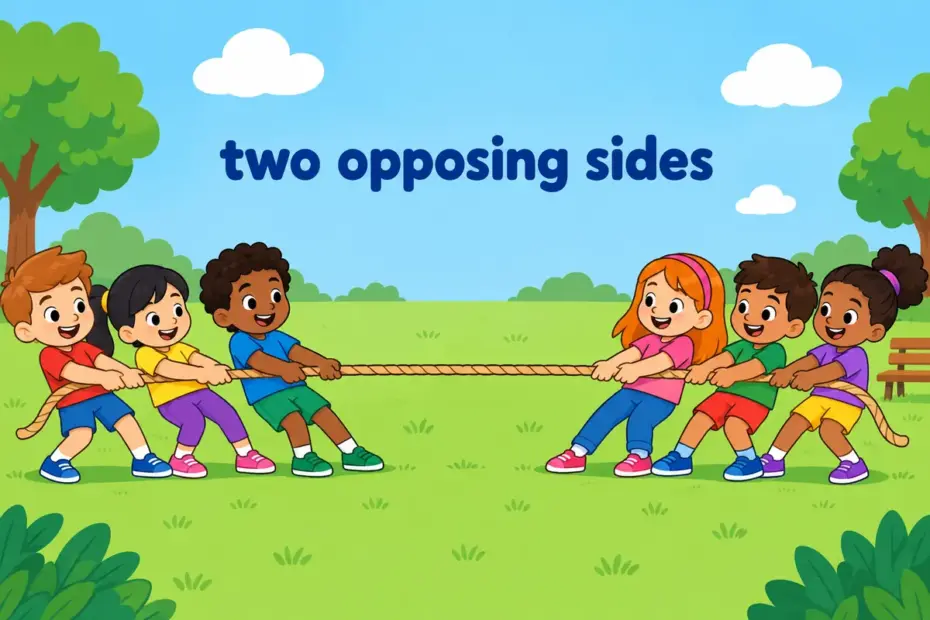
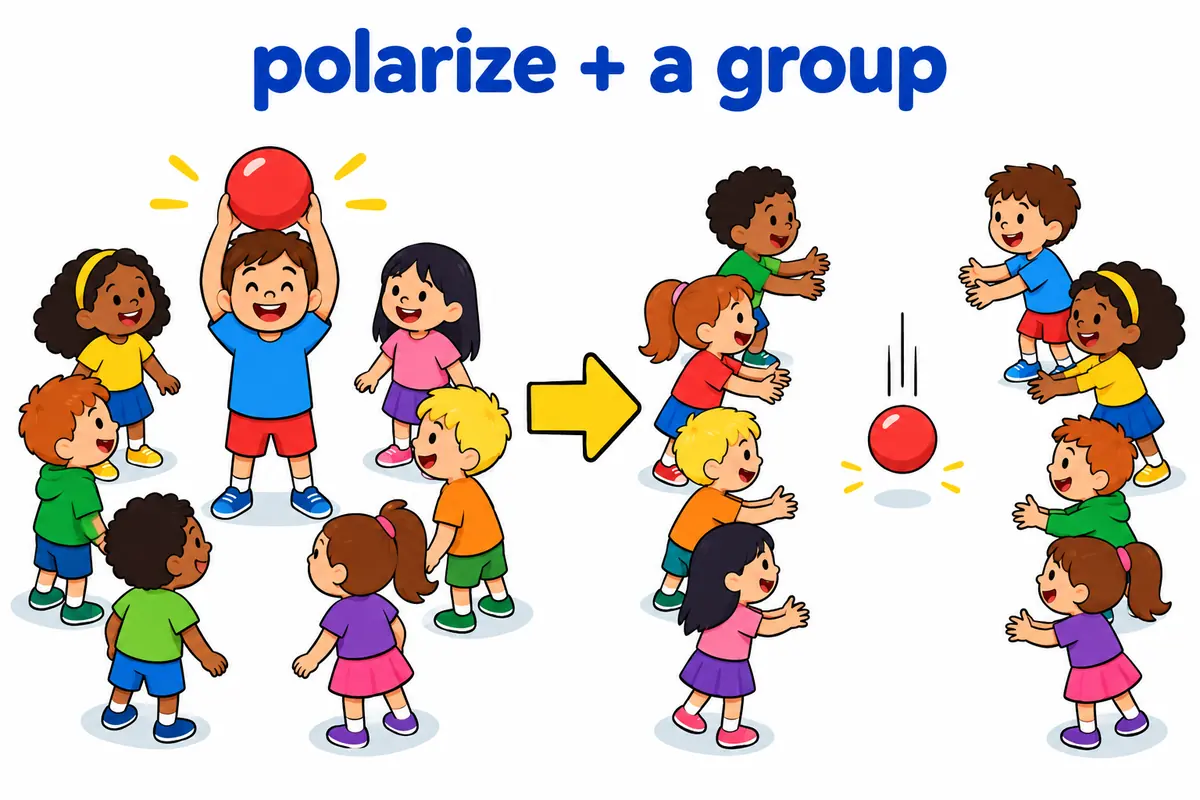
Polarize means to split a group into two opposed camps or to push opinions toward opposite extremes. To use polarize in a sentence, name the force that does the dividing and the group it divides: “The new rule polarized the staff.” The verb is transitive, so something always gets polarized.
Polarize at a glance
- Polarize is a transitive verb; its forms are polarizes, polarized, polarizing and polarization.
- The social sense is to split opinion into two camps; the technical sense is to give light or a magnet two opposite poles.
- The usual subjects are a policy, a speech, a scandal, an issue, a leader or a referendum.
- Polarize sits in journalism, politics and commentary rather than casual conversation.
- The commonest error is using polarize without an object, as in the crowd polarized.
What does polarize mean?
Polarize is a transitive verb meaning to divide a group into two sharply opposed sides, or, in physics, to give light waves or a magnet two opposite poles. The Cambridge entry for polarize treats the social sense first and the technical sense second, and the everyday writer almost always wants the first.
| Sense | Plain meaning | Example sentence |
|---|---|---|
| Social | Split a group into two opposed camps | The referendum polarized the village. |
| Scientific | Give light or a magnet two opposite poles | The filter polarizes the reflected light. |
| Intensifying | Turn a mild difference into open conflict | The interview polarized an uneasy committee. |
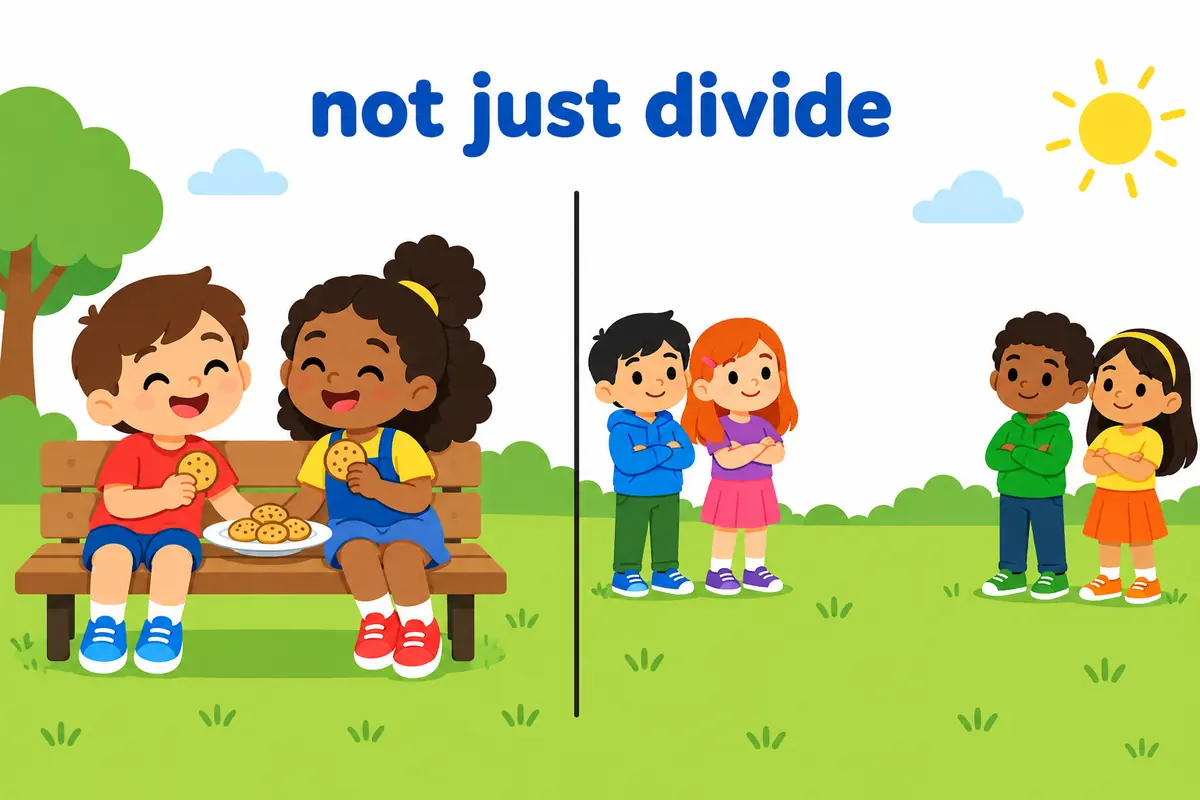
One limitation matters. Polarize does not mean merely to discuss or to disagree; it means the middle has narrowed until two sides face each other. When a sentence describes a calm exchange, divide a room is the safer choice, because a friendly argument can divide people without polarizing them.
How do you use polarize in a sentence?
The verb needs a subject that does the dividing and an object that receives the split: an issue polarizes a group. The passive appears often in reporting because the cause matters less than the effect.
| Pattern | Example | What it signals |
|---|---|---|
| issue + polarize + group | The pay offer polarized the union. | One question splits an entire body. |
| polarize + opinion | The leak polarized opinion overnight. | The object is abstract rather than a named group. |
| be polarized | The committee was polarized by the vote. | Passive voice, chosen when the split itself is the news. |
| polarize + group + into + camps | The ruling polarized voters into two blocs. | Names the two sides the split created. |
| become / remain polarized | The town became sharply polarized. | Describes a settled state rather than an act. |
Keep the action and the state apart: the town polarized describes what an event did, while the town is polarized describes the condition the event left behind.
Polarize in a sentence: examples across contexts
Polarize changes register more than it changes meaning. The nine sentences below keep the same verb while moving from a classroom to a news report, and each one names the issue doing the dividing.
| Context | Example sentence | Why this works |
|---|---|---|
| Classroom | The timetable change polarized the class into two groups. | A small, concrete issue shows the pattern a reader can picture. |
| Workplace email | The new rota has polarized the team. | Present perfect reports a split that is still live. |
| News report | The housing plan polarized the council. | Names the body and the issue, as reporting requires. |
| Political commentary | One slogan polarized the electorate within a week. | A short time frame stresses how fast the middle empties. |
| Legal writing | The ruling polarized the profession it was meant to guide. | Uses a formal subject and a measured, impersonal tone. |
| Academic writing | The survey polarized respondents across age lines. | Adds a variable, which keeps the claim checkable. |
| Talk show | The host polarized the panel in the first ten minutes. | Conversational, with a human subject doing the dividing. |
| Social media | The clip polarized viewers the moment it was posted. | Names the crowd and the instant, which suits online writing. |
| Conversation | That topic always polarizes this family. | The simple present reports a standing habit. |
Only the last two sentences put people rather than issues in charge of the split, and that choice is what makes them sound spoken rather than reported.
Polarize vs divide
Polarize and divide overlap, but only polarize insists that the middle has emptied. split a committee and related words describe any separation, while polarize describes two camps hardening against each other.
| Attribute | polarize | divide | split |
|---|---|---|---|
| Core job | Push a group into two opposed camps | Separate into parts of any size | Break one thing into pieces |
| Typical subject | An issue, policy, speech or scandal | A line, wall, river or disagreement | A knife, vote or quarrel |
| The middle | Empties out | May stay wide and calm | Is cut cleanly |
| Result | Two factions that face each other | Groups that need not oppose | Shares or fragments |
| Register | Journalistic and political | Neutral and everyday | Neutral, often physical |
Verdict: choose divide for any separation, split for a physical or tidy break, and polarize only when the split has pushed people onto opposite sides.
Word forms and grammar of polarize
Polarize inflects regularly, and its noun separate the two camps is a reminder that the root idea is a pair of poles. The table also lists the form learners often build by mistake.
| Form | Part of speech | Example |
|---|---|---|
| polarize | verb, base form | Hard questions polarize a room. |
| polarizes | verb, third person singular | The fee polarizes the whole department. |
| polarized | verb, past and past participle | The debate polarized the audience. |
| polarizing | verb, present participle; also an adjective | She is a polarizing figure in local politics. |
| polarization | noun | The polarization of the vote surprised analysts. |
| polarizingly | adverb, non-standard | Do not write the bill was polarizingly debated; use the adjective instead. |
Common mistakes with polarize
- Incorrect:
The crowd polarized when the speaker arrived.Correct: The speaker polarized the crowd. Rule: Polarize is transitive, so an outside force must act on the group. - Incorrect:
The two neighbours polarized each other.Correct: The boundary dispute polarized the two neighbours. Rule: People are the object of the split, not its cause. - Incorrect:
The meeting was polarized about the budget.Correct: The meeting was polarized by the budget. Rule: The passive keeps by for the cause and avoids about after this verb. - Incorrect:
The issue polarized quietly for months.Correct: The issue slowly polarized the committee. Rule: The verb needs an object; it cannot stand alone with an adverb. - Incorrect:
They polarized opinions polarizingly.Correct: They polarized opinions sharply. Rule: The -ly adverb form is non-standard; use sharply or deeply.
Practice using polarize
Work through the six items, then check the reasoning rather than only the answer.
- Fill the gap: The proposed fence ______ the residents until neighbours stopped speaking.
- Choose the better word: A parking rule can (divide / polarize) a street, but a bitter feud can (divide / polarize) it into two hostile camps.
- Correct the error: The audience polarized during the second half.
- Build a sentence: use be polarized about a school council split over a new club.
- Spot the register: which belongs in a news report — the vote polarized the council, or the vote totally polarized everyone?
- Rewrite with the noun: The ruling polarized the profession. Use polarization instead.
Answers
- polarized — the fence is the cause, and the residents are the object that receives the split.
- divide, then polarize — the first is a mild separation, the second leaves two hostile camps.
- The second half polarized the audience — keep the cause as the subject and the crowd as the object.
- Model answer: The school council was polarized when two clubs competed for the same room.
- The vote polarized the council — a report keeps the neutral verb and drops the intensifier totally.
- The ruling deepened the polarization of the profession — the noun needs an article or a determiner.
The bottom line
Use polarize in a sentence when an issue pushes a group onto two opposite sides and empties the middle, and name that issue as the subject. The two points that settle most sentences are these: the verb is transitive, so a group must always be polarized, and only polarize implies two hardening camps rather than a simple split. Where the difference is mild, unite a divided group is the opposite move, and reconcile two sides is the repair a polarized group needs.
Frequently asked questions about polarize
Is polarize a formal word?
Polarize belongs to journalism, politics and commentary, where a single issue is shown splitting a group. In casual speech most people say split or divide instead. Writing the picnic polarized our family in a text message would sound stiff, while a news report would use exactly that shape.
What is the difference between polarize and polarized?
Polarize is the verb and polarized is usually its past participle or an adjective. The town polarized means an event did the splitting; the town is polarized means the split has settled into a lasting state. Choose the verb for the act and the adjective for the condition it left.
Can an issue polarize people without dividing them?
No, polarize always divides, but it divides in a particular way. It pushes a group into two opposed camps and empties the middle. A mild question might divide a room into several opinions, while a polarizing one leaves two sides facing each other with nothing settled between them.
Does polarize always imply two sides?
Yes. The word carries the image of two poles, so it implies exactly two opposed positions, even when the original issue had many shades. Politics polarized the committee means the many views collapsed into two camps. For three or more lasting groups, split or fragment is more accurate.
When opinions on a particular topic become sharply divided, they can polarize individuals, creating a clear distinction between those who support one side and those who support another. This polarization often leads to heated debates and a lack of consensus.
In communication, using polarizing language or discussing polarizing topics can elicit strong emotional responses and solidify opposing viewpoints. It is important to be aware of how polarization can affect discussions and relationships, as finding common ground and fostering understanding become increasingly challenging.
7 Examples Of Polarize Used In a Sentence For Kids
- The magnet can polarize the pieces of iron.
- The black and white colors polarize the image.
- The north and south poles polarize the magnet.
- The positive and negative charges polarize the battery.
- The red and blue colors polarize the drawing.
- The opposites polarize each other.
- The sun’s rays can polarize the light.
14 Sentences with Polarize Examples
- Polarize your study group based on common interests and goals to maximize productivity.
- As college students, it’s important to polarize your priorities to avoid getting overwhelmed by various tasks.
- Polarize your approach to extracurricular activities to strike a balance between academics and personal growth.
- It can be beneficial to polarize your time between socializing and studying to maintain a healthy lifestyle.
- Polarize your budget to allocate funds for essential expenses and leisure activities wisely.
- To excel in academics, it’s advisable to polarize your focus on subjects requiring more attention.
- Create a study schedule that allows you to polarize your time efficiently between different courses.
- Participating in debates and discussions can help students polarize their viewpoints on various topics.
- As a college student, it’s crucial to polarize your energy towards self-care and mental well-being.
- Polarize your friendships by spending more time with those who share similar career aspirations.
- Joining different clubs and organizations can help you polarize your interests and develop new skills.
- Use online tools and apps to help you polarize your daily routine and tasks effectively.
- Polarize your approach to group projects by assigning roles and responsibilities clearly to avoid confusion.
- Attending workshops and seminars can help you polarize your career goals and aspirations.
How To Use Polarize in Sentences?
Polarize means to divide or cause to divide into two sharply contrasting groups or sets of opinions or beliefs. When using Polarize in a sentence, you can create a strong contrast between two opposing viewpoints.
For example:
– The issue of climate change continues to polarize the scientific community, with some researchers arguing that human activity is the primary cause, while others believe it is a natural phenomenon.
– The new policy proposal has polarized members of the board, with half in strong support and the other half vehemently opposed.
– The controversial art exhibit has polarized public opinion, sparking heated debates among viewers.
To effectively use Polarize in a sentence, consider the context in which you are discussing contrasting viewpoints or opinions. You can use Polarize to emphasize the division between two opposing sides, highlighting the intensity of the disagreement.
Remember that Polarize is a powerful word that signifies a stark division, so use it carefully and appropriately in your writing or conversation to convey the strong contrast between different perspectives.
Conclusion
In conclusion, the use of polarizing language in sentences can lead to division and conflict among individuals with differing viewpoints. Examples of sentences with terms like “us versus them” or “right versus wrong” illustrate how such language can create a sense of opposition and create barriers to open dialogue and understanding. When sentences are polarizing, they have the potential to deepen divisions rather than foster unity and mutual respect.
Therefore, it is important to be mindful of the language we use in our sentences to avoid polarization and instead strive for communication that promotes inclusivity, empathy, and constructive conversation. By choosing words carefully and seeking common ground, we can work towards building bridges between divergent perspectives and fostering a more harmonious society.


