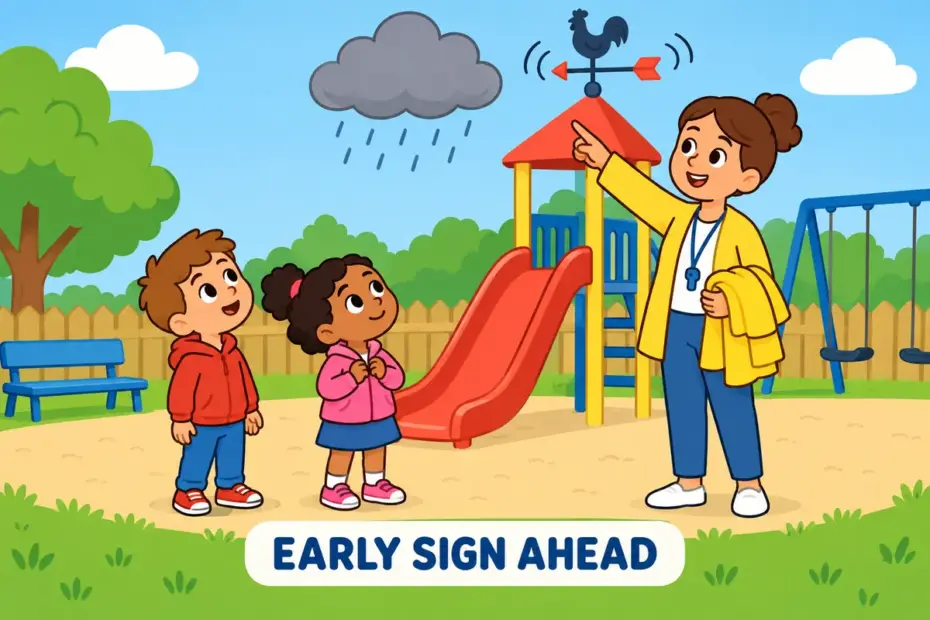
Precursor means something that comes before another thing and leads to it or signals it. To use precursor in a sentence, name the earlier thing and the event it points to: “The strike was a precursor to a wider revolt.” The noun usually takes to or of, and it names a warning rather than a replacement.
Precursor at a glance
- Precursor is a countable noun; its plural is precursors.
- It means an earlier event, substance or object that leads to or signals something later.
- The dominant pattern is precursor to or precursor of.
- It belongs to formal, scientific and journalistic writing.
- The commonest error is confusing precursor with predecessor, which names the previous holder of a role.
What does precursor mean?
Precursor is a noun meaning a thing that comes before another and either causes it or signals that it is coming. The Cambridge entry for precursor records both the general sense and the chemical sense, in which a precursor is a substance that is changed into another substance.
| Sense | Plain meaning | Example sentence |
|---|---|---|
| Early sign | Something that signals what follows | Rising prices were a precursor of unrest. |
| Forerunner | An earlier thing that leads to a later one | The steam engine was a precursor of the modern car. |
| Chemical precursor | A substance that becomes another in a reaction | The lab stored the precursor in a sealed drum. |
One limitation is worth stating plainly. Precursor is not a synonym for cause, and it is not the same as predecessor. A cause may be hidden and steady, while a precursor is usually visible before the event it introduces.
How do you use precursor in a sentence?
Put the earlier thing first and the later thing after the preposition. The five patterns below cover the general, scientific and historical uses.
| Pattern | Example | What it signals |
|---|---|---|
| precursor to + event | The tremor was a precursor to the eruption. | Points forward to a bigger event. |
| precursor of + thing | The pamphlet was a precursor of the modern newspaper. | Names the later thing it led to. |
| a precursor of + field | She was a precursor of the new style. | Marks an early figure in a movement. |
| be seen as a precursor | The talks were seen as a precursor to peace. | Reports how other people read the event. |
| chemical precursor of | The enzyme turns the precursor into a hormone. | Technical, subject-first scientific sense. |
Where the emphasis falls on a person who prepares the way, forerunner often sounds warmer, and harbinger is the choice when the earlier thing announces something unwelcome.
Precursor in a sentence: examples across contexts
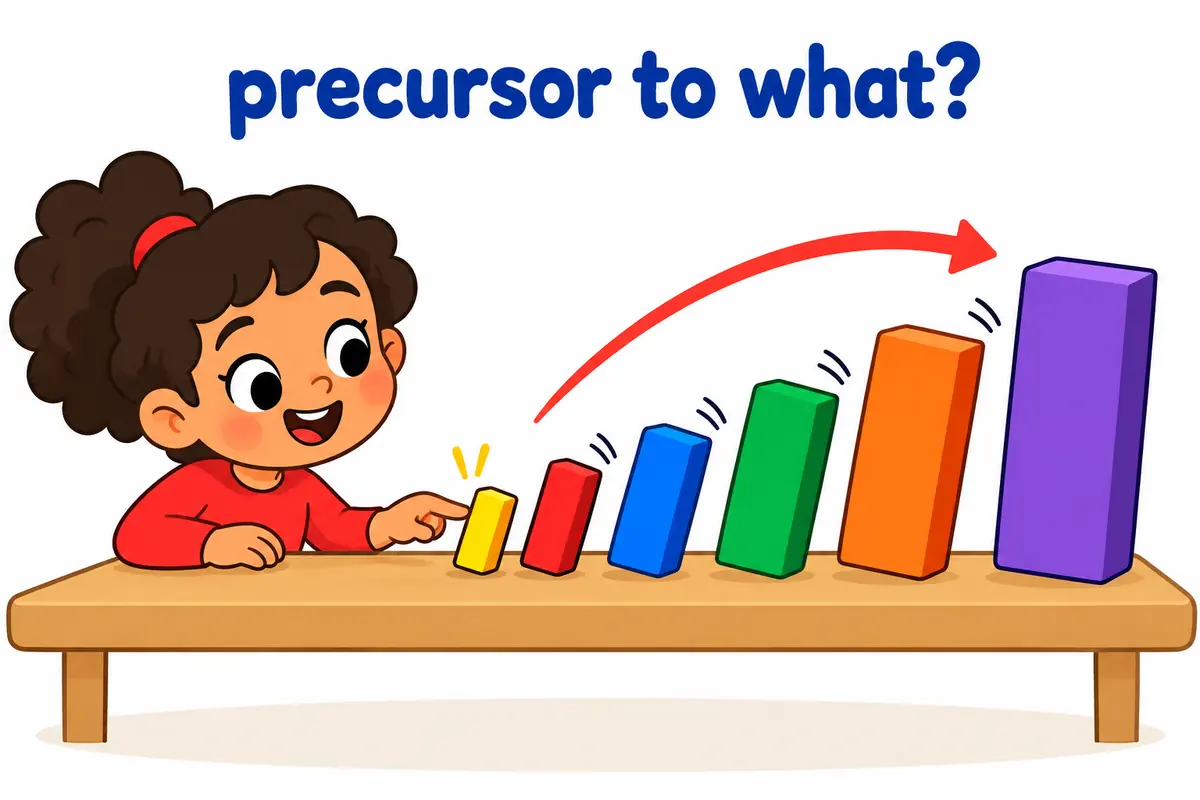
Precursor moves easily between science and history because both fields care about what came first. The nine sentences below show the same noun in very different registers.
| Context | Example sentence | Why this works |
|---|---|---|
| Classroom | A short quiz is a precursor to the full test next week. | Names a small step before a larger one. |
| Science lab | The team tracked the precursor before it formed the final compound. | Uses the technical substance sense precisely. |
| News report | The ruling was a precursor to a wider review of the policy. | Links a decision to the process it triggered. |
| History essay | The treaty served as a precursor of the later union of states. | Places events on a timeline with of. |
| Business memo | These talks are a precursor to any formal agreement. | Signals that a deal has not been signed yet. |
| Weather diary | A still, heavy afternoon was the precursor of the storm. | Turns a felt condition into a warning. |
| Academic prose | The essay is a precursor of the field now called linguistics. | Marks an early work without claiming it founded the field. |
| Conversation | The first argument was a precursor to the split. | Explains a break by pointing to its early sign. |
| Medical writing | A dry cough is often a precursor to the infection. | States a symptom before the illness clearly. |
Only the scientific row uses a physical substance as the precursor. Everywhere else the noun names an earlier event, which is why the verb that follows it is usually be or serve as.
Precursor vs predecessor
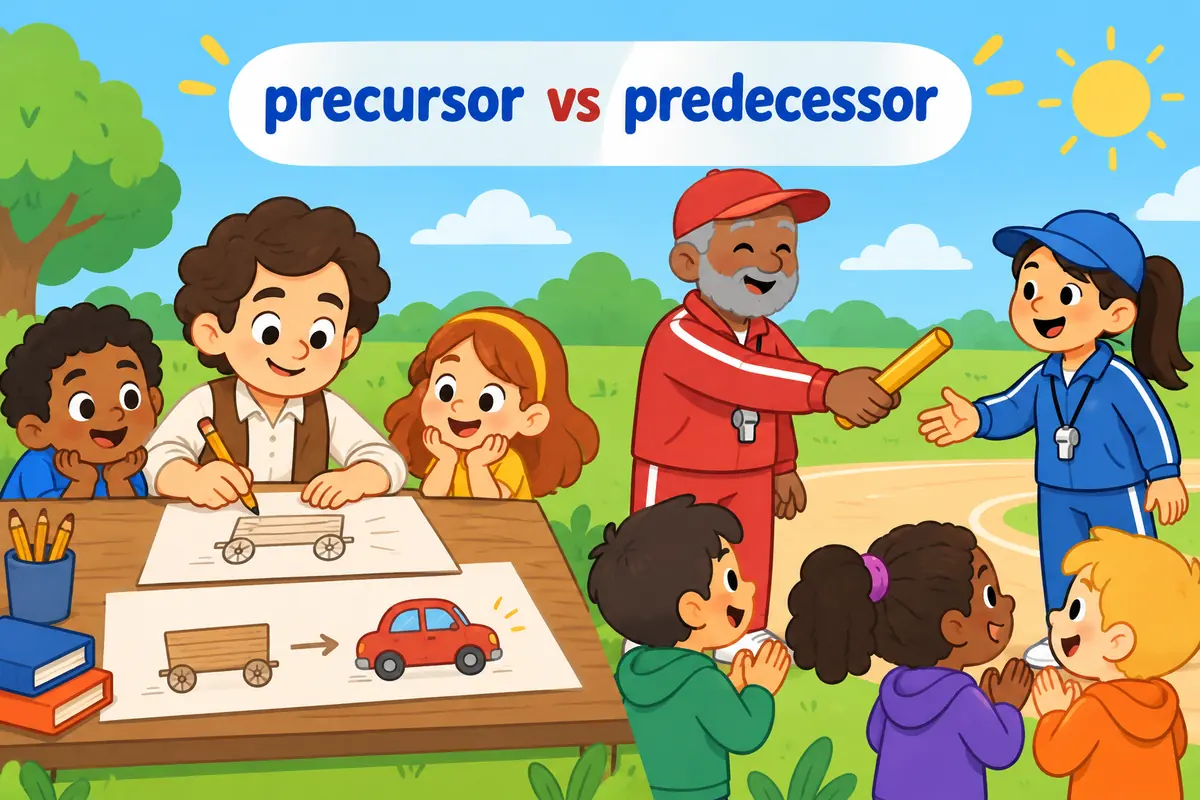
Precursor and predecessor both look backward, but they point at different things. Precursor is about cause and sequence; a predecessor is the previous holder of a job or a previous version of a model. A rudimentary engine is a precursor of the car, while the horse cart is its predecessor.
| Attribute | precursor | predecessor |
|---|---|---|
| Core job | What came before and led or signalled | The previous holder or version |
| Typical referent | An event, substance or invention | A person, a title or a model |
| Relation to the next | Cause or warning | Replacement in a line |
| Register | Formal, scientific | Formal, administrative |
| Example | The telegram was a precursor of the fax. | The fax was the predecessor of email. |
Verdict: choose precursor for an early stage that leads or warns, and predecessor for whoever or whatever held the place before.
Word forms and grammar of precursor
Precursor is regular, and its adjective is rare enough that most writers avoid it. The table also shows the preposition that follows each form.
| Form | Part of speech | Example |
|---|---|---|
| precursor | noun, singular | The comet was a precursor of change. |
| precursors | noun, plural | These symptoms are precursors to the illness. |
| precursory | adjective, rare | A precursory review was enough. |
| precursor protein | compound noun | The enzyme cuts the precursor protein. |
The adjective precursory exists but is uncommon; when in doubt, use the noun, which readers recognise instantly. In grammar, the related term antecedent names the earlier word that a pronoun refers back to.
Common mistakes with precursor
- Incorrect:
The director was a precursor to the current one.Correct: The director was the predecessor of the current one. Rule: People in a post have predecessors; events have precursors. - Incorrect:
Rising debt was precursor to the crisis.Correct: Rising debt was a precursor to the crisis. Rule: Precursor is a countable noun and needs an article. - Incorrect:
The early design was a precursor for the final model.Correct: The early design was a precursor to the final model. Rule: The usual prepositions are to and of, not for. - Incorrect:
The cough was a precursory sign.Correct: The cough was a precursor sign. Rule: Precursory is rare; the noun form is far more common. - Incorrect:
The meeting was a precursor of itself.Correct: The meeting was a prelude to the merger. Rule: A precursor must precede something distinct, which is why prelude fits here.
Practice using precursor
Work through the six items, then check the reasoning rather than only the key.
- Fill the gap: The first frost is a ______ to a hard winter.
- Choose the better word: The retired captain was the (precursor / predecessor) of the new coach.
- Correct the error: The vote was a precursor for independence.
- Build a sentence: use precursor of about an early invention.
- Spot the register: which fits a lab report — the reagent is a precursor of the dye, or the reagent is kind of a forerunner to the dye?
- Rewrite with an article: Rising prices were precursor of unrest.
Answers
- precursor — the frost is an early sign, so the noun with to fits.
- predecessor — a person who held the post before is a predecessor.
- The vote was a precursor to independence — the usual preposition is to.
- Model answer: The abacus was a precursor of the modern calculator.
- The reagent is a precursor of the dye — a lab report keeps the technical sense and the formal noun.
- Rising prices were a precursor of unrest — the countable noun needs an article.
The bottom line
Use precursor in a sentence for an earlier event, substance or design that leads to or signals something later, and pair it with to or of. Two nuances matter: a precursor is not a predecessor, which names the previous holder of a role, and not every cause is a precursor, because the word also carries the idea of a visible warning.
Frequently asked questions about precursor
Is precursor a formal word?
Precursor belongs to formal, scientific and journalistic writing, where a careful sequence of events matters. In everyday speech people say an early sign, the first step or a heads-up instead. A lab report will use precursor freely, while a chat about the weather would sound bookish with it.
What is the plural of precursor?
The plural is precursors, formed by adding s. Because the noun is countable, it needs an article or a determiner in the singular, as in a precursor or the precursor. Writing these symptoms are precursor to the illness drops the article and is a common learner slip.
Does precursor mean the same as cause?
No. A cause produces an effect, while a precursor comes before it and often signals that it is near. Rising prices can be a precursor of unrest without causing it directly. Precursor adds the idea of a visible early warning that cause alone does not carry.
What is a precursor in chemistry?
In chemistry a precursor is a substance that is changed into another during a reaction. The starting material is the precursor, and the reaction turns it into the product. The word keeps the same forward-pointing logic as the general sense, which is why the metaphor transfers so cleanly to science.
Have you ever wondered what a “precursor” is and how it functions in a sentence? A precursor is a word or phrase that indicates something to come or serves as a prelude to a later idea or event.
In grammar, a precursor often sets the stage for a forthcoming statement, providing context or leading into the main point. Understanding how to use precursors effectively can enhance the clarity and flow of your writing.
7 Examples Of Precursor Used In a Sentence For Kids
- The rainbow is a colorful precursor to rain.
- Planting seeds is the first precursor to growing flowers.
- A yawn is often a precursor to feeling sleepy.
- The sun rising in the morning is a precursor to a new day.
- Mixing flour and sugar is a precursor to baking a cake.
- Feeling hungry can be a precursor to mealtime.
- Putting on your shoes is a precursor to going outside to play.
14 Sentences with Precursor Examples
- Precursor to success in college is consistent attendance and active participation in classes.
- Missing the precursor lecture can lead to confusion in understanding the upcoming topics.
- Completing all assigned readings is a vital precursor to acing your exams.
- Setting clear academic goals is a necessary precursor to achieving good grades.
- Joining study groups can serve as a helpful precursor to improving your understanding of complex subjects.
- Establishing a solid study routine is a key precursor to maintaining academic success throughout college.
- Time management skills are essential precursors to balancing academics, extracurricular activities, and personal time.
- Attending career fairs can be a valuable precursor to securing internships and job opportunities in the future.
- Networking with professors and professionals in your field is a significant precursor to building a strong professional network.
- Developing strong research skills is an important precursor to excelling in academic writing assignments.
- Taking prerequisite courses is often a precursor to enrolling in advanced classes in your major.
- Mastering basic mathematical concepts is a crucial precursor to success in higher-level calculus courses.
- Participating in lab experiments serves as a practical precursor to understanding theoretical concepts taught in lectures.
- Gaining proficiency in a second language is a valuable precursor to pursuing international study opportunities.
How To Use Precursor in Sentences?
Precursor is a noun that refers to a person or thing that comes before another in time, a forerunner. When using Precursor in a sentence, it is important to remember that it acts as the subject or object of the sentence.
For example, you can say: “The discovery of fire was a precursor to the development of civilization.” In this sentence, “discovery of fire” is the precursor to the “development of civilization.”
Another example could be: “The crumbling walls were a precursor to the old building’s collapse.” Here, the “crumbling walls” are the precursor to the “old building’s collapse.”
To use Precursor correctly, identify the events, objects, or people that came before the main subject or action you are referring to in your sentence. This will help you construct a clear and concise sentence that effectively communicates the relationship between the precursor and the main element.
In conclusion, incorporating Precursor into your writing can add depth and historical context to your sentences. By understanding its meaning and usage, you can enhance your language skills and effectively convey the sequence of events or ideas.
Conclusion
In summary, the sentences with the precursor keyword highlighted various examples of how precursor molecules or events are essential in the development or understanding of specific processes or outcomes. These sentences underscored the significance of precursors in biology, chemistry, and other fields, illustrating their role in laying the foundation for subsequent steps or reactions. By examining these sentences, it becomes clear that precursors play a crucial role in the progression of a wide range of phenomena, serving as the building blocks or triggers for future events.
Understanding the concept of precursors can equip individuals with the insight needed to recognize and appreciate the intricate connections and dependencies that exist within complex systems. By recognizing and studying precursors, researchers and practitioners can enhance their comprehension of various processes and phenomena, ultimately leading to advancements in science, technology, and numerous other disciplines.


